Treatment By Type: Why The Cause Comes First, Which Xanthomas Fade With Lipid Control, And When Removal Makes Sense
Xanthoma treatment starts with finding and treating the cause, usually a blood fat disorder, because most xanthomas are a visible sign of something happening inside the body. Removal of the lumps themselves comes second, except for xanthelasma on the eyelids, where removal is often the main goal once the cause has been checked.
Xanthoma treatment depends on the type. Tendon, eruptive, palmar and tuberous xanthomas are treated mainly by managing the underlying lipid disorder with diet and medicines such as statins, and some types fade as levels improve. Eyelid xanthelasma rarely fades with lipid control, so it’s usually removed by laser, surgery or peels, or at home with a cream made for it.
Key Takeaways
- The type of xanthoma decides the treatment, so a doctor’s diagnosis comes first.
- Most body xanthomas are treated by managing the lipid disorder behind them.
- Eruptive xanthomas signal very high triglycerides and a pancreatitis risk.
- Tendon xanthomas point to familial hypercholesterolemia; statins are first-line.
- Eyelid xanthelasma usually needs direct removal; lipid control rarely clears it.
- Rare widespread flat xanthomas with normal lipids need investigation.
On This Page 16 sections
How Is Xanthoma Treated?
By identifying the type, finding the cause, and treating that cause, most often a blood fat disorder, with diet, activity and lipid-lowering medicine. Removal of the deposits is a second step, used mainly for eyelid xanthelasma or lumps that persist once the cause is controlled.
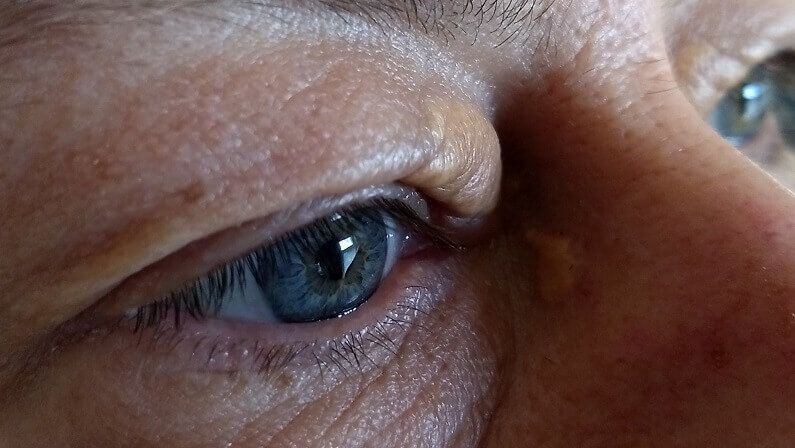
A xanthoma is a collection of fat-filled immune cells, called foam cells, in the skin or tendons. Xanthelasma palpebrarum, on the eyelids, is the most common form.[1] Other types appear on the tendons, palms, elbows, knees, buttocks or across the skin, and many are linked with specific lipid disorders that carry real health risks.
That’s why xanthoma treatment is medical-led: the lump is often the first visible clue to high cholesterol, very high triglycerides or another condition. Our xanthomas guide describes each type, and what is xanthoma covers the basics.

Why Does The Type Of Xanthoma Change The Treatment?
Because each type points to a different cause and carries a different risk. Eruptive xanthomas suggest dangerously high triglycerides, tendon xanthomas suggest inherited high cholesterol, palmar xanthomas suggest a specific lipoprotein disorder, and eyelid xanthelasma has many possible causes or none.
- Eruptive. Crops of small yellow-red bumps, linked with triglycerides above 1,000 mg/dL.[5]
- Tendon. Firm lumps on the Achilles, elbows, hands, knees or feet, a sign of familial hypercholesterolemia.[3]
- Palmar and tuberous. Yellow palm creases and firm nodules, linked with dysbetalipoproteinemia.[4]
- Plane. Flat patches; when widespread with normal lipids, sometimes linked with a blood protein disorder.[6]
- Xanthelasma. Eyelid plaques; about half of people have a lipid disorder.[1]
Our guides to eruptive xanthoma, tendon xanthomas, palmar xanthoma and plane xanthoma go into each type.

How Is Xanthoma Diagnosed Before Treatment?
A doctor examines the lumps, asks about your health, family and medicines, and orders blood tests: a fasting lipid profile, liver, thyroid and kidney tests and blood sugar. A biopsy is used when the type or diagnosis is uncertain.
- Examination. Where the xanthomas are, how they look and feel, and whether tendons are thickened.
- History. Family heart disease or high cholesterol, diabetes, liver or kidney disease, alcohol and medicines.
- Blood tests. A fasting lipid profile, liver panel, thyroid tests and fasting glucose, with HbA1c in diabetes.[1]
- Further tests if needed. Genetic testing for familial hypercholesterolemia,[3] or blood protein tests for widespread plane xanthomas with normal lipids.[6]
- Biopsy. When the diagnosis is uncertain.[1]
Our guide on the xanthoma definition explains the terms you’ll hear.

How Is The Cause Of Xanthoma Treated?
With a heart-healthy diet, regular activity, weight control, not smoking and, usually, lipid-lowering medicine, plus treatment of any condition pushing blood fats up, such as diabetes, an underactive thyroid, or liver or kidney disease.
Secondary causes of raised blood fats include primary biliary cholangitis, diabetes, an underactive thyroid, nephrotic syndrome, and retinoid or estrogen medicines.[1] Treating those conditions, and reviewing medicines with your doctor, can lower blood fats directly. For inherited high cholesterol, statins are the first-line medicine.[3] Uncontrolled diabetes raises triglycerides, so better blood sugar control is a key part of treating eruptive xanthomas.[5]
Treating the cause protects your heart, pancreas and blood vessels, which is the main reason it comes first. Our guide to the causes of xanthelasma explains these conditions in more detail.

How Are Eruptive Xanthomas Treated?
By urgently lowering very high triglycerides. Eruptive xanthomas appear with triglycerides above about 1,000 mg/dL, a level that also raises the risk of pancreatitis, so they need prompt medical attention rather than removal.
Eruptive xanthomas are seen with severely raised triglycerides, and uncontrolled diabetes is a common driver; at these levels, pancreatitis is a real risk.[5] Treatment focuses on bringing triglycerides down through diet changes (especially cutting alcohol and sugars), blood sugar control and triglyceride-lowering medicine chosen by your doctor. Removing the bumps without lowering triglycerides doesn’t address the danger.
Our guide to eruptive xanthomas describes what to look for.

How Are Tendon Xanthomas Treated?
By treating the inherited high cholesterol behind them, usually familial hypercholesterolemia, with statins as first-line medicine. Surgery on the tendon is rarely needed and is reserved for lumps that cause pain or limit movement.

Familial hypercholesterolemia affects about 1 in 250 to 1 in 500 people, is passed on with a 50% chance to each child, and causes very high LDL from birth. Signs include xanthelasma and tendon xanthomas on the Achilles tendons, elbows, hands, knees and feet. Without care, about half of affected men had a coronary event by 50 and about 30% of women by 60.[3] Finding and treating it early protects the heart, and relatives should be tested too.
Our guides to Achilles tendon xanthoma and tendon xanthoma cover the lumps themselves.

How Are Palmar And Tuberous Xanthomas Treated?
By treating dysbetalipoproteinemia, the lipid disorder usually behind them, with diet and lipid-lowering medicine. Palmar xanthomas fade once the disorder is managed; firm tuberous nodules may need more time or removal.
Palmar xanthomas, yellow deposits in the creases of the palms and fingers, and tuberous xanthomas, firm nodules over the elbows and knees, are characteristic of dysbetalipoproteinemia, and palmar xanthomas fade once it’s managed.[4] That makes them one of the clearest examples of xanthomas responding to treatment of the cause.
Our guide to tuberous xanthoma describes the nodules in more detail.

How Are Plane And Rare Xanthomas Treated?
Plane xanthomas are treated according to their cause. Widespread flat xanthomas in people with normal lipids need investigation, because they can be linked with a blood protein disorder called monoclonal gammopathy, which then guides treatment.
Diffuse normolipemic plane xanthoma and its link with monoclonal gammopathy has been described in detail in the hematology literature, with treatment directed at the underlying blood disorder.[6] Rare forms such as xanthoma disseminatum are also managed by specialists. These are uncommon, but they’re the reason any unusual, spreading or rapidly appearing xanthoma should be assessed rather than simply removed.
Our guides to xanthoma disseminatum and xanthomatosis cover the rarer forms.

Xanthoma Treatment By Type
| Type | Usual Cause | Main Treatment | Removal? |
|---|---|---|---|
| Eruptive | Very high triglycerides, often with uncontrolled diabetes | Urgent triglyceride and blood sugar control | Not the priority |
| Tendon | Familial hypercholesterolemia | Statins and lipid management | Rarely; only if painful or limiting |
| Palmar | Dysbetalipoproteinemia | Lipid management | Usually not; fades once managed |
| Tuberous | Dysbetalipoproteinemia, other lipid disorders | Lipid management | Sometimes, for persistent nodules |
| Diffuse plane (normal lipids) | Possible monoclonal gammopathy | Investigation and specialist care | Not the priority |
| Eyelid xanthelasma | Lipid disorder in about half; local factors in others | Check and manage the cause | Usually yes: clinic or at-home cream |
When Does Removing A Xanthoma Make Sense?
Once the cause has been checked and treated, and the xanthoma persists, bothers you, or affects function. Removal is the main treatment for eyelid xanthelasma and an occasional one for persistent body xanthomas.
Clinic removal methods include surgical excision, CO2 and erbium laser, trichloroacetic acid peels and radiofrequency. A 2023 review of 49 studies on eyelid xanthelasma found CO2 laser gave more than 75% improvement in over 90% of patients and erbium laser more than 80%; changes in skin color were the most common complication, and surgery was favored for larger, deeper plaques.[2] Freezing and chemical cauterization can scar and discolor the skin, and eyelid surgery can pull the lid out of shape.[1]
Removing a body xanthoma without treating its cause treats only the sign, not the condition. Our guide on clinic options for xanthoma looks at removal methods in more depth.

How Is Eyelid Xanthoma (Xanthelasma) Treated?
Check and manage the cause with your doctor, then remove the plaques, because eyelid xanthelasma rarely fades with lipid control alone. Options are laser, surgery or peels in a clinic, or a removal cream made for xanthelasma at home.
About half of people with xanthelasma have a primary or secondary lipid disorder, and the rest have normal blood fats.[1] Lifestyle changes and lipid-lowering medicine are part of management, but once plaques have formed they may have only a limited effect on how they look.[1] So for xanthelasma, treatment usually means two tracks: the doctor’s check for health, and removal for appearance. Recurrence after removal is generally under 50%, rising to around 60% after repeat procedures.[1]
Many people with small to medium eyelid plaques choose to remove them at home. Our guides to xanthelasma, clinic options for xanthelasma and xanthelasma cream compare the routes.
If your xanthomas are on the eyelids and your doctor has checked the cause, this is the cream we make for eyelid xanthelasma.

Which Doctors Treat Xanthoma?
Start with your primary care doctor, who orders the tests and treats most lipid problems. They may refer you to a lipid specialist or cardiologist, an endocrinologist, a dermatologist, or a surgeon, depending on the type.
- Primary care doctor. Diagnosis, blood tests, first-line lipid treatment.
- Lipid specialist or cardiologist. Familial hypercholesterolemia and hard-to-control lipids.
- Endocrinologist. Diabetes and thyroid problems.
- Dermatologist. Skin diagnosis, biopsy and removal of skin xanthomas.
- Oculoplastic surgeon. Large or deep eyelid plaques.
- Hematologist. Widespread plane xanthomas with a blood protein disorder.
Our guide on which doctor treats xanthelasma covers the eyelid side in detail.

Will Xanthomas Come Back After Treatment?
They can, especially if the cause isn’t kept under control. Removed eyelid plaques return in under half of people overall, and body xanthomas tend to return or persist when the lipid disorder isn’t managed.
For xanthelasma, recurrence is higher for deeper plaques and after repeat procedures.[1] For body xanthomas, the best protection is long-term control of the underlying disorder, with regular blood tests and any medicine your doctor prescribes. Our guide on whether xanthelasma comes back explains recurrence after each removal method.

What Can You Do At Home Alongside Xanthoma Treatment?
Follow your treatment plan, take medicines as prescribed, eat a heart-healthy diet, stay active, limit alcohol, stop smoking, and keep blood sugar under control. Don’t squeeze, cut or burn xanthomas with home remedies.
- Take medicines as prescribed. Don’t stop a statin or other medicine without advice.
- Eat for your lipids. Less saturated fat, sugar and alcohol; more vegetables, whole grains and fish.
- Stay active and manage your weight.
- Control blood sugar. Especially important for eruptive xanthomas.[5]
- Keep up blood tests. They show whether treatment is working.
- Photograph your xanthomas. To track changes over months.
Squeezing and kitchen remedies don’t remove xanthomas and can damage the skin, especially on the eyelids; our guide on whether you can squeeze out xanthelasma explains why.

What’s The Bottom Line On Xanthoma Treatment?
Xanthoma treatment starts with the cause: identify the type, test your blood fats and related conditions, and manage what’s found. Body xanthomas are treated mainly through that; eyelid xanthelasma usually also needs removal, in a clinic or at home.
See your doctor first for any xanthoma. For eyelid plaques only, Xanthel® is a cosmetic cream made for xanthelasma removal at home, sold by Xanthelasma.com. You’ll find it in the box above, or read more about Xanthel® xanthelasma removal cream, and browse all our xanthelasma and xanthoma guides.
Common Questions About Xanthoma Treatment
How Is Xanthoma Treated?
By identifying the type, testing for the cause and treating it, usually a lipid disorder, with diet, activity and lipid-lowering medicine. Removal is a second step, used mainly for eyelid xanthelasma.
Can Xanthoma Be Treated Without Surgery?
Often, yes. Managing the lipid disorder is the main treatment for most body xanthomas, and eyelid xanthelasma can be removed with laser, peels or a cream made for it.
Does Lowering Cholesterol Get Rid Of Xanthomas?
For some types. Palmar xanthomas fade once dysbetalipoproteinemia is managed, but eyelid xanthelasma rarely clears with lipid control alone.
How Are Eruptive Xanthomas Treated?
By urgently lowering very high triglycerides and controlling blood sugar, because triglycerides above about 1,000 mg/dL also raise the risk of pancreatitis.
How Are Tendon Xanthomas Treated?
By treating the inherited high cholesterol behind them, usually familial hypercholesterolemia, with statins as first-line medicine. Surgery is rarely needed.
Can I Use A Cream For Xanthoma?
Only for eyelid xanthelasma. Xanthel is made for the eyelid type, not for tendon, eruptive, palmar or other body xanthomas, which need medical treatment.
Will Xanthomas Come Back After Treatment?
They can, especially if the cause isn’t controlled. Removed eyelid plaques return in under half of people, and body xanthomas persist when lipids stay high.
Which Doctor Treats Xanthoma?

Start with your primary care doctor, who may refer you to a lipid specialist, cardiologist, endocrinologist, dermatologist or surgeon depending on the type.
Sources
- Blair K. Xanthelasma Palpebrarum. StatPearls, National Library of Medicine (NCBI Bookshelf), updated 2026.
- Malekzadeh H, Ormseth B, Janis JE. A Practical Review of the Management of Xanthelasma Palpebrarum. Plastic and Reconstructive Surgery Global Open, 2023;11(5):e4982.
- Ison HE, Clarke SL, Knowles JW. Familial Hypercholesterolemia. GeneReviews, National Library of Medicine (NCBI Bookshelf), revised 2025.
- Javvaji A, Can AS, Sharma S. Dysbetalipoproteinemia. StatPearls, National Library of Medicine (NCBI Bookshelf), updated 2024.
- Mishra C, Tripathy K. Lipemia Retinalis. StatPearls, National Library of Medicine (NCBI Bookshelf), updated 2026.
- Szalat R, et al. Pathogenesis and treatment of xanthomatosis associated with monoclonal gammopathy. Blood, 2011.