
Achilles Tendon Xanthoma
A Lump on the Achilles Tendon, What It Means and Why It Needs a Doctor
A firm lump on the Achilles tendon can be a xanthoma, a cholesterol deposit that often signals an inherited cholesterol disorder. This page explains what it is, why it matters for your heart health, and when to see a doctor.
By Xanthelasma.com
What an Achilles Tendon Xanthoma Is
An Achilles tendon xanthoma is a firm, benign lump that forms within the Achilles tendon, the strong band connecting your calf muscles to your heel bone. It is made of cholesterol, specifically LDL cholesterol that has been taken up by cells in the tendon and built up over time into a palpable nodule. It is not cancerous and is not contagious, but it is a meaningful finding.
It is worth being clear from the outset that this is a different matter from the eyelid condition many people are searching for. If your concern is soft yellow patches on your eyelids, that is xanthelasma, a usually cosmetic issue covered on our xanthelasma overview. An Achilles tendon xanthoma, by contrast, sits deep in a tendon and is strongly linked to an underlying cholesterol disorder, which means it genuinely warrants medical assessment rather than any cosmetic approach. The wider family of these deposits is explained on our xanthomas page.

Why It Matters: The Link to Familial Hypercholesterolemia
The most important thing to understand about an Achilles tendon xanthoma is what it can signal. These deposits are a recognised physical sign of familial hypercholesterolemia (FH), an inherited condition that causes very high LDL cholesterol from birth and substantially raises the risk of early heart disease. In other words, a lump on the tendon can be an outward clue to a significant, treatable condition happening inside the body.
This is exactly why an Achilles tendon xanthoma should be taken seriously and assessed by a doctor. If you have one, particularly if high cholesterol or early heart problems run in your family, it is a strong prompt to have your cholesterol checked and your cardiovascular risk evaluated. Catching FH early genuinely matters, because managing the cholesterol with the right treatment can greatly improve long-term heart health. This is not a situation for self-treatment or a cosmetic product; it is one for proper medical care. Our page on tendon xanthomas covers the broader tendon-deposit picture.

How an Achilles Tendon Xanthoma Shows Up
These xanthomas usually appear as a firm thickening or nodule along the Achilles tendon, often on both legs. Many cause no pain at all, especially early on, and may be noticed simply as a lump or as the tendon looking thicker than usual. In some cases they can become uncomfortable, particularly if they grow large enough to rub against footwear or affect movement when walking or standing on tiptoe.
Because they are often painless, it can be tempting to ignore them, but that is the opposite of what their presence calls for. Even a symptomless tendon xanthoma is worth showing to a doctor, precisely because of what it can indicate about your cholesterol. The lump itself is benign; its value is as a warning sign. If you notice firm thickening of your Achilles tendon, especially alongside any family history of high cholesterol, booking a medical review is the sensible response.

How It Is Diagnosed
A doctor will usually start with a physical examination, feeling for nodular thickening along the tendon, and a review of your personal and family medical history, since the family link is so significant. The cornerstone of the workup is a blood test to measure your lipid profile, particularly your LDL cholesterol, which helps establish whether an underlying lipid disorder such as FH is present.
Imaging can support the diagnosis where needed. Ultrasound is a common, non-invasive way to look at the tendon’s structure and confirm the deposit, and MRI can give a more detailed view if the extent of involvement needs clarifying. These tools also help distinguish a xanthoma from other causes of tendon thickening. The aim of the whole process is not just to confirm the lump but to identify and address the underlying cholesterol disorder it points to, which is the part that really affects your health.

How It Is Managed
Management of an Achilles tendon xanthoma centres on the underlying cause rather than the lump itself. The priority is controlling the high cholesterol, which usually means lipid-lowering treatment such as statins prescribed by your doctor, alongside a heart-healthy diet, regular activity, maintaining a healthy weight, and not smoking. Bringing LDL cholesterol down protects your cardiovascular health and, over time, can sometimes reduce the deposits and helps prevent new ones.
Where a xanthoma is large, painful, or genuinely interferes with tendon function, surgical removal is occasionally considered, but this is reserved for more severe cases because operating on a weight-bearing tendon carries real risks and recovery time. For most people the focus stays firmly on managing the cholesterol with their medical team and monitoring the tendon over time. This is a long-term, doctor-led process, and regular follow-up to track both your lipid levels and the tendon is an important part of it.

If You Were Looking for the Eyelid Type
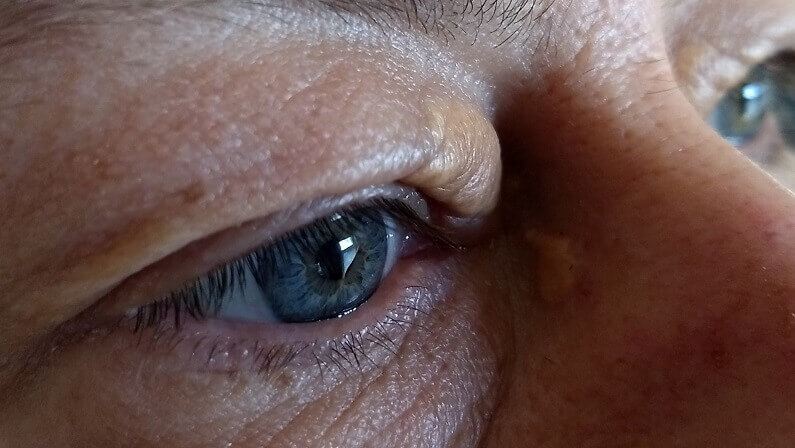
Many people arrive at a page like this after searching for “xanthoma” when what they actually have is the eyelid form, the soft yellow patches known as xanthelasma. If that is you, the situation is far simpler and less worrying than a tendon xanthoma. Eyelid xanthelasma is usually a straightforward cosmetic concern rather than a sign of a serious inherited disorder, though a cholesterol check is still worthwhile.
For the eyelid plaques specifically, Xanthel ® is a cosmetic skincare cream formulated to remove xanthelasma plaques at home. To be clear, it is intended only for eyelid xanthelasma and is not a treatment for an Achilles tendon xanthoma or for the underlying cholesterol disorder that a tendon xanthoma can signal, both of which need proper medical care. If your concern is the eyelid marks, you can read more on why xanthelasma appears or compare the full range of removal options.

The Bottom Line on Achilles Tendon Xanthoma
An Achilles tendon xanthoma is a benign cholesterol lump in the tendon, but its real significance is as a sign of an underlying cholesterol disorder, often familial hypercholesterolemia, which raises cardiovascular risk and needs proper medical attention. So the right first move, if you have firm thickening of your Achilles tendon, is to see a doctor for a lipid check and assessment rather than to reach for any cosmetic fix.
If, on the other hand, your concern turns out to be the common eyelid plaques known as xanthelasma, that is a much simpler, cosmetic matter. You can start with our xanthelasma overview, read about the causes of xanthelasma, or, if removal is what you are after, look at the at-home option made specifically for the eyelid form.
Common Questions About Achilles Tendon Xanthoma
Is an Achilles tendon xanthoma dangerous?
The lump itself is benign and not cancerous. What gives it significance is what it signals, since it is strongly linked to familial hypercholesterolemia, an inherited cholesterol disorder that raises the risk of early heart disease. So while the xanthoma is harmless, its presence is an important prompt to have your cholesterol and heart health assessed by a doctor.
Is an Achilles tendon xanthoma the same as eyelid xanthelasma?
No. They are both cholesterol deposits, but a tendon xanthoma sits deep in the Achilles tendon and usually points to a serious underlying cholesterol disorder, while eyelid xanthelasma is on the eyelids and is generally a cosmetic concern. They are managed completely differently, and a cosmetic cream is only relevant to the eyelid form.
Does an Achilles tendon xanthoma mean I have high cholesterol?
Very often, yes. These deposits are a recognised sign of familial hypercholesterolemia and are typically associated with high LDL cholesterol. A blood test from your doctor is essential to confirm your lipid levels and assess your cardiovascular risk, which is the key reason to get a tendon xanthoma checked.
Can I use a cream to remove an Achilles tendon xanthoma?
No. A tendon xanthoma is deep within the Achilles tendon and is a medical matter tied to an underlying cholesterol disorder, not something any cream can treat. Xanthel ® is a cosmetic cream intended only for eyelid xanthelasma. An Achilles tendon xanthoma needs medical assessment and management of the underlying cause.
Will the lump go away if I lower my cholesterol?
Managing your cholesterol is the priority and protects your heart, and over time it can sometimes reduce the deposits and helps prevent new ones. However, an established tendon xanthoma may not disappear completely with cholesterol control alone. Your doctor will monitor both your lipid levels and the tendon over time.
Do I need surgery for an Achilles tendon xanthoma?
Usually not. Surgery is reserved for cases where the xanthoma is large, painful, or significantly affects how the tendon works, because operating on a weight-bearing tendon carries real risks. For most people, management focuses on controlling the underlying cholesterol with their doctor and monitoring the tendon.
What should I do if I find a lump on my Achilles tendon?
See a doctor for an assessment. Because an Achilles tendon xanthoma can signal an inherited cholesterol disorder with cardiovascular implications, getting your cholesterol checked and the lump evaluated is more important than its appearance. Early diagnosis and management of the underlying condition genuinely improve long-term health.
Xanthel ® is a cosmetic skincare product intended for eyelid xanthelasma, not a medical treatment, and it is not suitable for an Achilles tendon xanthoma. Because a tendon xanthoma can indicate an underlying cholesterol disorder such as familial hypercholesterolemia, it should be assessed by a doctor, who can check your lipids and cardiovascular health and guide your care.