
Eruptive Xanthoma
Sudden Crops of Yellow-Red Bumps, and the Triglyceride Problem Behind Them
Eruptive xanthoma is a skin condition in which small yellow-red bumps appear suddenly, usually driven by very high blood triglycerides. This page explains what it is, why it happens, and why it is a signal to see a doctor.
By Xanthelasma.com
What Is Eruptive Xanthoma?
Eruptive xanthoma is a skin condition in which small, firm, yellow-red bumps appear suddenly, often in crops, on the skin. The bumps are deposits of fatty material, and the word “eruptive” reflects how quickly they tend to appear. They usually measure a few millimetres across, can be slightly tender, and most commonly show up on the buttocks, shoulders, arms, legs, and back, often symmetrically on both sides of the body.
The important thing to understand is that, while the bumps themselves are benign, eruptive xanthoma is essentially a visible warning sign. It is strongly associated with very high levels of triglycerides (a type of blood fat), and so it points to an underlying metabolic problem that needs medical attention. This makes it quite different from the eyelid type of cholesterol deposit, xanthelasma, which is usually just a cosmetic concern. If you were actually looking for information on the eyelid marks, our xanthelasma overview is the page you want. This page focuses on eruptive xanthoma, which is a matter for your doctor.

What Eruptive Xanthoma Looks Like
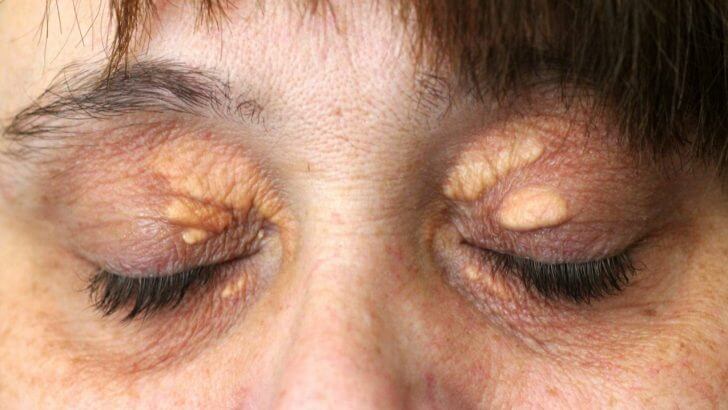
Recognising eruptive xanthoma comes down to a few characteristic features. The bumps are typically small (around one to four millimetres), reddish-yellow in colour from their fatty content, and firm rather than soft. They often have a slightly inflamed reddish base, and they appear in clusters rather than singly. Their sudden onset, sometimes many appearing over a short period, is one of their most distinctive features, as is their tendency to come up symmetrically on both sides of the body.
The usual locations, the buttocks, shoulders, the backs of the arms and legs, and the trunk, also help distinguish them. They can occasionally be itchy or tender, unlike many other harmless skin bumps. Because several other skin conditions can look somewhat similar, this is not something to self-diagnose; the pattern of sudden, clustered, yellow-red bumps is a prompt to get a professional assessment rather than a definitive label you can apply yourself. Our pages on skin xanthomas and the wider xanthomas family give the broader context.
Why Eruptive Xanthoma Happens
The central cause of eruptive xanthoma is a high level of triglycerides in the blood, often very high. When triglycerides rise steeply, the body can deposit fatty material in the skin, producing the characteristic bumps. So the bumps are really a downstream sign of a triglyceride problem, and that problem usually has an identifiable driver.
The most common drivers are poorly controlled diabetes (which disturbs fat metabolism), inherited disorders that raise triglycerides, and lifestyle and dietary factors such as a very high-fat or high-sugar diet, excess alcohol, and being overweight. Certain medications, including some beta-blockers, retinoids, and hormone therapies, can also push triglycerides up, as can thyroid, liver, or kidney conditions. One reason eruptive xanthoma matters so much medically is that the very high triglyceride levels behind it can occasionally trigger pancreatitis, a serious inflammation of the pancreas. This is exactly why it warrants prompt medical evaluation rather than being treated as a skin nuisance.

How It Is Diagnosed
If you have what looks like eruptive xanthoma, a doctor will usually start with a visual examination of the bumps, noting their appearance, size, and distribution, and will ask about your medical history, including any diabetes, family history of lipid problems, recent dietary changes, alcohol use, and medications. The pattern of sudden, clustered, yellow-red bumps is often quite recognisable to a clinician.
The key step, though, is bloodwork. A lipid profile will check triglyceride and cholesterol levels, and is usually the test that confirms the picture, since eruptive xanthoma is so closely tied to very high triglycerides. Blood glucose testing checks for diabetes, and further tests of liver, thyroid, or kidney function may follow depending on the findings. Occasionally, if the diagnosis is unclear, a small skin biopsy is taken to confirm it and rule out other conditions. The purpose of all this is not just to name the bumps but to find and address the metabolic problem behind them.

How Eruptive Xanthoma Is Managed
The most important point about treatment is that it focuses on the underlying cause, not the bumps themselves. Because eruptive xanthoma is driven by high triglycerides, bringing those down is the priority, and encouragingly, the bumps often fade on their own once the triglyceride levels are brought under control. So the management is really the management of the metabolic problem.
That typically means a combination of lipid-lowering medication where appropriate (such as fibrates or other triglyceride-focused treatments), tight control of diabetes if it is present, and dietary and lifestyle changes, reducing saturated fat and refined sugar, moderating alcohol, losing excess weight, and increasing activity. Any contributing medications would be reviewed with the doctor. This is firmly a doctor-led process: eruptive xanthoma is not something to treat at home or with cosmetic products, because the real issue is internal. Our page on the broader xanthoma treatment approach covers how the different types are handled.


Eruptive Xanthoma: The Bottom Line
Eruptive xanthoma is a sudden crop of small, firm, yellow-red bumps, usually on the buttocks, shoulders, and limbs, caused by very high blood triglycerides. The bumps themselves are benign, but they are an important warning sign of an underlying metabolic problem, most often linked to poorly controlled diabetes, inherited lipid disorders, or lifestyle factors, and the high triglycerides behind them can occasionally lead to pancreatitis.
For this reason, eruptive xanthoma should be assessed by a doctor, who will check your triglyceride and glucose levels and address the underlying cause; the bumps often fade once triglycerides are controlled. This is quite distinct from the eyelid type of cholesterol deposit. If the eyelid marks were what you were looking for, our xanthelasma overview and what is xanthelasma pages cover those, and our eruptive xanthoma page covers this condition further.

Common Questions About Eruptive Xanthoma
What is eruptive xanthoma?
Eruptive xanthoma is a skin condition in which small, firm, yellow-red bumps appear suddenly, often in crops, usually on the buttocks, shoulders, and limbs. The bumps are fatty deposits caused by very high blood triglycerides. They are benign in themselves but signal an underlying metabolic problem that needs medical attention.
What causes eruptive xanthoma?
The main cause is very high triglyceride levels in the blood. This is often driven by poorly controlled diabetes, inherited lipid disorders, a high-fat or high-sugar diet, excess alcohol, or being overweight. Some medications and thyroid, liver, or kidney conditions can also raise triglycerides. The bumps are a downstream sign of this triglyceride problem.
Is eruptive xanthoma dangerous?
The bumps themselves are harmless, but the condition is an important warning sign. The very high triglycerides behind it can occasionally trigger pancreatitis, a serious inflammation of the pancreas, and reflect a metabolic problem that raises other health risks. This is why eruptive xanthoma should be assessed and managed by a doctor promptly.
How is eruptive xanthoma different from xanthelasma?
Eruptive xanthoma appears as sudden crops of yellow-red bumps on the body (buttocks, shoulders, limbs) and is driven by very high triglycerides, signalling a metabolic problem. Xanthelasma is a soft yellow cholesterol plaque on the eyelids that is usually just a cosmetic concern. They differ in appearance, location, cause, and significance.
Will eruptive xanthoma go away?
Often, yes, once the underlying cause is treated. Because the bumps are driven by high triglycerides, they frequently fade on their own after triglyceride levels are brought under control through medication, diabetes management, and lifestyle changes. This is why treatment focuses on the metabolic cause rather than the bumps themselves.
How is eruptive xanthoma treated?
Treatment targets the underlying high triglycerides rather than the bumps. This usually involves lipid-lowering medication where appropriate, tight diabetes control if relevant, and dietary and lifestyle changes such as reducing fat and sugar, moderating alcohol, and losing excess weight. The bumps tend to resolve as triglycerides come down. It is a doctor-led process.
Should I see a doctor about eruptive xanthoma?
Yes, promptly. Eruptive xanthoma signals very high triglycerides, which need medical assessment because of the risk of pancreatitis and other complications. A doctor will check your lipid and glucose levels, identify the cause, and arrange treatment. This is not a condition to manage at home or with cosmetic products.
This page is for general information about eruptive xanthoma and is not a substitute for medical advice. Eruptive xanthoma is associated with very high blood triglycerides and can occasionally point to serious issues such as pancreatitis, so if you notice sudden crops of yellow-red bumps, please see a doctor for proper assessment, lipid testing, and management of any underlying cause.