
A Plain Guide to the Yellow Cholesterol Deposits, What They Signal, and How to Deal With Them
Waxy yellow bumps on the skin, especially on the eyelids, are usually xanthomas. This page explains what they are, why they form, when to see your doctor, and what your options are for clearing the visible ones.
By Xanthelasma.com
Understanding Xanthomas: Definition and Overview
Xanthomas are waxy, yellowish deposits of cholesterol that build up in the skin. They can appear almost anywhere, but they show up most often over joints like the knees and elbows, on the tendons, and around the eyes. Their texture ranges from soft to firm, and they vary in size from very small to large enough to be a clear cosmetic concern.
For most people they are simply a visible nuisance. They are not dangerous in themselves, they do not hurt, and they are not contagious. But they can also be a clue about what is happening inside the body, particularly with how it handles fats. Xanthomas appear more often in adults, though they can show up at any age, and they can be a one-off or run in families. The eyelid type, xanthelasma, is the one most people come looking to understand, because it sits on the face where it cannot be hidden, and it is also the type that can be cleared at home rather than at a clinic.

The Science Behind Xanthomas
Xanthomas form when cholesterol and other fats in the blood settle into the skin. When lipid levels run high, those fats get deposited into cells in the skin and tendons, building up into the yellow bumps you can see. That is the simple mechanism behind every type.
The most common driver is raised blood lipids, whether from an inherited tendency, an underactive thyroid, or diabetes. Sometimes the deposits form with no clear change in lipid levels at all, which is especially true of eyelid xanthelasma. This is worth knowing early, because it shapes what works to remove them: if the deposit is not being driven by your cholesterol, then fixing your diet alone may not clear it. Our guide to what causes xanthelasma covers the triggers in more detail.

Causes of Xanthomas
The causes mostly come down to how your body processes fats, and a good deal of it is outside your control. Genetics play a large role. Some people are simply prone to xanthelasma and other deposits through family history, and plenty of people with completely normal cholesterol still develop them. So if you have them, it is rarely about anything you did wrong.
Beyond genetics, raised cholesterol from diet or weight, an underactive thyroid, and diabetes can all contribute, which is why a simple lipid blood test from your doctor is worth doing. Certain medications can shift your lipid levels too. The key takeaway is that the cause sits in your bloodstream and is your doctor’s domain, while the visible bump on your skin is a separate, cosmetic matter you can address on its own. If you want to understand your personal risk, our piece on why xanthelasma develops is a useful read, and how common xanthelasma is shows just how many people are in the same position.
Identifying Xanthomas
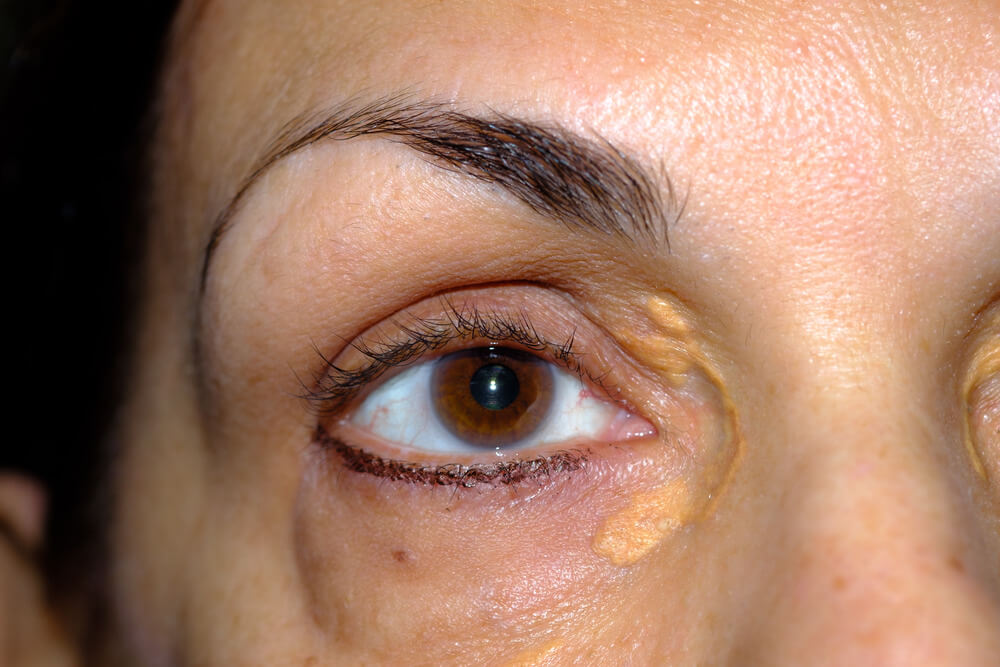
Xanthomas are usually easy to recognize: waxy, yellowish, soft to firm, appearing as bumps or flatter plaques depending on the type. Their size reflects how long they have been forming. On the eyelids, xanthelasma typically shows as soft yellow patches near the inner corner, often on both eyes, and they tend to grow or multiply slowly if left alone.
A doctor can usually confirm a xanthoma on sight, and may suggest a lipid panel to check what is happening underneath. The diagnosis itself is rarely in doubt. Where the type matters is in what you do next: eyelid xanthelasma responds well to targeted cosmetic removal, whereas deposits over tendons or joints are more about managing the underlying lipid disorder. Knowing which you have tells you which path makes sense.

Cerebrotendinous Xanthomatosis
Cerebrotendinous xanthomatosis (CTX) is a rare inherited disorder in which cholesterol builds up abnormally in tissues including the brain and tendons, producing xanthomas. It is genuinely uncommon, but worth a brief mention because it sits in the wider family of these conditions.
Unlike ordinary xanthelasma, CTX affects multiple body systems and can cause neurological and eye-related problems, so it needs specialist medical care rather than any cosmetic approach. If you have firm nodules over your tendons alongside symptoms like early cataracts or neurological changes, see a doctor promptly. For the great majority of people reading this, though, the deposits are the common, harmless kind. The broader group of these conditions is covered in our page on xanthomatosis.


Xanthoma and Heart Disease
This is the one genuinely important health point on the page. Because xanthomas are made of cholesterol, they can sometimes be an outward sign of raised lipids, which in turn are linked to cardiovascular risk. The bumps themselves are harmless, but what they occasionally signal is worth checking.
That is why a quick lipid test is a sensible step if you notice xanthomas. If your numbers are raised, your doctor can advise on diet, lifestyle, or medication, which protects your heart regardless of the deposits. Keep the two things separate in your mind, though: looking after your cholesterol is about your long-term health, while clearing the visible deposit is a cosmetic job that does not always follow automatically from better blood results, especially with eyelid xanthelasma.

Eruptive Xanthomatosis
Eruptive xanthomatosis is a specific type that appears suddenly as a crop of small yellow-red bumps, usually on the buttocks, shoulders, arms, and legs. The bumps can be tender or itchy, and their sudden arrival is the giveaway that sets them apart from slower-forming types.
They are strongly tied to very high triglycerides, often linked to poorly controlled diabetes, so their appearance is a clear prompt to get your blood lipids and glucose checked. The good news is that once the underlying cause is managed, they usually clear without scarring. This is a type where the medical side leads, rather than a cosmetic one.

Treatment Options for Xanthomas
How you treat xanthomas depends on the type and where they sit. For deposits driven by a lipid disorder, the foundation is managing that underlying cause with your doctor, through diet, lifestyle, and lipid-lowering medication where appropriate. That can reduce some deposits over time and helps prevent new ones.
For eyelid xanthelasma specifically, there is a choice between clinical removal and an at-home cosmetic approach. Clinical options performed at a clinic, surgery, laser, cryotherapy, and acid treatments, can work, but they tend to be expensive, may need recovery time, and carry a risk of scarring on the delicate eyelid skin. The at-home alternative is a cosmetic cream. Xanthel ® is a cosmetic skincare cream formulated to remove xanthelasma plaques at home, without the cost, scarring risk, or downtime of a clinic procedure, and one application is usually all it takes. If you want to weigh everything side by side, our full range of removal options lays them out honestly.

Living with Xanthomas
Day to day, the medical side of living with xanthomas is about keeping your lipids healthy: a balanced diet, a healthy weight, regular activity, not smoking, and keeping up with your doctor’s checks. These habits support your overall health and may slow new deposits forming. Our guidance on managing xanthelasma at home goes further on the daily routine.
The other side of living with them is how they make you feel. A visible mark on the face affects people more than they expect, from avoiding photos to feeling self-conscious in person. The deposits are harmless, but wanting them gone is completely reasonable, and clearing them does not have to mean a clinic. For the eyelid plaques, the cosmetic cream we make is designed to remove them at home, on your own schedule, so the simple plan for most people is to look after the underlying causes with your doctor and let Xanthel ® handle the visible deposits.

In Reflection
Xanthomas are harmless cholesterol deposits, and the eyelid type, xanthelasma, is the one most people want gone for the way it looks. The sensible approach is twofold: get a quick lipid check with your doctor to rule out any underlying cause, then deal with the visible deposits directly. For the eyelid plaques, you do not need surgery or a clinic to do that. You can read more across our xanthelasma information library, or see how long xanthelasma lasts if you want a sense of timelines before deciding.
Frequently Asked Questions
What is the difference between a xanthoma and xanthelasma?
Xanthoma is the umbrella term for waxy cholesterol deposits that can form anywhere on the body, including over tendons and joints. Xanthelasma is the specific type that forms on or around the eyelids. So all xanthelasma deposits are xanthomas, but not all xanthomas are xanthelasma.
Are xanthomas dangerous?
The deposits themselves are benign and painless. What matters is what they can signal, since they sometimes point to raised cholesterol, thyroid changes, or diabetes. The bump is harmless, but it is worth a quick lipid test with your doctor to check your overall cardiovascular and metabolic health.
Will lowering my cholesterol make xanthomas disappear?

Sometimes, but often not on its own. When deposits are driven by high blood lipids, getting those under control can help some fade over time. Eyelid xanthelasma in particular does not always track with cholesterol, so it can persist even when your blood tests come back normal, which is why clearing it usually needs a direct cosmetic approach.
Can xanthelasma on the eyelids be removed without surgery?
Yes. Alongside clinical options like surgery, laser, and cryotherapy, there is an at-home route. Xanthel ® is a cosmetic skincare cream formulated to remove xanthelasma plaques at home, offering an alternative without the cost, scarring risk, or downtime of a clinic procedure. One application is usually all it takes, and the formula is designed to support visible long-term results.
Do xanthomas come back after removal?
They can, particularly if an underlying lipid issue is left unaddressed. That is why the two-sided approach works best: manage your cholesterol and any related condition with your doctor to reduce the chance of new deposits, while a cosmetic removal clears the ones already there.
Are xanthomas hereditary?
They can be. A tendency to form these deposits often runs in families, and some inherited conditions raise the likelihood, especially when xanthomas appear early in life. If they or lipid disorders run in your family, it is worth mentioning to your doctor.
Why did I get xanthelasma when my health is otherwise fine?
This is very common. Many people with xanthelasma have completely normal cholesterol, and genetics plays a big part. It is rarely about anything you did wrong. A lipid test is still worth doing to be sure, but plenty of cases simply come down to a personal tendency to form the deposits.
Is it normal to feel self-conscious about xanthomas?
Completely. The deposits are harmless, but because the eyelid ones sit on your face, most people want them gone for cosmetic reasons, and they can affect your confidence in photos and in person. Wanting to clear them is a reasonable choice, and there is a gentle at-home option made specifically for the eyelid form.
Xanthel ® is a cosmetic skincare product and is not a medical treatment. Xanthelasma can sometimes indicate underlying lipid, thyroid, or cardiovascular factors worth discussing with your doctor. We always recommend a conversation with your GP for a full picture of your health alongside any cosmetic approach.
Disclaimer (add at the very end of the post):
Xanthel ® is a cosmetic skincare product and is not a medical treatment. Xanthelasma can sometimes indicate underlying lipid, thyroid, or cardiovascular factors worth discussing with your doctor. We always recommend a conversation with your GP for a full picture of your health alongside any cosmetic approach.