
Do Xanthelasma Creams Work, And Which Kind Should You Use?
Some xanthelasma creams work and most don’t. A cream made specifically for xanthelasma, applied straight to the plaque, can clear the yellow cholesterol deposits on your eyelids at home. Ordinary eye creams, moisturizers and kitchen remedies can’t. Here’s how to tell the difference, how to use a xanthelasma cream safely, and how it compares with clinic options.
A xanthelasma cream only works if it’s made for xanthelasma and applied directly to the plaque, like Xanthel®. General eye creams and moisturizers can’t reach the cholesterol inside the skin, and DIY remedies such as garlic or vinegar have no good evidence behind them and can burn the delicate eyelid skin.
Key Takeaways
- Only creams made specifically for xanthelasma can clear the plaques.
- Normal eye creams and moisturizers can’t remove a cholesterol deposit.
- Garlic, vinegar and other DIY remedies can cause chemical burns.
- A purpose-made cream is the least invasive, lowest-cost way to remove xanthelasma.
- No cream fixes the cause, so a cholesterol check is still worth doing.
On This Page 13 sections
What Is A Xanthelasma Cream?
A xanthelasma cream is any cream sold to improve or remove xanthelasma, the soft yellow cholesterol plaques on the eyelids. The label covers very different products, and only one kind is actually made to remove the plaques.
Search for “xanthelasma cream” and you’ll find everything from luxury eye serums to homemade garlic pastes, all promising to fade the yellow patches. That’s why so many people end up disappointed. It helps to sort them into four groups:
- Purpose-made xanthelasma removal creams. Formulated specifically for xanthelasma and applied only to the plaque, with clear instructions and a healing phase. Xanthel® is in this group.
- General eye creams and moisturizers. Made to hydrate, firm or brighten the skin around the eyes. They’re pleasant to use, but they’re not designed to touch a cholesterol deposit.
- DIY and “natural” remedies. Garlic, apple cider vinegar, castor oil and similar kitchen-cupboard ideas shared online.
- Acids applied at a clinic. Strong chemical peels such as trichloroacetic acid (TCA), which a doctor applies in the clinic. These aren’t creams you buy and use yourself.
Only the first group is a true at-home xanthelasma cream. If you’re not yet sure the marks on your eyelids are xanthelasma, start with what xanthelasma is and what can be mistaken for xanthelasma before choosing anything.

Do Xanthelasma Creams Actually Work?
A purpose-made xanthelasma cream applied to the plaque can clear it. General skincare can’t, because xanthelasma is a cholesterol deposit inside the skin, not a mark on the surface.
To see why, it helps to know what a plaque is made of. Xanthelasma forms when cholesterol-filled cells build up in the skin of the eyelid, most often near the inner corner. It’s common, affecting around 1.1% of women and 0.3% of men, usually from their mid-thirties to mid-fifties.[1] Because the deposit sits within the skin, anything that only works on the surface, like a moisturizer, simply never reaches it.
A cream made for xanthelasma removal works differently. It’s applied only to the plaque, and that patch of skin then goes through a short healing phase as the yellow patch comes away and new skin forms underneath. That’s the same basic idea behind the acid peels used in clinics, which are applied by a doctor in the clinic, though no two products are the same.[2]
So the honest answer to “do xanthelasma creams work?” is: the right kind can, the wrong kind won’t. Results vary from person to person, and the size and depth of the plaque matter. Small and medium plaques are the best fit for a cream; very large or thick ones may need a clinic.

Why Won’t A Normal Eye Cream Or Moisturizer Work On Xanthelasma?
Because eye creams and moisturizers are made to care for the surface of the skin. They don’t remove anything, so a cholesterol plaque sitting inside the eyelid stays exactly where it is, however long you use them.
It’s an easy mistake to make. Xanthelasma sits around the eyes, so an eye cream feels like the logical answer, and many products talk about “brightening” or “evening out” the skin. But those claims are about tone and texture on the surface. Retinol, vitamin C, peptides and hyaluronic acid can all make eyelid skin look fresher, yet none of them is designed to clear a cholesterol deposit.
Some people also try heavy concealer or color-correcting creams. Those can make the yellow look softer for the day, and our guide to covering xanthelasma with makeup shows how. They’re a disguise, though, not a way to remove xanthelasma, and the plaque is still there when you wash it off.

Are Natural And DIY Xanthelasma Creams Safe?
No. There’s no good evidence that garlic, vinegar, castor oil or other home remedies clear xanthelasma, and some of them can cause chemical burns, which is a real risk on thin eyelid skin right next to the eye.
Homemade xanthelasma creams are all over the internet, and it’s understandable why they appeal: they’re cheap and feel natural. But natural doesn’t mean gentle. A systematic review of 39 reported cases found that raw garlic held against the skin caused burns, most of them second-degree, with some leaving scars, especially on the face.[3]
Vinegar carries the same problem. Dermatologists have reported chemical burns from apple cider vinegar used in online “self-removal” routines for skin marks, warning that it can scar and darken the skin.[4] Castor oil is gentler, but we couldn’t find any published research showing it clears xanthelasma.
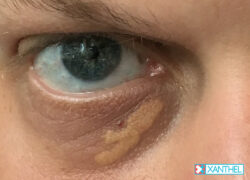
On your eyelids, a burn is the last thing you want: the skin is among the thinnest on your body, it scars easily, and any liquid can run into the eye. If you’d like a home route, choose a cream made for xanthelasma rather than a kitchen experiment. Our page on getting rid of xanthelasma without surgery covers the safer options.

What Should You Look For In A Xanthelasma Cream?
Look for a cream made specifically for xanthelasma removal, designed for use on the eyelid, with clear step-by-step instructions, an honest description of the healing phase, and real support if you have questions.
Before you buy any xanthelasma cream, run it through a quick checklist:
- Made for xanthelasma. Not a general eye cream relabeled, and not a “for all blemishes” product.
- Designed for the eyelid. The instructions should explain how to keep it on the plaque and away from the eye and surrounding skin.
- Clear about the healing phase. A cream that removes a plaque will leave the area red and healing for a short time. A product that promises nothing will happen to your skin isn’t removing anything.
- Honest claims. Be wary of words like “guaranteed”, “permanent” or “no scarring”. No method, clinic or cream, can honestly promise those.
- Proper instructions and support. A printed guide and someone to contact if you’re unsure.
If you’re comparing purpose-made products, our guides to xanthelasma removal cream and choosing a cream for xanthelasma go into more detail.

How Do You Use A Xanthelasma Cream?
You apply a small amount of the cream only to the plaque, on clean, makeup-free skin, follow the timing in the supplied guide, then let the area heal over about one to two weeks.
Every purpose-made xanthelasma cream comes with its own instructions, and following them closely matters more than anything else. With Xanthel®, the process looks like this:
- Prepare the skin. Remove makeup and cleanse the eyelid so the plaque is clean and dry.
- Apply to the plaque only. Use a small amount exactly as the guide shows, keeping it on the yellow patch and off the surrounding skin and away from the eye.
- Follow the timing. Leave it for the time the guide sets out, then rinse gently.
- Let the skin heal. Keep the area clean while it goes through its healing phase.
- Go again on a larger plaque if needed. There’s enough cream for a second application on a bigger or thicker mark.
Take your time, work in good light, and if you have plaques on both eyes, follow the guide on doing one area at a time. Our step-by-step guide to how to remove xanthelasma at home covers the whole routine.
If a cream made for xanthelasma sounds like the right route for you, this is the one we make.

What Happens To Your Skin After Using A Xanthelasma Cream?
Expect the plaque to go red, form a light crust and then come away, with new pink skin underneath that settles toward your normal tone over the following weeks.
This healing phase is a normal part of how a xanthelasma cream removes the plaque, and knowing what to expect makes it much easier. Over roughly one to two weeks, the area typically goes through redness, then a thin crust, then fresh skin. The new skin often looks pinker than the rest of your eyelid at first, and that difference usually fades gradually.
A few habits help the skin heal well:
- Leave the crust alone and let it come away by itself.
- Keep makeup off the area until the skin has fully closed over.
- Keep it clean and dry, and use an antibacterial cream if the guide advises it.
- Protect the new skin from strong sun with sunglasses or a hat.
If the area becomes very swollen, painful or looks infected, speak to a pharmacist or doctor. For a fuller picture of healing after every method, see our guide to the removal of xanthelasma.

Is A Xanthelasma Cream Better Than Clinic Options?
For small and medium plaques, a purpose-made xanthelasma cream is the less invasive, lower-cost and more convenient choice. Clinic methods such as surgery and laser are better suited to very large, thick or unusual plaques.
Clinic options do work. In a 2023 review of 49 studies, CO2 laser improved plaques by more than 75% in over 90% of people, and it outperformed TCA acid peels in head-to-head comparisons; changes in skin color were the most common side effect across methods.[2] Surgery can clear large plaques in one go, but on eyelid skin it carries a risk of scarring and of pulling the lid out of shape.[1]

The trade-off is cost, appointments and recovery. Clinic removal is usually seen as cosmetic, so insurance rarely helps, and laser or freezing often take more than one session. Our guide to how much xanthelasma removal costs goes into the numbers. Here’s how the main routes compare:
Xanthelasma Cream Vs Other Options
| Option | Made For Xanthelasma? | Where | Cost | Main Risks |
|---|---|---|---|---|
| Xanthel® xanthelasma cream | Yes | At home | $169, one purchase | Redness and a short healing phase; results vary |
| General eye cream or moisturizer | No | At home | Varies | Won’t remove the plaque |
| Garlic, vinegar and DIY remedies | No | At home | Low | Chemical burns, scarring, no evidence it works |
| TCA acid peel | Used for it | Clinic | Moderate, often repeat sessions | Color changes, scarring |
| CO2 or Er:YAG laser | Used for it | Specialist clinic | High, often several sessions | Color changes, scarring |
| Surgical excision | Used for it | Clinic or hospital | Highest | Scarring, pulling of the lid |
If you’d like the full clinical detail on each method, our page on clinical options for xanthelasma covers them in depth.

Who Is A Xanthelasma Cream Right For?
A xanthelasma cream suits most people with typical small to medium plaques who want to avoid clinics. Anyone with unusual marks, or plaques that are very large, thick or right on the lash line, should see a doctor first.
A Cream Suits You If
- Your plaques are small to medium and soft
- A doctor has confirmed they’re xanthelasma
- You want the lowest-cost route
- You’d rather avoid needles, stitches and appointments
See A Doctor First If
- The marks are hard, bleeding or changing quickly
- They’re very large, thick or right on the lash line
- You’re not sure they’re xanthelasma
- You’ve never had your cholesterol checked
Plenty of people start with a cream and keep clinic options in reserve for anything a cream doesn’t suit. If you’re weighing up home removal more broadly, our guide to xanthelasma home removal walks through it.

Does A Xanthelasma Cream Stop It Coming Back?
No cream or clinic method can promise xanthelasma won’t come back. Removal clears the visible plaque, not the process behind it, so new plaques can form later.
Recurrence happens after every kind of removal. Clinical reviews put it at under 50% overall, rising to around 60% for plaques that have already been removed once, with deeper plaques coming back more often.[1] That’s one reason many people like a cream as their first step: if a new plaque appears later, dealing with it again at home is far simpler than booking another procedure.
About half of adults with xanthelasma have abnormal blood fats, which means about half have normal cholesterol.[1] Either way, a simple blood test with your doctor is worth doing alongside any removal, and managing your cholesterol is good for your wider health. Read more about the causes of xanthelasma and whether xanthelasma can come back.

What’s The Bottom Line On Xanthelasma Cream?
A xanthelasma cream works only if it’s made for xanthelasma and used on the plaque as directed; general eye creams and DIY remedies won’t remove it, and some can harm your skin.
If you have typical yellow plaques on your eyelids and want to avoid clinics, a purpose-made cream is the least invasive and most affordable way to deal with them. Have a quick cholesterol check with your doctor, follow the guide closely, and give your skin a week or two to heal. Xanthel® is a cosmetic cream made for xanthelasma removal at home, sold by Xanthelasma.com. You’ll find it at the foot of this page, or read more about Xanthel® xanthelasma cream and browse our other xanthelasma guides.
Common Questions About Xanthelasma Cream
Is There A Cream That Removes Xanthelasma?
Yes, if it’s made specifically for xanthelasma and applied to the plaque, like Xanthel®. General moisturizers, eye creams and DIY remedies won’t remove it. After using a purpose-made cream, the skin usually heals over one to two weeks.
Do Xanthelasma Creams Actually Work?
Purpose-made xanthelasma creams can clear the plaques, but ordinary skincare can’t, because xanthelasma is a cholesterol deposit inside the skin rather than a surface mark. Results vary with the size and depth of the plaque.
Can I Use A Normal Eye Cream Or Moisturizer On Xanthelasma?
You can, but it won’t clear xanthelasma. Eye creams and moisturizers care for the skin’s surface and don’t reach the cholesterol deposit. Makeup can disguise the yellow for the day, but it doesn’t remove anything.
Are Natural Or DIY Xanthelasma Creams Safe?
They’re best avoided. There’s no good evidence that garlic, vinegar or castor oil clears xanthelasma, and garlic and vinegar have caused chemical burns on skin, which is a serious risk next to the eye.
How Do You Use A Xanthelasma Cream?
Apply a small amount only to the plaque on clean, makeup-free skin, keep it off the surrounding skin and away from the eye, follow the timing in the guide, then rinse gently and let the area heal.
Is A Xanthelasma Cream Better Than Surgery Or Laser?
For typical small to medium plaques, a cream is less invasive, cheaper and more convenient. Very large, thick or unusual plaques may be better suited to a clinic, so check with a doctor if you’re unsure.
How Long Does A Xanthelasma Cream Take To Work?
Most of the visible change happens during the healing phase, which usually takes about one to two weeks. The new skin can look pinker at first and gradually settles toward your normal tone.
Does A Xanthelasma Cream Stop The Marks Coming Back?

No. A cream clears the visible plaque but not the cause behind it, so new plaques can form. A cholesterol check with your doctor is worth doing alongside any removal.
Sources
- Blair K. Xanthelasma Palpebrarum. StatPearls, National Library of Medicine (NCBI Bookshelf), updated 2026.
- Malekzadeh H, Ormseth B, Janis JE. A Practical Review of the Management of Xanthelasma Palpebrarum. Plastic and Reconstructive Surgery Global Open, 2023;11(5):e4982.
- Hitl M, Kladar N, Gavaric N, Srdenovic Conic B, Bozin B. Garlic burn injuries: a systematic review of reported cases. American Journal of Emergency Medicine, 2021.
- Feldstein S, Afshar M, Krakowski AC. Chemical Burn from Vinegar Following an Internet-based Protocol for Self-removal of Nevi. Journal of Clinical and Aesthetic Dermatology, 2015;8(6).