
Palmar Xanthoma
Yellow Deposits on the Palms, What They Mean and Why They Need a Doctor
Palmar xanthomas are yellow-orange cholesterol deposits on the palms and finger creases. They are an important marker of an underlying lipid disorder. This page explains what they signal and why prompt medical assessment matters.
By Xanthelasma.com
What Palmar Xanthomas Are
Palmar xanthomas are yellowish-orange deposits of cholesterol-rich material that form on the palms of the hands and along the creases of the fingers. They can appear as flat patches or slightly raised plaques and nodules, often in a symmetrical pattern, and are usually soft to firm to the touch. While the deposits themselves are benign, their location and type carry real significance.
It is worth being clear from the outset that this is a different matter from the eyelid condition many people are searching for. If your concern is soft yellow patches on your eyelids, that is xanthelasma, a usually cosmetic issue covered on our xanthelasma overview. Palmar xanthomas, by contrast, sit on the hands and are strongly linked to specific, often inherited, disorders of how the body handles fats, which means they genuinely warrant medical assessment rather than any cosmetic approach. The wider family of these deposits is explained on our xanthomas page.

Why They Matter: A Strong Marker of Lipid Disorders
The most important thing to understand about palmar xanthomas is what they can signal. They are particularly associated with a condition called familial dysbetalipoproteinemia (also known as type III hyperlipoproteinemia), an inherited disorder of lipid metabolism, and they can also point to familial hypercholesterolemia and other causes of significantly raised blood fats. In other words, deposits on the palms can be an outward clue to a significant, treatable disorder happening inside the body.
This is why palmar xanthomas should be taken seriously and assessed by a doctor. The conditions they signal can substantially raise the risk of cardiovascular disease, and in some cases pancreatitis, so identifying and managing them genuinely matters. Their appearance often comes before such a disorder has been formally diagnosed, which means recognising them can lead to catching something important early. This is firmly a situation for medical care, not self-treatment or a cosmetic product. Our pages on tendon xanthomas and eruptive xanthomas cover other deposit types that carry similar significance.
What Causes Palmar Xanthomas
Palmar xanthomas form when cholesterol and other fats accumulate in the skin of the palms, and the underlying drivers are usually significant. Genetics play a central role, the inherited lipid disorders mentioned above are the classic causes, and a family history of high cholesterol or early heart disease is an important clue. On top of that, conditions such as diabetes, an underactive thyroid, and pancreatitis can contribute, and lifestyle factors like a high-fat diet and excess weight can make matters worse.
Because so many of these drivers are systemic, palmar xanthomas are treated by doctors as a window into what is happening in the bloodstream rather than just a skin finding. That is exactly why a proper work-up matters: identifying the specific lipid abnormality behind the deposits is what guides effective treatment. Establishing whether an inherited disorder is present, and assessing overall cardiovascular risk, is the priority, and it is something only a medical assessment can do.

How They Are Diagnosed and Managed
A doctor will usually begin with a physical examination of the deposits and a careful review of your personal and family medical history, since the inherited link is so significant. The cornerstone of the work-up is blood testing, a full lipid profile measuring cholesterol, triglycerides, and the various lipoproteins, sometimes with more detailed lipoprotein analysis or genetic testing where an inherited disorder is suspected. Occasionally a skin biopsy is used to confirm the diagnosis.
Management centres firmly on the underlying lipid disorder rather than the appearance of the deposits. This typically means lipid-lowering treatment such as statins or fibrates prescribed by your doctor, alongside dietary changes, regular exercise, weight management, and not smoking. Bringing the blood fats under control protects your cardiovascular health and, over time, can sometimes reduce the deposits themselves. This is a long-term, doctor-led process, and regular monitoring of your lipid levels and overall health is an important part of it. Removal of the deposits for cosmetic reasons is a secondary consideration and, if relevant at all, a matter to raise with your medical team.
If You Were Looking for the Eyelid Type
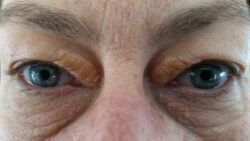
Many people arrive at a page like this after searching broadly for “xanthoma” when what they actually have is the eyelid form, the soft yellow patches known as xanthelasma. If that is your situation, it is far simpler and less worrying than palmar xanthomas. Eyelid xanthelasma is usually a straightforward cosmetic concern rather than a sign of a serious inherited disorder, though a cholesterol check is still worthwhile.
If your concern is the eyelid marks specifically, you can read about them on our xanthelasma overview, learn what causes xanthelasma, or see what xanthelasma looks like to confirm that is what you are dealing with. For anything involving deposits on the palms or hands, however, a doctor’s assessment is the right first step.

The Bottom Line on Palmar Xanthoma
Palmar xanthomas are benign yellow-orange cholesterol deposits on the palms and finger creases, but their real significance lies in what they signal: a notable, often inherited, lipid disorder that raises cardiovascular and other health risks and needs proper medical attention. So the right response, if you have yellow deposits on your palms, is to see a doctor for a lipid work-up and assessment rather than to reach for any cosmetic fix.
If, on the other hand, your concern turns out to be the common eyelid plaques known as xanthelasma, that is a much simpler, cosmetic matter. You can start with our xanthelasma overview or the broader picture on xanthomas. For deposits on the palms, please see your doctor.

Common Questions About Palmar Xanthoma
Are palmar xanthomas dangerous?
The deposits themselves are benign and not cancerous. What gives them significance is what they signal, since they are strongly linked to inherited lipid disorders such as familial dysbetalipoproteinemia, which can substantially raise cardiovascular risk and sometimes the risk of pancreatitis. That is why palmar xanthomas should be assessed by a doctor.
Are palmar xanthomas the same as eyelid xanthelasma?
No. They are both cholesterol deposits, but palmar xanthomas form on the palms and finger creases and usually point to a significant underlying lipid disorder, while eyelid xanthelasma is on the eyelids and is generally a cosmetic concern. They are managed very differently, and a cosmetic cream is only relevant to the eyelid form.
What do palmar xanthomas indicate?
They are particularly associated with familial dysbetalipoproteinemia (type III hyperlipoproteinemia), an inherited lipid disorder, and can also point to familial hypercholesterolemia or other causes of raised blood fats. Finding them is an important prompt for a full lipid work-up and cardiovascular risk assessment by a doctor.
Can I remove palmar xanthomas with a cream?
No. Palmar xanthomas are a medical matter tied to an underlying lipid disorder, not something a cosmetic cream is intended for. They need medical assessment and management of the underlying cause. Any consideration of removing the deposits themselves is a secondary matter to raise with your medical team.
Will palmar xanthomas go away if I lower my cholesterol?
Managing the underlying lipid disorder is the priority and protects your wider health, and over time bringing blood fats under control can sometimes reduce the deposits. However, this is a long-term, doctor-led process, and the focus is on treating the underlying condition rather than the appearance of the deposits.
What kind of doctor should I see about palmar xanthomas?
Start with your usual doctor, who can examine the deposits, take a history, and arrange a lipid blood test. Depending on the findings, they may involve specialists such as a lipid specialist (lipidologist), endocrinologist, or cardiologist to manage the underlying disorder and assess your cardiovascular risk.
What should I do if I find yellow deposits on my palms?
See a doctor for an assessment. Because palmar xanthomas can signal an inherited lipid disorder with cardiovascular implications, getting your blood fats checked and the deposits evaluated is more important than their appearance. Early diagnosis and management of the underlying condition genuinely improve long-term health.
Palmar xanthomas can indicate a significant, often inherited, lipid disorder, so they should always be assessed by a doctor, who can arrange the right tests and guide your care. This page is for general information and is not a substitute for medical advice.