
Xanthelasma.com publishes plain-English, fully sourced guides to xanthelasma and sells Xanthel®, a cosmetic cream made for removing small to medium eyelid plaques at home. We’re run by BGI Northern Limited. We always advise a doctor’s check for the cause first, and we say when clinic removal suits you better.
Key Takeaways
- We’re an information site first, with guides that answer one question each.
- Every medical fact is tied to a numbered scholarly or government source.
- We never cite clinics, commercial health sites or Wikipedia.
- Xanthel® is a cosmetic cream for small to medium eyelid plaques.
- We always recommend a doctor’s check for the cause first.
- Xanthel® is $169 with free international delivery.
On This Page 16 sections
Who Is Xanthelasma.com?
An information site and online shop dedicated to one condition: xanthelasma. We publish guides that answer the questions people ask about it, and we make and sell Xanthel®, a cosmetic cream made for xanthelasma removal at home. The site is run by BGI Northern Limited.
Most people arrive here after noticing yellow spots on their eyelids and searching for answers. Some want to know what the marks are; some want to know whether they mean something serious; some want them gone. We try to answer all three honestly, in that order, because understanding the cause matters before deciding what to do about the plaques.
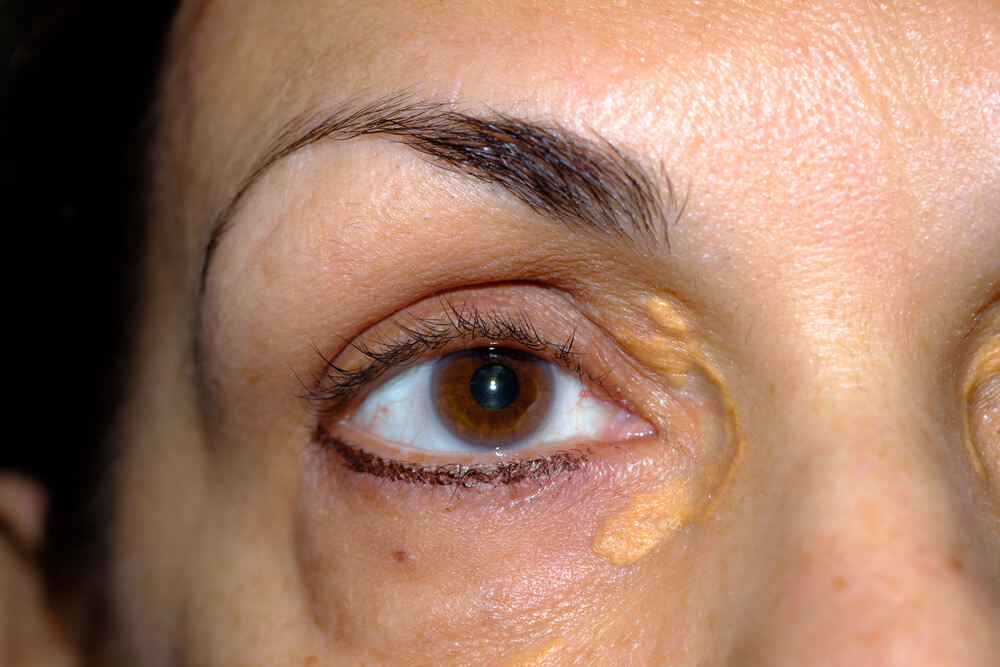
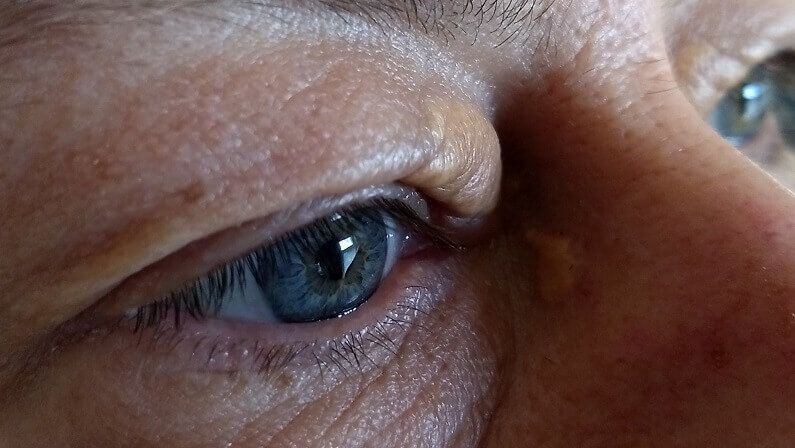
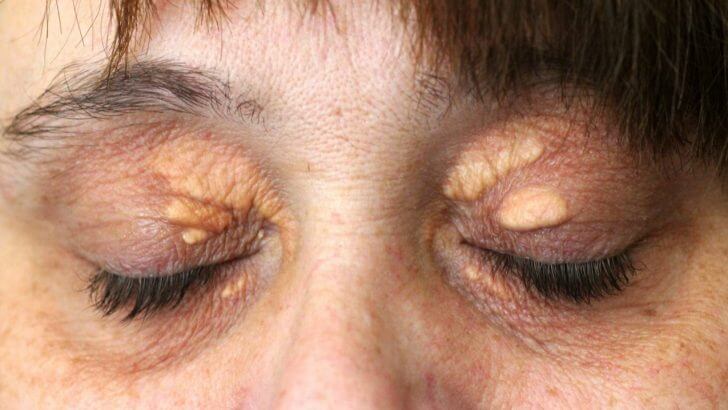
If you’re new to the condition, start with our complete xanthelasma guide or our page on what xanthelasma is.
Why Do We Focus Only On Xanthelasma?
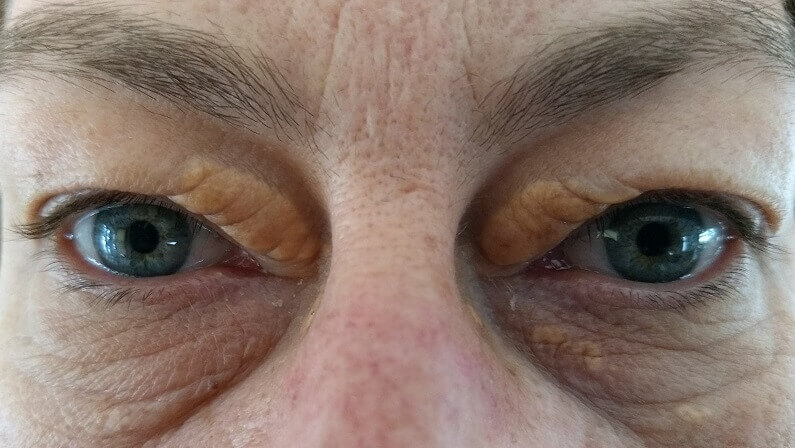
Because it’s common, visible and widely misunderstood. It affects about 1.1% of women and 0.3% of men, it shows on the most noticeable part of the face, and the internet is full of advice that ranges from unsourced to dangerous.
StatPearls, the National Library of Medicine’s clinical reference, describes xanthelasma as benign plaques of cholesterol-filled cells in the eyelid skin, linked with a lipid disorder in about half of people, which rarely resolve by themselves.[1] In a study of almost 13,000 people, xanthelasma was linked with a higher risk of heart attack and heart disease, even after allowing for cholesterol.[3]
That combination, a harmless-looking mark that can point to something worth checking, is why we think a dedicated, careful resource is useful. Our page on the causes of xanthelasma explains the health side.

What Does Xanthelasma.com Publish?
Around 155 guides, each answering one question people search for, from what xanthelasma is and what causes it to whether it’s dangerous, how it’s removed and whether it comes back. Related guides link to each other so you can go as deep as you like.
- What it is. Definitions, pictures, look-alikes and where it appears.
- Causes and health. Cholesterol, inherited conditions, heart risk and the tests to ask for.
- Removal. Every clinic method and the at-home route, compared honestly.
- Related conditions. Other types of xanthoma on the body, which are information only.
- Everyday questions. Covering it with makeup, whether it spreads, how fast it grows.
You can browse every guide in Xanthelasma Guides or read our quick xanthelasma facts.

How Do We Research Our Xanthelasma Guides?
From scholarly and authoritative sources only: US government health bodies such as the National Institutes of Health and the National Library of Medicine, peer-reviewed medical journals, and professional medical bodies. Every medical figure or claim carries a numbered citation linking to the source.
- Find the evidence. We search the medical literature for studies and clinical references on the question.
- Go to the permanent record. We link to the PubMed, PMC or NCBI Bookshelf record or the journal’s own page.
- Verify before citing. We only cite what we’ve confirmed from the source itself.
- Cite every claim. A numbered marker after each figure or medical statement links to the full reference.
- Correct the record. When we rebuild a page, we fix anything older versions got wrong or left unsourced.
We never cite clinics, companies, commercial health websites or Wikipedia, and where something is our own finding rather than published evidence, we say so plainly.

What Are Our Editorial Principles?
Answer first, plainly. Back every medical fact. Never overpromise. Tell people when something else would suit them better. And keep pages about other medical conditions free of selling.
- Answer first. Each section opens with a direct answer, then the detail.
- Plain English. Medical terms are explained the first time they appear.
- No overpromising. We never claim a method is permanent, guaranteed or scar-free, because no method is.
- Honest comparisons. We say when laser or surgery would suit you better than home removal.
- No selling on purely medical pages. Guides to conditions other than eyelid xanthelasma carry no product at all.
For example, StatPearls gives recurrence after any removal method as generally under 50%, and we say so on every removal page rather than implying plaques never return.[1]
Why Do We Always Send You To A Doctor First?
Because removing plaques does nothing for what may be behind them. About half of people with xanthelasma have a lipid disorder, and xanthelasma is linked with higher heart risk, so a blood test matters more than how your eyelids look.
StatPearls recommends a fasting lipid profile, liver panel, thyroid function and fasting glucose.[1] Normal results are common: in one clinic study, 54.8% had normal total cholesterol, though their HDL was lower than in people without xanthelasma.[2] A doctor can also confirm that what you have is xanthelasma and not a look-alike.
That’s why every eyelid guide, and every Xanthel® recommendation, starts with the check. Our page on whether xanthelasma indicates raised cholesterol explains the tests.

Why Do We Make Xanthel®?
Because the options for getting rid of xanthelasma were almost all clinic-based: laser, surgery, peels or freezing, each needing appointments, usually paid for privately since insurers see removal as cosmetic. We wanted to offer a purpose-made route for people with typical eyelid plaques to remove them at home.
Clinic methods work well, and we say so: a 2023 review of 49 studies found CO2 laser gave more than 75% improvement in over 90% of patients.[4] But not everyone can reach a specialist or wants clinic sessions for a benign, cosmetic mark. Meanwhile, the home remedies people were trying, like garlic and vinegar, were causing burns.[5][6]
Xanthel® is our answer: a cosmetic cream made specifically for xanthelasma removal at home, with clear instructions and support. Our xanthelasma cream guide explains how creams compare.

What Is Xanthel®, And What Isn’t It?
It is a cosmetic cream made for xanthelasma removal at home, applied only to the plaque. It isn’t a medical product, doesn’t address cholesterol or any condition behind the plaques, and isn’t for xanthomas elsewhere on the body.
What It Is
- A cosmetic cream for eyelid xanthelasma
- Applied only to the plaque, at home
- One application per plaque, with enough for a second on larger ones
- About one to two weeks of healing
What It Isn’t
- A medical product or a cholesterol medicine
- For xanthomas on the body
- For large, deep or lid-edge plaques
- A substitute for your doctor’s check
Results vary from person to person, and like any removal method, plaques can come back.[1]

Who Is Xanthel® Right For?
People with typical small to medium xanthelasma plaques on the open eyelid skin, away from the lash line, who have had the diagnosis confirmed and the cause checked by a doctor.
Xanthel® Suits
- Small to medium plaques
- Flat or gently raised plaques
- Plaques on the lid skin, not the lash line
- A diagnosis confirmed by a doctor
See A Specialist Instead
- Large, thick or deep plaques
- Plaques at the lid edge or very near the eye
- Any doubt about the diagnosis
- A mark that’s firm, bleeding or changing fast
For large, deep plaques, the 2023 review recommended surgery, ideally with an eyelid specialist.[4] Our page on who can remove xanthelasma helps you find the right person.

How Is Xanthel® Used?
On clean, makeup-free skin, applied precisely to the plaque only, left for the time the guide states, then rinsed off, followed by simple aftercare while the skin heals over about one to two weeks.
- Prepare. Remove makeup, clean the area and work in good light.
- Apply precisely. Only on the plaque, never near the eye, following the supplied guide.
- Wait and rinse. Leave it for the stated time, then rinse.
- Look after the skin. Keep it clean, use the recommended antibacterial cream and don’t pick.
- Protect it. Once healed, use sun protection on the new skin.
Our page on how to remove xanthelasma at home goes through each step in more detail.

If your doctor has checked the cause and your plaques suit home removal, this is the cream we make for it.
Xanthel® And Clinic Options Compared
| Option | Where | Best For | Main Risks | Healing |
|---|---|---|---|---|
| Xanthel® | At home | Small to medium eyelid plaques | Redness while healing; keep away from the eye | About one to two weeks |
| CO2 laser | Clinic | Flat to moderately raised plaques | Skin color change | One to two weeks |
| Surgery | Clinic | Large, deep plaques | Scar; lid pulled out of shape | Stitches; one to two weeks or more |
| Peel or freezing | Clinic | Small, flat plaques | Scarring, color change | About one to two weeks |
What Do We Never Recommend?
Squeezing, cutting, kitchen remedies and wart-freezing kits on the eyelid. None removes xanthelasma, and some cause burns and scars right beside the eye.
- Garlic. A review of 39 garlic burn cases found mostly second-degree burns, some leaving scars, especially on the face.[5]
- Apple cider vinegar. Has caused chemical burns with a risk of scarring and darkening on skin spots.[6]
- Castor oil. We’ve found no published evidence that it removes xanthelasma.
- Squeezing or cutting. The fat is held inside cells, so there’s nothing to push out.
- Wart-freezing kits. Made for thick skin on hands and feet, not eyelids.
Our page on whether you can squeeze out xanthelasma explains why it never works.
How Do Delivery, Returns And Support Work?
Xanthel® is $169 with free international delivery. Our shipping and returns policies set out the details, and you can contact us with any question before or after you order.
- Shop. Order from our shop.
- Delivery. Free international delivery; see our shipping policy.
- Returns. See our returns policy.
- Support. Questions about whether Xanthel® suits your plaques, or how to use it, are welcome through our contact page.
We can’t diagnose or give medical advice; for that, please see your doctor.

Who Runs Xanthelasma.com?
Xanthelasma.com is run by BGI Northern Limited, Library Chambers, 48 Union Street, Hyde, Cheshire, England, SK14 1ND. You can reach us by email at info@xanthelasma.com or by phone on 0044 2080501681.
- Company. BGI Northern Limited.
- Address. Library Chambers, 48 Union Street, Hyde, Cheshire, England, SK14 1ND.
- Email. info@xanthelasma.com
- Phone. 0044 2080501681
- Contact form. Our contact page.
For the full picture of every removal route, see our removal of xanthelasma guide, or compare methods in xanthelasma removal and how xanthelasma is removed.
What’s The Bottom Line On Xanthelasma.com?
Xanthelasma.com is a research-led information site about xanthelasma, run by BGI Northern Limited, with plain-English guides backed by numbered scholarly sources. We always recommend a doctor’s check for the cause first, we say when clinic removal suits you better, and for typical small to medium eyelid plaques we make Xanthel® for removal at home.
Xanthel® is a cosmetic cream made for xanthelasma removal at home, sold by Xanthelasma.com. You’ll find it in the section above and at the foot of this page, or read more about Xanthel® xanthelasma removal cream. Our xanthelasma removal cream guide explains how it compares, or browse all our xanthelasma guides.
Common Questions About Xanthelasma.com
Who Runs Xanthelasma.com?
BGI Northern Limited, based at Library Chambers, 48 Union Street, Hyde, Cheshire, England, SK14 1ND.
Where Does Your Medical Information Come From?
From US government health bodies, peer-reviewed journals and professional medical bodies, with every claim tied to a numbered source.
Is Xanthel® A Medical Product?
No, Xanthel® is a cosmetic cream made for xanthelasma removal at home; it doesn’t address cholesterol or any condition behind the plaques.
Who Is Xanthel® For?
People with typical small to medium eyelid plaques, away from the lash line, whose doctor has checked the cause.
Can Xanthel® Be Used On Xanthomas Elsewhere On The Body?
No, it’s made for xanthelasma on the eyelids only.
How Much Is Xanthel®?
$169, with free international delivery.
Why Do You Recommend Seeing A Doctor First?
About half of people with xanthelasma have a lipid disorder, and it’s linked with higher heart risk, so the cause should be checked.
How Can I Contact Xanthelasma.com?
By email at info@xanthelasma.com, by phone on 0044 2080501681, or through our contact page.
Sources
- Blair K. Xanthelasma Palpebrarum. StatPearls, National Library of Medicine (NCBI Bookshelf), updated 2026.
- Kavoussi H, Ebrahimi A, Rezaei M, Ramezani M, Najafi B, Kavoussi R. Serum lipid profile and clinical characteristics of patients with xanthelasma palpebrarum. Anais Brasileiros de Dermatologia, 2016;91(4):468-471.
- Christoffersen M, Frikke-Schmidt R, Schnohr P, Jensen GB, Nordestgaard BG, Tybjaerg-Hansen A. Xanthelasmata, arcus corneae, and ischaemic vascular disease and death in general population: prospective cohort study. BMJ, 2011.
- Malekzadeh H, Ormseth B, Janis JE. A Practical Review of the Management of Xanthelasma Palpebrarum. Plastic and Reconstructive Surgery Global Open, 2023;11(5):e4982.
- Hitl M, Kladar N, Gavaric N, Srdenovic Conic B, Bozin B. Garlic burn injuries: a systematic review of reported cases. American Journal of Emergency Medicine, 2021.
- Feldstein S, Afshar M, Krakowski AC. Chemical Burn from Vinegar Following an Internet-based Protocol for Self-removal of Nevi. Journal of Clinical and Aesthetic Dermatology, 2015;8(6).