
Email info@xanthelasma.com, call 0044 2080501681 or use the form at the foot of this page. We answer questions about Xanthel®, whether your plaques suit removal at home, orders, delivery and returns. We can’t diagnose spots or give medical advice, so please see your doctor about the cause of xanthelasma first.
Key Takeaways
- Email info@xanthelasma.com is the surest way to reach us.
- You can also call 0044 2080501681 or use the form at the foot of this page.
- We help with Xanthel®, removal at home, orders, delivery and returns.
- We can’t diagnose eyelid spots or give medical advice.
- About half of people with xanthelasma have a lipid disorder, so see your doctor too.
- Xanthel® is $169 with free international delivery.
On This Page 14 sections
How Can I Contact Xanthelasma.com?
Three main ways: email info@xanthelasma.com, call 0044 2080501681, or send a message through the form at the foot of every page on this site. Email is the surest route, because it gives us your question in writing and lets us reply in full.
- Email. info@xanthelasma.com. Best for detailed questions, order queries and anything you’d like an answer to in writing.
- Phone. 0044 2080501681. It’s an international number, so check call charges with your provider before you dial.
- Message form. At the foot of this page. Leave your name, your email address and your message, and we’ll reply by email.
- Post. BGI Northern Limited, Library Chambers, 48 Union Street, Hyde, Cheshire, England, SK14 1ND. Please read our returns policy before sending anything back.
Whichever you choose, give us an email address we can reply to, and check your spam or junk folder if you’re expecting an answer. Replies from a new sender sometimes land there, and it’s the most common reason people think they haven’t heard back.
If you’re looking for general information rather than help with an order, one of our guides may answer your question straight away. Start with our complete xanthelasma guide, or read our quick xanthelasma facts for the essentials in a few minutes.

What Should I Put In My Message?
Your name, an email address we can reply to, what your question is about, and any order number. If you’re asking whether Xanthel® suits your plaques, tell us how many there are, roughly how big they are, where on the eyelid they sit and whether a doctor has looked at them.
- Say what it’s about. A question about Xanthel®, an order, delivery, a return, or something on the website.
- Add your order number. If it’s about an order, include the number from your confirmation email and the name the order is under.
- Describe your plaques. How many, how big, flat or raised, and how close they are to the lash line or the inner corner of the eye.
- Tell us what your doctor said. Whether xanthelasma has been confirmed, and whether your cholesterol and other blood tests have been checked.
- Ask everything at once. One message with all your questions gets you a fuller, faster answer than several short ones.
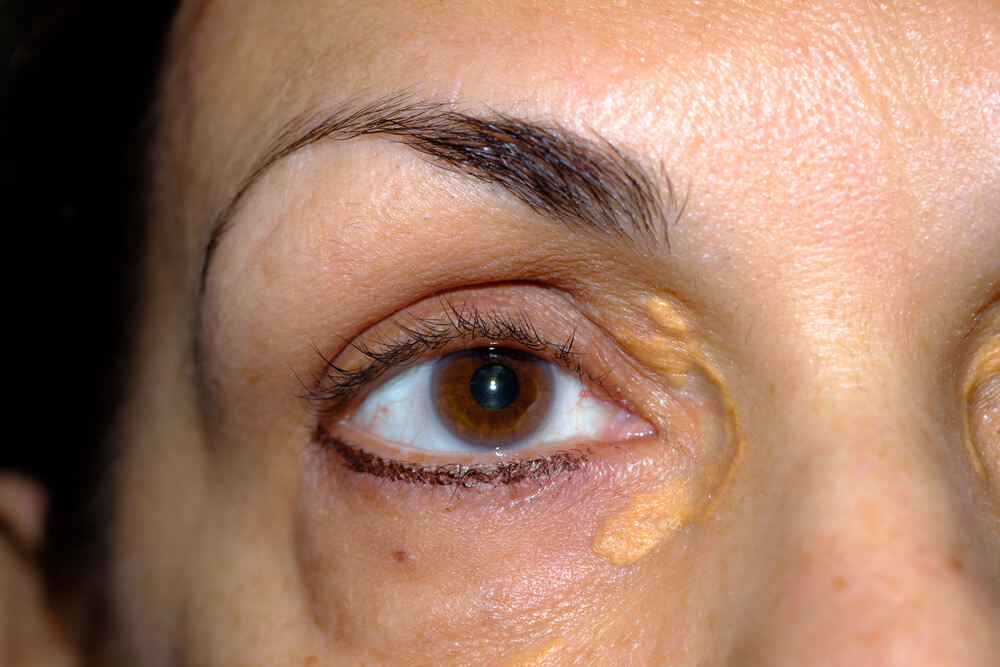
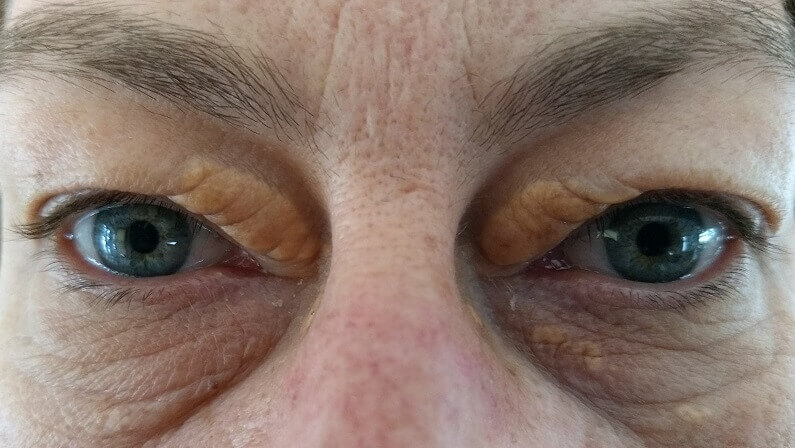
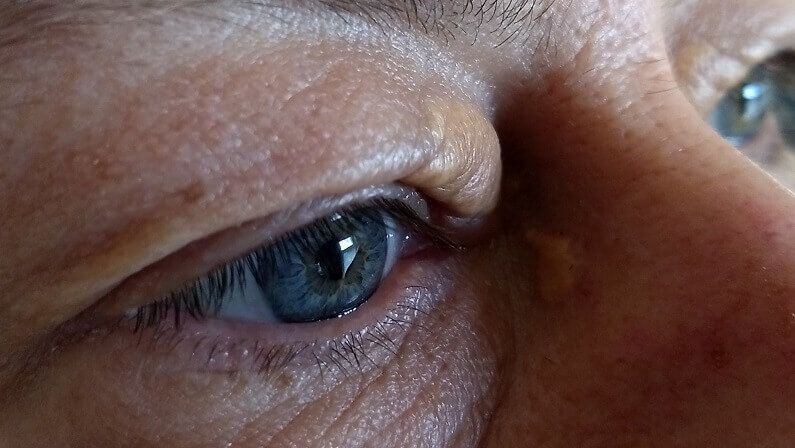
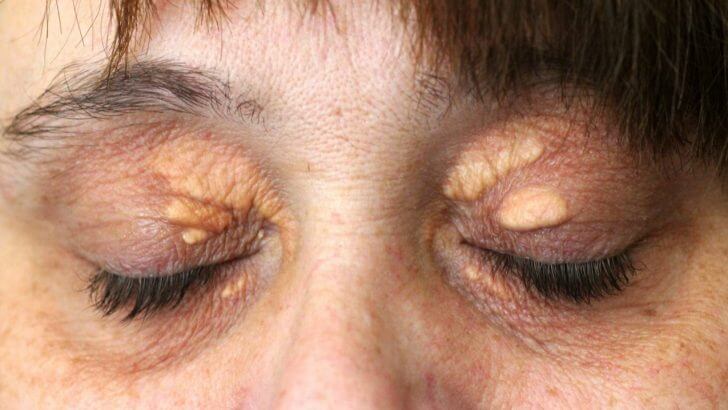
Plaque details matter because they decide whether removal at home is a sensible route. Typical xanthelasma appears as soft, yellowish plaques, mainly near the inner corner of the upper eyelid, often on both sides, with the lower lid involved less often.[1] If yours look different from that, it’s another reason to have a doctor see them before you do anything else.
Not sure how to describe them? Our guide to what xanthelasma looks like gives you the words, from flat yellow patches to raised cholesterol deposits on the eyelids.

Who Should I Ask About What?
| Your Question | Who To Ask | Why |
|---|---|---|
| Whether Xanthel® suits my plaques | Us, by email | We can tell you who it’s made for, and when a specialist would suit you better |
| Using Xanthel® and aftercare | Us | We make it and wrote the step-by-step guide |
| An order, delivery or return | Us, with your order number | We can look up your order |
| Whether my spots are xanthelasma | Your doctor or a dermatologist | It needs an examination, and sometimes a small skin sample |
| My cholesterol, thyroid, liver or blood sugar | Your doctor | It needs blood tests and medical advice |
| Large, deep or lid-edge plaques | A dermatologist or eyelid surgeon | Laser or surgery may suit better |
| A mark that’s bleeding, firm or changing fast | Your doctor, promptly | It needs checking in person |
Can You Tell Me If My Spots Are Xanthelasma?
No. We can’t diagnose skin marks from a description or a message, and nobody should try. A family doctor, an eye doctor or a dermatologist can usually tell by looking, and will take a small skin sample if there’s any doubt.
The clinical reference used across US medicine says first checks are usually done in primary care, ophthalmology or dermatology, and that a skin biopsy is recommended when the diagnosis is uncertain.[1] That matters because several other eyelid conditions can look like yellow spots on the eyelids, including enlarged oil glands, sarcoidosis of the eyelid and, less often, a type of skin cancer called nodular basal cell carcinoma.[1]
That’s why we always ask that a doctor has confirmed the diagnosis before you remove anything at home. Our guide to what can be mistaken for xanthelasma covers the common look-alikes, and our page on what doctor removes xanthelasma explains who to book with.
Once you know it is xanthelasma, we’re happy to answer questions about whether the plaques are the kind Xanthel® is made for.
Should I See A Doctor Before I Contact You?
Ideally, yes. About half of people with xanthelasma have a primary or secondary lipid disorder, and the plaques are linked with higher heart risk, so a blood test is the most useful first step, whatever you decide to do about the plaques themselves.
StatPearls recommends a fasting lipid profile, a liver panel, thyroid tests and a fasting glucose check, because xanthelasma can go with high cholesterol, diabetes, an underactive thyroid, kidney problems such as nephrotic syndrome, the liver condition primary biliary cholangitis, or taking retinoid or estrogen medicines.[1]
The heart link is the main reason we keep saying this. In a Copenhagen study that followed almost 13,000 people for decades, those with xanthelasma had a higher risk of heart attack and heart disease, and the link held even after allowing for cholesterol.[2] A 2020 analysis of 15 studies with 854 patients found people with xanthelasma had higher total cholesterol, LDL and apolipoprotein B, lower apolipoprotein A1, and thicker artery walls in the neck than people without it.[3]
A normal result is good news, and it’s common: about half of people with xanthelasma don’t have a lipid disorder.[1] Either way, you’ll know where you stand. Our pages on whether xanthelasma indicates raised cholesterol and whether xanthelasma is dangerous explain the tests and the risks, and our causes of xanthelasma guide covers every known cause.

What Can You Tell Me About Xanthel®?
Anything about what it is, who it suits, how it’s used and what to expect while the skin heals. Xanthel® is a cosmetic cream made for xanthelasma removal at home, applied only to the plaque, with one application per plaque and enough for a second on larger ones.
Questions We Often Answer
- Will it suit my plaques?
- How do I apply it safely near the eye?
- What’s normal while the skin heals?
- How many plaques will one pack cover?
- What if a plaque comes back later?
What To Expect
- Applied only to the plaque, at home
- One application per plaque, with enough for a second on larger ones
- About one to two weeks of healing
- Results vary from person to person
- Plaques can return after any removal method
On that last point, we’d rather you hear it from us before you buy: StatPearls gives recurrence after removal as generally under 50%, rising after repeat procedures, whichever method is used.[1] It also notes that xanthelasma doesn’t usually go away on its own and tends to stay the same or grow, which is why so many people look into removal in the first place.[1]
Our page on how to remove xanthelasma at home walks through each step, and our xanthelasma removal cream guide explains how creams compare.

If your doctor has checked the cause and you’d like to deal with the plaques themselves at home, this is the cream we make for it, and we’re here to help before and after you order.
How Do I Get Help With An Order?
Email us with your order number and the name on the order, and tell us what’s happened. Our shipping, returns and payment policies set out the details, and your account page shows your orders.
- Ordering. Order from our shop; Xanthel® is $169.
- Delivery. Free international delivery; our shipping policy has the details.
- Returns. Please read our returns policy before sending anything back.
- Payment. Our payment terms explain how payment works.
- Your account. Sign in to your account to see your orders and details.
If you’d like to check something before you buy, such as whether delivery reaches your country or how many plaques one pack will cover, just ask. It’s quicker than guessing, and there’s no obligation.

Can You Help Me Choose Between Xanthel® And Clinic Removal?
Yes. We’ll explain how the options compare and say plainly when a clinic suits you better. Large, deep or lid-edge plaques are usually better with a specialist; typical small to medium plaques on the open lid skin are the ones Xanthel® is made for.
Clinic methods work well, and we say so. A 2023 review of 49 studies found CO2 laser gave more than 75% improvement in over 90% of patients, with changes in skin color the most common complication, and recommended surgery for larger, deeper plaques.[4] StatPearls adds that cutting plaques out can pull the lower lid out of shape, and that freezing and chemical methods can scar or discolor the skin.[1] When people want plaques removed, a dermatologist or an eyelid (oculoplastic) surgeon is the usual specialist.[1]
- Size and depth. Small to medium plaques suit home removal; large, thick or deep ones suit a specialist.
- Position. Plaques on the open lid skin suit home removal; those at the lid edge or very near the eye need a clinic.
- Cost and access. Clinic removal means appointments and is usually paid for privately.
- Your preference. Some people want a specialist’s hands on it; others prefer to deal with it at home.
Our removal of xanthelasma guide compares every route. For the money side, see how much xanthelasma removal costs and whether xanthelasma removal is covered by insurance, and for what happens afterward, whether xanthelasma comes back.
What Should I Avoid While I Wait For A Reply?
Kitchen remedies, squeezing, cutting and wart-freezing kits. None of them removes xanthelasma, and some have caused burns and scars on the face, right beside the eye.
- Garlic. A review of 39 garlic burn cases found mostly second-degree burns, some leaving scars, especially on the face.[5]
- Apple cider vinegar. It has caused chemical burns when used on skin spots at home, with a risk of scarring and darkening.[6]
- Castor oil. We’ve found no published evidence that it removes xanthelasma.
- Squeezing or cutting. The fat sits inside cells in the skin, so there’s nothing to push out; see why you can’t squeeze out xanthelasma.
- Wart-freezing kits. Made for thick skin on hands and feet, not for thin eyelid skin.
If something you’ve already tried has left the skin blistered, weeping or very red, please see a doctor rather than waiting for us. A burn beside the eye needs looking at in person.

What Can’t We Help With?
Diagnosis, medical advice, prescriptions, test results or anything urgent. Those belong with your doctor, and if you’re worried about your eyesight or your heart, please don’t wait for an email.
We Can Help With
- Whether Xanthel® suits typical eyelid plaques
- How to use Xanthel® and look after the skin
- Orders, delivery, payment and returns
- Finding the right guide on this site
Please Ask Your Doctor
- Whether a spot is xanthelasma
- Cholesterol, thyroid, liver or blood sugar results
- Medicines, including cholesterol-lowering medicine
- Anything sudden, painful or worrying
For chest pain, sudden changes in your vision or any other emergency symptom, contact emergency services straight away. We answer messages about our guides and Xanthel®; we aren’t a medical service.

What Happens To The Details I Send?
We use them to answer your message and, if you’ve ordered, to deal with your order. Our privacy policy explains how personal information is handled, and our terms and conditions cover use of the site.
Please don’t send more than we need. There’s no need to include medical records or blood test results; a short description of your plaques and what your doctor said is plenty. And please never send card details by email or through the message form: payments go through our checkout.
You’ll find the full details in our privacy policy and our terms and conditions.

Who Am I Contacting?
Xanthelasma.com is run by BGI Northern Limited, Library Chambers, 48 Union Street, Hyde, Cheshire, England, SK14 1ND. We publish research-led guides to xanthelasma and make Xanthel®, a cosmetic cream for xanthelasma removal at home.
- Company. BGI Northern Limited.
- Address. Library Chambers, 48 Union Street, Hyde, Cheshire, England, SK14 1ND.
- Email. info@xanthelasma.com
- Phone. 0044 2080501681
- Message form. At the foot of this page.
We’re an information site first. Every medical fact in our guides is tied to a numbered source from US government health bodies, peer-reviewed journals or professional medical bodies, and we say so when a clinic would suit you better than home removal. You can read more about us, or browse every guide in Xanthelasma Guides.
What’s The Bottom Line On Contacting Us?
Email info@xanthelasma.com, call 0044 2080501681 or use the form at the foot of this page. Tell us what your question is about, add any order number, and describe your plaques if you’re asking about Xanthel®. See your doctor first for the cause, because about half of people with xanthelasma have a lipid disorder, and ask them anything medical or urgent.
Xanthel® is a cosmetic cream made for xanthelasma removal at home, sold by Xanthelasma.com. You’ll find it in the section above and at the foot of this page, or read more about Xanthel® xanthelasma removal cream. For everything else, browse all our xanthelasma guides.
Common Questions About Contacting Xanthelasma.com
How Do I Contact Xanthelasma.com?
By email at info@xanthelasma.com, by phone on 0044 2080501681, or through the message form at the foot of this page.
What’s The Best Way To Reach You?
Email is best, because it gives us your question in writing and lets us reply in full.
Can You Diagnose My Eyelid Spots?
No, we can’t diagnose skin marks; please see a doctor or dermatologist, who can confirm xanthelasma by examining it.
Should I See A Doctor Before Using Xanthel®?
Yes, because about half of people with xanthelasma have a lipid disorder, so the cause should be checked with a blood test.
Can You Tell Me If Xanthel® Suits My Plaques?
Yes, describe how many plaques you have, their size, where they sit and what your doctor said, and we’ll explain whether they’re the kind Xanthel® is made for.
How Do I Get Help With An Order?
Email us with your order number and the name on the order, and tell us what’s happened.
How Much Is Xanthel® And Is Delivery Free?
Xanthel® is $169 with free international delivery.
Where Is Xanthelasma.com Based?
Xanthelasma.com is run by BGI Northern Limited, Library Chambers, 48 Union Street, Hyde, Cheshire, England, SK14 1ND.
Sources
- Blair K. Xanthelasma Palpebrarum. StatPearls, National Library of Medicine (NCBI Bookshelf), updated 2026.
- Christoffersen M, Frikke-Schmidt R, Schnohr P, Jensen GB, Nordestgaard BG, Tybjaerg-Hansen A. Xanthelasmata, arcus corneae, and ischaemic vascular disease and death in general population: prospective cohort study. BMJ, 2011.
- Chang HC, Sung CW, Lin MH. Serum lipids and risk of atherosclerosis in xanthelasma palpebrarum: a systematic review and meta-analysis. Journal of the American Academy of Dermatology, 2020;82(3):596-605.
- Malekzadeh H, Ormseth B, Janis JE. A Practical Review of the Management of Xanthelasma Palpebrarum. Plastic and Reconstructive Surgery Global Open, 2023;11(5):e4982.
- Hitl M, Kladar N, Gavaric N, Srdenovic Conic B, Bozin B. Garlic burn injuries: a systematic review of reported cases. American Journal of Emergency Medicine, 2021.
- Feldstein S, Afshar M, Krakowski AC. Chemical Burn from Vinegar Following an Internet-based Protocol for Self-removal of Nevi. Journal of Clinical and Aesthetic Dermatology, 2015;8(6).