
Xanthomatosis
Understanding Widespread Cholesterol Deposits and the Conditions Behind Them
Xanthomatosis is the formation of multiple cholesterol deposits across the body, often a sign of an underlying lipid or metabolic disorder. This page explains the types, what they signal, and why proper medical assessment matters.
By Xanthelasma.com
What Xanthomatosis Is
Xanthomatosis describes the presence of xanthomas, deposits of yellowish, cholesterol-rich material, across the body, typically in the skin, tendons, or around the eyes. Rather than a single mark, the term points to a broader pattern of deposits that usually reflects an underlying abnormality in how the body handles fats. In other words, xanthomatosis is often the visible outward sign of a lipid or metabolic condition happening inside.
That is why it is taken seriously as a medical matter rather than just a skin concern. The deposits themselves are generally benign, but their presence can indicate conditions ranging from raised blood lipids to liver disease, diabetes, inherited disorders, and, in some cases, more serious systemic illness. Anyone noticing multiple yellowish deposits, particularly in more than one area of the body, should see a doctor for proper assessment and blood tests. If your concern is only soft yellow patches on the eyelids, that is the specific, usually cosmetic type called xanthelasma, explained on our xanthelasma overview.
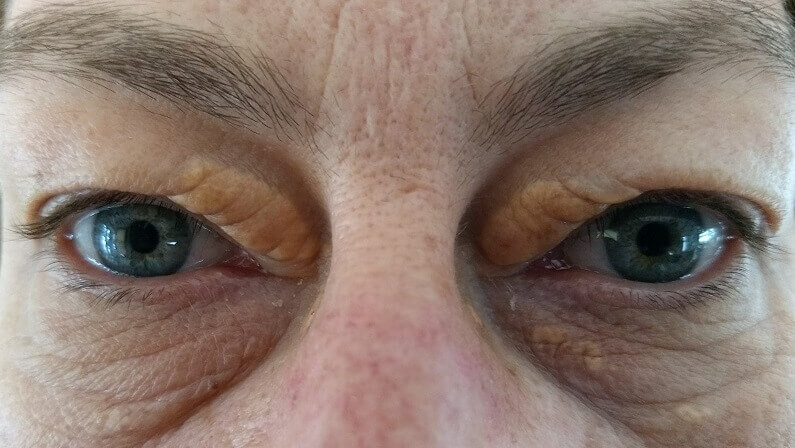
The Types of Xanthomas Seen in Xanthomatosis
Xanthomatosis can involve several distinct types of deposit, and recognising them helps point to the underlying cause. Eruptive xanthomas appear as crops of small yellow-red bumps, often itchy, usually on the buttocks, shoulders, arms, or legs, and are strongly linked to very high triglycerides and uncontrolled diabetes. Tendon xanthomas are firm nodules in the tendons, especially the hands, feet, and Achilles, and are commonly associated with familial hypercholesterolemia.
Tuberoeruptive xanthomas are larger nodules over the knees and elbows, also tied to lipid disorders. Plane xanthomas are flat yellowish patches that can appear widely on the body and sometimes correlate with systemic disease, including, in rare cases, lymphoproliferative disorders. Xanthelasma, the eyelid type, is the most familiar and is generally the most benign, though it too can reflect lipid levels. The key point is that the type and distribution of the deposits guide a doctor toward the underlying condition, which is what really needs identifying and managing. Our pages on tendon xanthomas and plane xanthoma cover those types in detail.

Cerebrotendinous Xanthomatosis (CTX)
One specific form deserves particular mention because of its seriousness: cerebrotendinous xanthomatosis, or CTX. This is a rare, inherited metabolic disorder in which a faulty enzyme disrupts the normal processing of cholesterol, causing a byproduct called cholestanol to build up in tissues including the brain, the lens of the eyes, blood vessels, and tendons.
CTX is far more than a skin condition. Its features can include chronic diarrhoea in childhood, early cataracts, tendon xanthomas appearing in the teens or twenties, and progressive neurological symptoms such as problems with coordination or cognition. Left untreated, it can lead to serious complications including premature artery disease and neurological decline. The important message is that CTX is a genuinely medical, genetic disorder that needs specialist diagnosis and treatment, and early intervention substantially improves the outlook. If you or a family member have a combination of tendon deposits, early cataracts, and neurological symptoms, this warrants prompt medical attention and possibly genetic counselling. It is not something any cosmetic approach can address.

What Xanthomatosis Can Signal
The reason xanthomatosis matters so much is what it points to beneath the surface. The deposits are made of cholesterol and other fats, so widespread xanthomas frequently reflect a disorder of lipid metabolism, such as hyperlipidemia or familial hypercholesterolemia, which carries cardiovascular risk. Certain types flag specific issues: eruptive xanthomas often signal very high triglycerides and poorly controlled diabetes, while plane xanthomas can occasionally be associated with liver disease or, rarely, blood-related cancers.
Because of these associations, finding xanthomatosis is a valuable prompt for investigation rather than a cause for panic. A doctor will typically examine the deposits, take a personal and family history, and arrange blood tests for cholesterol, triglycerides, blood sugar, and sometimes liver or further specialist tests. Identifying and managing the underlying condition is the real priority, and doing so protects your wider health far beyond the appearance of the deposits. This is firmly a matter for medical care.

How Xanthomatosis Is Managed
Management of xanthomatosis centres almost entirely on the underlying cause rather than the deposits themselves. Where raised cholesterol or triglycerides are responsible, lipid-lowering treatment such as statins, prescribed and monitored by a doctor, is the foundation, alongside dietary changes and lifestyle measures. Where diabetes is driving eruptive xanthomas, controlling blood sugar is central. Where liver disease is involved, treating that condition takes priority, and CTX requires specific specialist treatment aimed at the metabolic defect.
Alongside the medical treatment, the familiar healthy-living measures all support better lipid control: a balanced diet lower in saturated fat, regular exercise, maintaining a healthy weight, moderating alcohol, and not smoking. When the underlying disorder is well managed, some types of deposit can reduce over time, and new ones are less likely to form. The consistent theme across all of this is that xanthomatosis is doctor-led: ongoing monitoring, blood tests, and follow-up are an important part of keeping both the deposits and the underlying condition in check.


If You Were Looking for the Eyelid Type
Many people reach a page like this after searching broadly for “xanthoma” or a related term when what they actually have is the eyelid form, xanthelasma, the soft yellow patches on the eyelids. If that is your situation, it is far simpler and less worrying than widespread xanthomatosis. Eyelid xanthelasma is usually a straightforward cosmetic concern rather than a sign of serious systemic disease, although a cholesterol check is still sensible.
If your concern is the eyelid marks specifically, you can read about them on our xanthelasma overview, learn what causes xanthelasma, or see what xanthelasma looks like to confirm that is what you are dealing with. For anything involving deposits beyond the eyelids, or any of the systemic features described above, a doctor’s assessment is the right first step.

The Bottom Line on Xanthomatosis
Xanthomatosis is the widespread formation of cholesterol deposits, and its real significance lies in what it signals: an underlying lipid, metabolic, liver, or inherited disorder that needs proper medical attention. From eruptive xanthomas linked to diabetes and high triglycerides, to tendon xanthomas tied to familial hypercholesterolemia, to the serious inherited disorder CTX, the deposits are a prompt to identify and manage the cause with a doctor rather than to treat the appearance alone.
If your concern turns out to be only the eyelid type, xanthelasma, that is a much simpler, usually cosmetic matter. You can start with our xanthelasma overview or the broader picture on xanthomas. For anything more widespread, please see your doctor for assessment.

Common Questions About Xanthomatosis
What is xanthomatosis?
Xanthomatosis is the presence of multiple xanthomas, cholesterol-rich deposits, across the body, typically in the skin, tendons, or around the eyes. It usually reflects an underlying disorder of lipid metabolism or another medical condition, so it is treated as a sign worth investigating rather than just a skin concern.
Is xanthomatosis dangerous?
The deposits themselves are generally benign, but xanthomatosis can signal serious underlying conditions, including lipid disorders with cardiovascular risk, uncontrolled diabetes, liver disease, or the rare inherited disorder CTX. That is why it should be assessed by a doctor, who can identify and manage the underlying cause.
What causes xanthomatosis?
It is caused by abnormalities in how the body processes fats, leading to cholesterol deposits in tissues. Common drivers include raised cholesterol or triglycerides, familial hypercholesterolemia, diabetes, and liver disease. The rare inherited disorder CTX is caused by a specific enzyme defect. Blood tests help identify which cause applies.
What is cerebrotendinous xanthomatosis (CTX)?
CTX is a rare, inherited metabolic disorder in which a faulty enzyme causes cholestanol to build up in the brain, eyes, blood vessels, and tendons. It can cause neurological symptoms, early cataracts, and tendon deposits, and needs specialist medical treatment. Early diagnosis significantly improves the outlook, so suspected cases warrant prompt medical attention.
Is xanthomatosis the same as eyelid xanthelasma?
No. Xanthelasma is one specific, usually benign type that appears on the eyelids and is often a cosmetic concern. Xanthomatosis refers to the broader, often widespread presence of cholesterol deposits, which more frequently signals an underlying systemic disorder needing medical care. They are approached very differently.
Can xanthomatosis be cured?
It depends on the underlying cause. Managing conditions like high cholesterol, diabetes, or liver disease can reduce some deposits over time and prevent new ones, and CTX has specific specialist treatment. The deposits are managed by treating the root condition with a doctor, rather than through any cosmetic approach.
Should I see a doctor about xanthomatosis?
Yes. Because xanthomatosis can indicate an underlying lipid, metabolic, liver, or inherited disorder, a medical assessment with blood tests is important to identify and manage the cause. This matters far more than the appearance of the deposits, and early diagnosis can prevent more serious complications.
Xanthomatosis can indicate an underlying lipid, metabolic, liver, or inherited disorder, some of which are serious, so it should always be assessed by a doctor, who can arrange the right tests and guide your care. This page is for general information and is not a substitute for medical advice.