Every Removal Method Side By Side: What Happens On The Day, Results, Scarring, Skin Tone, Recovery And Recurrence, Plus A Simple Guide To Choosing The One That Suits Your Plaques
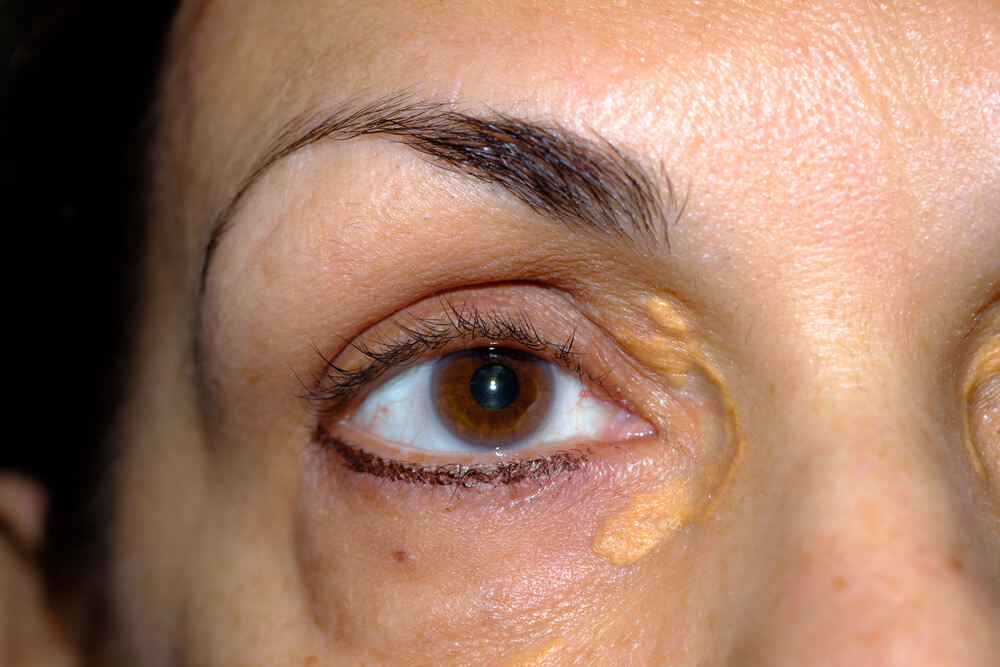
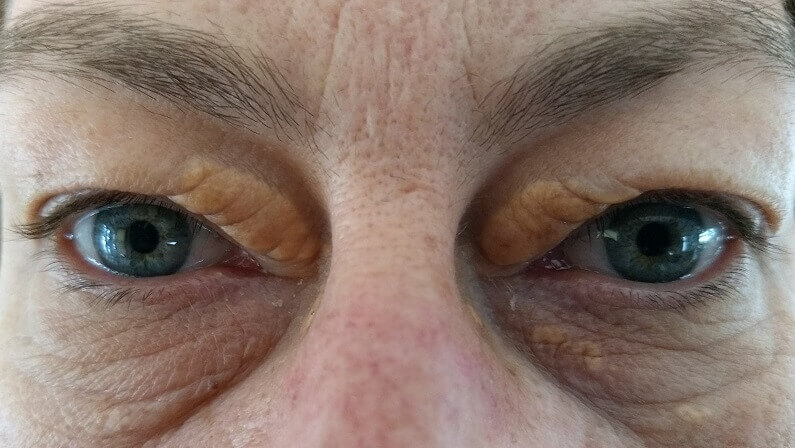
To remove xanthelasma palpebrarum, the yellow plaques on your eyelids have to be taken away so clear skin can grow back: at a clinic with laser, surgery, a chemical peel, freezing or radiofrequency, or at home with a cream made for xanthelasma removal. CO2 laser has the strongest published results for most plaques, surgery suits large, deep ones, and the right choice depends on your plaque, your skin and your priorities.
Remove xanthelasma palpebrarum with CO2 or erbium laser, surgery, a TCA peel, freezing or radiofrequency at a clinic, or a purpose-made cream at home for small to medium plaques. CO2 laser gave over 75% improvement in over 90% of patients in a large review. Healing takes about one to two weeks; get a blood test first.
Key Takeaways
- Xanthelasma palpebrarum rarely fades by itself, so removal is what clears it.
- CO2 laser outperformed erbium laser and TCA peels in a 49-study review.
- Surgery suits larger, deeper plaques but must spare enough eyelid skin.
- Skin color change is the most common complication across methods.
- Plaques return in generally fewer than half of cases after removal.
- Small to medium plaques can be removed at home with a purpose-made cream.
On This Page 17 sections
How Do You Remove Xanthelasma Palpebrarum?
By taking away the plaque of cholesterol-filled cells so new skin can grow in its place. The options are laser, surgery, chemical peels, freezing and radiofrequency at a clinic, or a cream made for xanthelasma removal at home.
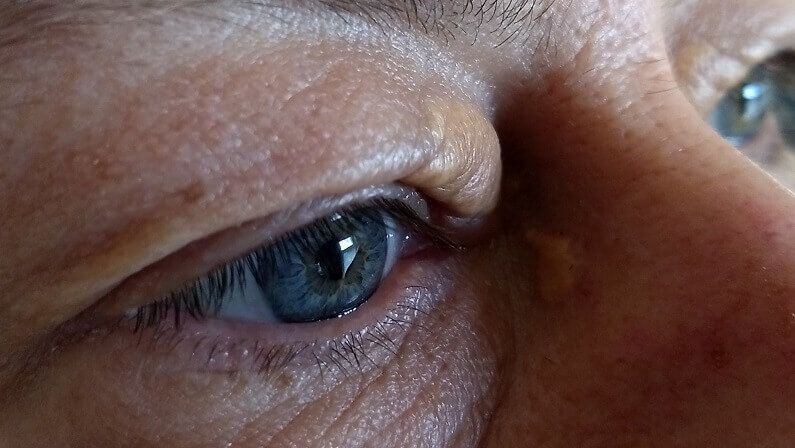
Xanthelasma palpebrarum is made of foam cells, immune cells packed with cholesterol, clustered around small blood vessels in the deeper layer of the eyelid skin.[1] StatPearls, the National Library of Medicine’s clinical reference, describes the plaques as rarely resolving by themselves, and notes that lowering cholesterol may do little for plaques already formed.[1] So if you want them gone, a removal method is the way.
This page compares every method in depth. If you’d rather have a step-by-step plan, see our guide on how to get rid of xanthelasma palpebrarum; for the condition itself, see what xanthelasma palpebrarum is.
What Should You Do Before Removing Xanthelasma Palpebrarum?
Get the diagnosis confirmed and your blood tested. About half of people with xanthelasma have a lipid disorder, and removing plaques does nothing for what’s behind them.
- Confirm it. Milia, syringomas and, rarely, skin cancers can appear on the lid; a doctor can tell them apart.
- Test. Fasting lipid profile, liver panel, thyroid function and fasting glucose.[1]
- Plan your time. Allow one to two weeks with no big events while the skin heals.
- Photograph. Take clear before photos in daylight.
Normal results are common: in one clinic study, 54.8% had normal total cholesterol, though their HDL was lower than in people without xanthelasma.[3] But the check matters, because xanthelasma was linked with higher heart risk, independent of cholesterol, in a study of almost 13,000 people.[4] Our pages on whether xanthelasma indicates raised cholesterol and what can look like xanthelasma explain more.

How Does CO2 Laser Remove Xanthelasma Palpebrarum?
A carbon dioxide laser vaporizes the plaque layer by layer while metal shields protect the eye. It had the strongest results in the 2023 review: more than 75% improvement in over 90% of patients.
That review of 49 studies found CO2 laser outperformed both erbium laser and 30 to 50% TCA peels, and that a change in skin color was the most common complication.[2]
- On the day. Numbing, eye shields, a few minutes per plaque.
- Sessions. One for thin plaques; thicker ones may need more.
- Healing. Raw, red skin that crusts and heals in about one to two weeks.
- Best for. Flat to moderately raised plaques, including several small ones.

How Does Erbium Laser Remove Xanthelasma Palpebrarum?
An erbium laser removes the plaque in very thin layers with less heat spread to the surrounding skin. The 2023 review found more than 80% improvement, slightly behind CO2 laser overall.
Because it’s gentler on nearby skin, some clinics prefer erbium for flatter plaques.[2] As with CO2 laser, the main risk is lighter or darker skin afterward, and thicker plaques can need more than one session.
- On the day. Similar to CO2: numbing, eye shields, minutes per plaque.
- Healing. About one to two weeks.
- Best for. Flatter, thinner plaques.

When Is Surgery Used To Remove Xanthelasma Palpebrarum?
For large, thick or deep plaques, or ones that haven’t responded to other methods. The surgeon cuts out the plaque under local anesthetic and closes the skin with fine stitches.
The 2023 review recommended surgery for larger, deeper plaques.[2] The key risk is taking too much of the thin, limited eyelid skin: StatPearls warns this can turn the lid outward or pull it away from the eye.[1] That’s why an oculoplastic (eyelid) surgeon is often the right choice for big plaques.
- Variations. Skin flaps or grafts for large areas, removal in stages, or combining with an eyelid lift when there’s loose skin.
- Healing. Stitches out after about a week; bruising settles over one to two weeks.
- Best for. Large, deep or stubborn plaques.
Our pages on who removes xanthelasma and how they remove xanthelasma describe the day in more detail.

Can A Chemical Peel Remove Xanthelasma Palpebrarum?
Yes, for small, flat plaques. A trichloroacetic acid (TCA) solution is applied carefully to the plaque, which then crusts and peels away. It’s quick and low-cost but less effective than CO2 laser.
In the 2023 review, 30 to 50% TCA was outperformed by CO2 laser.[2] StatPearls notes chemical cauterization can leave scarring and discoloration.[1] Some people need more than one application, a few weeks apart.

A clinic peel is very different from putting acids on your own eyelid at home; kitchen acids like vinegar have caused chemical burns with scarring and darkening.[6]
Can Freezing Remove Xanthelasma Palpebrarum?
Yes, for small plaques. Cryotherapy uses extreme cold, often liquid nitrogen, to destroy the plaque. Swelling is common afterward, and it can scar or lighten the skin.
StatPearls notes freezing can cause scarring and color change.[1] Lighter patches tend to show more on medium and darker skin, so ask the clinic about this before choosing it. Eyelid skin also swells readily after freezing, so expect puffiness for a few days.
Never use an over-the-counter wart-freezing kit on your eyelid; those are made for thick skin on hands and feet.
Can Radiofrequency Or Electrosurgery Remove Xanthelasma Palpebrarum?
Yes, for thin plaques. A fine, heated tip shaves or burns the plaque away layer by layer. There are fewer published studies than for laser, and scarring and color change are possible.
These methods sit between laser and surgery in how much tissue they affect. They suit thin plaques and are offered by some dermatology clinics. Ask how many xanthelasma cases the clinic has done and to see results, since technique matters on eyelid skin. Our page on every clinic option compares the evidence for each.

Can You Remove Xanthelasma Palpebrarum At Home?
Yes, for small to medium plaques, with a cream made specifically for xanthelasma removal, applied only to the plaque and kept away from the eye. Large, deep or lid-edge plaques are better seen by a specialist.
- Prepare. Clean the area and remove all makeup.
- Apply precisely. Only on the plaque, following the supplied guide.
- Wait and rinse. Leave it for the time stated, then rinse off.
- Heal. Keep it clean, use the recommended antibacterial cream, don’t pick, and protect it from the sun.
What doesn’t work at home: squeezing, which can’t remove fat held inside cells, and kitchen remedies. A review of 39 garlic burn cases found mostly second-degree burns, some leaving scars, especially on the face.[5] Our pages on how to remove xanthelasma at home, our xanthelasma removal cream guide and whether you can squeeze out xanthelasma explain more.
If your doctor has checked the cause and your plaques are small to medium, this is the cream we make for removing xanthelasma palpebrarum at home.
How To Remove Xanthelasma Palpebrarum: Every Method Compared
| Method | Best For | Evidence | Main Risks | Healing |
|---|---|---|---|---|
| Xanthel® at home | Small to medium plaques | Cosmetic cream; results vary | Redness while healing; keep away from the eye | About one to two weeks |
| CO2 laser | Flat to moderately raised plaques | Over 75% improvement in over 90% | Skin color change | One to two weeks |
| Erbium laser | Flatter plaques | Over 80% improvement | Skin color change | One to two weeks |
| Surgery | Large, deep plaques | Recommended for larger, deeper plaques | Scar; lid pulled out of shape | Stitches; one to two weeks or more |
| TCA peel | Small, flat plaques | Outperformed by CO2 laser | Scarring, color change | About one to two weeks |
| Freezing | Small plaques | Used for small plaques | Swelling, scarring, lighter skin | About one to two weeks |
| Radiofrequency | Thin plaques | Fewer published studies | Scarring, color change | About one to two weeks |
How Do You Choose A Method To Remove Xanthelasma Palpebrarum?
Start with the plaque, then weigh your priorities. Size, depth and position narrow the field; budget, downtime and skin tone pick the winner.
By Plaque
- Small and flat: at-home cream, laser, peel or freezing
- Several small spots: laser or at-home, plaque by plaque
- Large or thick: surgery or laser in several sessions
- At the lid edge: an eyelid surgeon
By Priority
- Strongest evidence: CO2 laser
- No clinic visit: at-home removal
- Biggest plaques cleared at once: surgery
- Darker skin: ask about pigment risk first
Deeper plaques are more likely to come back, so removing plaques while they’re small widens your options.[1] Our full removal of xanthelasma guide sets the options side by side.
Does Removing Xanthelasma Palpebrarum Leave A Scar?
It can, depending on the method, plaque size and how the skin heals. Surgery leaves a fine line that usually fades into the lid crease; peels and freezing carry a higher risk of uneven scarring; color change is the most common issue overall.
The 2023 review identified skin color change as the most frequent complication across methods.[2] StatPearls notes freezing and chemical cauterization can scar and discolor, and surgery risks distorting the lid if too much skin is removed.[1]
- Don’t pick crusts; let them lift by themselves.
- Keep the area clean and use any ointment you’re given.
- Protect healed skin from the sun for several months.

Does Skin Tone Affect How You Remove Xanthelasma Palpebrarum?
Yes. Lighter or darker patches after removal show more on medium and darker skin, so method, settings and aftercare matter more. Freezing and peels in particular can lighten the skin.

Ask any clinic how often they remove xanthelasma on your skin type, whether a test spot or gentler settings make sense, and to see results. Sun protection after healing helps color settle evenly. Because dyspigmentation was the most common complication in the review, this is worth discussing before you book.[2]

Does Xanthelasma Palpebrarum Come Back After Removal?
It can, with any method. StatPearls gives recurrence as generally under 50%, around 60% after repeat procedures, and higher for deeper plaques.
Those figures come from StatPearls.[1] Removal clears the plaque but not the conditions that formed it, so new plaques can appear. Managing any lipid problem protects your heart and may slow new ones, and dealing with new spots while small keeps future removal simple.
Our pages on whether xanthelasma comes back and the causes of xanthelasma go further.

How Much Does It Cost To Remove Xanthelasma Palpebrarum?
Costs vary widely by method, specialist, region and the number of plaques and sessions. Surgery with an eyelid surgeon is generally the most expensive route; insurance rarely pays because removal is seen as cosmetic.
Laser often needs more than one session for thicker plaques, so ask for a written, all-in quote that includes follow-ups and any repeat sessions. The doctor’s visit and blood tests for the cause are normally covered like any other check. Our pages on how much xanthelasma removal costs and whether removal is covered by insurance go into the detail.

What’s The Bottom Line On How To Remove Xanthelasma Palpebrarum?
Xanthelasma palpebrarum rarely fades, so removal is what clears it. CO2 laser has the strongest evidence for most plaques, erbium laser is gentler for flat ones, surgery suits large, deep plaques, peels and freezing suit small ones, and a purpose-made cream can remove small to medium plaques at home. Get your blood tests first, weigh scarring and skin-tone risks, and expect about one to two weeks of healing.
Xanthel® is a cosmetic cream made for xanthelasma removal at home, sold by Xanthelasma.com. You’ll find it in the at-home section above and at the foot of this page, or read more about Xanthel® to remove xanthelasma palpebrarum at home. For more on the condition, see xanthelasma palpebrarum, or browse all our xanthelasma guides.
Common Questions About Removing Xanthelasma Palpebrarum
How Do You Remove Xanthelasma Palpebrarum?
With laser, surgery, a TCA peel, freezing or radiofrequency at a clinic, or a cream made for xanthelasma removal at home for small to medium plaques.
What Is The Best Way To Remove Xanthelasma Palpebrarum?
In a 49-study review, CO2 laser gave the strongest results for most plaques, while surgery suits large, deep ones.
Can I Remove Xanthelasma Palpebrarum At Home?
Yes, for small to medium plaques, with a cream made specifically for xanthelasma removal and applied only to the plaque.
Does Removing Xanthelasma Palpebrarum Leave A Scar?
It can, depending on the method; skin color change is the most common complication, and good aftercare and sun protection help.
How Long Does It Take To Heal After Removal?
Usually about one to two weeks, though skin color can take longer to settle.
Is Laser Better Than Surgery For Xanthelasma?
For most flat to moderately raised plaques, laser has strong results and no stitches, while surgery is better for large, deep plaques.
Will Xanthelasma Palpebrarum Come Back After Removal?
It can, in generally fewer than half of cases, more often when plaques were deep or removed repeatedly.
Is Xanthelasma Removal Covered By Insurance?
Usually not, because it’s seen as cosmetic, though the doctor’s visit and blood tests normally are.
Sources
- Blair K. Xanthelasma Palpebrarum. StatPearls, National Library of Medicine (NCBI Bookshelf), updated 2026.
- Malekzadeh H, Ormseth B, Janis JE. A Practical Review of the Management of Xanthelasma Palpebrarum. Plastic and Reconstructive Surgery Global Open, 2023;11(5):e4982.
- Kavoussi H, Ebrahimi A, Rezaei M, Ramezani M, Najafi B, Kavoussi R. Serum lipid profile and clinical characteristics of patients with xanthelasma palpebrarum. Anais Brasileiros de Dermatologia, 2016;91(4):468-471.
- Christoffersen M, Frikke-Schmidt R, Schnohr P, Jensen GB, Nordestgaard BG, Tybjaerg-Hansen A. Xanthelasmata, arcus corneae, and ischaemic vascular disease and death in general population: prospective cohort study. BMJ, 2011.
- Hitl M, Kladar N, Gavaric N, Srdenovic Conic B, Bozin B. Garlic burn injuries: a systematic review of reported cases. American Journal of Emergency Medicine, 2021.
- Feldstein S, Afshar M, Krakowski AC. Chemical Burn from Vinegar Following an Internet-based Protocol for Self-removal of Nevi. Journal of Clinical and Aesthetic Dermatology, 2015;8(6).