Three Ways It Plays Out: Left Alone, With Cholesterol Control, Or Removed, Plus How Long It Takes To Disappear, What Your Skin Looks Like After, And How To Keep It Gone
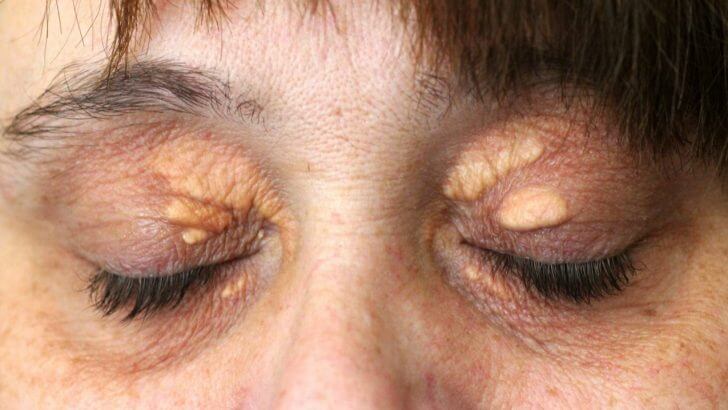
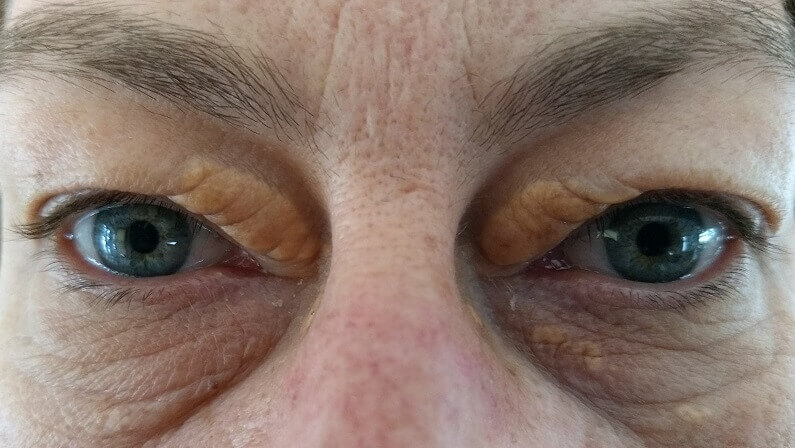
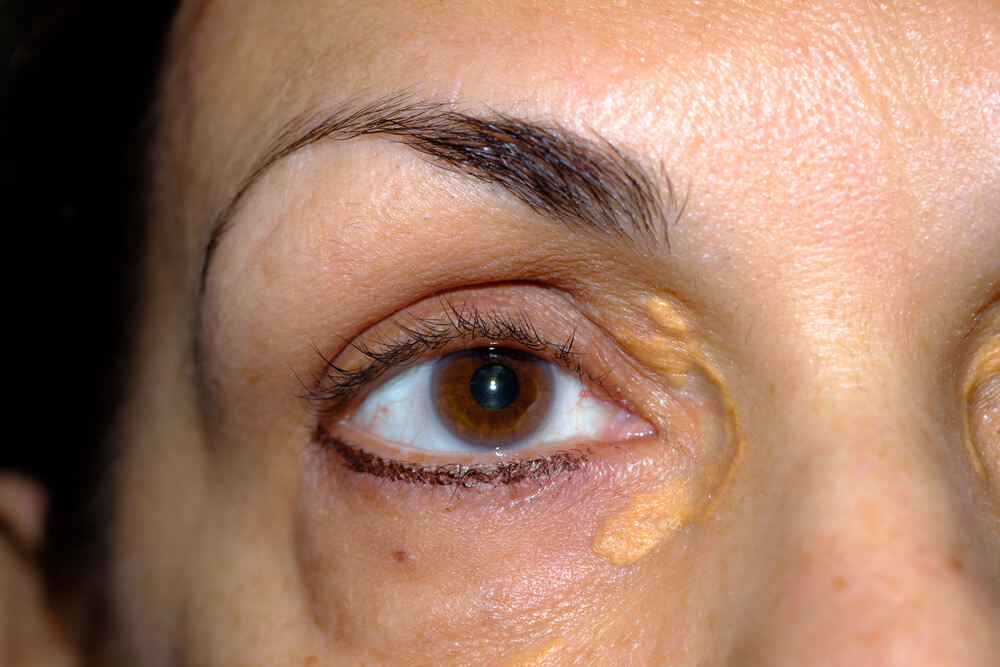
Xanthelasma rarely disappears by itself: the yellow eyelid plaques usually stay the same or slowly grow, and even lowering cholesterol seldom makes them fade. They can disappear, though, when they’re removed, with laser, surgery or other clinic methods, or with a cream made for xanthelasma removal at home, after which the skin usually heals in about one to two weeks.
Left alone, xanthelasma rarely disappears; plaques tend to stay or slowly grow. Cholesterol control protects your heart but seldom makes existing plaques fade. Removal is what makes them disappear, with healing over about one to two weeks. Plaques return in generally fewer than half of cases.
Key Takeaways
- Xanthelasma rarely disappears without removal.
- Lowering cholesterol seldom shrinks plaques that have already formed.
- Some body xanthomas do fade as blood fats fall; eyelid plaques usually don’t.
- Yellow spots that vanish in weeks were probably something else.
- After removal, the skin usually heals in about one to two weeks.
- Plaques come back in generally fewer than half of cases.
On This Page 17 sections
Can Xanthelasma Disappear?
Yes, but almost always only when it’s removed. Left alone, xanthelasma rarely disappears; the plaques usually stay the same or slowly widen over months and years.
StatPearls, the National Library of Medicine’s clinical reference, describes xanthelasma as rarely resolving by itself.[1] That’s the honest answer most people don’t want to hear, but it also means you’re not waiting in vain: if you want the plaques gone, there are reliable ways to make that happen.
Our pages on whether xanthelasma can go away on its own, whether xanthelasma can just disappear and whether it can go away naturally look at related questions. This page follows the three ways it can play out.

Why Doesn’t Xanthelasma Disappear By Itself?
Because the cholesterol is locked inside living immune cells, called foam cells, woven around small blood vessels in the deeper skin layer. Unlike a bruise or a spot, nothing in the body breaks them down and carries them away.
StatPearls describes the plaques as foam cells clustered around vessels in the dermis, formed when cholesterol-carrying particles leak from the eyelid’s tiny capillaries and macrophages swallow them.[1] Those cells are long-lived parts of the skin, so the plaque is stable rather than something that runs its course.
Our page on how xanthelasma forms explains the process step by step.

Can Xanthelasma Disappear? Three Ways It Plays Out
| Scenario | Existing Plaques | New Plaques | Timeframe |
|---|---|---|---|
| Left alone | Usually stay or slowly grow | Can appear | Months to years of slow change |
| Cholesterol controlled | Rarely fade | May be slowed | Ongoing; protects the heart |
| Removed | Disappear as the skin heals | Return in generally fewer than half | About one to two weeks of healing |
| Removed and cause managed | Disappear as the skin heals | Best chance of staying clear | Healing plus ongoing care |
Can Lowering Cholesterol Make Xanthelasma Disappear?
Rarely. Managing cholesterol protects your heart and may slow new plaques, but StatPearls notes it may do little for plaques that have already formed. And about half of people with xanthelasma have normal blood fats to begin with.
StatPearls reports a primary or secondary lipid disorder in about half of people with xanthelasma, and recommends lifestyle changes and lipid-lowering medicine where one is found.[1] In one clinic study, 54.8% had normal total cholesterol, though HDL was lower than in people without xanthelasma.[3]
So a cholesterol check is always worth it, for your heart, but it isn’t a way to make existing plaques disappear. Our pages on whether xanthelasma indicates raised cholesterol and the causes of xanthelasma explain the tests.

Which Xanthomas Do Disappear When Blood Fats Fall?
Some body xanthomas do. Palmar xanthomas fade once dysbetalipoproteinemia is managed, and eruptive xanthomas usually settle as very high triglycerides come down. Eyelid xanthelasma is the stubborn exception.
StatPearls notes palmar xanthomas, yellow lines in the palm creases, fade once dysbetalipoproteinemia is controlled.[4] Eruptive xanthomas, sudden crops of small yellow bumps, appear when triglycerides rise above 1,000 mg/dL, often with uncontrolled diabetes.[5] They usually settle as levels fall.
That’s where stories of xanthomas “melting away” come from. They’re true for those types, but not usually for the slow-building plaques on your eyelids. Our pages on palmar xanthoma and eruptive xanthoma explain both.

What If A Yellow Spot On My Eyelid Disappeared By Itself?
Then it probably wasn’t xanthelasma. Milia, styes, chalazia and irritated spots can look yellowish and often clear within days or weeks; true xanthelasma is slow and stable.
- Milia. Tiny hard white or pale yellow beads that often clear by themselves.
- Styes and chalazia. Red, tender or swollen lumps at the lid margin that settle in days to weeks.
- Irritation. Rubbing or a reaction to makeup can leave temporary discoloration.
- Xanthelasma. Soft, flat or slightly raised yellow plaques that stay for months and years.[1]
If you’re unsure what you have, a doctor can usually tell on sight. Our guide to what can look like xanthelasma shows the differences.

What Doesn’t Make Xanthelasma Disappear?
Squeezing, kitchen remedies, supplements, “fade” creams and wart-freezing kits. None removes the foam cells in the skin, and some can burn or scar the eyelid.
- Squeezing or picking. There’s no core to push out; you only damage the skin beside your eye.
- Garlic, vinegar and lemon. Acids and irritants that can burn thin eyelid skin; garlic burns have left facial scars.[6]
- Castor oil. Often suggested online; we’ve found no published evidence it removes xanthelasma.
- Supplements. None has been shown to dissolve plaques; check any cholesterol supplement with your doctor.
- General creams. Moisturizers, brightening and “fat-dissolving” creams don’t reach the deeper skin where the plaque sits.
- Wart-freezing kits. Made for thick skin on hands and feet, not eyelids.
If something promises to make xanthelasma “melt away” in days with no healing, be skeptical.
Does Xanthelasma Disappear More Easily If You Act Early?
Yes, in practical terms. Small, flat plaques have the widest choice of removal methods, heal simply, and are less likely to come back than deep, long-standing ones.
StatPearls notes deeper plaques are more likely to recur after removal.[1] The 2023 review recommended surgery for larger, deeper plaques, while many smaller ones respond well to laser.[2] Bigger plaques also use up more of the limited eyelid skin if they need cutting out.
There’s no medical urgency, since the plaques are benign, but if you already know you’d like them gone, dealing with them while they’re small makes the job easier. Our page on whether xanthelasma can get bigger explains why size matters.
What Makes Xanthelasma Disappear?
Removal. Laser, surgery, chemical peels, freezing or radiofrequency at a clinic, or a cream made for xanthelasma removal at home for small to medium plaques. The plaque is taken away and new skin grows in its place.
A 2023 review of 49 studies found CO2 laser gave more than 75% improvement in over 90% of patients and erbium laser more than 80%, with surgery recommended for larger, deeper plaques; a change in skin color was the most common complication.[2] Clinic removal is usually seen as cosmetic, so insurance rarely covers it.
Squeezing doesn’t make xanthelasma disappear, because there’s no core to push out. Our pages on how xanthelasma is removed, how to get rid of xanthelasma and whether you can squeeze out xanthelasma go further.

How Long Does It Take For Xanthelasma To Disappear After Removal?
Usually about one to two weeks for the skin to heal, with color evening out over the following weeks. Thicker plaques removed by laser can need more than one session.
- Removal day. A clinic session or an at-home application.
- The first days. Redness, mild swelling, perhaps a crust or scab.
- Week one. Crusts lift by themselves; stitches come out after surgery.
- Week two. Fresh pink skin where the plaque was.
- Following weeks. Color settles; any lighter or darker patches take longer.
Left alone, by contrast, xanthelasma generally doesn’t disappear at all, however long you wait.[1]
What Does Your Skin Look Like After Xanthelasma Disappears?
At first, pink and a little shiny where the plaque was; over the following weeks it usually blends in. The most common complication across methods is a change in skin color, lighter or darker.
The 2023 review identified dyspigmentation as the most frequent complication.[2] StatPearls notes freezing and chemical cauterization can also scar, and surgery that removes too much skin can pull the lid out of shape.[1]
- Keep the area clean and don’t pick crusts.
- Skip makeup on the spot until it’s fully healed.
- Use sun protection on healed skin for several months.

Can You Make Xanthelasma Disappear At Home?
Yes, for small to medium plaques, with a cream made specifically for xanthelasma removal, applied only to the plaque and kept away from the eye. Large, deep or lid-edge plaques are better seen by a specialist.
What doesn’t work at home is improvising. Kitchen remedies don’t remove the foam cells, and some are dangerous beside the eye: a review of 39 garlic burn cases found most were second-degree burns, some leaving scars, especially on the face.[6] Our pages on how to remove xanthelasma at home and our xanthelasma removal cream guide explain the safe route.

If your doctor has checked the cause and you’d like your plaques gone without a clinic visit, this is the cream we make for it.
Will Xanthelasma Stay Gone After It Disappears?
Often, but not always. StatPearls gives recurrence after removal as generally under 50%, around 60% after repeat procedures, and higher for deeper plaques.
Those figures come from StatPearls.[1] Removal clears the plaque, not the conditions that formed it, so no method can promise it will never return. Your best chance of staying clear is to manage any lipid problem, remove plaques while they’re small, and deal with new spots early.
- Keep up with blood tests and any prescribed medicine.
- Eat less saturated fat, stay active and don’t smoke.
- Photograph your eyelids every few months to catch new spots.
Our pages on whether xanthelasma can come back and how to prevent xanthelasma go further.

Can You Make Xanthelasma Disappear From View?
Yes, temporarily, with makeup. A peach or orange color corrector cancels the yellow, a thin layer of concealer evens the skin, and a light dusting of powder sets it.
Makeup is a handy bridge while you wait for tests or decide on removal. It hides the plaque without removing it, so it’ll be there again when you take your makeup off. Use clean brushes and skip it on any area that’s healing. Our guide to covering xanthelasma with makeup shows the technique.

When Should You See A Doctor About Xanthelasma?
Once when you first notice it, for the diagnosis and blood tests. Go promptly if you’re young, have lumps on your tendons, a family history of early heart disease, or a spot that’s firm, bleeding or changing fast.
StatPearls recommends a fasting lipid profile, liver panel, thyroid function and fasting glucose, and advises considering an inherited lipid disorder in young people.[1] Once the check is done and any cause is in hand, whether to make the plaques disappear is your choice.

What’s The Bottom Line On Whether Xanthelasma Can Disappear?
Xanthelasma rarely disappears by itself, and cholesterol control seldom makes existing plaques fade, unlike some body xanthomas. It does disappear when it’s removed, at a clinic or at home with a purpose-made cream, with healing over about one to two weeks. Get your blood tests, manage any cause, and deal with new spots early to give it the best chance of staying gone.
Xanthel® is a cosmetic cream made for xanthelasma removal at home, sold by Xanthelasma.com. You’ll find it in the at-home section above and at the foot of this page, or read more about Xanthel® to make xanthelasma disappear at home. For everything else, see our complete xanthelasma guide or browse all our xanthelasma guides.
Common Questions About Whether Xanthelasma Can Disappear
Can Xanthelasma Disappear On Its Own?
Very rarely; plaques usually stay the same or slowly grow unless they’re removed.
Can Lowering Cholesterol Make Xanthelasma Disappear?
Rarely; it protects your heart and may slow new plaques, but existing plaques usually stay.
Why Did My Yellow Eyelid Spot Disappear?
It was probably something else, such as milia or a stye, since true xanthelasma is slow and stable.
How Long Does Xanthelasma Take To Disappear After Removal?
Usually about one to two weeks for the skin to heal, with color settling over the following weeks.
What Makes Xanthelasma Disappear?
Removal, with laser, surgery, a peel, freezing, radiofrequency or a cream made for xanthelasma removal at home.
Can I Make Xanthelasma Disappear At Home?
Yes, for small to medium plaques, with a cream made specifically for xanthelasma removal and applied only to the plaque.
Will Xanthelasma Stay Gone After Removal?

Often; plaques return in generally fewer than half of cases, more often when they were deep.
Should I See A Doctor If Xanthelasma Won’t Disappear?
Yes, once, for the diagnosis and blood tests, because about half of people with xanthelasma have a lipid disorder.
Sources
- Blair K. Xanthelasma Palpebrarum. StatPearls, National Library of Medicine (NCBI Bookshelf), updated 2026.
- Malekzadeh H, Ormseth B, Janis JE. A Practical Review of the Management of Xanthelasma Palpebrarum. Plastic and Reconstructive Surgery Global Open, 2023;11(5):e4982.
- Kavoussi H, Ebrahimi A, Rezaei M, Ramezani M, Najafi B, Kavoussi R. Serum lipid profile and clinical characteristics of patients with xanthelasma palpebrarum. Anais Brasileiros de Dermatologia, 2016;91(4):468-471.
- Javvaji A, Can AS, Sharma S. Dysbetalipoproteinemia. StatPearls, National Library of Medicine (NCBI Bookshelf), updated 2024.
- Mishra C, Tripathy K. Lipemia Retinalis. StatPearls, National Library of Medicine (NCBI Bookshelf), updated 2026.
- Hitl M, Kladar N, Gavaric N, Srdenovic Conic B, Bozin B. Garlic burn injuries: a systematic review of reported cases. American Journal of Emergency Medicine, 2021.