
Can Xanthelasma Go Away Naturally?
The Honest Answer on Whether Xanthelasma Fades on Its Own, and What Natural Steps Can and Can’t Do
The honest answer is no: xanthelasma does not go away naturally or fade on its own. This guide explains why, what diet and lifestyle genuinely can and cannot do, and how to actually clear it.
By Xanthelasma.com
Can Xanthelasma Go Away on Its Own?
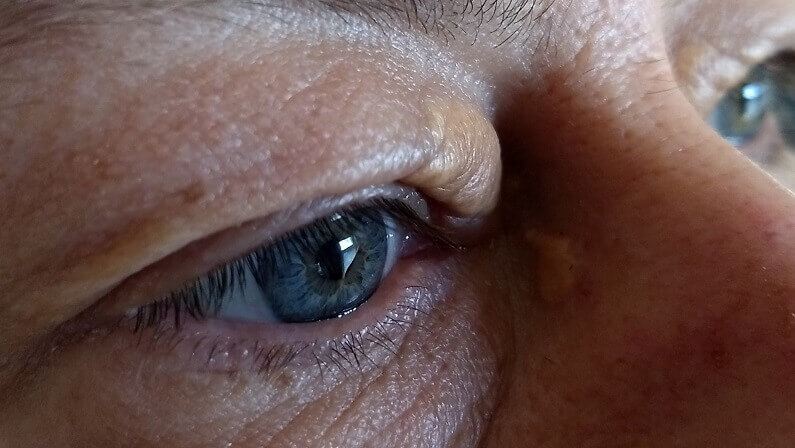
The straightforward and honest answer is no. Xanthelasma, the yellow cholesterol plaques on the eyelids, does not go away naturally or fade on its own over time. It is a deposit of cholesterol-rich material that has formed within the skin, and unlike a temporary blemish, it will not simply clear itself. In fact, left alone, xanthelasma tends to stay put and often enlarges slowly over months and years rather than receding.
This is worth saying plainly, because a lot of hope (and a lot of misleading content online) is pinned on the idea that xanthelasma might vanish with the right diet, supplement, or home remedy. It will not. That does not mean diet and lifestyle are pointless, they matter, but for a different job than clearing existing xanthelasma, as explained below. If you want a xanthelasma gone, it needs an active removal method. Xanthel ® is a cosmetic skincare cream made for xanthelasma removal at home. Our pages on whether xanthelasma disappears and what xanthelasma is cover the basics.

Why Xanthelasma Doesn’t Fade on Its Own
Understanding why xanthelasma is so persistent helps explain why the “natural disappearance” hope is misplaced. Xanthelasma forms when cholesterol-rich material is deposited in the skin of the eyelid, gathering in lipid-laden cells. Once that deposit has formed, it is a physical, settled feature of the skin tissue, not something the body readily clears away on its own, which is why xanthelasma does not behave like a passing spot or a bruise that resolves with time.
Because the deposit is already there, changing what is happening in your bloodstream (through diet or medication) does not dissolve the plaque that has formed. It can influence whether new xanthelasma develops, but it cannot reach back and remove an existing one. This is the key distinction that the “go away naturally” question misses: managing the cause affects the future, not the plaque already on your eyelid. Xanthelasma also tends to enlarge slowly if untreated, so waiting generally means it stays the same or grows, not that it fades. Our page on how fast xanthelasma grows covers its slow progression.

What Diet and Lifestyle Can Actually Do
Here is where natural approaches genuinely help, as long as expectations are right. Because xanthelasma is made of cholesterol, the diet and lifestyle measures that support healthy blood lipids, eating less saturated fat, more fibre, more vegetables, oily fish and other healthier fats, staying active, not smoking, and moderating alcohol, can help keep your cholesterol in a good range. Where raised cholesterol is part of why your xanthelasma formed, that genuinely matters.
But the honest framing is this: these measures work to reduce the chance of new xanthelasma forming and to support your wider health; they do not clear a xanthelasma that has already formed. So a healthier diet is a sensible, worthwhile thing to do alongside removal and for your heart, not a substitute for removal. It is also why a simple cholesterol check with your doctor is worthwhile, around half of people with xanthelasma have completely normal cholesterol, so for many it is reassurance, but for the rest it is a genuinely useful prompt. Our pages on what to eat for xanthelasma and how to prevent xanthelasma cover the diet side honestly.

What About Home Remedies and Supplements?
Online you will find claims that garlic, castor oil, or apple cider vinegar can make xanthelasma disappear naturally, and that supplements can dissolve it. The honest position is that none of these clears xanthelasma. The DIY topical remedies do not remove the cholesterol deposit, and applied to the eyelid they can irritate or burn that delicate skin, so they are best avoided entirely rather than tried near the eye.
As for supplements marketed for cholesterol or liver health, any genuine benefit they have is to your blood lipids, the same “may reduce new xanthelasma, won’t clear existing ones” logic applies, and they should only ever be taken on your doctor’s advice, not self-prescribed as a xanthelasma cure. There is simply no natural product, eaten or applied, that has been shown to make an existing xanthelasma go away. Recognising this saves time, money, and the risk of irritating the skin around your eye chasing a result that will not come. Our page on the causes of xanthelasma covers the cholesterol link.
If It Won’t Go Naturally, How Do You Clear It?
Since xanthelasma will not fade on its own, clearing it means an active removal method, and the good news is that the options are effective. The clinic procedures (surgical excision, laser, cryotherapy, radiofrequency, electrosurgery) all work but involve cost, some recovery, and a scarring risk on the delicate eyelid skin, and removal is cosmetic so it is rarely covered by insurance. The least invasive route, for typical eyelid xanthelasma, is an at-home cosmetic cream made for the purpose.
Xanthel ® is a cosmetic skincare cream made for xanthelasma removal at home, applied precisely to the xanthelasma following the supplied guide, with the skin healing over roughly one to two weeks. It avoids a clinic visit and is the natural first choice for most people. Pairing removal with a cholesterol check is sensible, since removal clears the existing xanthelasma while managing any underlying cause helps limit new ones, the two work together. If you would rather not remove it at all, that is fine too, as xanthelasma is harmless; concealing it with makeup is an option in the meantime. Our pages on how to remove xanthelasma, the xanthelasma removal cream, and removing xanthelasma at home cover the options.


Can Xanthelasma Go Away Naturally? The Bottom Line
No, xanthelasma does not go away naturally or fade on its own. It is a cholesterol deposit that has formed in the eyelid skin, and once present it tends to stay and often enlarges slowly rather than receding. Diet, lifestyle, and any supplements your doctor advises genuinely matter, but for reducing the chance of new xanthelasma and supporting your wider health, not for clearing a plaque that has already formed. The popular home remedies do not work and can irritate the skin near the eye.
So if you want an existing xanthelasma gone, an active removal method is the answer. The clinic options work but involve cost, recovery, and a scarring risk, while the least invasive route is xanthelasma removal at home with a cream made for the purpose, ideally paired with a cholesterol check to manage the cause. Our pages on whether xanthelasma comes back, whether it spreads, and how to treat it cover related questions.
Common Questions About Whether Xanthelasma Goes Away Naturally
Can xanthelasma go away on its own?
No. Xanthelasma does not fade naturally or resolve by itself. It is a cholesterol deposit that has formed within the eyelid skin, and once present it tends to stay and often enlarges slowly over time rather than receding. Clearing an existing xanthelasma requires an active removal method, either a clinic procedure or an at-home cosmetic cream made for the purpose.
Will changing my diet make xanthelasma disappear?
No, a better diet will not clear an existing xanthelasma, because the deposit has already formed in the skin and changing your blood lipids cannot dissolve it. What diet can do is help keep cholesterol healthy and reduce the chance of new xanthelasma forming, which is worthwhile alongside removal and for your wider health. To remove a plaque already there, an active method is needed.
Do home remedies like garlic or castor oil work naturally?
No. Garlic, castor oil, and apple cider vinegar do not remove the cholesterol deposit that makes up xanthelasma, despite the claims. Applied to the eyelid they can also irritate or burn that delicate skin and risk getting into the eye. They are best avoided entirely. There is no natural topical product shown to make an existing xanthelasma go away.
Can supplements dissolve xanthelasma?
No supplement has been shown to dissolve or remove an existing xanthelasma. Any genuine benefit of cholesterol- or liver-related supplements is to your blood lipids, which may help reduce new xanthelasma but will not clear one already formed, and they should only be taken on your doctor’s advice rather than self-prescribed as a xanthelasma cure. An existing plaque needs an active removal method.
Does xanthelasma get worse if I just leave it?
Often, slowly. Left untreated, xanthelasma does not fade and tends to persist, frequently enlarging gradually over months and years, and sometimes additional patches appear. The change is slow rather than sudden, so there is no urgency, but waiting generally means it stays the same or grows rather than going away. If you want it cleared, removal is the reliable route.
If it won’t go naturally, what is the easiest way to remove it?
For typical eyelid xanthelasma, the least invasive route is an at-home cosmetic cream made for the purpose. Xanthel is a cosmetic skincare cream made for xanthelasma removal at home, applied to the plaque, with the skin healing over one to two weeks. It avoids the cost, downtime, and scarring risk of a clinic procedure. Pairing it with a cholesterol check helps manage the underlying cause.
Is it okay to just leave xanthelasma alone?
Yes, if you wish. Xanthelasma is benign and does not harm the eye or vision, so there is no medical need to remove it, and leaving it alone is a valid choice. It simply will not go away on its own and may slowly enlarge. A cholesterol check is still worthwhile given the lipid link, and you can decide on removal at any time if the appearance starts to bother you.
Xanthel ® is a cosmetic skincare cream made for xanthelasma removal at home, not a medical treatment for any underlying condition. However your xanthelasma is removed, it is worth seeing your doctor for a simple check, since xanthelasma can sometimes sit alongside lipid, thyroid, or cardiovascular factors worth identifying and managing for your wider health.