Why The Yellow Eyelid Plaques Can Return After Removal, Who Is Most Likely To See Them Again, And What Lowers The Odds
Yes, xanthelasma can come back after any removal method, because taking away a plaque doesn’t change what made it form. Studies put recurrence generally under half of people, rising after repeat procedures and with deeper plaques. Knowing your cause, keeping your blood fats in check and dealing with new spots while they’re small gives you the best chance of staying clear.
Xanthelasma can come back after laser, peels, surgery or removal cream, at the same spot or nearby. Recurrence is generally reported in under half of people, rising to around 60% after repeat procedures, and deeper plaques return more often. Getting your lipids checked, managing any cause and removing new spots early all help.
Key Takeaways
- Xanthelasma can come back after every removal method.
- Recurrence is generally under 50%, around 60% after repeat procedures.
- Deeper plaques are more likely to return.
- About half of people with xanthelasma have a lipid disorder worth managing.
- Plaques can return even with normal cholesterol, often with low HDL.
- Small new spots are the easiest to remove again.
On This Page 16 sections
Can Xanthelasma Come Back?
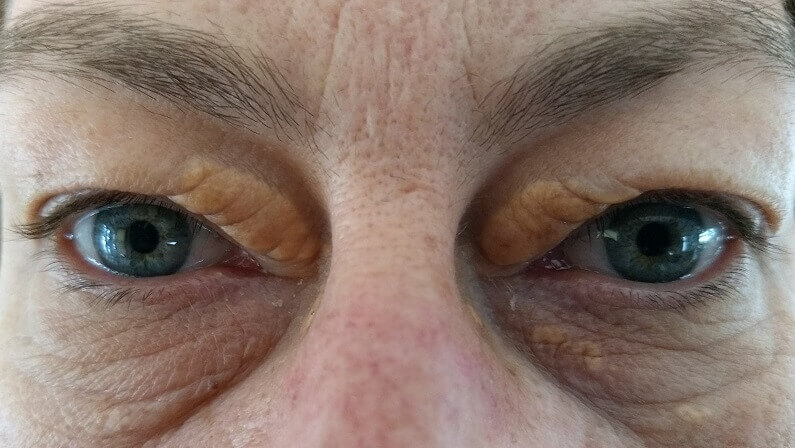
Yes. Xanthelasma can come back after any removal method, either where the old plaque was or nearby, because removal clears the visible deposit but not the process that formed it.
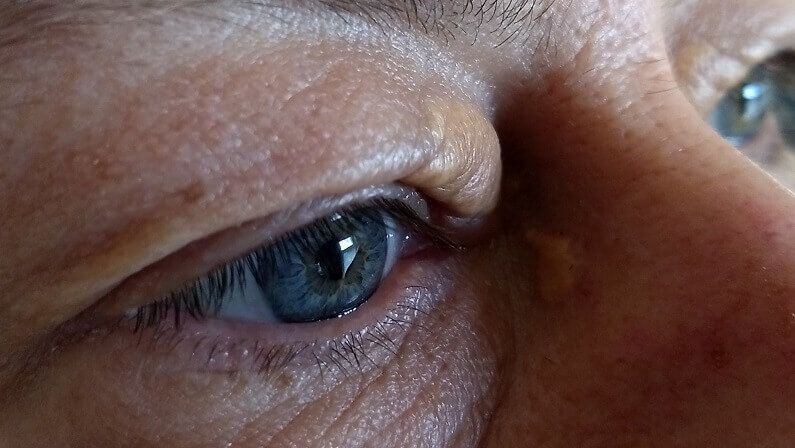
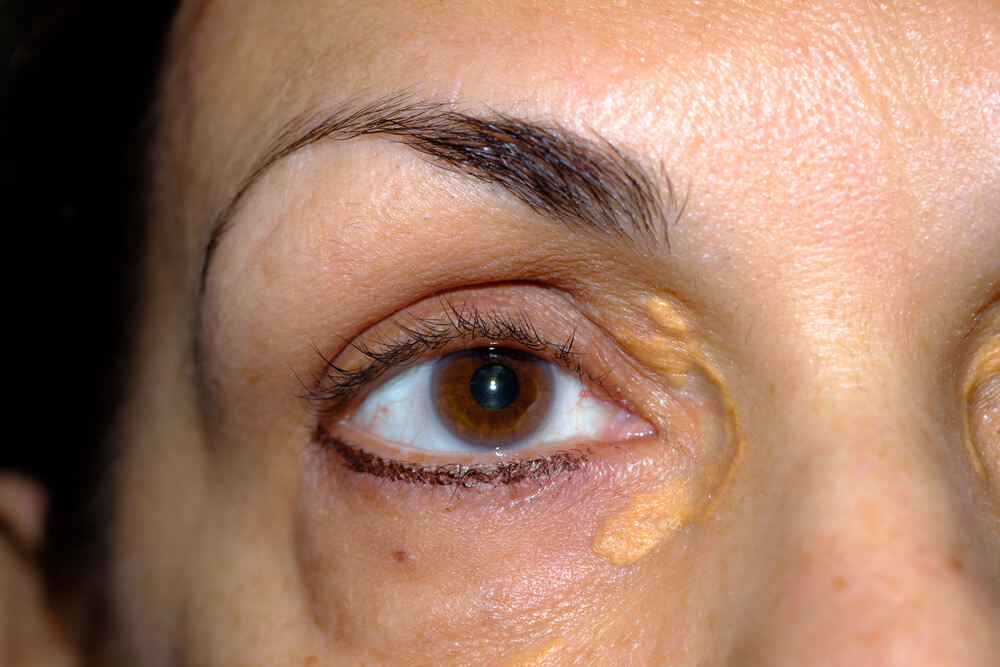
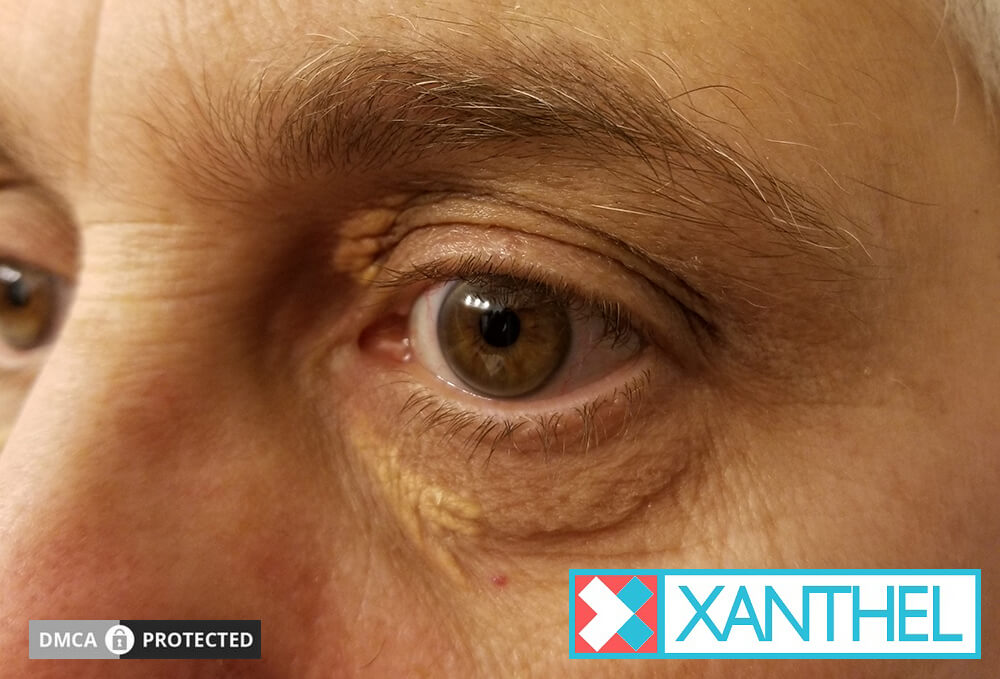
Xanthelasma palpebrarum is a soft, yellow plaque of fat-filled foam cells in the deeper eyelid skin, usually near the inner corners of the eyes.[1] When you remove a plaque, you take away those cells. What you don’t take away is whatever led fat to collect there in the first place, whether that’s a blood fat disorder, an inherited tendency or something going on in the eyelid skin itself.
StatPearls reports that recurrence after removal is generally under 50%, around 60% after repeat procedures, and more common with deeper plaques.[1] So recurrence is common, but far from certain, and there’s a lot you can do to tip the odds your way. Our sister page on whether xanthelasma comes back gives the short version; this guide goes into who is most at risk and what helps.
Why Does Xanthelasma Come Back?
Because the conditions that let fat collect in the eyelid skin usually carry on after removal, especially an untreated lipid disorder, an inherited tendency or other health conditions.
The plaques form when fat-carrying particles leak out of tiny blood vessels in the eyelid. Blinking constantly squeezes these vessels, and they become leakier with age. Immune cells called macrophages swallow the fat, become overloaded and turn into the foam cells that make up the plaque.[1] That process goes on in the eyelid whether or not a plaque has been removed.
Common contributors include raised cholesterol and triglycerides, low HDL, diabetes, an underactive thyroid, liver conditions such as primary biliary cholangitis, kidney conditions and some medicines such as retinoids or estrogens.[1] Whichever of these applies to you, if it’s still active, new plaques are more likely. Our guide to the causes of xanthelasma explains each one, and our page on why you might have got xanthelasma helps you work out which applies to you.
Can Xanthelasma Come Back If My Cholesterol Is Normal?
Yes. Many people with xanthelasma have normal total cholesterol, and plaques can still form and return, often alongside low “good” HDL cholesterol or local factors in the eyelid skin.
In one study of 42 people with xanthelasma, 54.8% had normal cholesterol, but their median HDL was much lower than in people without it, at 36.2 mg/dL against 50.5 mg/dL. The researchers suggested local, hormonal or immune cell factors may also play a part.[4] A wider review of 15 studies found people with xanthelasma tended to have higher LDL and apolipoprotein B and lower apolipoprotein A1, even when standard results looked unremarkable.[3]
So a “normal” cholesterol result doesn’t mean recurrence can’t happen. It’s worth asking your doctor to look at the full lipid profile, including HDL, rather than total cholesterol alone. Our page on whether xanthelasma indicates raised cholesterol explains what the numbers mean.

Who Is Most Likely To See Xanthelasma Come Back?
People with deeper plaques, plaques that have already returned once, an unmanaged lipid disorder, or an inherited cholesterol condition are the most likely to see xanthelasma come back.
- Deeper plaques. Recurrence is higher when plaques reach deeper into the skin.[1]
- Repeat procedures. Recurrence rises to around 60% after repeat removals.[1]
- An unmanaged lipid disorder. About half of people with xanthelasma have one.[1]
- Inherited high cholesterol. Familial hypercholesterolemia often brings xanthelasma and tendon xanthomas.[5]
- Other active causes. Diabetes, an underactive thyroid or certain medicines that aren’t being managed.[1]
None of these means plaques will definitely return, and people with none of them can still see new ones. They simply raise the odds, which makes them the places to focus your effort.

Does The Removal Method Change Whether Xanthelasma Comes Back?
Partly. Every method can be followed by recurrence. Removing the whole depth of a plaque matters, but no method changes the cause, so new plaques can form whichever route you choose.
A 2023 review of 49 studies found lasers gave strong results, with CO2 laser giving over 75% improvement in over 90% of patients, and surgery was favored for larger, deeper plaques.[2] Because deeper plaques are the ones most likely to return,[1] fully dealing with depth helps with that particular plaque. It doesn’t stop a new one forming next to it.
What Removal Can Do
- Clear the plaque you can see
- Leave smooth, healed skin
- Be repeated if a plaque returns
What Removal Can’t Do
- Lower your cholesterol
- Change an inherited tendency
- Stop new plaques forming nearby
That’s true of clinic methods and of removal cream at home alike. Our guide on how xanthelasma is removed compares the methods in detail.

Does Xanthelasma Come Back In The Same Place?
It can return at the same spot, at the edge of the old plaque or somewhere new on the eyelids, because the whole eyelid area is exposed to the same conditions.
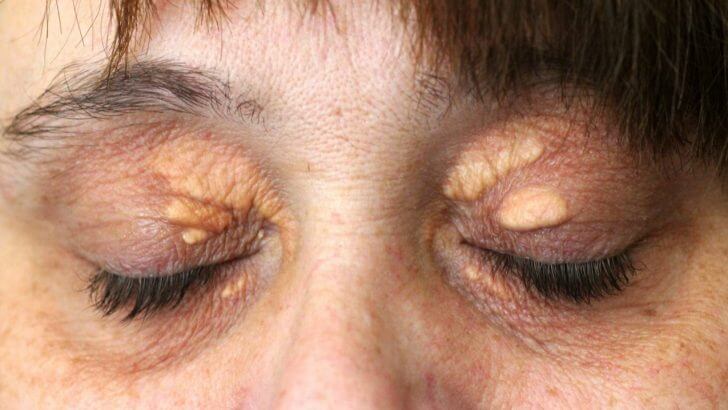
Plaques most often sit near the inner corners of the eyes, frequently on both sides, and they can slowly join up or spread along the lid.[1] A plaque returning at the edge of a removed one often means some deeper cells were left behind; a plaque appearing on the other eye or a different lid usually means the underlying process is still active. Our pages on whether xanthelasma spreads and how to stop xanthelasma from growing cover this pattern.

How Soon Can Xanthelasma Come Back?
There’s no fixed timeline. Some people see a new plaque within months, many go years without one, and some never see it again.
Xanthelasma generally grows slowly, over months to years rather than days.[1] In our experience, when plaques return they tend to start as a faint yellow tinge or a tiny flat spot that’s easy to miss at first. Checking your eyelids every month or two in good light means you catch anything new while it’s small. Our guide to how fast xanthelasma grows explains what to expect.
What Raises And Lowers The Chance Of Xanthelasma Coming Back
| Factor | Effect On Recurrence | What Helps |
|---|---|---|
| Cause managed, new spots removed early | Best chance of staying clear | Regular checks with your doctor and at home |
| Unmanaged lipid disorder | Raises the odds | Diet, activity and cholesterol-lowering medicine if prescribed |
| Low HDL with normal cholesterol | Can still allow plaques to form | A full lipid profile, not just total cholesterol |
| Inherited high cholesterol | Raises the odds | Diagnosis and lifelong lipid care |
| Deeper plaques | More likely to return | Removal that deals with the full depth |
| Repeat procedures | Around 60% recurrence | Pairing removal with cause management |
| Diabetes or underactive thyroid | Can raise the odds | Keeping these well controlled |
How Can I Stop Xanthelasma Coming Back?
You can’t rule it out, but you can lower the odds: get a full lipid check, manage any cause your doctor finds, look after your heart health and remove any new spots while they’re small.
- Get checked. A fasting lipid profile, liver panel, thyroid tests and fasting glucose cover the common causes.[1]
- Manage what’s found. Follow your doctor’s plan for cholesterol, diabetes or thyroid conditions, including cholesterol-lowering medicine if prescribed.
- Eat for your heart. Cut back on saturated and trans fats and favor vegetables, fruit, whole grains, beans, nuts and oily fish.
- Move, and keep a healthy weight. Regular activity is part of most cholesterol plans.
- Stop smoking and keep alcohol moderate. Both help your blood vessels as well as your lipids.
- Check your eyelids regularly. Catch new spots early, while they’re quick to remove.
Our guides on how to prevent xanthelasma and what to eat for xanthelasma go into each step.

Which Tests Help If Xanthelasma Keeps Coming Back?
A full fasting lipid profile including HDL, a liver panel, thyroid tests and blood sugar tests, with a closer look for inherited cholesterol conditions if plaques started young.
StatPearls recommends a fasting lipid profile, liver panel, thyroid function tests and fasting glucose, with HbA1c for people with diabetes.[1] If your results look normal but plaques keep returning, ask whether apolipoprotein B is worth checking too, since it tends to be higher in people with xanthelasma.[3]
These tests matter beyond your eyelids. A Danish study following almost 13,000 people for decades linked xanthelasma with a higher risk of heart attack and heart disease, even after allowing for cholesterol.[6] Plaques that keep coming back are a good prompt to keep those checks up to date.

Is Xanthelasma More Likely To Come Back If It Runs In The Family?
It can be, especially with familial hypercholesterolemia, an inherited condition that causes high LDL cholesterol from birth and often brings xanthelasma and tendon xanthomas.
Familial hypercholesterolemia affects about 1 in 250 to 1 in 500 people, and each child of an affected parent has a 50% chance of inheriting it. Statins are the first-line medicine.[5] In young people with xanthelasma, an inherited lipid disorder is more likely and worth testing for.[1] Because the cause is lifelong, plaques are more likely to return unless cholesterol is well controlled, and close family members may benefit from testing too. Our page on whether xanthelasma is genetic explains more.
What Should I Do If Xanthelasma Comes Back?
Don’t worry; it doesn’t mean anything went wrong. Get your lipids rechecked, then remove the new plaque, ideally while it’s still small and flat.
A returning plaque can be removed again with the same options as the first time: a removal cream at home, laser, an acid peel, radiofrequency or surgery. Small, thin plaques are generally simpler to deal with than large, deep ones,[2] so acting early saves time and money. Our guides on how you can get rid of xanthelasma and xanthelasma removal at home walk you through the choices.

If you’re keeping the cause in check with your doctor and want to clear a new or returning plaque at home, this is the cream we make for xanthelasma removal.
How Do I Spot Xanthelasma Coming Back Early?

Check your eyelids in daylight every month or two, without makeup, looking for a faint yellow tinge or a small, soft, flat spot near the inner corners.
- Use daylight. Face a window; artificial light hides yellow tones.
- Look at both eyes. Plaques often appear on both sides.
- Close your eyes gently. This stretches the upper lid so faint spots show.
- Take a photo. Use the same light and angle each time so changes stand out.
- Feel softly. Xanthelasma is soft and flat, not hard or round.
If you’re not sure whether a new spot is xanthelasma, our guide to what can look like xanthelasma helps you tell.

When Should I See A Doctor About Xanthelasma Coming Back?
If plaques keep returning, appear at a young age, come with yellow lumps on tendons, elbows or knees, or come with chest pain or other heart symptoms.
- Repeated returns. It’s worth reviewing your lipids, thyroid and blood sugar.[1]
- Plaques at a young age. An inherited lipid disorder is more likely.[1]
- Tendon lumps. Lumps on the Achilles, elbows, knees or hands can point to familial hypercholesterolemia.[5]
- Heart symptoms. Xanthelasma is linked with higher heart risk, so don’t ignore chest pain or breathlessness.[6]
Your primary care doctor can run the tests, and a dermatologist or eyelid surgeon can help with removal. Our page on what doctor removes xanthelasma explains who does what.
What’s The Bottom Line On Whether Xanthelasma Can Come Back?
Xanthelasma can come back after any removal method, generally in under half of people, more often after repeat procedures and with deeper plaques. Get a full lipid check, manage any cause, check your eyelids regularly and remove new spots while they’re small.
Xanthel® is a cosmetic cream made for xanthelasma removal at home, sold by Xanthelasma.com. You’ll find it in the box above and at the foot of this page, or read more about Xanthel® xanthelasma removal cream. Our pillar guide to the removal of xanthelasma compares every method, and you can browse all our xanthelasma guides. Wondering whether it can ever be cleared completely? Our pages on whether xanthelasma can be cured and whether xanthelasma can be reversed answer that.
Common Questions About Xanthelasma Coming Back
Does Xanthelasma Always Come Back After Removal?
No. Recurrence is generally reported in under half of people, though it’s more likely after repeat procedures and with deeper plaques.
Why Does Xanthelasma Come Back?
Removal clears the plaque but not the cause, such as a lipid disorder, an inherited tendency, diabetes or an underactive thyroid.
Can Xanthelasma Come Back With Normal Cholesterol?
Yes. Many people with xanthelasma have normal total cholesterol, often with low HDL or local factors in the eyelid skin.
Which Removal Method Stops Xanthelasma Coming Back?
None fully stops it. Dealing with a plaque’s full depth helps with that plaque, but managing the cause matters most for new ones.
Does Xanthelasma Come Back In The Same Place?
It can return at the same spot, at the edge of the old plaque or somewhere new on the eyelids.
Can Xanthelasma Be Removed Again If It Comes Back?
Yes. A returning plaque can be removed with the same options, ideally while it’s still small and flat.
How Can I Lower The Chance Of Xanthelasma Coming Back?
Get a full lipid check, manage any cause your doctor finds, eat for heart health, stay active, stop smoking and remove new spots early.
Should I See A Doctor If Xanthelasma Keeps Coming Back?
Yes. Repeated plaques are a good reason to review your lipids, thyroid and blood sugar, especially if they started young.
Sources
- Blair K. Xanthelasma Palpebrarum. StatPearls, National Library of Medicine (NCBI Bookshelf), updated 2026.
- Malekzadeh H, Ormseth B, Janis JE. A Practical Review of the Management of Xanthelasma Palpebrarum. Plastic and Reconstructive Surgery Global Open, 2023;11(5):e4982.
- Chang HC, Sung CW, Lin MH. Serum lipids and risk of atherosclerosis in xanthelasma palpebrarum: a systematic review and meta-analysis. Journal of the American Academy of Dermatology, 2020;82(3):596-605.
- Kavoussi H, Ebrahimi A, Rezaei M, Ramezani M, Najafi B, Kavoussi R. Serum lipid profile and clinical characteristics of patients with xanthelasma palpebrarum. Anais Brasileiros de Dermatologia, 2016;91(4):468-471.
- Ison HE, Clarke SL, Knowles JW. Familial Hypercholesterolemia. GeneReviews, National Library of Medicine (NCBI Bookshelf), revised 2025.
- Christoffersen M, Frikke-Schmidt R, Schnohr P, Jensen GB, Nordestgaard BG, Tybjaerg-Hansen A. Xanthelasmata, arcus corneae, and ischaemic vascular disease and death in general population: prospective cohort study. BMJ, 2011.