
Why Do I Have Xanthelasma
Why These Marks Appeared on You, and Why It’s Probably Not Your Fault
Wondering why you have xanthelasma? It usually comes down to a mix of genetics, your blood lipids, and sometimes other factors, often outside your control. This page explains why it happened to you, in plain terms.
By Xanthelasma.com
Why Do I Have Xanthelasma?
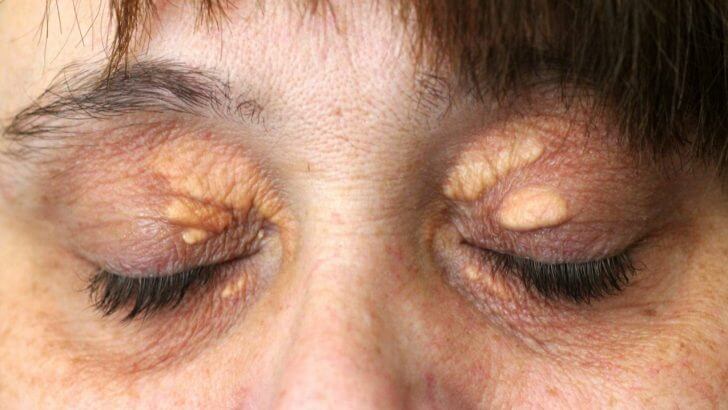
If you have found soft yellow marks on your eyelids and are asking why they appeared on you, here is the honest, reassuring answer: it usually comes down to a mix of factors, and many of them are outside your control. Xanthelasma forms when cholesterol-rich material collects under the thin skin of the eyelids, and whether that happens to you is shaped largely by your genetics, your blood lipids, and sometimes conditions like thyroid or diabetes, rather than by anything you did wrong.
The single most reassuring fact is this: around half of people with xanthelasma have completely normal cholesterol. So having these marks does not automatically mean your cholesterol is high or that you have neglected your health. The rest of this page walks through the real reasons, so you can understand your own case. And if you would like the marks gone, they can be removed without a clinic, Xanthel ® is a cosmetic skincare cream formulated to remove xanthelasma plaques at home. Our overview of what xanthelasma is covers the basics.

Genetics: Often the Biggest Reason
For a great many people, the honest answer to “why me” is genetics. A tendency to deposit cholesterol in the eyelid skin often runs in families, and you can have it even if your overall blood cholesterol is perfectly normal. If a parent or close relative has had xanthelasma or high cholesterol, that inherited predisposition is frequently the real explanation, and it is nothing you brought on yourself.
In some cases the genetic link is more specific, through inherited conditions like familial hypercholesterolemia, where the body handles cholesterol less efficiently from birth, which can lead to xanthelasma at a younger age. This is worth knowing because it is one of the things a doctor can check for. But the broader point stands: a personal, often inherited, tendency to form these deposits is the most common reason they appear, which is why they show up in plenty of people who eat well and look after themselves. Our page on what causes xanthelasma goes deeper into the genetic and lipid links.

Your Blood Lipids and Cholesterol
The other major factor is your blood lipids, the fats circulating in your blood. Because xanthelasma is built from cholesterol, raised LDL (the “bad” cholesterol), low HDL (the “good” kind), or raised triglycerides can all encourage the deposits to form. This is the link that gives the marks a little health significance, since raised lipids matter for your heart.
But, to repeat the key reassurance, this link is only present in about half of cases. For the other half, lipids are entirely normal and a local or genetic tendency is doing the work. The only way to know which group you are in is a simple lipid blood test from your doctor. If your lipids turn out to be raised, you have caught something genuinely useful early and can manage it for your heart’s sake; if they are normal, the marks are purely cosmetic and you have your reassurance. Our page on what xanthelasma indicates covers this health side.

Other Factors That Play a Part
Beyond genetics and lipids, a few other things influence who develops xanthelasma, and they help explain why it appeared when it did. Age is one: the marks most commonly appear between 35 and 55, as the skin changes with time. Sex is another, they are somewhat more common in women, partly through hormonal influences such as those around menopause. And certain health conditions can contribute, an underactive thyroid (hypothyroidism), diabetes, and liver conditions all affect how the body handles fats and can play a role.
Lifestyle factors, a diet high in saturated fat, carrying extra weight, and smoking, can add to the likelihood too, though they are rarely the whole story and often not the main one. The reason this matters for you is that some of these factors are checkable and manageable, which is exactly why a visit to your doctor is worthwhile when xanthelasma appears. Our page on what xanthelasma is caused by explores these systemic contributors.

It’s Probably Not Your Fault, and What to Do
If part of the worry behind “why do I have xanthelasma” is a sense that you must have done something wrong, please set that down. Because genetics and an inherited tendency play such a large role, and because half of those affected have normal cholesterol, xanthelasma is frequently nothing to do with lifestyle at all. It appears in healthy, careful people all the time. It is a tendency you were largely born with, not a verdict on how you live.
The constructive thing to do is twofold. First, see your doctor for a simple check, a lipid test, often with a thyroid and blood-sugar check, to identify or rule out any underlying factor. If something is found, managing it benefits your wider health; if not, you have reassurance. Second, the marks themselves are a separate, cosmetic matter. They will not fade on their own, but if they bother you, you can have them removed, including at home. You can look at the at-home removal option or compare the full range of removal options.


Why Do I Have Xanthelasma: The Short Version
You most likely have xanthelasma because of a mix of genetics, your blood lipids, your age, and sometimes a thyroid, diabetes, or liver factor, with an inherited tendency to deposit cholesterol in the eyelid skin being the most common reason of all. Crucially, around half of people who get it have normal cholesterol, so it is usually not a sign of poor health or anything you did wrong. The sensible response is a simple check with your doctor.
Once any underlying factor is checked, the marks are a cosmetic matter you can deal with separately. If you would like them gone, it is worth looking at the at-home removal option, and reading what causes xanthelasma or what it looks like for more.
Common Questions About Why You Have Xanthelasma
Why do I have xanthelasma if my cholesterol is normal?
This is very common, around half of people with xanthelasma have normal cholesterol. A local or genetic tendency to deposit cholesterol in the thin eyelid skin can exist independently of your overall blood levels. So normal cholesterol does not rule out xanthelasma, and the marks are often down to an inherited predisposition rather than your lipid levels.
Is xanthelasma my fault?
Almost certainly not. Because genetics play such a large role and half of those affected have normal cholesterol, xanthelasma frequently appears in people who eat well and look after themselves. It reflects a tendency you were largely born with, not a sign of a poor lifestyle or anything you did wrong.
Is xanthelasma hereditary?
Often, yes. A tendency to form the deposits commonly runs in families, and in some cases it is linked to specific inherited conditions like familial hypercholesterolemia. If close relatives have had xanthelasma or high cholesterol, you may share that predisposition, which is a useful thing to mention to your doctor.
Does having xanthelasma mean I have high cholesterol?
Not necessarily. It can be a sign of raised cholesterol, which is why a lipid test is worthwhile, but around half of people with xanthelasma have completely normal levels. The marks raise the question of your cholesterol rather than answering it, so a simple blood test is the way to find out.
Why did xanthelasma appear at my age?
Xanthelasma most commonly appears between 35 and 55, as the skin changes with age, though it can occur from the 20s onward. Hormonal changes, such as those around menopause in women, can also influence when it shows up. Its appearance at a particular age is normal and not a cause for alarm in itself.
Can a thyroid or diabetes problem be why I have xanthelasma?
It can contribute. An underactive thyroid and diabetes both affect how the body handles fats and are associated with xanthelasma, which is why a doctor often checks thyroid function and blood sugar alongside cholesterol. These are checkable and manageable, another reason a check-up is worthwhile.
Will the xanthelasma keep coming back?
It can, if an underlying cause like raised cholesterol is left unmanaged, or simply because the personal tendency to form it remains. Managing any underlying factor with your doctor reduces the chance of new marks. Removing the visible ones and managing the cause together gives the most lasting result.
What should I do now that I have xanthelasma?
See your doctor for a simple lipid test and a check for any underlying cause, which protects your wider health and provides reassurance. The marks themselves are a separate cosmetic matter, they will not fade on their own, but they can be removed, including at home, if they bother you.
Xanthel ® is a cosmetic skincare product, not a medical treatment. Because xanthelasma can sometimes sit alongside lipid, thyroid, or cardiovascular factors, it is worth discussing with your doctor, who can give you the full picture of your health to pair with any cosmetic approach.