Treatment Of Xanthoma
Why Treating a Xanthoma Starts with the Cause, Not Just the Lesion
The treatment of a xanthoma depends on its type, but one principle runs through nearly all of them: managing the underlying lipid cause comes first, with lesion removal a separate step. This page explains both, and where the eyelid type fits.
By Xanthelasma.com
Treatment of Xanthoma: Cause First, Lesion Second
A xanthoma is a deposit of cholesterol-rich material in the skin, and the right treatment depends a great deal on which type you have. The systemic types, eruptive, tuberous, tendon, and palmar xanthomas, are firmly a medical matter, while the eyelid type (xanthelasma) is usually a cosmetic one. But across nearly all of them, a single principle holds: because xanthomas are made of lipid, the foundation of treatment is identifying and managing any underlying lipid disorder, with removing the visible lesion a separate, often secondary, step.
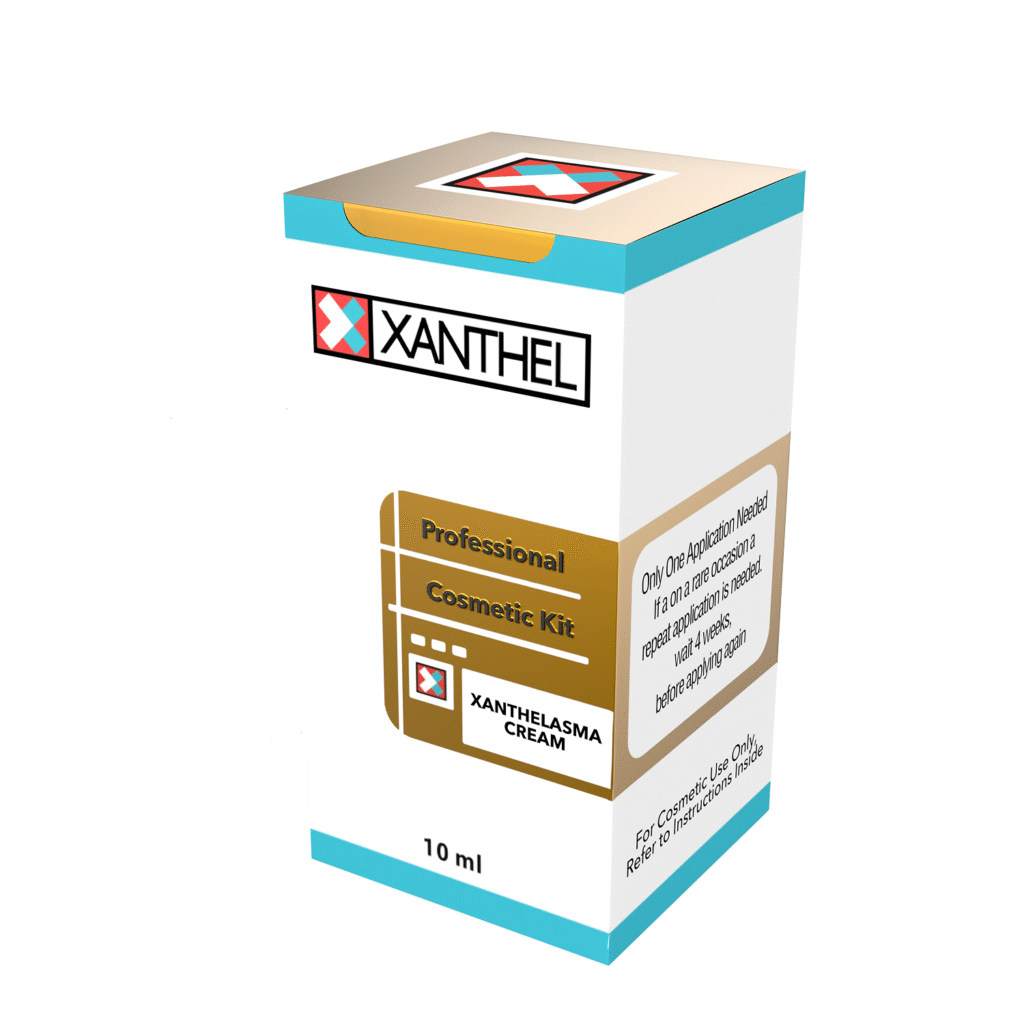
That is the key idea this page is built around. For the systemic types, treating the cause with a doctor is the priority and they should not be self-treated. For the eyelid type specifically, where removal is more often the main goal, the least invasive route is an at-home cosmetic cream: Xanthel ® is a cosmetic skincare cream made for xanthelasma removal at home, intended for the eyelid type and not for the systemic xanthomas. Our xanthomas overview and the xanthoma treatment page cover the family more widely.

Why the Cause Comes First
For almost every type of xanthoma, understanding what the lesion signals matters more than the lesion itself. Xanthomas are strongly associated with lipid abnormalities, raised cholesterol or triglycerides, and sometimes with inherited disorders like familial hypercholesterolemia or with diabetes, an underactive thyroid, or liver conditions. Some types, particularly eruptive xanthomas linked to very high triglycerides, can point to a risk of pancreatitis. So the appearance of a xanthoma (other than a clearly cosmetic eyelid mark) is a prompt to see a doctor for a lipid profile and an assessment of the cause.
Treating that cause, through diet, lifestyle, and lipid-lowering medication such as statins or fibrates where a doctor prescribes them, is the foundation of management. It protects your wider cardiovascular health and, for the systemic types, can sometimes reduce the lesions over time. Removal addresses the visible mark but never the cause, so the two work together rather than one replacing the other. Our pages on the causes of xanthelasma and skin xanthomas go further into the drivers.

Treating the Systemic Types
The xanthomas that form away from the eyelids are managed mainly by treating the lipid disorder behind them, with lesion removal a secondary, sometimes optional, step. Eruptive xanthomas (small bumps that appear in crops, often with very high triglycerides) frequently improve as the triglycerides are brought under control. Tuberous and tendon xanthomas, strongly tied to high cholesterol and inherited lipid disorders, are managed chiefly through lipid-lowering treatment, with surgery occasionally considered for large or troublesome lesions. Palmar xanthomas (yellowish deposits in the palm creases) are a recognised pointer to specific lipid disorders and are likewise addressed by treating the cause.
For all of these, the priority is medical management with a doctor, not cosmetic removal, and they are not something to treat at home. Where a lesion is large, uncomfortable, or cosmetically troubling, a doctor may remove it surgically or with laser, but recurrence is likely if the lipids stay uncontrolled. Our dedicated pages on tuberous xanthoma, tendon xanthomas, eruptive xanthoma, palmar xanthoma, and plane xanthoma cover each type.

Treating the Eyelid Type (Xanthelasma)
The eyelid form, xanthelasma, is different in an important way: while it can occasionally be linked to raised cholesterol, around half of people with it have completely normal cholesterol, and it is generally a cosmetic concern rather than a marker of a serious systemic disorder. A lipid check is still worthwhile, but for many it is simply reassurance. That makes the eyelid type the one where cosmetic removal is most often the main goal.
Removal options for xanthelasma include surgical excision, laser, cryotherapy, radiofrequency, and electrosurgery in a clinic, all effective but involving cost, recovery, a scarring or pigment-change risk near the eye, and usually no insurance cover. The least invasive route is the at-home cream. Xanthel ® is a cosmetic skincare cream made for xanthelasma removal at home, applied to the eyelid mark following the supplied guide, with the skin healing over one to two weeks. To be clear, it is intended only for eyelid xanthelasma, not for the systemic xanthoma types above, which need a doctor. Our pages on eyelid xanthoma and xanthelasma removal cover this type specifically.

Clinic Removal Methods and What to Expect
Where a lesion of any type is removed in a clinic, the methods are broadly the same, and the choice depends on the type, size, and location. Surgical excision cuts the lesion out under local anaesthetic, effective for larger or isolated lesions but with a scarring risk and recovery time; for eyelid lesions a skin flap or blepharoplasty technique is sometimes used for the best cosmetic result. Laser removal vaporises the deposit with precision and tends to heal relatively quickly, though it may need several sessions. Cryotherapy freezes it off, and radiofrequency or electrosurgery use heat to remove it.
All share the same realities: they remove the visible lesion but not the cause, recurrence is possible if the underlying lipids are not managed, and, since most xanthoma removal is cosmetic, insurance rarely covers it. Possible side effects include scarring, pigment changes, and, with lipid-lowering medication, the usual monitoring a doctor arranges. For lesions near the eyelid, an experienced practitioner who understands the delicate eye area matters. Whichever method and type, pairing removal with managing the underlying lipids gives the best chance of lasting results. Our xanthomas treatment page sets out the methods by type.


Treatment Of Xanthoma: The Bottom Line
How a xanthoma is treated depends on its type, but the foundation across nearly all of them is the same: identify and manage any underlying lipid disorder with a doctor, with lesion removal a separate step. The systemic types, eruptive, tuberous, tendon, and palmar, are primarily a medical matter and should not be self-treated. The eyelid type, xanthelasma, is usually cosmetic and is the one type where at-home removal is appropriate.
If your concern is the eyelid type and you would rather avoid a clinic, xanthelasma removal at home with Xanthel ® is the least invasive route, paired with a quick cholesterol check. For any xanthoma elsewhere on the body, please see your doctor for assessment. Our xanthomas overview gives the wider picture.

Common Questions About the Treatment of Xanthoma
How is a xanthoma treated?
It depends on the type, but the foundation is managing any underlying lipid disorder with a doctor, since xanthomas are made of cholesterol. The systemic types (eruptive, tuberous, tendon, palmar) are treated mainly this way, with lesion removal secondary. The eyelid type (xanthelasma) is usually cosmetic and can be removed by clinic procedures or an at-home cream.
Can all xanthomas be treated at home?
No. Only the eyelid type, xanthelasma, is suitable for at-home cosmetic removal. The systemic xanthomas are linked to significant lipid disorders and need medical assessment and management by a doctor, not home treatment. Xanthel ® is intended specifically for eyelid xanthelasma, not for the systemic types.
Does treating a xanthoma cure the underlying cause?
No. Removing a xanthoma deals with the visible lesion, not the lipid abnormality that caused it. That is why managing cholesterol or triglycerides with your doctor is the foundation of treatment for most types. Removal and cause-management work together, removal clears the mark, cause-management limits recurrence and protects your health.
Will a xanthoma come back after treatment?
It can, particularly if the underlying lipid disorder is left unmanaged, and this applies to all types and removal methods. Controlling cholesterol or triglycerides with your doctor, alongside any removal, is what reduces the chance of new lesions. Recurrence is much less about the method used than about the underlying cause.
Do lipid-lowering medications remove xanthomas?
Not directly. Medications like statins or fibrates are prescribed to manage your lipid levels and protect your wider health, and for some systemic types they can reduce the lesions over time. But they are not a reliable way to clear an existing lesion, especially eyelid xanthelasma, which usually needs removal. They work alongside removal, not instead of it.
How is eyelid xanthelasma treated differently from other xanthomas?
The eyelid type is usually a cosmetic concern, and around half of people with it have normal cholesterol, so removal is more often the main goal. It can be removed by clinic procedures or, least invasively, an at-home cream made for the purpose. The systemic types are primarily managed medically by treating the lipid disorder.
Can a cream treat any type of xanthoma?
No. An at-home cosmetic cream like Xanthel ® is made for eyelid xanthelasma, not for tuberous, tendon, eruptive, or palmar xanthomas, which sit elsewhere on the body and reflect lipid disorders needing medical management. Using a cosmetic eyelid product is not appropriate for those types; they should be assessed by a doctor.
When should I see a doctor about a xanthoma?
For any xanthoma other than a clearly cosmetic eyelid mark, see a doctor, since the systemic types signal lipid disorders that need assessment and management. Even for eyelid xanthelasma, a simple lipid check is worthwhile. A doctor can confirm the type, run blood tests, and guide treatment of any underlying cause.
Xanthel ® is a cosmetic skincare cream made for xanthelasma removal at home, intended for the eyelid type and not for the systemic xanthoma types, which need medical care. Whatever the lesion, it is worth seeing your doctor, since xanthomas can sit alongside lipid, thyroid, or cardiovascular factors worth identifying and managing for your wider health.