
Xanthoma Treatment
How Treatment Differs by Type, and Why It Usually Starts With the Cause
Xanthoma treatment depends heavily on which type you have. For most, the priority is treating the underlying lipid cause with a doctor, not removing the lump. This page explains the approach by type.
By Xanthelasma.com
How Is Xanthoma Treated?
Xanthoma treatment is not one-size-fits-all, because “xanthoma” is not a single condition. It is a family of cholesterol deposits that can appear in very different places, the eyelids, the tendons (such as the Achilles), the palms, the buttocks, or as widespread bumps across the skin, and the right treatment depends heavily on which type you have. So the first step in treating any xanthoma is identifying the type, which means seeing a doctor.
The key principle that runs through all of them: for most xanthomas, the priority is treating the underlying cause, not just removing the lump. That is because the great majority of xanthoma types are outward signs of a lipid disorder or another systemic condition, and managing that, with your doctor, is what matters most for your health and what reduces recurrence. The one type where cosmetic removal is the main concern is xanthelasma, the harmless eyelid type, and for that, Xanthel ® is a cosmetic skincare cream formulated to remove xanthelasma plaques at home. This page explains the approach by type. Our overview of xanthomas covers the family in full.

Step One: Identify the Type (See a Doctor)
Before any treatment, the type of xanthoma needs to be identified, because that determines everything that follows, and several types are important markers of serious underlying conditions. Eruptive xanthomas (crops of small bumps, often on the buttocks or limbs) can signal very high triglycerides and a risk of pancreatitis. Tendon xanthomas (firm lumps on tendons like the Achilles) are a classic sign of familial hypercholesterolemia, an inherited condition carrying significant cardiovascular risk. Palmar xanthomas (yellowish creases in the palms) point to a specific lipid disorder.
For all of these, the appearance of the xanthoma is genuinely useful, it is the body flagging something worth investigating, so the correct first step is a medical assessment: a doctor examines the lesions, takes your history, and runs blood tests (a lipid profile, and often checks for diabetes, thyroid, and liver conditions). This is not a step to skip in favour of cosmetic removal, because for these types the lump is the least important part. Our pages on tendon xanthomas and eruptive xanthoma cover those specific types.

Treating the Underlying Cause
For most xanthomas, treating the underlying cause is the main event, and it often improves the lesions too. Where a lipid disorder is found, managing it is the priority: this typically means a heart-healthy diet lower in saturated and trans fats, regular activity, a healthy weight, not smoking, and, frequently, lipid-lowering medication such as statins or other agents prescribed by your doctor. Where the cause is diabetes, a thyroid problem, or a liver condition, treating that condition is the route.
The encouraging part is that this often works on two levels at once. Eruptive xanthomas in particular can shrink or clear substantially once triglycerides are brought under control, sometimes without any direct removal at all. For other types, getting the underlying lipids managed protects your wider health (which matters far more than the lumps) and reduces the chance of new deposits forming. This is why xanthoma treatment is led by a doctor managing the cause, not by cosmetic removal of individual lesions. Our page on the causes behind these deposits covers the lipid side.
Removing the Lesions: When and How
Direct removal of a xanthoma is a separate question from treating the cause, and for many types it is secondary. Where lesions are removed, the clinic methods are surgical excision (for larger deposits, sometimes combined with eyelid surgery for big eyelid lesions), laser, cryotherapy (freezing), and electrosurgery or radiofrequency. These are carried out by a dermatologist or surgeon, the choice depending on the type, size, and location of the lesion, and all carry some scarring or pigment-change risk and a chance of recurrence if the cause is unmanaged.
It is worth being clear, though: removing a tendon or eruptive xanthoma without addressing the lipid disorder behind it treats the symptom and misses the point, which is why the cause comes first. Removal makes most sense for cosmetic reasons once any underlying condition is being managed, and that is most relevant for the eyelid type, which is harmless and where appearance is usually the only concern. Our page on the full range of removal options covers the methods.

The Eyelid Type: Xanthelasma
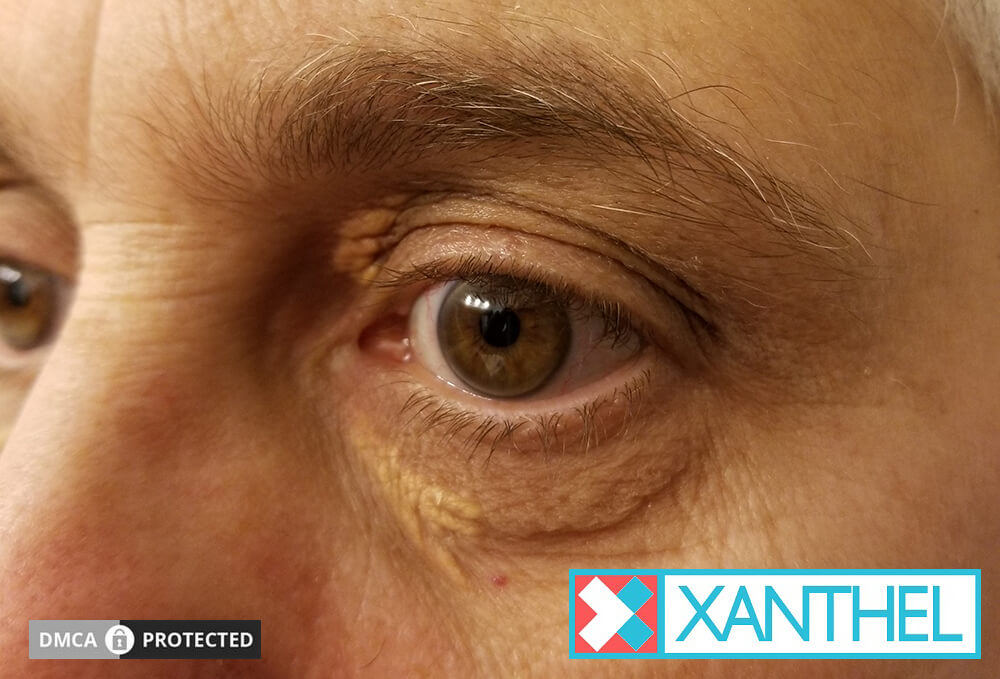
Xanthelasma, the type on the eyelids, is the exception where cosmetic treatment is usually the main concern, because it is harmless and does not threaten health in the way some other xanthomas can. It is still worth the same lipid check as any xanthoma, since around half of people with it have normal cholesterol but the rest may have a manageable lipid issue worth knowing about. Once that is sorted, dealing with the marks is purely a cosmetic choice.
For removing eyelid xanthelasma, the options run from the clinic procedures above to an at-home cream. Xanthel ® is a cosmetic skincare cream formulated to remove xanthelasma plaques at home, designed specifically for the eyelid type, as a less invasive, more affordable alternative to clinic procedures. Importantly, it is made for eyelid xanthelasma, not for tendon, eruptive, palmar, or other body xanthomas, which need the medical approach above. If your marks are the eyelid type, it is worth looking at the at-home removal option or our dedicated xanthelasma overview.


Xanthoma Treatment: The Bottom Line
How a xanthoma is treated depends on its type. For most types, tendon, eruptive, palmar, and other body xanthomas, the priority is identifying and treating the underlying lipid or systemic cause with a doctor, since these lesions are markers of conditions that matter more than the lumps themselves, and managing the cause often improves them. Direct removal of lesions is secondary and best done once any underlying condition is managed.
The eyelid type, xanthelasma, is the exception where cosmetic removal is usually the main concern, since it is harmless. For that type, it is worth looking at the at-home removal option. For any xanthoma, though, a doctor’s assessment comes first, and you can read more in our overview of xanthomas.

Common Questions About Xanthoma Treatment
How is xanthoma treated?
It depends on the type. For most xanthomas, the priority is treating the underlying lipid disorder or systemic condition with a doctor, often through diet, lifestyle, and lipid-lowering medication, which can improve the lesions. Direct removal (surgery, laser, freezing) is secondary. The eyelid type, xanthelasma, is the exception, where cosmetic removal is usually the main concern.
Can xanthoma be treated without surgery?
Often, yes. For many types, especially eruptive xanthomas, managing the underlying lipid disorder can shrink or clear the lesions without surgery. Lipid-lowering medication and lifestyle changes are central. For the eyelid type, an at-home cosmetic cream offers a non-surgical removal option. The right approach depends on the type, which a doctor should identify first.
Does treating cholesterol get rid of xanthoma?
For some types it helps considerably. Eruptive xanthomas in particular can shrink or resolve once high triglycerides are controlled. For other types, managing lipids reduces the chance of new deposits and protects your wider health, but may not clear existing lesions, which can need direct removal. It varies by type, so a doctor’s guidance matters.
Why does xanthoma treatment focus on the cause rather than the lump?
Because for most xanthoma types, the lump is an outward sign of an underlying condition, such as a lipid disorder, familial hypercholesterolemia, or diabetes, that carries real health implications. Treating only the lump misses the more important issue. Managing the cause protects your health and reduces recurrence, which is why a medical assessment comes first.
Can I use a cream to treat xanthoma?
A cosmetic cream like Xanthel is made for xanthelasma, the harmless eyelid type, not for tendon, eruptive, palmar, or other body xanthomas, which need medical assessment and treatment of their underlying cause. If your deposit is on the eyelids, an at-home cream is an option once you have had a lipid check. For other types, see a doctor.
Is xanthoma removal permanent?
Removal clears the treated lesion, but xanthomas can recur if the underlying cause, usually a lipid disorder, is left unmanaged, since the tendency to form deposits remains. This is why treating the cause alongside any removal gives the most lasting result. For inherited lipid conditions in particular, ongoing management with a doctor is important.
Which doctor treats xanthoma?
Start with your GP or primary care doctor, who can assess the lesions, run lipid and other blood tests, and identify the type and any underlying cause. They may refer you to a dermatologist for skin lesions, an endocrinologist or lipid specialist for the underlying disorder, or a surgeon for removal of larger lesions, depending on what is found.
Should I see a doctor before treating xanthoma?
Yes, this is important. Because several xanthoma types signal underlying conditions, some serious, a doctor should identify the type and check for any lipid or systemic cause before you consider removal. Skipping this in favour of cosmetic removal can miss a condition worth managing. The eyelid type is harmless, but still warrants a simple lipid check.
Xanthel ® is a cosmetic skincare cream made to remove xanthelasma plaques (the eyelid type) at home, not a medical treatment for xanthomas elsewhere on the body or for any underlying condition. Because many xanthomas are signs of a lipid or systemic disorder, it is important to see your doctor for assessment, who can identify the type and manage any underlying cause.