The Complete Guide: What It Is, What It Looks Like, Why It Happens, What It Means For Your Health, And How To Get Rid Of It
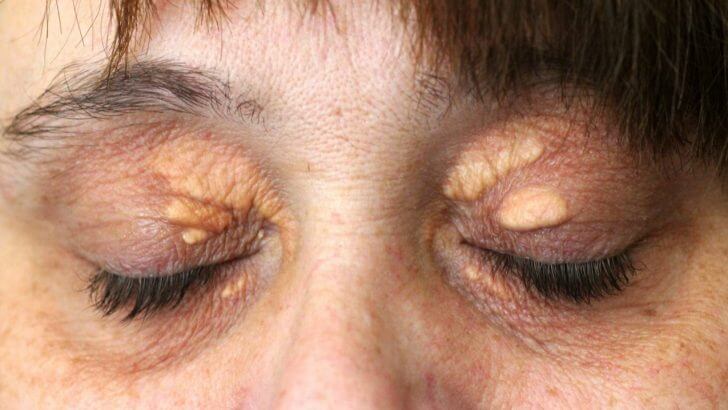
Xanthelasma is soft, yellow, cholesterol-rich plaques on the eyelids, usually near the inner corners. They’re harmless in themselves, but about half of people with them have a blood fat disorder, and they’re linked with heart disease risk, so a blood test comes first. The plaques rarely fade by themselves; they can be removed in a clinic or at home.
Xanthelasma is a buildup of fat-filled immune cells in the eyelid skin, seen as soft yellow plaques near the inner corners of the eyes. It affects about 1.1% of women and 0.3% of men. About half have a lipid disorder, so see a doctor for blood tests. The plaques can be removed by laser, surgery, peels or a removal cream.
Key Takeaways
- Xanthelasma is soft yellow plaques of fat-filled cells on the eyelids.
- It’s benign, never cancer, and doesn’t affect your sight.
- About half of people with it have a blood fat disorder.
- It’s linked with heart disease risk, even with normal cholesterol.
- Plaques rarely clear by themselves or with cholesterol control alone.
- Removal is by laser, surgery, peels or a removal cream at home.
On This Page 16 sections
What Is Xanthelasma?
Xanthelasma, or xanthelasma palpebrarum, is a buildup of fat-filled immune cells called foam cells in the skin of the eyelids. It shows as soft, flat or slightly raised yellow plaques, usually near the inner corners of the eyes.
Xanthelasma palpebrarum affects about 1.1% of women and 0.3% of men. It’s usually seen between ages 20 and 70, most often between 35 and 55.[1] It’s a type of xanthoma, the family of yellow lipid deposits that can appear in the skin and tendons, and it’s by far the one people notice most, because it sits on the face.
The name comes from the Greek for yellow plate; “palpebrarum” means “of the eyelids”. Our guide to xanthelasma palpebrarum covers the medical name and the basics in more depth.
How Do You Recognize Xanthelasma?
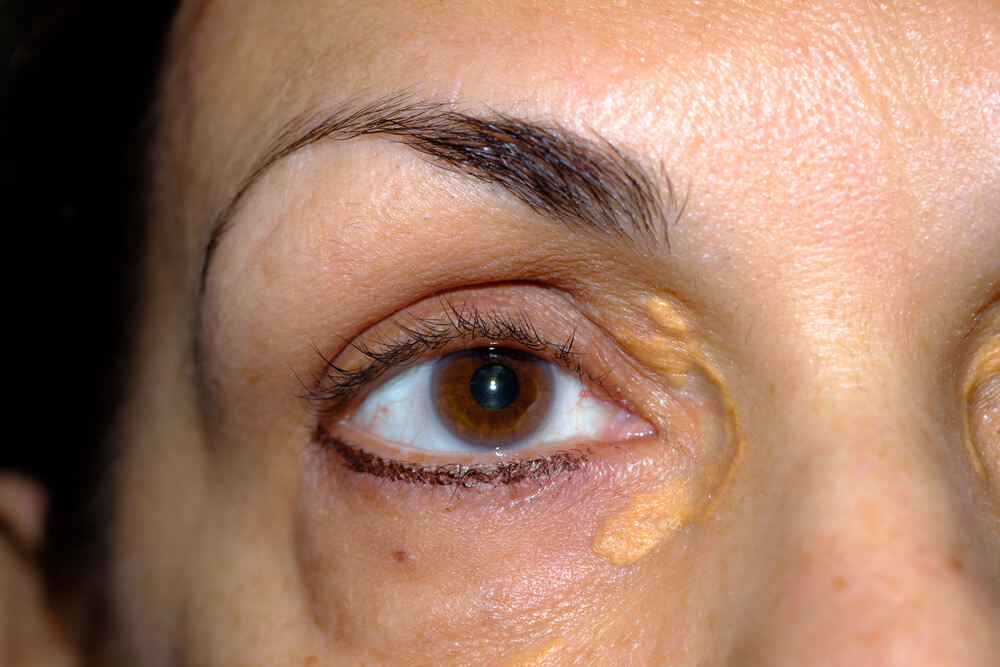
Look for soft, yellow, flat or slightly raised plaques near the inner corners of the eyelids, often on both sides. They don’t hurt, itch or bleed, and they change slowly over months or years.
Typical Of Xanthelasma
- Soft yellow plaques
- Inner corners of the eyelids
- Often on both sides
- Painless, slow to change
Worth A Closer Look
- White, hard dots (could be milia)
- Pearly or pink, with tiny vessels
- Bleeding, crusting or a sore
- Fast growth or firm nodules
A doctor can usually recognize xanthelasma just by looking.[6] A biopsy is only needed if the diagnosis is unclear.[1] Our guides to what xanthelasma looks like and what can be mistaken for xanthelasma show the typical look and the lookalikes.

Why Does Xanthelasma Happen?
Lipid leaks from tiny eyelid blood vessels into the skin, where immune cells swallow it and turn into yellow foam cells. Blinking and aging make those vessels leakier, and a blood fat disorder adds more lipid to leak.
The leading explanation is that blinking compresses the eyelid capillaries, the vessels become leakier with age, and macrophages that take up the escaped lipid become foam cells, collecting in the deeper skin around the vessels.[1] About half of people with xanthelasma have a primary or secondary lipid disorder.[1]
The secondary causes include an underactive thyroid, diabetes, primary biliary cholangitis (a liver condition), nephrotic syndrome (a kidney condition), and taking retinoid or estrogen medicines; in younger people, an inherited lipid disorder is more likely.[1] Our guides to the causes of xanthelasma and why xanthelasma occurs explain each one.
Does Xanthelasma Mean High Cholesterol?
Not always. About half of people with xanthelasma have a lipid disorder, most often high LDL or low HDL, and the other half have normal blood fats. A fasting lipid profile is the only way to know which applies to you.
A meta-analysis of 15 case-control studies with 854 patients found people with xanthelasma had higher total cholesterol, LDL cholesterol and apolipoprotein B, and lower apolipoprotein A1, than people without it.[2] In a study of 42 patients and 42 matched controls, 45.2% of patients had high cholesterol and 54.8% had normal cholesterol, and median HDL was 36.2 mg/dL in patients against 50.5 mg/dL in controls.[4]
The authors suggested that local, hormonal or immune-cell factors may explain plaques in people with normal blood fats.[4] Our guide on whether xanthelasma indicates raised cholesterol goes into the figures.

Is Xanthelasma Linked With Heart Disease?
Yes. People with xanthelasma have a higher risk of heart attack and heart disease, and the link holds even when cholesterol is normal. The plaques don’t cause heart problems, but they’re a reason to check your heart health.
A study of almost 13,000 people from the general population, followed for decades, found xanthelasma was linked with a higher risk of heart attack and heart disease independent of cholesterol.[3] A meta-analysis also found people with xanthelasma had thicker carotid artery walls and a higher risk of atherosclerosis.[2]
That’s why a check-up should look at your blood pressure, smoking, weight, blood sugar and family history as well as your cholesterol. Our guides on what xanthelasma indicates and whether xanthelasma is dangerous put the risk in context.

What Doesn’t Xanthelasma Mean?

It isn’t cancer and doesn’t turn into cancer, it doesn’t affect your sight, it doesn’t guarantee heart disease, and it isn’t a sign you’ve done something wrong.
- Not cancer. It’s a benign buildup of foam cells.[1] See whether xanthelasma can be cancerous.
- Not a sight problem. The plaques sit in the eyelid skin, not in the eye.
- Not a heart disease diagnosis. It’s linked with higher risk,[3] but many people with it never develop heart disease.
- Not always high cholesterol. More than half the patients in one study had normal cholesterol.[4]
- Not your fault. Age, genes and the way eyelid vessels behave all play a part.[1]

How Is Xanthelasma Diagnosed?
Usually by looking, then with blood tests for a cause: a fasting lipid profile, a liver panel, thyroid tests and fasting blood sugar, with HbA1c for people with diabetes.
- See your family doctor. They can usually recognize it by looking.[6]
- Fasting lipid profile. Total, LDL and HDL cholesterol and triglycerides.[1]
- Liver panel. Looks for conditions such as primary biliary cholangitis.[1]
- Thyroid function tests. Rule out an underactive thyroid.[1]
- Fasting glucose, and HbA1c in diabetes. Check blood sugar.[1]
- Heart risk review. Given the link with heart disease.[3]
- Biopsy, rarely. Only if the diagnosis is unclear.[1]
Our guide on which doctor to see about xanthelasma explains who does what.

How Is Xanthelasma Removed In A Clinic?
With surgery, laser, chemical peels or radiofrequency, chosen by the plaque’s size and depth. Laser suits small, superficial plaques; surgery suits large, deep or recurring ones. Each carries some risk of scarring or color change.
In a review of 49 studies, CO2 laser gave more than 75% improvement in over 90% of patients and Er:YAG more than 80%, with changes in skin color the most common complication; surgery suits larger, deeper plaques.[5] Recurrence after laser has been reported at 13% to 16%.[6] Chemical peels with 70% trichloroacetic acid work best on small plaques, and freezing is usually avoided on the eyelids because it can cause severe swelling.[6]
Surgery’s main risks are scarring and the lower lid turning outward or pulling back.[1] Our guides to the removal of xanthelasma and how doctors approach the cause and the plaques compare the methods in detail.

Xanthelasma Removal Options Compared
| Option | Best For | Results | Main Downsides |
|---|---|---|---|
| Xanthel® at home | Small to medium plaques, cause checked | One application per plaque, with enough for a second on larger ones; results vary | About one to two weeks of healing |
| Surgical excision | Large, deep or recurring plaques | Removes the plaque in one procedure | Scarring; lid turning out or pulling back |
| CO2 laser | Small, superficial plaques | Over 75% improvement in over 90% | Color change; recurrence 13% to 16% |
| Chemical peel (TCA) | Small plaques | Often several sessions | Thinning, scarring, discoloration |
| Radiofrequency | Plaques near the eye | Fine heated probe | Cost limits its use |
| Freezing | Rarely used on eyelids | Variable | Severe swelling, scarring |
Can You Remove Xanthelasma At Home?
Yes, with a removal cream made specifically for xanthelasma, applied only to the plaque after your doctor has checked the cause. Squeezing, picking and kitchen remedies such as garlic or vinegar don’t work and can burn or scar the eyelid.
Many people with small to medium plaques prefer to remove them at home rather than book a clinic procedure near the eye. A purpose-made cream is applied only to the plaque, one application per plaque, with enough for a second on larger ones, followed by about one to two weeks of healing. Results vary, and very large or deep plaques may still suit a clinic better.
Our guides to xanthelasma cream and how to remove xanthelasma at home walk through it, and whether you can squeeze out xanthelasma explains why DIY methods backfire. If your doctor has checked the cause and you want to deal with the plaques at home, this is the cream we make for xanthelasma.

Can You Cover Xanthelasma With Makeup?
Yes. A peach or orange color corrector cancels the yellow, and a thin layer of concealer matched to your skin covers it. It doesn’t remove anything, but it’s a safe way to hide plaques while you decide what to do.
- Prep gently. Clean, moisturized skin; don’t rub the plaque.
- Correct. A small dab of peach or orange corrector on the plaque only.
- Conceal. A thin layer of skin-matched concealer, pressed on.
- Set. A light dusting of powder helps it last on a moving eyelid.
Our guide on how to cover xanthelasma with makeup gives step-by-step tips.

Does Xanthelasma Come Back?
It can. Recurrence after removal is generally under 50%, rising to around 60% after repeat procedures and higher with deep plaques. Managing any cause protects your health, though it rarely clears existing plaques.
Recurrence is generally under 50%, around 60% after repeat procedures, and higher for deeper plaques.[1] Low-fat diets and statins have a questionable effect on the plaques themselves,[6] so cholesterol control and removal work side by side rather than one replacing the other. Keeping blood fats, thyroid and blood sugar under control gives you the best chance of fewer new plaques and protects your heart.
Our guide on whether xanthelasma comes back explains the odds and what affects them.

How Much Does Xanthelasma Removal Cost, And Does Insurance Pay?
Clinic removal varies widely by method, clinic and country, is charged per procedure or session, and is usually classed as cosmetic, so insurance rarely pays. At-home removal with Xanthel® is a fixed $169.
The check-up and blood tests for a cause are normal medical care and are usually covered, while removal for appearance generally isn’t. Clinic costs climb with plaque size, the number of eyelids and the number of sessions, and recurrence can mean paying again.[1] Our guides on how much xanthelasma removal is and whether xanthelasma removal is covered by insurance go into detail.

How Is Xanthelasma Different From Other Xanthomas?
Xanthelasma is the eyelid type. Other xanthomas appear elsewhere: tendon xanthomas in the Achilles and hands, eruptive crops of bumps with very high triglycerides, and flat yellow lines in the palm creases. Those are stronger signs of specific blood fat disorders.
All xanthomas are made of the same foam cells, but where they appear points to different causes. Xanthelasma often occurs with normal blood fats,[4] whereas tendon and palm-crease xanthomas point more strongly to inherited lipid disorders. If you have yellow deposits anywhere else as well as your eyelids, tell your doctor. Our xanthomas guide covers every type.

What’s The Bottom Line On Xanthelasma?
Xanthelasma is harmless yellow plaques of fat-filled cells on the eyelids. About half of people with it have a blood fat disorder, and it’s linked with heart disease risk, so get checked first. The plaques rarely fade, but they can be removed in a clinic or at home.
See your doctor for a lipid profile, liver, thyroid and blood sugar tests, look after your heart health, and then decide whether you want the plaques gone. Xanthel® is a cosmetic cream made for xanthelasma removal at home, sold by Xanthelasma.com. You’ll find it at the foot of this page, or read more about Xanthel® xanthelasma removal cream, and browse all our xanthelasma guides.
Common Questions About Xanthelasma
What Is Xanthelasma?
It’s a buildup of fat-filled immune cells in the eyelid skin, seen as soft yellow plaques near the inner corners of the eyes.
Is Xanthelasma Dangerous?
The plaques are harmless and never cancer, but they’re linked with blood fat disorders and heart disease risk, so a check-up is worthwhile.
Does Xanthelasma Mean High Cholesterol?
Not always. About half of people with it have a lipid disorder, and the rest have normal blood fats, so a lipid test is the only way to know.
Who Gets Xanthelasma?
About 1.1% of women and 0.3% of men, usually between 20 and 70 and most often between 35 and 55.
Does Xanthelasma Go Away On Its Own?
Rarely. The plaques tend to stay or slowly grow, and cholesterol control alone rarely clears them.
How Do You Get Rid Of Xanthelasma?
By removal: clinic laser, surgery or peels, or at home with a removal cream such as Xanthel® once a doctor has checked the cause.
Will Xanthelasma Come Back After Removal?
It can. Recurrence is generally under 50%, higher after repeat procedures and with deep plaques.
Should I See A Doctor About Xanthelasma?
Yes. A doctor can confirm it and arrange blood tests for cholesterol, liver, thyroid and blood sugar.
Sources
- Blair K. Xanthelasma Palpebrarum. StatPearls, National Library of Medicine (NCBI Bookshelf), updated 2026.
- Chang HC, Sung CW, Lin MH. Serum lipids and risk of atherosclerosis in xanthelasma palpebrarum: a systematic review and meta-analysis. Journal of the American Academy of Dermatology, 2020;82(3):596-605.
- Christoffersen M, Frikke-Schmidt R, Schnohr P, Jensen GB, Nordestgaard BG, Tybjaerg-Hansen A. Xanthelasmata, arcus corneae, and ischaemic vascular disease and death in general population: prospective cohort study. BMJ, 2011.
- Kavoussi H, Ebrahimi A, Rezaei M, Ramezani M, Najafi B, Kavoussi R. Serum lipid profile and clinical characteristics of patients with xanthelasma palpebrarum. Anais Brasileiros de Dermatologia, 2016;91(4):468-471.
- Malekzadeh H, Ormseth B, Janis JE. A Practical Review of the Management of Xanthelasma Palpebrarum. Plastic and Reconstructive Surgery Global Open, 2023;11(5):e4982.
- Patadia A, Rana HS, Stewart K, Yen MT, Lee H. Xanthelasma. EyeWiki, American Academy of Ophthalmology, reviewed 2026.