
What Can Be Mistaken For Xanthelasma
The Eyelid Bumps That Look Like Xanthelasma, and How to Tell Them Apart
Not sure the mark on your eyelid is xanthelasma? Several other bumps look similar. This page explains the common look-alikes, how they differ, and when to get a mark checked to be sure.
By Xanthelasma.com
Is It Really Xanthelasma?
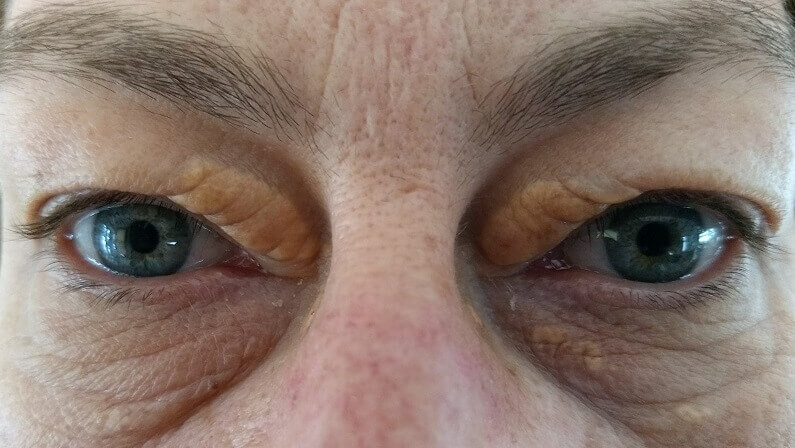
If you have a small bump or patch near your eye, it is sensible to ask whether it is xanthelasma or something else, because several harmless skin conditions look similar. Xanthelasma itself has a fairly recognisable look, soft yellow patches, usually near the inner corner of the upper and lower eyelids, often symmetrical on both eyes, but milia, syringomas, and a few others can be mistaken for it.
Getting the identification right matters for two reasons: so you treat the right thing, and because while xanthelasma and most of its look-alikes are completely benign, a small number of eyelid lumps are not, which is why anything that does not fit the typical picture is worth a professional look. This page walks through the common mimics and how they differ. If your marks do match xanthelasma, the good news is they can be removed at home, Xanthel ® is a cosmetic skincare cream formulated to remove xanthelasma plaques at home. Our page on what xanthelasma looks like describes the genuine article in detail.

Milia: The Most Common Mix-Up
Milia are probably the most frequent thing mistaken for xanthelasma. They are tiny cysts of trapped keratin (a skin protein) that show up as small, firm, white or yellowish bumps just under the skin’s surface, often around the eyes. It is easy to see why they get confused with the yellow of xanthelasma.
The differences, though, are clear once you know them. Milia are very small, usually just one or two millimetres, and dome-shaped, like tiny white pearls, whereas xanthelasma forms flatter, broader, distinctly yellow patches. Milia are filled with keratin, not cholesterol, so unlike xanthelasma they have no link to your lipid levels and need no cholesterol check. They can appear at any age, often after minor skin irritation. So if you are looking at tiny white pinhead bumps rather than soft yellow patches, milia is the more likely answer, and it is entirely harmless.

Syringomas and Sebaceous Hyperplasia
Two more common look-alikes are worth knowing. Syringomas are small, benign growths that come from the sweat-gland ducts, appearing as flesh-coloured or slightly yellowish firm bumps, often clustered on the lower eyelids and cheeks. They are more common in younger people and, like xanthelasma, are harmless and treated only for cosmetic reasons, but they are not made of cholesterol and carry no lipid significance. They tend to be small, firm, and multiple, rather than the softer, flatter, yellow plaques of xanthelasma.
Sebaceous hyperplasia is another: small yellowish bumps caused by enlarged oil glands, often with a tell-tale tiny dip in the centre, which helps distinguish them. Both of these are benign and, like xanthelasma, sit in the “cosmetic concern only” category, but because they are different in nature, they are treated differently, which is exactly why identifying the mark correctly is useful before deciding what to do. Our overview of what xanthelasma is helps you compare against the real thing.

When It Could Be Something That Needs Checking
Most look-alikes are harmless, but this is the part to take seriously. A few eyelid lesions do need proper medical attention, and the most important is basal cell carcinoma, a common and usually very treatable form of skin cancer that can occasionally appear near the eyes. Unlike xanthelasma, it tends to look like a pearly or waxy bump rather than a soft yellow patch, may have tiny visible blood vessels, can be firmer, and crucially may ulcerate, bleed, or slowly change and grow.
The honest message here is one of balanced reassurance: xanthelasma itself is benign and not cancer, and most things mistaken for it are harmless too. But because telling these apart by eye is not always reliable, any eyelid mark that bleeds, ulcerates, changes shape or colour, grows noticeably, or simply does not fit the soft, yellow, symmetrical pattern of xanthelasma should be checked by a doctor or dermatologist. That is not cause for alarm, it is simply sensible, and getting a clear diagnosis is the surest way to put your mind at rest. Our page on whether xanthelasma can be cancerous addresses that worry directly.

How to Tell, and What to Do
Putting it together, the soft, yellow, flat, symmetrical patches near the inner eyelid corners are the signature of xanthelasma; tiny white pearly bumps point to milia; small firm clustered bumps suggest syringomas; and yellow bumps with a central dimple suggest sebaceous hyperplasia. Anything pearly, bleeding, ulcerating, or changing warrants a doctor’s look. When in any doubt at all, the simplest and safest step is a professional diagnosis, a doctor can usually identify these in moments, and confirm with a biopsy if ever needed.
Once you know it is xanthelasma, the marks are a cosmetic matter. They will not fade on their own, but they can be removed, including at home, and it is worth a simple cholesterol check too, since xanthelasma can occasionally flag raised lipids. If yours is confirmed as xanthelasma, you can look at the at-home removal option or compare the full range of removal options.


What Can Be Mistaken For Xanthelasma: The Short Version
Several harmless conditions can look like xanthelasma, most commonly milia (tiny white keratin cysts), syringomas (small sweat-gland bumps), and sebaceous hyperplasia (yellow bumps with a central dip). These are benign, like xanthelasma itself, but differ in nature and treatment. More rarely, an eyelid lesion can be something that needs medical attention, such as basal cell carcinoma, which is why any mark that bleeds, ulcerates, or changes should be checked.
If your marks match the soft, yellow, symmetrical pattern of xanthelasma, they can be dealt with cosmetically, it is worth looking at the at-home removal option, and confirming with what xanthelasma looks like. If you are unsure, see a doctor for a definitive diagnosis first.
Common Questions About What Can Be Mistaken For Xanthelasma
What is most commonly mistaken for xanthelasma?
Milia are the most common mix-up, tiny white or yellowish keratin cysts that appear as small pearly bumps around the eyes. Syringomas (small sweat-gland bumps) and sebaceous hyperplasia (yellow bumps with a central dip) are also frequently confused with xanthelasma. All three are benign but differ from xanthelasma in nature and treatment.
How can I tell xanthelasma from milia?
Xanthelasma appears as soft, flat, distinctly yellow patches, usually near the inner corners of the eyelids and often symmetrical. Milia are much smaller, one to two millimetres, dome-shaped, and white or pearly rather than yellow plaques. Milia are made of keratin, not cholesterol, so they have no link to your lipid levels.
Can syringomas be mistaken for xanthelasma?
Yes. Syringomas are small, firm, flesh-coloured or slightly yellowish bumps that often cluster on the lower eyelids, and they can resemble xanthelasma. However, they come from sweat-gland ducts, not cholesterol deposits, so they carry no lipid significance. Both are benign, but they are different conditions treated in different ways.
Could a mark I think is xanthelasma be skin cancer?
It is uncommon, but some eyelid lesions, such as basal cell carcinoma, can look superficially similar. Unlike xanthelasma’s soft yellow patches, these often appear pearly or waxy, may have visible blood vessels, and can bleed, ulcerate, or grow. Any eyelid mark that does this, or does not fit the typical xanthelasma pattern, should be checked by a doctor.
Is xanthelasma itself dangerous or cancerous?
No. Xanthelasma is a benign cholesterol deposit and is not cancer, nor does it turn into cancer. The reason to identify a mark correctly is to distinguish it from the rarer eyelid lesions that do need attention, and so you treat the right thing, not because xanthelasma itself is a threat.
How do doctors tell these conditions apart?
A doctor or dermatologist can usually distinguish xanthelasma from its look-alikes by appearance alone, considering the colour, texture, size, and distribution of the marks, along with your history. Where there is any doubt, a simple biopsy gives a definitive answer by showing exactly what the lesion is made of.
Should I get my eyelid mark checked?
If it clearly matches xanthelasma, soft, yellow, flat, symmetrical, a doctor visit is still worthwhile for a cholesterol check, but it is reassuring. If the mark is pearly, bleeding, ulcerating, changing, or simply does not fit that pattern, you should have it checked to be sure. When in doubt, a professional diagnosis is the safest step.
If it is xanthelasma, how do I get rid of it?
Once confirmed, xanthelasma is a cosmetic matter. It will not fade on its own, but it can be removed. Xanthel ® is a cosmetic skincare cream formulated to remove xanthelasma plaques at home, as an alternative to clinic procedures like surgery, laser, and freezing, without the cost, scarring risk, or downtime.
Xanthel ® is a cosmetic skincare product intended for confirmed eyelid xanthelasma. Because some eyelid lesions can look similar but need medical attention, any mark you are unsure about, or that bleeds, ulcerates, or changes, should be checked by a doctor. A cholesterol check is also worthwhile, since xanthelasma can occasionally sit alongside lipid factors.