What Does Xanthelasma Mean?
What the Word Refers To, and What It Means to Actually Have It, for Your Looks and Your Health
Xanthelasma means a benign, yellow cholesterol deposit on the eyelid. Having it means a harmless cosmetic mark that, because it is made of cholesterol, is also worth a simple health check, though for about half of people it signals nothing wrong.
By Xanthelasma.com
What Does Xanthelasma Mean?
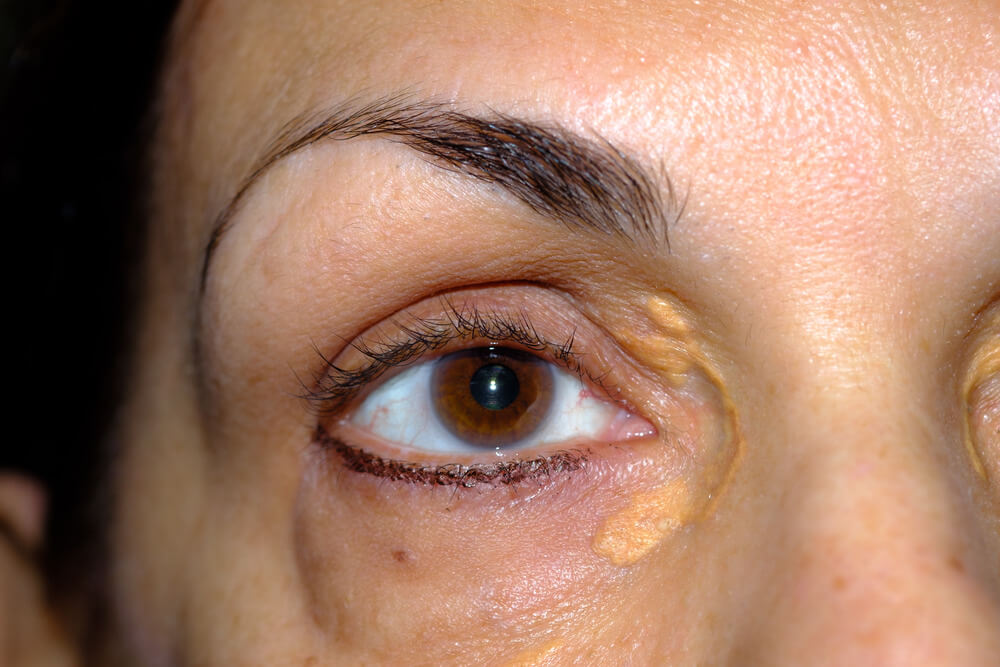
Xanthelasma means a soft, yellow deposit of cholesterol-rich material in the skin of the eyelids. It is a type of xanthoma (the general term for cholesterol deposits in the skin), and the eyelid form is the most common kind. So at the simplest level, the word refers to a specific, well-recognised, benign mark: yellow plaques on the eyelids, usually near the inner corner, often on both eyes.
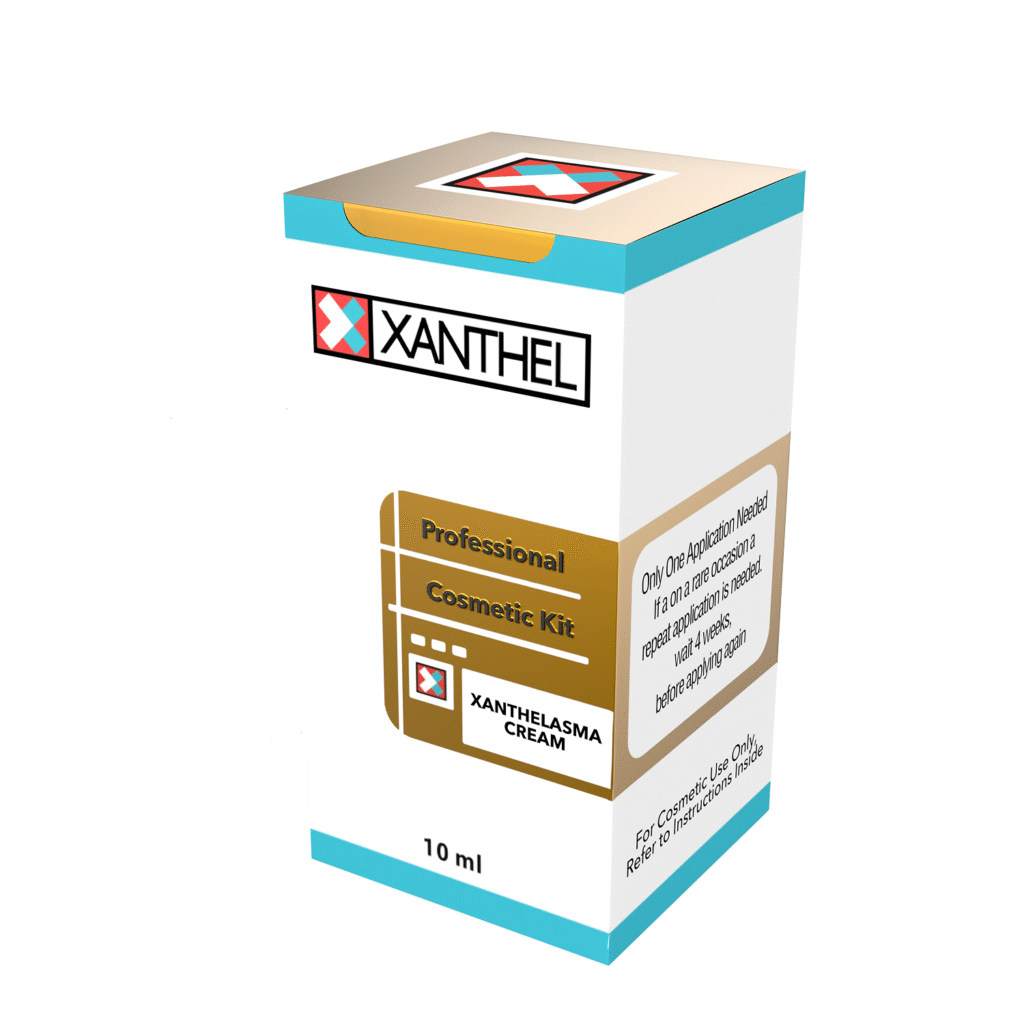
But people asking “what does xanthelasma mean” usually want more than a dictionary definition, they want to know what it means for them: is it serious, what does it say about their health, and what should they do. This page answers all of that in plain terms. In short, having xanthelasma means a harmless cosmetic mark that is also a gentle prompt to check your cholesterol, though often it signals nothing wrong at all. If you would like the precise word origin, our meaning of xanthelasma in medical terms page covers the etymology; for the full primer, see what is xanthelasma. And if you would like to clear the marks, Xanthel ® is a cosmetic skincare cream made for xanthelasma removal at home.

What It Means for Your Appearance
For most people, what xanthelasma means in practice is a cosmetic mark. The plaques are yellow, soft, and usually flat or slightly raised, with well-defined edges, sitting on the eyelid skin near the inner corner. They are painless and do not affect your vision or how the eyelid works, but because they sit on the face in a visible spot, they can affect how you feel about your appearance.
That is a perfectly valid reason to want them gone, and many people do. It is worth knowing that they will not fade on their own: once a plaque has formed, it tends to stay put or slowly enlarge, so “what does it mean for my looks” really means “this is here until removed.” It also tends to be symmetrical, appearing on both eyes, and can grow gradually over time. If the appearance is your main concern, the marks can be removed cosmetically. Our page on what xanthelasma looks like covers the appearance and how to tell it from look-alikes.

What It Means for Your Health
This is the part most people are really asking about: does having xanthelasma mean something is wrong? The honest answer is reassuring but worth taking seriously. Because the marks are made of cholesterol, they can sometimes be an outward sign of raised blood lipids, and occasionally of a thyroid, diabetes, or liver issue. So xanthelasma can act as a useful visual clue prompting a simple check.
But it must be kept in proportion, and this is the key point: around half of people with xanthelasma have completely normal cholesterol. So having the marks does not mean you have high cholesterol or heart disease, it simply means a quick lipid blood test is worthwhile, to find out. For some people that test turns up raised cholesterol worth managing (which is genuinely useful to catch early); for many others it is simply reassurance. Either way, the marks themselves are benign and not dangerous. So what it means for your health is: not an alarm, but a sensible prompt for a routine check. Our pages on whether xanthelasma indicates raised cholesterol and whether it is dangerous cover this in depth.

Xanthelasma and Xanthoma: What the Terms Mean Together
It helps to place the word in context, because you will often see “xanthoma” alongside it. Xanthoma is the broad term for any cholesterol deposit in the skin or tissues, which can appear in several places on the body. Xanthelasma is the specific type that forms on the eyelids, so all xanthelasma are xanthomas, but not all xanthomas are xanthelasma. Its full medical name is xanthelasma palpebrarum, where “palpebrarum” simply means “of the eyelids.”
So when you see “xanthelasma,” it always means the eyelid form specifically, which is reassuring, because the eyelid type is typically the straightforward cosmetic one, while some other xanthoma types (on tendons, for instance) carry stronger links to significant lipid disorders. Knowing the term places your marks precisely: the common, benign, eyelid kind. Our pages on what a xanthoma is and xanthelasma palpebrarum cover the wider terminology.
What It Means You Should Do
So, putting it together, what does having xanthelasma mean you should actually do? Two simple things. First, have a quick cholesterol check with your doctor, this is the one worthwhile health step, since it tells you whether raised lipids are part of your picture (and reassures you if they are not). Second, decide whether you want the marks removed, which is entirely optional, since they are harmless, and purely down to whether their appearance bothers you.
If you do want them gone, the clinic options (surgery, laser, freezing) work but involve cost, recovery, and a scarring risk near the eye, while the least invasive route is an at-home cosmetic cream made for the purpose. Xanthel ® is a cosmetic skincare cream made for xanthelasma removal at home, applied to the plaque, with the skin healing over one to two weeks. That is really all “having xanthelasma” means in practical terms: a benign mark, a quick check, and an optional removal. Our pages on how to remove xanthelasma, the xanthelasma removal cream, and whether it is common cover these.


What Does Xanthelasma Mean? The Bottom Line
Xanthelasma means a benign, yellow cholesterol deposit on the eyelid skin, the most common type of xanthoma, full name xanthelasma palpebrarum. In practical terms, having it means two things: a harmless cosmetic mark that will not fade on its own, and a gentle prompt to have a simple cholesterol check, since the marks are made of cholesterol and can occasionally signal raised lipids, though around half of people with them have normal cholesterol. It does not mean you have high cholesterol or heart disease; it means a routine check is worthwhile.
What it means you should do is straightforward: get that cholesterol check, and decide whether to remove the marks (optional and cosmetic). If you would rather avoid a clinic, xanthelasma removal at home with a cream made for the purpose is the least invasive route. Our meaning of xanthelasma in medical terms, whats xanthelasma, and causes of xanthelasma pages cover the term and background further.
Common Questions About What Xanthelasma Means
What does xanthelasma mean?
Xanthelasma means a benign, yellow deposit of cholesterol-rich material in the eyelid skin. It is the most common type of xanthoma (the general term for cholesterol deposits in the skin), and its full medical name is xanthelasma palpebrarum. It is primarily a cosmetic mark, though because it is made of cholesterol, it can occasionally signal raised lipids worth checking.
Does having xanthelasma mean I have high cholesterol?
Not necessarily. Around half of people with xanthelasma have completely normal cholesterol, so having the marks does not mean your cholesterol is high. It does mean a simple lipid blood test is worthwhile, since for the other half it can be a useful early sign of raised cholesterol worth managing. So it is a prompt to check, not a diagnosis.
Is xanthelasma serious?
No, the marks themselves are benign and harmless, they do not threaten your eyes or vision. What they can mean is that a cholesterol check is worthwhile, because they are made of cholesterol and can occasionally reflect raised lipids. So xanthelasma is not serious in itself, but it is a sensible prompt for a routine health check rather than something to ignore.
What does it mean if xanthelasma keeps appearing?
Recurring or new marks usually mean an underlying cause, often raised cholesterol or a genetic tendency, has not been addressed, since removal clears a mark but not the cause. It can also simply reflect an individual predisposition. The sensible response is a cholesterol check and management of any lipid issue with your doctor, alongside removing the marks.
What is the difference between xanthelasma and xanthoma?
Xanthoma is the broad term for any cholesterol deposit in the skin or tissues, which can appear in several places on the body. Xanthelasma is the specific type that forms on the eyelids. So all xanthelasma are xanthomas, but not all xanthomas are xanthelasma. The eyelid type is usually the straightforward cosmetic one.
Does xanthelasma mean anything will happen to my eyes?
No. Despite sitting on the eyelids, xanthelasma does not affect your vision or how the eye works, it is purely a deposit in the skin. It is painless and harmless to the eye itself. The only reason it relates to the eye area at all is location; it carries no threat to your eyesight.
What should I do if I have xanthelasma?
Two simple things: have a quick cholesterol check with your doctor (the one worthwhile health step), and decide whether you want the marks removed, which is optional since they are harmless. If you want them gone and would rather avoid a clinic, an at-home cosmetic cream made for the purpose is the least invasive route. A doctor can also confirm the marks are xanthelasma.
Xanthel ® is a cosmetic skincare cream made for xanthelasma removal at home, not a medical treatment for any underlying condition, so it addresses the appearance of the xanthelasma rather than any underlying cause. The marks themselves are benign, but because xanthelasma can sometimes signal raised cholesterol or another lipid issue, it is worth seeing your doctor for a simple check.