
How Common Is Xanthelasma?
The Prevalence Figures in Detail, by Sex, by Age, and Where on the Eyelid It Appears
Xanthelasma affects roughly 1% of people overall, but the figure differs by sex, around 1.1% of women and 0.3% of men, and it peaks in middle age. Here are the prevalence numbers in detail and what they mean for you.
By Xanthelasma.com
How Common Is Xanthelasma?
Xanthelasma is reasonably common as skin conditions go, affecting in the region of 1% of the general population, and it is the most common type of cutaneous xanthoma (cholesterol deposit in the skin). So if you have noticed the soft yellow plaques on your eyelids, you are in well-recognised company rather than dealing with something rare. The headline 1% figure, though, hides some meaningful variation by sex and age, which is what this page looks at in detail.
In short: it is more common in women than men, and more common with increasing age, peaking in middle age. None of that changes the basic picture, the marks are benign, primarily cosmetic, and only sometimes a sign of raised cholesterol, but the demographic detail is useful for understanding your own likelihood. Our companion page on whether xanthelasma is common gives the general overview, while this one focuses on the numbers. If you would like to clear the marks, Xanthel ® is a cosmetic skincare cream made for xanthelasma removal at home.

The Figures by Sex
The clearest demographic split is by sex, and the figures are worth stating precisely. Prevalence is estimated at around 1.1% in women and roughly 0.3% in men, so xanthelasma is several times more common in women than men. Hormonal factors are thought to contribute to this difference, though the marks are common enough in both groups to be familiar to doctors.
This sex difference is one of the more consistent findings about xanthelasma’s distribution. It does not mean being a woman causes the marks, only that they are seen noticeably more often in women, in the same way many conditions skew toward one sex without that being the cause. If you are a woman who has developed xanthelasma, this is simply part of the normal pattern of the condition rather than anything unusual. The same benign nature and the same sensible response (a simple cholesterol check) apply regardless of sex. Our page on whether xanthelasma indicates raised cholesterol covers that check.

The Figures by Age
Age is the other major factor in how common xanthelasma is, and the pattern is straightforward: it becomes more likely as you get older. While it can appear across a wide age span (reported from the teens through to the seventies), the peak incidence falls in middle age, broadly between the ages of around 30 and 50, and it remains common into older age. This is thought to relate to the way lipid handling and skin change over time.
Onset in younger people is less common, and when xanthelasma does appear notably early in life, it more often points to a stronger genetic tendency or an underlying lipid disorder such as familial hypercholesterolaemia. That is why early onset, say under 40, is a particular prompt for a cholesterol check. For most people, though, xanthelasma showing up in middle age is simply the typical pattern. Our page on whether xanthelasma is genetic covers the inherited and early-onset angle in more detail.

Where on the Eyelid It Appears
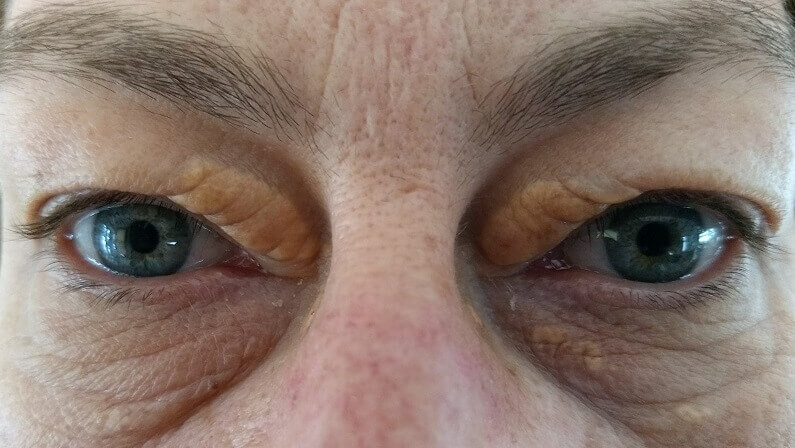
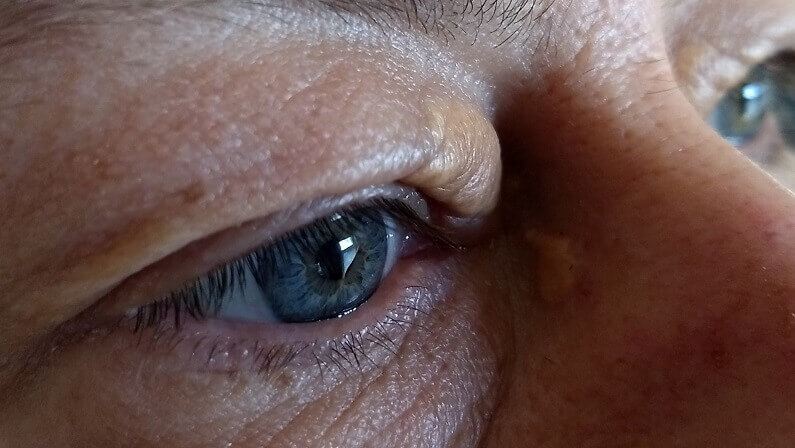
Beyond who gets it, there is a consistent pattern in where xanthelasma appears, which is part of its characteristic presentation. The plaques most commonly form on the upper eyelid, more often than the lower, and typically near the inner canthus, the corner of the eye closest to the nose. They also tend to appear symmetrically, showing up in a balanced pattern on both eyes rather than just one.
This predictable distribution (upper eyelids, inner corners, both sides) is one of the features that lets a doctor recognise xanthelasma readily and distinguish it from other eyelid bumps. It is also why the marks are so noticeable: they sit in a prominent, visible spot. The plaques can be single or multiple, flat or slightly raised, and soft to firmer in texture. Our page on what xanthelasma looks like covers the appearance and how it is told apart from look-alikes.
What the Numbers Mean for You
Pulling the figures together: xanthelasma is a common, benign condition, around 1% overall, more so in women (about 1.1% versus 0.3% in men), and more so with age, peaking in middle age. If you fit the more-likely groups, that simply explains why you have developed it; it does not mean anything is wrong. And whatever your demographic, the practical response is the same and reassuringly simple.
That response has two parts. First, a simple cholesterol check with your doctor, since the marks can occasionally signal raised lipids (though around half of people with xanthelasma have completely normal cholesterol). Second, if the appearance bothers you, optional cosmetic removal, the marks are harmless, so this is purely a personal choice. The clinic options work but involve cost, recovery, and a scarring risk near the eye, while the least invasive route is an at-home cosmetic cream made for the purpose. Xanthel ® is a cosmetic skincare cream made for xanthelasma removal at home. Our pages on whether it is dangerous and how to remove it cover both.

How Common Is Xanthelasma? The Bottom Line
Xanthelasma affects roughly 1% of people overall, making it the most common cutaneous xanthoma, but the figure varies: prevalence is about 1.1% in women versus 0.3% in men, and it rises with age, peaking in middle age (broadly 30 to 50) while remaining common later. The plaques most often appear on the upper eyelids near the inner corner, symmetrically on both eyes. Early onset is less common and more likely to reflect a genetic or lipid cause.
Whatever your sex or age, xanthelasma is benign and well understood, so the response is simply a cholesterol check with your doctor and, if you wish, optional cosmetic removal. If you would rather avoid a clinic, xanthelasma removal at home with a cream made for the purpose is the least invasive route. Our is xanthelasma common and xanthelasma palpebrarum pages cover the condition further.

Common Questions About How Common Xanthelasma Is
How common is xanthelasma?
Xanthelasma affects roughly 1% of the general population and is the most common type of cutaneous xanthoma (cholesterol deposit in the skin). The figure varies by sex and age, it is more common in women than men, and becomes more likely with increasing age. So it is a well-recognised, frequently encountered condition rather than a rare one.
Is xanthelasma more common in men or women?
It is several times more common in women. Prevalence is estimated at around 1.1% in women compared with roughly 0.3% in men, with hormonal factors thought to contribute to the difference. It is common enough in both sexes to be familiar to doctors, but the female predominance is one of the more consistent findings about the condition.
At what age is xanthelasma most common?
It peaks in middle age, broadly between around 30 and 50, and remains common into older age. It can appear across a wide span, from the teens to the seventies, but is less common in younger people. When it does appear early in life, it more often suggests a genetic tendency or an underlying lipid disorder, which is worth checking.
Where does xanthelasma most commonly appear?
Most often on the upper eyelids rather than the lower, and typically near the inner canthus, the corner of the eye closest to the nose. The plaques usually appear symmetrically on both eyes. This predictable distribution is one of the features that helps a doctor recognise xanthelasma and tell it apart from other eyelid bumps.
Is it common to get xanthelasma young?
It is less common in younger people, with the peak in middle age, but it can occur in younger adults and occasionally even in the teens. Early onset is more likely to reflect a genetic tendency or an underlying lipid disorder such as familial hypercholesterolaemia, so developing xanthelasma young is a particular prompt for a cholesterol check with a doctor.
Does xanthelasma being common mean it’s harmless?
The two are separate, but yes, xanthelasma is both common and benign. Being common simply means it is well recognised and understood. Its harmlessness comes from its nature as a benign cholesterol deposit. The one caveat is that it can occasionally signal raised cholesterol, so a simple check is worthwhile, but the marks themselves are not dangerous.
Why is xanthelasma more common in some people?
Largely because of differences in how the body handles cholesterol, influenced by sex, age, genetics, and conditions affecting lipid metabolism. Women and older people are affected more often, and a genetic tendency raises the likelihood, sometimes even with normal blood cholesterol. This is why around half of people with xanthelasma have normal cholesterol.
Xanthel ® is a cosmetic skincare cream made for xanthelasma removal at home, not a medical treatment for any underlying condition, so it addresses the appearance of the xanthelasma rather than any underlying cause. The marks themselves are benign, but because xanthelasma can sometimes signal raised cholesterol or another lipid issue, it is worth seeing your doctor for a simple check.