
Xanthelasma Home Removal
How to Remove Xanthelasma at Home Safely, Why DIY Remedies Fail, and What Actually Works
Xanthelasma home removal is possible, but only with a product made for the job. DIY remedies like garlic or trying to pick at the marks do not work and risk harming the delicate eye area. Here is the safe way to do it at home.
By Xanthelasma.com
Can You Remove Xanthelasma at Home?
Yes, you can remove xanthelasma at home, but the important word is “safely”, because the eyelid is delicate skin right next to the eye, and the wrong approach can do real harm. The internet is full of DIY suggestions, garlic, picking or “popping” the marks, kitchen-cupboard acids, and the honest truth is that these do not clear xanthelasma and can cause irritation, burns, scarring, or worse near the eye. So home removal is a good option, but only with a method made for the purpose.
That method is a purpose-made cosmetic cream. Xanthel ® is a cosmetic skincare cream made for xanthelasma removal at home: it is applied precisely to the plaque, with the skin then healing over one to two weeks, giving an at-home route without a clinic, cutting, or guesswork. This page explains how at-home removal works, why the DIY remedies fail, and how to do it properly. Our what is xanthelasma page covers the condition itself, and xanthelasma removal at home is a useful companion.

Why DIY Home Remedies Don’t Work
It is worth being clear about the popular home remedies, because avoiding them saves you from disappointment and possible harm. Garlic is the most common suggestion: people apply it hoping it will dissolve the plaque, but there is no good evidence it removes xanthelasma, and garlic contains compounds that can burn or irritate skin, especially the thin, sensitive eyelid. Apple cider vinegar and other acidic remedies carry the same problem, an uncontrolled chemical applied next to the eye is a recipe for irritation or a burn, not a clean result.
The reason these fail is fundamental: xanthelasma is a cholesterol deposit sitting within the skin, not a surface blemish, so dabbing a food or household substance on top does not reach or remove it. Even if a remedy seems to redden or irritate the surface, that is damage, not removal, and the plaque remains. Worse, anything that breaks the skin or gets into the eye risks infection or eye injury. The takeaway is simple: home remedies are not a safe or effective route. Our page on whether you can pop xanthelasma explains why physical removal attempts are a particularly bad idea.
Why You Should Never Pick, Squeeze, or Cut It
This deserves its own warning, because the instinct to physically remove a visible mark is strong. Xanthelasma cannot be squeezed out like a spot, it is not a blocked pore or a fluid-filled bump, but cholesterol-rich material spread through the skin, so there is nothing to “pop.” Attempting to pick, squeeze, or cut it does not remove the deposit; it simply injures the eyelid skin.
The risks are serious and worth stating plainly: breaking the skin near the eye can introduce infection, cause bleeding, and lead to permanent scarring that may look worse than the original mark, and any sharp implement or harmful substance near the eye risks injuring your eyesight. There is no safe DIY surgical shortcut. If you want the marks gone at home, the safe route is a cream made to do it properly on the eyelid area, not a physical attempt. Our page on removing xanthelasma covers the full range of proper methods.

The Safe Way to Remove Xanthelasma at Home
The safe and effective at-home route is a cosmetic cream made specifically for xanthelasma and for use on the delicate eye area. Xanthel ® is a cosmetic skincare cream made for xanthelasma removal at home, and using it is straightforward when you follow the supplied guide: start with clean, makeup-free skin, apply a small amount precisely to the plaque (keeping it to the mark and off the surrounding skin), leave it for the time the instructions specify, then gently rinse. The treated area then heals over roughly one to two weeks.
Good aftercare supports the result: keep the area clean, apply an antibacterial cream as advised, and protect it from the sun once healed. One application is enough for most people, with enough supplied for a second treatment if a larger plaque needs it. Some mild redness during healing is normal. The key difference from the DIY remedies is that this is a product designed for the job and the location, applied in a controlled way per clear instructions, rather than an improvised experiment next to your eye. Our xanthelasma removal cream page covers the product, and how to remove xanthelasma at home walks through the process.
Home Removal vs the Clinic
It is worth knowing how the at-home route compares with the clinic options, so your choice is informed. The clinic methods, surgical excision, laser, cryotherapy, radiofrequency, and electrosurgery, are all effective, but they involve attending a specialist, cost (often per session, and rarely covered by insurance since removal is cosmetic), recovery time, and a scarring or pigment-change risk on the eyelid skin. They make most sense for very large, thick, or unusual plaques.
For the typical eyelid plaque, home removal with a purpose-made cream offers a sensible balance: it avoids the cost, clinic visits, and downtime, while still being made specifically to clear the marks. That is why, for most people, it is the natural first choice, with a clinic kept in reserve for anything large or stubborn. As with every method, it clears the mark but not the underlying cause, so it is worth pairing with a cholesterol check. Our pages on how to get rid of xanthelasma without surgery and getting rid of it at home cover this comparison.
Don’t Forget the Cause
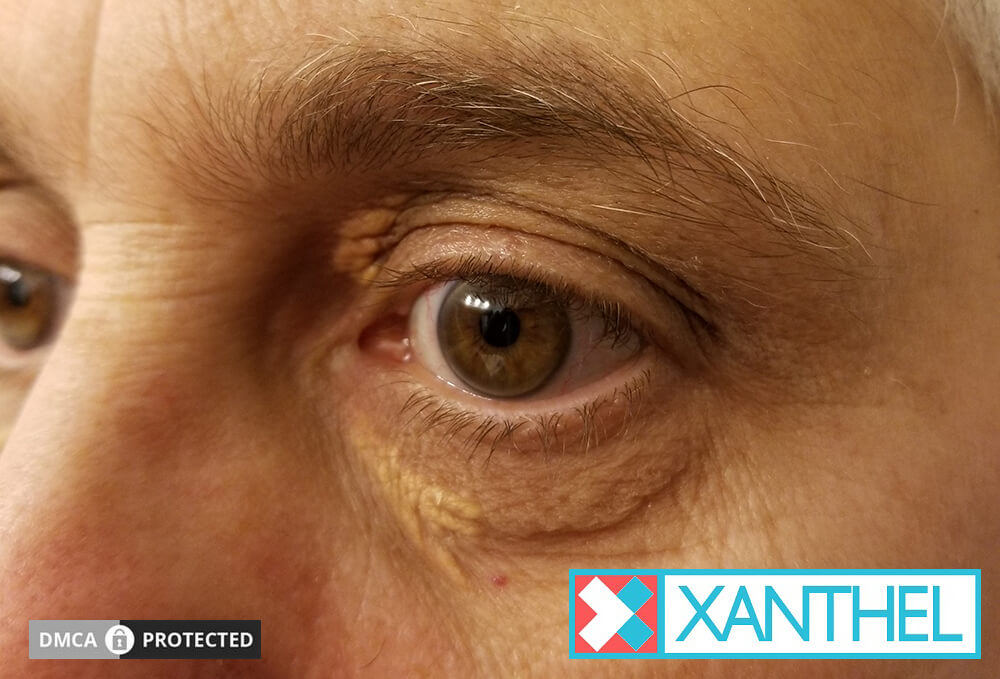
Whether you remove xanthelasma at home or in a clinic, the same point applies: removal clears the visible mark, not the reason it formed. Because xanthelasma is made of cholesterol, a simple lipid test from your doctor is worth doing alongside. Around half of people with xanthelasma have completely normal cholesterol, so for many it is reassurance, but where raised cholesterol, or sometimes a thyroid or diabetes issue, is present, managing it protects your wider health and reduces the chance of new marks.
This is why removing the mark and checking the cause work best together, and why no removal method, at home or otherwise, guarantees the marks will never return if the cause is left unmanaged. Keeping cholesterol in a healthy range through diet, activity, not smoking, and any treatment your doctor advises is what helps results last; if a new mark does appear, it can be treated again. Our pages on the causes of xanthelasma, whether it comes back, and how to prevent it cover this side.

Xanthelasma Home Removal: The Bottom Line
You can remove xanthelasma at home, but only safely with a product made for the purpose, not with DIY remedies. Garlic, vinegar, and other kitchen treatments do not clear the cholesterol plaque and can burn or irritate the delicate eyelid, and trying to pick, squeeze, or cut the marks risks infection, scarring, and even eye injury, with no removal benefit, because there is nothing to “pop.” The safe at-home route is a purpose-made cosmetic cream applied precisely to the mark per its guide, with the skin healing over one to two weeks.
For the typical eyelid plaque this is the simplest, least invasive option, avoiding the cost and downtime of a clinic. If you would rather avoid a clinic, xanthelasma removal at home with Xanthel ® is the way to do it properly, and pairing it with a cholesterol check covers the underlying side. Our treating xanthelasma page sets all the options side by side.

Common Questions About Xanthelasma Home Removal
Can you remove xanthelasma at home?
Yes, but only safely with a product made for the purpose. Xanthel ® is a cosmetic skincare cream made for xanthelasma removal at home, applied precisely to the plaque, with the skin healing over one to two weeks. DIY remedies like garlic or trying to pick at the marks do not work and can harm the delicate eye area, so they are not a safe route.
Does garlic remove xanthelasma?
No. There is no good evidence that garlic clears xanthelasma, and it contains compounds that can burn or irritate skin, particularly the thin, sensitive eyelid. Xanthelasma is a cholesterol deposit within the skin, not a surface mark, so applying garlic on top cannot remove it. It is one of the DIY remedies best avoided.
Can I squeeze or pop xanthelasma at home?
No, and you should not try. Xanthelasma is cholesterol-rich material spread through the skin, not a fluid-filled bump, so there is nothing to pop or squeeze out. Attempting it injures the eyelid, risking infection, bleeding, scarring, and even eye injury, without removing the deposit. The safe at-home route is a cream made for the purpose.
What is the safe way to remove xanthelasma at home?
Use a cosmetic cream made specifically for xanthelasma and the eye area. With Xanthel ®, you apply a small amount precisely to the plaque on clean skin following the supplied guide, leave it for the specified time, then rinse, with the area healing over one to two weeks. Following the instructions and aftercare carefully gives the best result.
Are home remedies for xanthelasma dangerous?
They can be. Applying garlic, vinegar, or other uncontrolled substances near the eye risks irritation, chemical burns, and scarring, and any attempt to break the skin risks infection or eye injury. They also do not actually remove the cholesterol deposit. The safe approach is a purpose-made cream, not an improvised remedy.
Is home removal as good as a clinic?
For typical eyelid plaques, a purpose-made at-home cream is a sensible, less invasive, more affordable alternative to clinic procedures, with no clinic visits or downtime. Very large, thick, or unusual plaques may be better handled in a clinic. Both clear the visible mark but not the underlying cause, so a cholesterol check is worthwhile either way.
Will the xanthelasma come back after home removal?
It can, like with any removal method, if an underlying cause such as raised cholesterol is left unmanaged, because removal clears the mark but not the cause. Pairing home removal with a cholesterol check and managing any lipid issue reduces the chance of new marks. If one does return, it can be treated again.
Should I see a doctor before removing xanthelasma at home?
It is worth one visit. A doctor can confirm the marks are xanthelasma rather than a look-alike, and run a simple lipid test for any underlying cause. Once you know what you are dealing with, you can remove the marks at home with a purpose-made cream and manage any underlying factor separately.
Xanthel ® is a cosmetic skincare cream made for xanthelasma removal at home, not a medical treatment for any underlying condition. However the marks are removed, it is worth seeing your doctor for a simple check, since xanthelasma can sometimes sit alongside lipid, thyroid, or cardiovascular factors worth identifying and managing for your wider health.