
What to Do About Xanthelasma
A Clear, Practical Action Plan for When You’ve Noticed the Yellow Eyelid Marks
Noticed xanthelasma and wondering what to do? The sensible plan has four steps: confirm what it is, get a simple cholesterol check, decide whether to remove the marks, and manage any underlying cause. Here is each step.
By Xanthelasma.com
What to Do About Xanthelasma: The Short Version
If you have spotted soft yellow marks on your eyelids, the first thing to know is that there is no need to panic, xanthelasma is benign, painless, and harmless to your eyes. It will not, however, fade on its own; left alone it tends to stay put or grow slowly. So “what to do about it” comes down to a calm, four-step plan: confirm it really is xanthelasma, get a simple cholesterol check (since the marks can occasionally signal raised lipids), decide whether you want the marks removed, and manage any underlying cause to limit new ones.
That covers both halves of the issue, the cosmetic and the health side, without overcomplicating it. For the removal step, if you choose it, the least invasive route is an at-home cosmetic cream made for the purpose: Xanthel ® is a cosmetic skincare cream made for xanthelasma removal at home. The rest of this page walks through each step. Our xanthelasma overview and what is xanthelasma pages cover the background.

Step 1: Confirm What It Is
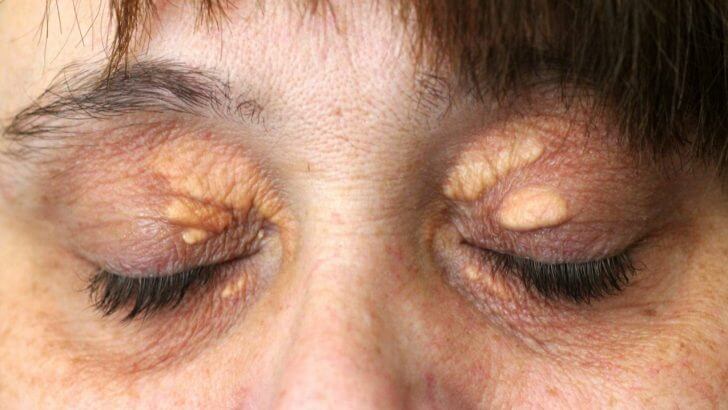
Before doing anything else, it is worth being sure the marks are actually xanthelasma, because a few other eyelid bumps can look similar. Xanthelasma is typically soft, yellow, flat or slightly raised, with well-defined edges, sitting near the inner corner of the eyelids and often on both eyes symmetrically. It is painless and grows slowly. Other conditions, like milia (small white keratin cysts), syringomas (firm sweat-duct bumps), or skin tags, differ in colour, texture, and shape.
A doctor or dermatologist can usually confirm xanthelasma on sight in seconds, occasionally with a small biopsy if there is any doubt. This matters because the right thing to do depends on what you are actually dealing with, treating a look-alike as xanthelasma wastes effort. So step one is simply a quick check to be sure. Our pages on what xanthelasma looks like and whether the condition is common help you recognise it.

Step 2: Get a Simple Cholesterol Check
This is the most worthwhile health step, and it is easy. Because xanthelasma is made of cholesterol, the marks can sometimes be an outward sign of raised blood lipids, and occasionally of a thyroid, diabetes, or liver issue. A simple lipid blood test from your doctor tells you whether any of that applies to you. It is worth keeping in proportion: around half of people with xanthelasma have completely normal cholesterol, so for many the test is reassurance rather than bad news.
But for the others, it is genuinely valuable, catching raised cholesterol early lets you manage it and protect your cardiovascular health, quite apart from the marks themselves. This is why the sensible response to xanthelasma is always a quick medical check, not because the marks are dangerous (they are not), but because they can be a useful prompt. If a lipid issue is found, your doctor will guide you on managing it. Our pages on whether xanthelasma is dangerous and whether it indicates raised cholesterol cover this step.
Step 3: Decide Whether to Remove the Marks
Removing xanthelasma is entirely optional, the marks are harmless, so this is a personal, cosmetic decision rather than a medical necessity. Many people do choose to, because the marks are visible and can affect confidence, and because they will not fade on their own. If you are happy to leave them, that is a perfectly valid choice; if you would rather clear them, you have options.
The clinic methods, surgical excision, laser, cryotherapy, radiofrequency, and electrosurgery, all work, but they involve cost, recovery, a scarring or pigment-change risk near the eye, and are rarely covered by insurance since removal is cosmetic. The least invasive route is an at-home cosmetic cream made for the purpose. Xanthel ® is a cosmetic skincare cream made for xanthelasma removal at home, applied to the plaque, with the skin healing over one to two weeks. For most people weighing cost and convenience against a procedure near the eye, the at-home route is the natural first choice. Our pages on how to remove xanthelasma, the xanthelasma removal cream itself, and treating xanthelasma cover the options.

Step 4: Manage the Cause to Limit New Marks
The final step ties the cosmetic and health sides together. Whether or not you remove the marks, managing any underlying cause is what reduces the chance of new ones forming, because removal clears the visible mark but not the reason it appeared. If your cholesterol check showed raised lipids, managing them with your doctor (through diet, lifestyle, and any prescribed medication) is the key step. If your cholesterol is normal, the same heart-healthy habits still do no harm and support your general health.
Practically, that means a balanced diet lower in saturated and trans fats, plenty of fibre, regular activity, a healthy weight, not smoking, and managing any thyroid or diabetes issue. These measures help prevent new marks but rarely clear existing ones, so they work alongside removal, not instead of it. And if a new mark does appear despite everything (which can happen, especially with a genetic tendency), it can simply be treated again. Our pages on the causes of xanthelasma, how to prevent it, and whether it comes back cover this side.

What Not to Do
A short but important note on what to avoid. Do not try to remove xanthelasma yourself with DIY remedies, garlic, castor oil, apple cider vinegar, and the like have no good evidence behind them and can irritate or burn the delicate eyelid skin. Do not try to pick, squeeze, or cut the marks: there is nothing to “pop” (they are cholesterol spread through the skin, not a fluid-filled bump), and attempting it risks infection, scarring, and even eye injury. And do not assume that diet alone will clear an existing mark, it helps prevent new ones, but will not dissolve a plaque already there.
In short, the things to do are the four calm steps above; the things to avoid are the improvised shortcuts. Sticking to safe, purpose-made methods, whether an at-home cream or a clinic procedure, and pairing them with a cholesterol check is the sensible approach. Our page on whether xanthelasma is dangerous reassures on the safety side.

What to Do About Xanthelasma: The Bottom Line
What to do about xanthelasma comes down to four steps: confirm the marks are xanthelasma (a quick look from a doctor), get a simple cholesterol check (since the marks can occasionally signal raised lipids, though around half of people with them have normal cholesterol), decide whether to remove the marks (entirely optional and cosmetic), and manage any underlying cause to limit new ones. Avoid DIY remedies and any attempt to pick or squeeze the marks.
If you do choose to remove them and would rather avoid a clinic, xanthelasma removal at home with a cream made for the purpose is the least invasive route, paired with that cholesterol check for the health side. The marks are harmless, so there is no rush, just a sensible plan. Our treating xanthelasma page sets the removal options side by side.

Common Questions About What to Do About Xanthelasma
I’ve just noticed xanthelasma, what should I do first?
Start by confirming it really is xanthelasma, a doctor can usually tell on sight, since a few other eyelid bumps look similar. Then get a simple cholesterol check, because the marks can occasionally signal raised lipids. After that, you can decide whether to remove the marks (optional and cosmetic) and manage any underlying cause.
Do I need to do anything about xanthelasma for my health?
The one worthwhile health step is a simple cholesterol check with your doctor, since the marks can sometimes signal raised lipids worth managing. The marks themselves are harmless, so removing them is optional and purely cosmetic. Around half of people with xanthelasma have normal cholesterol, so for many the check is simply reassurance.
Should I remove my xanthelasma or leave it?
That is entirely your choice, the marks are harmless, so there is no medical need to remove them. Many people choose removal because the marks are visible and will not fade on their own. If you are happy to leave them, that is fine too. If you want them gone, an at-home cream is the least invasive option.
What is the easiest thing to do about xanthelasma?
For the health side, a simple cholesterol check. For the cosmetic side, if you want the marks gone, the easiest route is an at-home cosmetic cream made for the purpose, like Xanthel ®, which avoids clinic visits, cost, and the scarring risk of a procedure near the eye. Pairing the two covers both aspects simply.
Can I just manage it with diet?
Diet and lifestyle help manage cholesterol and reduce the chance of new marks forming, which is worthwhile, but they will not clear a plaque already in the skin. So diet is part of the plan (the cause-management step), but if you want existing marks gone, they need to be removed. The two work together.
What should I avoid doing about xanthelasma?
Avoid DIY remedies like garlic or vinegar, which do not work and can burn the delicate eyelid skin, and never try to pick, squeeze, or cut the marks, which risks infection, scarring, and eye injury with no benefit. Also do not expect diet alone to clear an existing mark. Stick to safe, purpose-made removal methods.
When should I see a doctor about xanthelasma?
It is worth seeing a doctor soon after noticing xanthelasma, to confirm the diagnosis and run a simple lipid test for any underlying cause. See them sooner if the marks change in size or colour, or if you have a history of high cholesterol or heart disease. The visit is about the cause, not because the marks are dangerous.
Will dealing with xanthelasma stop it coming back?
Removing the marks clears what is there, and managing any underlying cause reduces the chance of new ones, but no approach guarantees they never return, especially with a genetic tendency. The good news is that any new mark can be treated again. Pairing removal with cholesterol management gives the best chance of lasting results.
Xanthel ® is a cosmetic skincare cream made for xanthelasma removal at home, not a medical treatment for any underlying condition. However the marks are removed, it is worth seeing your doctor for a simple check, since xanthelasma can sometimes sit alongside lipid, thyroid, or cardiovascular factors worth identifying and managing for your wider health.