
What Doctor Removes Xanthelasma
Which Specialist Treats Eyelid Xanthelasma, and the At-Home Route That Skips the Clinic
If you are wondering which doctor removes xanthelasma, this page explains the specialists who treat it, what each offers, and the simpler at-home option that lets you clear the eyelid marks without a clinic visit at all.
By Xanthelasma.com
Which Doctor Removes Xanthelasma?
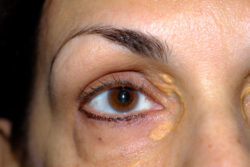
If you have decided to deal with the yellow plaques on your eyelids, a sensible first question is who actually removes them. The short answer: several types of specialist can, mainly dermatologists, oculoplastic surgeons, and cosmetic surgeons, and which you choose depends on the size of the marks and the method you prefer. A dermatologist is usually the natural starting point, since they can confirm the diagnosis, check for any underlying cause, and carry out or refer for removal.
Before going further, it is worth knowing that you do not necessarily need any of them. The clinic routes work, but they come with cost, recovery, and a scarring risk near the eye, and for many people an at-home option is the simpler first step. Xanthel ® is a cosmetic skincare cream formulated to remove xanthelasma plaques at home, designed as an alternative to a clinic procedure. The rest of this page runs through the specialists honestly so you can weigh them against the at-home route. If you want to confirm the marks are xanthelasma first, our xanthelasma overview helps.

Dermatologists
A dermatologist is the skin specialist most people see first for xanthelasma, and for good reason. They can confirm the diagnosis on sight, distinguish it from look-alike eyelid bumps, and arrange a simple lipid blood test to check whether raised cholesterol or another lipid issue is contributing, which is worth doing for your wider health regardless of how you treat the marks.
For removal, a dermatologist may offer or recommend electrodessication (using an electric current to dry out the plaque), cryotherapy (freezing), laser, or refer you for surgical excision of larger marks. They can also advise on managing any underlying cause to reduce the chance of recurrence. The main considerations are that these are clinic procedures with a cost, some recovery time, and a scarring or pigment-change risk on the delicate eyelid skin. A dermatologist is a solid choice if you want a medical assessment alongside removal, and many people start there before deciding. Our guide to treating xanthelasma compares the methods in more detail.

Oculoplastic Surgeons
An oculoplastic surgeon specialises in plastic surgery around the eyes, combining ophthalmic knowledge with surgical skill. For xanthelasma, particularly larger or more awkwardly placed plaques close to the eyelid margin, this expertise can be valuable, since they understand the delicate anatomy of the eyelid and aim to preserve both its function and its natural contour.
Their focus tends to be on precise surgical removal with attention to minimising visible scarring and protecting eyelid function, and they may pick up other eye-related issues during assessment. The trade-offs are the same as with any surgical route: it is more invasive than non-surgical options, involves a recovery period, carries the usual surgical risks, and comes at the cost of a specialist procedure. An oculoplastic surgeon is worth considering for complex or larger cases where the position near the eye makes specialist surgical care sensible. For straightforward, smaller plaques, though, it is a lot to take on compared with less invasive routes.

Cosmetic and Plastic Surgeons
Cosmetic surgeons approach xanthelasma primarily from the appearance angle, offering surgical and energy-based removal methods. Direct surgical excision removes the plaque and is effective for larger marks, while laser treatment vaporises the deposit with precision, and radiofrequency surgery uses radio-wave energy to remove the lesions, often with relatively limited scarring in skilled hands.
A consultation typically involves reviewing your medical history, examining the marks, sometimes arranging blood tests for underlying lipid issues, and discussing the options, costs, and recovery with you. As with the other surgical routes, the considerations are cost, downtime, and the scarring risk inherent in any procedure on the eyelid, and removal is usually classed as cosmetic, so it is rarely covered by insurance. A cosmetic or plastic surgeon is a reasonable choice if you want a clinic-based removal and have weighed the cost and recovery, but it sits at the more involved end of the scale.

The At-Home Alternative: No Doctor Visit Needed for Removal
Here is the option that often gets overlooked when people assume removal means finding a doctor: you can clear eyelid xanthelasma at home, without a clinic procedure at all. Xanthel ® is a cosmetic skincare cream formulated to remove xanthelasma plaques at home, applied to the mark following the supplied guidance, with the skin then healing over the following days. One application is usually enough, with a second occasionally needed for larger plaques.
The appeal is exactly what puts people off the clinic routes: it avoids the cost of a specialist, the recovery time, and the scarring risk that comes with cutting, freezing, or burning the delicate eyelid skin, and it can be done on your own schedule. To be clear, it is a cosmetic product for the eyelid marks, not a substitute for medical assessment of any underlying cause, so a quick lipid check with your doctor is still worth doing alongside. For most people weighing convenience and price, the at-home route is the natural place to start before committing to a clinic. You can compare it against the clinic methods in our full range of removal options.

Choosing What’s Right for You
Pulling it together: if you want a clinic removal, a dermatologist is the usual first port of call and can also check for underlying causes, an oculoplastic surgeon offers specialist surgical expertise for complex or larger marks near the eye, and a cosmetic or plastic surgeon focuses on surgical and laser removal for appearance. All are effective in skilled hands, but all involve cost, recovery, a scarring risk, and, since removal is usually cosmetic, little or no insurance cover.
The at-home cream sidesteps all of that for the eyelid marks specifically, which is why many people try it first. Whichever route you take, getting a quick cholesterol check and managing any underlying cause is what helps keep results lasting. If you would rather avoid a clinic, it is worth looking at the at-home removal option made for the eyelid form, and reading why you might have got xanthelasma to understand the cause side.

Common Questions About Which Doctor Removes Xanthelasma
What type of doctor removes xanthelasma?
Mainly dermatologists, oculoplastic surgeons, and cosmetic or plastic surgeons. A dermatologist is usually the first port of call, since they can confirm the diagnosis, check for underlying causes, and carry out or refer for removal. The right choice depends on the size of the marks and the method you prefer.
Do I need a doctor to remove xanthelasma at all?
Not necessarily. While clinic specialists can remove xanthelasma, you can also clear the eyelid marks at home. Xanthel ® is a cosmetic skincare cream formulated to remove xanthelasma plaques at home, avoiding the cost, scarring risk, and downtime of a clinic procedure. A quick cholesterol check with your doctor is still worth doing alongside.
Should I see a dermatologist for xanthelasma?
A dermatologist is a sensible first choice. They can confirm it is xanthelasma, rule out look-alike conditions, and arrange a lipid test to check for any underlying cause. They can also remove the marks or refer you. Even if you plan to treat the marks at home, a dermatologist’s assessment of any underlying cause is worthwhile.
What is an oculoplastic surgeon, and when would I need one?
An oculoplastic surgeon specialises in plastic surgery around the eyes. They are worth considering for larger or awkwardly placed xanthelasma near the eyelid margin, where their understanding of the delicate eye anatomy helps preserve eyelid function and appearance. For smaller, straightforward marks, less invasive routes are usually enough.
Does insurance cover xanthelasma removal by a doctor?
Often not, because xanthelasma removal is usually considered cosmetic rather than medically necessary. That means clinic procedures with a dermatologist or surgeon can be expensive out of pocket. This cost is one reason many people consider the more affordable at-home cream as a first option.
Is doctor removal better than an at-home cream?
Both can clear the marks. Clinic removal by a specialist is effective but involves cost, recovery, and a scarring risk near the eye. An at-home cream avoids those drawbacks and is the simpler, more affordable route for many people. The best choice depends on the size of your marks and your preferences; larger or complex cases may suit a specialist.
Will the xanthelasma come back after a doctor removes it?
It can, particularly if an underlying cause like raised cholesterol is left unmanaged. Recurrence is common after clinic procedures for this reason. Whichever removal route you choose, managing any underlying factor with your doctor reduces the chance of new marks forming.
Which doctor should I see first?
A dermatologist is usually the best starting point. They can confirm the diagnosis, check for any underlying cause with a simple blood test, and advise on removal options or refer you to a surgeon if needed. From there you can decide between a clinic procedure and clearing the marks at home.
Xanthel ® is a cosmetic skincare product, not a medical treatment. Because xanthelasma can sometimes sit alongside lipid, thyroid, or cardiovascular factors, it is worth seeing your doctor for a check, who can give you the full picture of your health to pair with any cosmetic approach.