Xanthelasma on Eyelids
You’ve Spotted Yellow Marks on Your Eyelids: What Xanthelasma Is, What It Means, and What to Do Next
Xanthelasma on the eyelids is a benign, yellow cholesterol plaque, harmless but worth a cholesterol check. This guide covers what it is, what it signifies, and your options for clearing it.
By Xanthelasma.com
Xanthelasma on the Eyelids: The Quick Picture
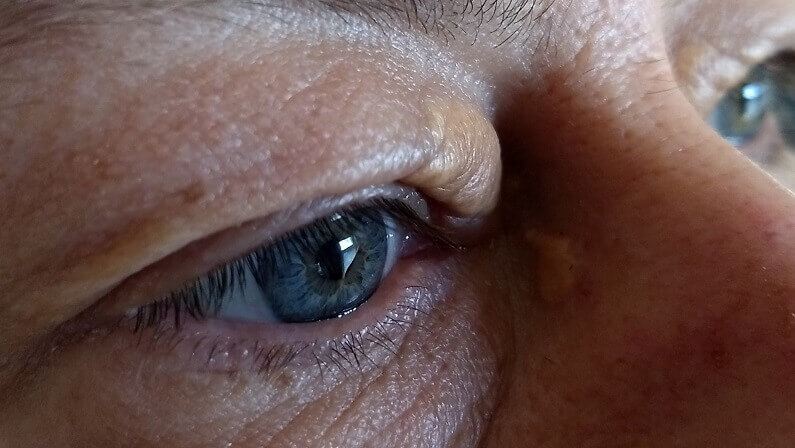
If you have noticed soft, yellowish marks on your eyelids, most often near the inner corner, on one or both eyes, that is very likely xanthelasma: a benign deposit of cholesterol-rich material in the eyelid skin, and the most common type of xanthoma. The reassuring headline is that xanthelasma on the eyelids is harmless. It does not hurt, it does not affect your vision or eyelid function, and it is not a sign of anything dangerous in the skin itself.
There are really only two things worth doing once you have spotted xanthelasma on your eyelids: have a simple cholesterol check, since the plaques are made of cholesterol and can occasionally flag raised blood lipids, and decide whether you want them removed, which is a personal, cosmetic choice rather than a medical necessity. This page walks through both. If you do want them gone, Xanthel ® is a cosmetic skincare cream made for xanthelasma removal at home. Our xanthelasma eyelid and eyelid xanthelasma pages cover recognition in more detail.

Is It Definitely Xanthelasma?
Before deciding what to do, it is worth being reasonably sure the marks are xanthelasma and not a look-alike. Xanthelasma on the eyelids is yellow to yellow-orange, soft to firm, flat or slightly raised, with fairly defined edges, and sits on the eyelid skin, classically at the inner corner near the nose, often symmetrically on both eyes. It tends to start small and enlarge slowly, sometimes with more than one patch appearing.
A few other harmless eyelid bumps can resemble it: milia are small, firm, white keratin cysts; syringomas are small, firm, skin-coloured sweat-duct bumps; and styes or cysts are usually red, tender, or swollen rather than flat and yellow. Because these differ in treatment, it is sensible to have a doctor confirm the diagnosis rather than assume, especially before any removal. The yellow colour and flat, plaque-like form are the strongest clues that a mark is xanthelasma. Our pages on what xanthelasma looks like and whether xanthelasma is dangerous cover the look-alikes and the reassurance in full.

What Xanthelasma on the Eyelids Says About Your Health
Because xanthelasma on the eyelids is made of cholesterol, its main significance is as a possible, gentle prompt about your blood lipids. In some people the plaques reflect raised cholesterol, particularly raised LDL (the “bad” cholesterol) or low HDL (the “good” cholesterol that helps clear it), and occasionally they accompany a thyroid issue, diabetes, or a liver problem affecting how the body handles fats. A genetic or family tendency to high cholesterol can also play a part.
This is why a simple lipid blood test is worth having once you notice xanthelasma, it is the one genuinely useful health step the marks point to. Keeping it in proportion, though: around half of people with xanthelasma on their eyelids have completely normal cholesterol, so for many the check is reassurance rather than a problem found. Where raised cholesterol or another factor is identified, managing it protects your wider cardiovascular health and helps limit new xanthelasma. The marks themselves remain harmless throughout. Our pages on whether xanthelasma indicates raised cholesterol and the causes of xanthelasma cover this side.
Your Options for Removing Xanthelasma on the Eyelids
Xanthelasma on the eyelids will not fade on its own, so if its appearance bothers you, removing it means an active method, though there is no medical need to remove it. The clinic options include surgical excision, laser, cryotherapy (freezing), radiofrequency, and electrosurgery. These work but involve cost, some recovery, and a scarring or pigment-change risk on the delicate eyelid skin so close to the eye, and because removal is cosmetic it is rarely covered by insurance. The least invasive route, for typical eyelid xanthelasma, is an at-home cosmetic cream made for the purpose.
Xanthel ® is a cosmetic skincare cream made for xanthelasma removal at home, applied precisely to the xanthelasma following the supplied guide, with the skin healing over roughly one to two weeks. It avoids a clinic visit and is designed for the eyelid area, which is why it is the natural first choice for most people. Avoid trying to squeeze or cut xanthelasma, or using DIY remedies near the eye, none of which remove the deposit and all of which risk harm. If you would rather conceal the marks for now, makeup is an option in the meantime. Our pages on how to remove xanthelasma, the xanthelasma removal cream, removing it at home, and hiding it with makeup cover the options.

Removal Plus Prevention: Keeping Results Lasting
Whichever way you clear xanthelasma on your eyelids, it is worth understanding that removal addresses the visible plaque but not the reason it formed. Because the marks are cholesterol, no method, clinic or at-home, can promise that new xanthelasma will never appear if an underlying lipid issue is left unmanaged. So the lasting approach pairs removal with attention to the cause: a cholesterol check, and where relevant, managing raised lipids through diet, activity, not smoking, and any treatment your doctor advises.
For people whose cholesterol is normal, removal is simply the practical answer, since there is no lipid issue to manage and lifestyle changes will not influence the plaques. For those with raised cholesterol, the combination of removing what is there and managing the cause gives the best long-term result and reduces the chance of new xanthelasma. If new plaques do appear over time, they can be treated again. Our pages on whether xanthelasma can get bigger and how to prevent xanthelasma cover this.


Xanthelasma on Eyelids: The Bottom Line
Xanthelasma on the eyelids is a benign, yellow cholesterol plaque, harmless to your eye and vision, usually appearing near the inner corner and often on both sides. Once you have spotted it, two things are worth doing: confirm it is xanthelasma rather than a look-alike and have a simple cholesterol check (around half of people with it have normal cholesterol), and decide whether you want it removed, which is a personal, cosmetic choice.
If you do want it gone, the clinic options work but involve cost, recovery, and a scarring risk near the eye, so the least invasive route is xanthelasma removal at home with Xanthel ®, ideally paired with a cholesterol check to manage any underlying cause. Avoid squeezing the plaques or using DIY remedies near the eye. Our pages on who can treat xanthelasma and what xanthelasma is cover related questions.

Common Questions About Xanthelasma on the Eyelids
What is xanthelasma on the eyelids?
It is a benign deposit of cholesterol-rich material in the eyelid skin, appearing as a soft, yellowish, flat or slightly raised plaque, usually near the inner corner of the eye and often on both sides. It is the most common type of xanthoma. The marks are harmless and do not affect the eye or vision, though they can sometimes signal raised cholesterol.
Is xanthelasma on the eyelids dangerous?
No. The plaques sit in the eyelid skin, not on or inside the eye, so they do not affect your eyeball, vision, or eyelid function, and they are benign. Their main significance is that, being made of cholesterol, they can occasionally flag raised blood lipids worth checking. The marks themselves are harmless; the value is the prompt to check your cholesterol.
Why have I got xanthelasma on my eyelids?
It forms when cholesterol-rich material is deposited in the eyelid skin. Contributing factors include raised cholesterol (especially high LDL or low HDL), a genetic or family tendency, and sometimes thyroid, diabetes, or liver issues affecting how the body handles fats. That said, around half of people with xanthelasma on their eyelids have completely normal cholesterol.
Do eyelid xanthelasma mean I have high cholesterol?
Not necessarily. They can be associated with raised cholesterol, but around half of people with xanthelasma have normal levels. So the marks are a useful prompt for a simple lipid blood test rather than proof of a problem. Where raised cholesterol is found, managing it benefits your wider health; where it is normal, the xanthelasma is simply a cosmetic matter.
How do I get rid of xanthelasma on my eyelids?
By an active removal method, since it will not fade on its own. The clinic options include surgery, laser, freezing, radiofrequency, and electrosurgery. The least invasive route for typical eyelid plaques is an at-home cosmetic cream. Xanthel is a cosmetic skincare cream made for xanthelasma removal at home, applied to the plaque, with the skin healing over one to two weeks. Avoid squeezing or DIY remedies near the eye.
Will xanthelasma on my eyelids come back after removal?
It can, with any method, if an underlying cause like raised cholesterol is left unmanaged, because removal clears the plaque but not the cause. Pairing removal with a cholesterol check and managing any lipid issue reduces the chance of new xanthelasma forming. If plaques do return, they can be treated again.
Should I see a doctor about xanthelasma on my eyelids?
A single visit is worthwhile, both to confirm the marks are xanthelasma rather than a look-alike, and for a simple cholesterol blood test given the lipid link. Beyond that you do not need ongoing care for the marks themselves, as they are benign. See a doctor more promptly if they change rapidly, bleed, or look unusual, or if you have any genuine eye symptoms.
Xanthel ® is a cosmetic skincare cream made for xanthelasma removal at home, not a medical treatment for any underlying condition. However your xanthelasma is removed, it is worth seeing your doctor for a simple check, since xanthelasma can sometimes sit alongside lipid, thyroid, or cardiovascular factors worth identifying and managing for your wider health.