
How to Hide Xanthelasma With Makeup
A Step-by-Step Guide to Concealing the Yellow Eyelid Marks Neatly and Naturally
Hiding xanthelasma with makeup comes down to colour-correcting the yellow tone, then concealing and setting carefully on delicate eyelid skin. This step-by-step guide covers the products, the colour theory, and the technique for a natural finish.
By Xanthelasma.com
Can You Hide Xanthelasma With Makeup?
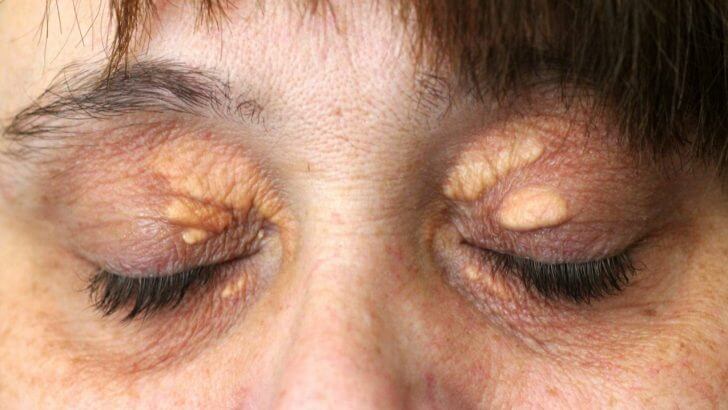
Yes, you can conceal xanthelasma with makeup reasonably well, though it takes the right products and a careful technique, because the eyelid skin is delicate and the marks have both a colour (yellow) and sometimes a slightly raised texture to work around. Done properly, makeup can make the plaques far less noticeable for the day. It is worth being realistic, though: makeup is a temporary cover, not a fix, and very raised plaques are harder to disguise than flat ones.
This guide walks through how to do it well. It is a genuinely useful skill if you want the marks hidden for work, an event, or just day to day. That said, if you would rather not conceal them every morning, the marks can be removed: Xanthel ® is a cosmetic skincare cream made for xanthelasma removal at home, which clears the plaques rather than covering them. Either approach is valid, this page focuses on the makeup method. Our xanthelasma overview covers the condition itself.

The Colour Theory: Cancelling the Yellow
The single most important principle for hiding xanthelasma is colour correction, and getting the colour right is what separates a neat result from an obvious patch. On the colour wheel, the shade that neutralises yellow is purple, so a lavender or pale-purple colour corrector is the key product for cancelling out the yellow tone of the plaques. This is the step most people miss, and it makes a big difference.
A common mistake (one even some guides get wrong) is reaching for a peach or orange corrector for xanthelasma. Peach and orange are for cancelling blue or purple tones, such as dark under-eye circles, not yellow. So if your only concern is the yellow plaque, a light purple corrector is what you want; reserve peach for any separate under-eye darkness. Use the corrector sparingly and precisely, only on the mark itself. Getting this colour step right means you need far less concealer on top, which keeps the area looking natural rather than heavy.
What You’ll Need
A short, sensible kit makes this much easier. For products: a lavender or pale-purple colour corrector (to cancel the yellow), a high-coverage concealer matched to your skin tone (to even everything out on top), and a finely-milled translucent setting powder (to lock it in place). If you wear foundation, a shade that matches your skin helps blend the concealed area into the rest of your face. Choose products labelled suitable for sensitive skin and the eye area, since this is delicate skin close to the eye.
For tools: a small, flat concealer brush gives precise application right on the plaque, a damp makeup sponge or blender lets you tap and diffuse the edges without dragging, and a soft, fluffy brush is useful for dusting on powder. Keeping your brushes and sponges clean matters here, the eyelid is sensitive, and clean tools reduce the risk of irritation. None of this needs to be expensive; what matters is the colour-correcting step and a gentle technique rather than any particular brand.

Step by Step
Here is the method, start to finish. First, prep: gently cleanse and lightly moisturise the area so makeup sits smoothly, and let it absorb. A little eye primer can help everything last longer and grip better, especially useful over the eyelid. Second, colour-correct: using the small flat brush, dab a thin layer of the lavender corrector directly onto the yellow plaque, staying within the edges of the mark rather than spreading onto clear skin. Less is more, build only if needed.
Third, conceal: tap a skin-tone concealer over the corrected area with the sponge, using a gentle pressing motion (never rubbing, which lifts off the corrector underneath). Fourth, blend the edges softly into the surrounding skin so there is no visible line. Fifth, set: dust a little translucent powder over the area with the fluffy brush to stop the concealer creasing or shifting, pressing gently rather than sweeping over a raised plaque. If you wear foundation, apply it before the concealer step over the rest of the face. A light setting spray at the end can help it all last.

Tips for a Natural Finish and Common Mistakes
A few refinements make the difference between “hidden” and “obvious.” Build in thin layers rather than one thick application, which is what causes a caked look that actually draws the eye. Tap and press rather than rub or swipe, both to protect the delicate skin and to avoid disturbing the corrector beneath. Pay attention to texture as well as colour: on a raised plaque, heavy product can catch the light and emphasise the bump, so keep layers thin and set lightly. And blend the edges thoroughly, harsh demarcation lines are the most common giveaway.
The usual mistakes to avoid: skipping the colour-correcting step (then no amount of concealer fully hides the yellow), using peach or orange instead of purple for the yellow, over-applying product, blending too vigorously, and forgetting to set. Remember too that makeup near the eyes can transfer or fade over a long day, so a small concealer and sponge for touch-ups is handy. Our sibling guides on how to cover xanthelasma, covering it with makeup, and covering xanthelasma spots offer further angles.


Makeup vs Removing the Marks
Concealing xanthelasma with makeup is a perfectly good day-to-day solution, and for many people it is enough. But it is worth weighing against the alternative honestly, because makeup is a daily task that covers the marks, while removal clears them so there is nothing to cover. If you find yourself colour-correcting the same plaques every morning, removal may be the more convenient long-term answer.
If you decide to go that way, the clinic options (surgery, laser, freezing, and so on) work but involve cost, recovery, and a scarring risk near the eye, while the least invasive route is an at-home cosmetic cream made for the purpose. Xanthel ® is a cosmetic skincare cream made for xanthelasma removal at home, applied to the plaque, with the skin healing over one to two weeks. Many people use makeup to manage the look in the meantime and then remove the marks when it suits them, the two are not mutually exclusive. Our pages on how to remove xanthelasma and the xanthelasma removal cream itself cover that route.

How to Hide Xanthelasma With Makeup: The Bottom Line
To hide xanthelasma with makeup, the key is colour correction: use a lavender or pale-purple corrector to cancel the yellow (not peach or orange, which are for under-eye darkness), then a skin-tone concealer on top, blended softly and set with translucent powder. Apply in thin layers with gentle tapping motions on the delicate eyelid skin, and keep it light over any raised plaque. With the right colour step and a careful technique, the marks can be made far less noticeable.
Makeup is a good temporary cover, but if you would rather not conceal the marks daily, they can be removed; if you would prefer to avoid a clinic, xanthelasma removal at home with a cream made for the purpose clears them rather than hiding them. And since the marks are made of cholesterol, a simple lipid check with your doctor is worth doing either way. Our page on whether xanthelasma is dangerous covers that side.

Common Questions About Hiding Xanthelasma With Makeup
What colour corrector hides xanthelasma?
A lavender or pale-purple corrector is the one to use, because purple sits opposite yellow on the colour wheel and neutralises it. This is the key step for cancelling the yellow tone of the plaques. Peach and orange correctors are for blue or purple tones like dark under-eye circles, not for yellow, so they are not the right choice for xanthelasma itself.
How do you conceal xanthelasma step by step?
Cleanse and lightly moisturise, optionally prime, then dab a thin layer of lavender corrector precisely onto the yellow plaque. Tap a skin-tone concealer over the top with a sponge, blend the edges softly, and set with a little translucent powder. Apply in thin layers with gentle pressing motions, and keep it light over any raised area.
Can makeup fully hide xanthelasma?
It can make the marks much less noticeable, especially flat ones, with good colour correction and technique. Very raised plaques are harder to disguise fully, since heavy product can catch the light and emphasise the texture. Makeup is a temporary cover for the day rather than a permanent fix, but done well it is effective.
Is it safe to put makeup over xanthelasma?
Generally yes, provided you use products suitable for the sensitive eye area, apply gently, keep your tools clean, and remove the makeup properly at the end of the day. Avoid harsh rubbing on the delicate eyelid skin. If you notice any irritation, stop and let the area settle, and choose non-irritating, eye-safe products.
Why won’t my concealer hide the yellow?
Almost always because the colour-correcting step is being skipped. Concealer alone, even high-coverage, struggles to fully neutralise the yellow of xanthelasma. Applying a thin layer of lavender or purple corrector first cancels the yellow, so the concealer on top then only needs to even out the skin tone, giving a much more natural, complete cover.
Does makeup make xanthelasma worse?
No, makeup does not affect the xanthelasma itself or make the plaques grow, as long as you apply and remove it gently and use eye-safe products. It is purely a cosmetic cover. Just be careful not to irritate the delicate skin with harsh rubbing, and cleanse the area properly at the end of the day.
Should I hide xanthelasma or remove it?
Both are valid, it depends on your preference. Makeup is a good day-to-day cover with no downtime, while removal clears the marks so there is nothing to conceal. Many people use makeup in the meantime and remove the marks when it suits them. If you are colour-correcting the same plaques every morning, removal may be more convenient long term.
Xanthel ® is a cosmetic skincare cream made for xanthelasma removal at home, not a medical treatment for any underlying condition. However the marks are removed, it is worth seeing your doctor for a simple check, since xanthelasma can sometimes sit alongside lipid, thyroid, or cardiovascular factors worth identifying and managing for your wider health.