What Is Xanthelasma Of Eyelid?
What the Yellow Eyelid Marks Are, and How to Tell Them From Look-Alikes
Xanthelasma of the eyelid is a harmless yellow deposit of cholesterol-rich material in the eyelid skin. This page explains what it is, how to recognise it, how it differs from similar-looking conditions, and what it can mean for your health.
By Xanthelasma.com
What Is Xanthelasma of the Eyelid?
Xanthelasma of the eyelid is a soft yellow growth on or near the eyelids, formed by a build-up of cholesterol-rich material just beneath the skin. It is a type of xanthoma, the general name for cholesterol deposits in the skin, and the eyelid form is the most common. The marks can be flat patches or slightly raised bumps, with a texture that ranges from soft to slightly chalky or semi-solid, and they usually appear on the upper eyelid or near the inner corner of the eye.
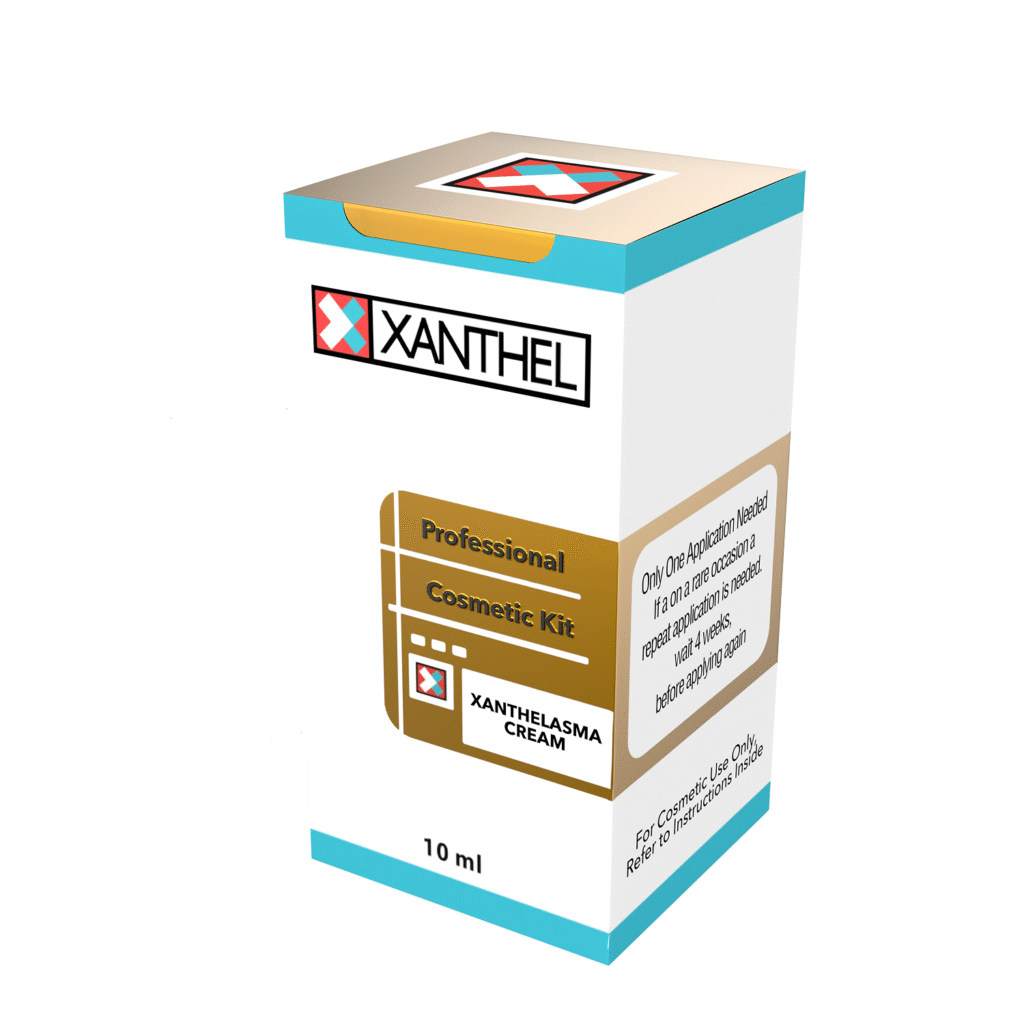
In short, it is a harmless cosmetic feature, not a growth to be alarmed about, though it can occasionally be a clue to your cholesterol levels. It will not fade on its own, so if the appearance bothers you, removal clears it, and the least invasive route is at home: Xanthel ® is a cosmetic skincare cream made for xanthelasma removal at home, the at-home answer this page returns to. For related reading, our what is xanthelasma page gives the general definition and the xanthelasma overview covers the basics.

How to Recognise It
Knowing the typical features helps you place what you are seeing. Xanthelasma of the eyelid is usually: yellow to yellow-orange in colour; soft, flat, or slightly raised; well-defined in shape; painless; and often symmetrical, appearing in matching spots on both eyes. It most commonly sits on the upper lid near the inner corner closest to the nose, though the lower lid can be involved. It tends to stay put or grow slowly rather than coming and going, and it does not become red, swollen, or warm the way an inflamed spot would.
These features are fairly distinctive, which is why a doctor can usually identify xanthelasma on sight. If your mark fits this description, soft, yellow, flat, near the inner eyelid, it is very likely xanthelasma. If it looks different, the next section covers the conditions it can be confused with. Our pages on where xanthelasma is found and the eyelid form in detail go further into its appearance and location.
Telling It Apart From Look-Alikes
Because a few other harmless conditions can appear near the eyes, it is worth knowing how xanthelasma differs. Milia are tiny, firm, distinctly white or pearly grains filled with keratin, rather than the soft yellow plaque of xanthelasma. Syringomas are small, firm, flesh-coloured sweat-duct bumps that often cluster on the lower lids. Sebaceous hyperplasia shows as yellowish bumps with a small central dimple. None of these are cholesterol deposits, so although they can resemble xanthelasma at a glance, they have different causes and are handled differently.
A few features help distinguish xanthelasma: it is non-inflammatory (no redness, swelling, or warmth), it keeps a stable appearance over time rather than fluctuating, and it is specifically located around the eyes, usually the inner upper lid. If your mark is a tiny white grain, a cluster of firm bumps, or has a central dimple, it may be one of the look-alikes rather than xanthelasma. A doctor can confirm on sight, occasionally with a small biopsy if there is any doubt. Our guide to what can be mistaken for xanthelasma sets these out in full.

What It Can Mean for Your Health
Although xanthelasma of the eyelid is benign in itself, it has a secondary role as a possible clue to your lipid health. Because it is made of cholesterol, it can be associated with raised levels, and sometimes with factors like an underactive thyroid, diabetes, or liver conditions that affect how the body handles fats. This is why a doctor will often suggest a simple lipid blood test when xanthelasma appears, less to treat the mark and more to check what, if anything, sits behind it.
It is worth keeping in proportion, though. Around half of people with eyelid xanthelasma have completely normal cholesterol, so for many the marks are simply a cosmetic feature and the test is reassurance. Where a lipid issue is found, managing it benefits your wider cardiovascular health; where levels are normal, there is nothing further to do on that front. Our pages on whether xanthelasma indicates raised cholesterol, whether it is dangerous, and what it indicates cover this side.

What You Can Do About It
If you have confirmed it is xanthelasma and would like it gone, you have genuine choices. The least invasive and most affordable is the at-home route with Xanthel ®, a cosmetic skincare cream made for xanthelasma removal at home: you apply it to the mark on clean skin following the simple guide supplied, then follow the aftercare while the skin heals over one to two weeks. It avoids the clinic, the anaesthetic, and the recovery that procedures involve, which is why it is the natural first option for most people.
The clinic alternatives all work too, with their own trade-offs: surgical excision (definitive for larger marks, most invasive), laser (precise, often several sessions), cryotherapy (freezing, with a pigment-change risk), and radiofrequency or electrosurgery (heat-based). All involve cost, some downtime, a scarring risk near the eye, and usually no insurance cover. Whichever route, removal clears the existing mark but not the cause, so pairing it with a cholesterol check helps results last. If you would rather skip the clinic, xanthelasma removal at home with Xanthel ® is the simplest start. Our guides to xanthelasma removal and how xanthelasma is removed compare the options.


What Is Xanthelasma Of Eyelid? The Bottom Line
Xanthelasma of the eyelid is a harmless soft yellow deposit of cholesterol-rich material in the eyelid skin, usually on the upper lid near the inner corner and often symmetrical across both eyes. It is recognisable by being yellow, soft, flat or slightly raised, painless, and non-inflammatory, which helps tell it apart from look-alikes such as milia, syringomas, and sebaceous hyperplasia. It can occasionally be a clue to raised cholesterol, though around half of people with it have normal levels.
Because it does not fade on its own, removal is what clears it if the appearance bothers you, with the least invasive route being at home with Xanthel ®, and a simple lipid check worthwhile alongside. If you would rather avoid a clinic, xanthelasma removal at home with Xanthel ® is the simplest place to start. You can also read the causes of xanthelasma or whether it can come back.

Common Questions About Xanthelasma of the Eyelid
What is xanthelasma of the eyelid?
It is a harmless soft yellow deposit of cholesterol-rich material in the skin of the eyelids, a type of xanthoma and the most common one. The marks can be flat patches or slightly raised bumps, usually on the upper lid near the inner corner, and often appear symmetrically on both eyes. They are benign but can occasionally signal raised cholesterol.
How do I know if it is xanthelasma or something else?
Xanthelasma is typically soft, yellow, flat or slightly raised, painless, and non-inflammatory, usually near the inner upper eyelid. Look-alikes differ: milia are tiny white grains, syringomas are firm clustered bumps often on the lower lid, and sebaceous hyperplasia has a central dimple. A doctor can confirm on sight, occasionally with a small biopsy.
Is xanthelasma of the eyelid harmful?
No. The marks themselves are benign, not cancerous, and do not affect vision, though a large plaque can occasionally affect the shape of the eyelid. Their significance is as a possible clue to cholesterol levels, which is why a simple lipid test is worthwhile, around half of people with it, though, have normal cholesterol.
What causes xanthelasma on the eyelid?
It forms when cholesterol-rich material accumulates in the thin eyelid skin. This can be driven by raised blood cholesterol or, in many people, local factors in the skin even when cholesterol is normal. Genetics, an underactive thyroid, diabetes, and liver conditions can all play a role, which is why a lipid check is worthwhile.
Does xanthelasma of the eyelid go away on its own?
Almost never. It is a settled cholesterol deposit that the body does not readily reabsorb, so it usually persists or grows slowly rather than fading. Clearing it means actively removing it, with the least invasive route being at home with Xanthel ®, a cosmetic cream made for xanthelasma removal at home.
How is xanthelasma of the eyelid removed?
The least invasive route is at home with Xanthel ®, applied to the mark following the supplied guide, with the skin healing over one to two weeks. Clinic options, surgery, laser, cryotherapy, and electrosurgery, are available for larger or stubborn marks but involve cost, downtime, and a scarring risk near the eye.
Does xanthelasma of the eyelid mean I have high cholesterol?
Not necessarily. It can be linked to raised cholesterol, but around half of people with eyelid xanthelasma have normal levels. The marks are a prompt to have a simple lipid test, either to reassure you or to flag something worth managing with your doctor, rather than proof of a cholesterol problem.
Should I see a doctor about xanthelasma on my eyelid?
One visit is worthwhile. A doctor can confirm the mark is xanthelasma rather than a look-alike, and run a simple lipid test to check for any underlying cause. With that done, you can choose how to remove it, including at home with Xanthel ®, and manage any underlying factor separately.
Xanthel ® is a cosmetic skincare cream made for xanthelasma removal at home, not a medical treatment for any underlying condition. However your xanthelasma is removed, a simple check with your doctor is worthwhile, since xanthelasma can sometimes sit alongside lipid, thyroid, or cardiovascular factors worth identifying and managing for your wider health.