
Your Cost By Situation: Plaque Size, How Many Eyelids, Which Method, And What It Adds Up To Over Time
How much it costs to remove xanthelasma depends mostly on your plaques: how big, how deep and how many. A single small, soft plaque costs far less to remove at a clinic than deep plaques on all four eyelids, and repeat sessions or recurrence can double a bill. At-home removal with Xanthel® costs a fixed $169, whatever the clinic would have charged.
The cost to remove xanthelasma depends on plaque size, depth and number, and on the method. Small, soft plaques suit cheaper options such as chemical peels; large, deep or recurring plaques usually need surgery, the costliest route. Plaques can return, so the lifetime cost may be higher. At-home removal with Xanthel® costs a fixed $169.
Key Takeaways
- Your plaques, not just the clinic, set the cost of removal.
- Small, soft, recent plaques suit less costly methods.
- Deep, hard, older or four-lid plaques usually need surgery.
- Recurrence can mean paying again, so think about cost over time.
- The check-up for a cause is routine medical care, not a removal cost.
- Xanthel® at-home removal is a fixed $169 with free delivery.
On This Page 13 sections
How Much Does It Cost To Remove Xanthelasma?
It depends on your plaques and the method. Clinics price by procedure or session, and the size, depth and number of plaques decide which method is suitable and how many visits it takes. Published price ranges aren’t reliable, but the pattern is clear, and at-home removal is a fixed $169.
Clinic methods include surgical excision, laser, chemical peels, radiofrequency and freezing.[2] Clinical guidance matches the method to the plaque: soft, superficial plaques suit the lighter methods, while deeper, harder or longer-standing ones usually need surgery.[3] That’s why two people asking the same clinic the same question can get very different quotes.
This page works through the cost by situation. For the individual cost lines, such as consultation, facility fees and follow-up, see how much xanthelasma removal is, and for what pushes prices up or down, how much xanthelasma removal costs. Our removal of xanthelasma guide covers every method in depth.
How Do Plaque Size And Depth Change The Cost?
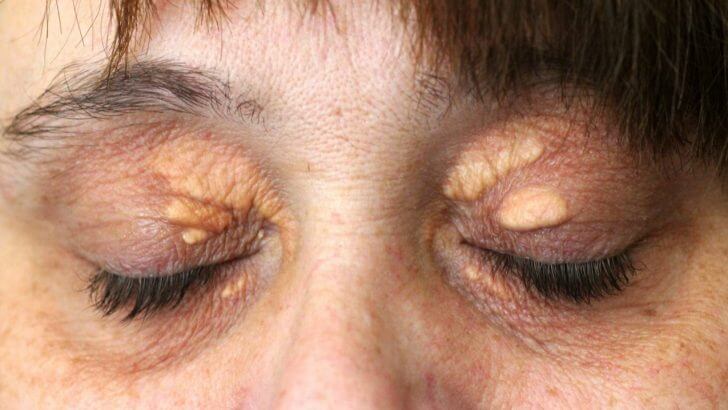
They decide which methods will work. Soft plaques under 5 mm high that have been there less than a year can often be removed with lighter, less costly methods. Hard plaques, those 5 mm or higher, or those present over a year usually need surgery.
Lower-Cost Methods Often Suit
- Soft, superficial plaques
- Under 5 mm high
- Present under a year
- Small areas
Surgery Usually Needed For
- Plaques reaching the deep skin or eyelid muscle
- 5 mm high or more, or hard
- Present over a year, or recurring
- Loose eyelid skin or an inherited lipid disorder
These criteria come from a clinical review of how to match removal to the plaque.[3] Depth matters for cost because it can’t always be judged in advance: in a surgical series of 95 patients, about a quarter had plaques reaching the eyelid muscle,[4] and a skin graft is sometimes needed during the operation.[5] A thin, flat plaque is simpler, as our guide on whether xanthelasma can be flat explains.

Does It Cost More To Remove Several Plaques Or All Four Eyelids?
Usually, yes. Some clinics price each eyelid or plaque, and more plaques mean a longer procedure or more sessions. Doctors grade xanthelasma from I to IV by how much of the eyelids it covers, and the higher grades often need more complex surgery.
Doctors grade xanthelasma from I to IV by how much of the eyelids it covers, and the grade affects how surgery is planned.[3][4] In the 95-patient surgical series, simple excision was used in 70%, combined with an eyelid lift for smaller grades, while extensive plaques needed local skin flaps or grafts.[4] Flaps and grafts mean a longer, more complex procedure, which tends to cost more.
Recurrence also rises with extent. One widely quoted surgical report found plaques returned in 80% of people when all four eyelids were involved, compared with 40% after a first excision overall.[3] So four-lid xanthelasma is more costly to remove and more likely to need paying for again.
The Cost To Remove Xanthelasma By Situation
| Your Situation | Usual Clinic Route | What Drives The Clinic Cost | At-Home Option |
|---|---|---|---|
| Small to medium soft plaques, cause checked | Peel, laser or radiofrequency | Number of sessions | Xanthel® at a fixed $169; one application per plaque, with enough for a second on larger ones |
| One small, soft plaque | Chemical peel or laser | Usually the fewest sessions | Well suited |
| Several plaques on the upper lids | Laser, peel or surgery | Per-plaque or per-lid pricing | Often suited |
| Plaques on all four eyelids | Surgery, sometimes with flaps or grafts | Complex surgery and higher recurrence | Possible for smaller plaques; ask your doctor |
| Large, hard or long-standing plaques | Surgery | Surgeon’s fee, possible graft | A clinic may suit better |
| Plaques that came back after removal | Surgery and a recheck of blood fats | Paying again, higher recurrence | Possible for smaller plaques |
Which Method Costs The Least To Remove Xanthelasma?
Among clinic methods, chemical peels are generally the least costly and can be done in primary care, while radiofrequency’s cost limits its use and surgery tends to cost most. But a low per-session price can add up if several sessions are needed.
- Chemical peel (TCA). Relatively inexpensive and can be done in primary care,[6] with the acid strength matched to plaque thickness.[3] It works best on small plaques and may take several sessions.[5]
- Radiofrequency. Useful near the eye, but its cost limits its use.[5] In a 20-patient trial, it needed fewer sessions than a peel, and 70% of eyelids reached more than 75% clearing within four weeks.[6]
- Laser. Priced per session; CO2 laser gave more than 75% improvement in over 90% of patients in a review of 49 studies.[2]
- Freezing. Usually avoided on the eyelids because it can cause severe swelling.[5]
- Surgery. Usually one procedure, which can make the total predictable, but typically at the top of the price range.
Ask every clinic for the total for your plaques, not the price of one session. Our guide on what doctor removes xanthelasma explains who offers each method, which also affects price.

What Does It Cost To Remove Xanthelasma Over Time?
Possibly more than the first bill. Recurrence is generally under 50%, but it rises to around 60% after repeat procedures and is higher for deeper plaques, so some people pay for removal more than once.
Recurrence after removal is generally reported at under 50%, around 60% after repeat procedures, and higher for deeper plaques.[1] In the widely quoted surgical report, about a quarter of recurrences appeared in the first year.[3] Results vary a lot between methods and studies: one surgical series reported 3.1% recurrence at one year,[4] laser 13% to 16%,[5] and none at six months in a small radiofrequency trial.[6]
- First removal. The procedure and any extra sessions.
- Follow-up. Check-ups to look at healing and spot early recurrence.
- Repeat removal, if needed. Ask in advance how a clinic charges for it.
- Managing the cause. Keeping cholesterol, thyroid or blood sugar under control is normal medical care, and helps your heart.
Our guide on whether xanthelasma comes back explains the odds in more detail.

Can Complications Add To The Cost?
They can. Color change is the most common complication of laser, and surgery can leave a tight scar or change the eyelid’s position, both of which may need further care. Choosing an experienced clinician reduces the risk.
Excision can cause the lower lid to turn outward (ectropion) or pull back, and freezing and chemical methods can scar and discolor the skin.[1] Dyspigmentation, lighter or darker patches, is the most common complication across methods.[2] In the surgical series, 4.2% developed a tight scar (scar contracture),[4] and in the radiofrequency trial, 40% showed some scarring and 45% pigment change at four weeks.[6]
Large plaques removed by laser showed more deformity, discoloration, scarring and recurrence in the surgical series,[4] which is a good reason not to choose a method on price alone. A cheaper method that’s wrong for your plaques can end up costing more.

What Does It Cost To Leave Xanthelasma Alone?
Nothing in money, since the plaques themselves are harmless. But plaques that grow can need a bigger procedure later, and the check-up for a cause matters whether or not you remove them.
Leaving xanthelasma alone is a perfectly reasonable choice if it doesn’t bother you. The cost question only changes if the plaques get bigger or spread, because larger and deeper plaques move you toward surgery and away from lighter, less costly methods.[3] Our guides on whether xanthelasma can get bigger and how fast xanthelasma grows explain what to expect.
What you shouldn’t do to save money is squeeze, cut or burn the plaques with kitchen remedies. Our guide on whether you can squeeze out xanthelasma explains why that backfires.
What Does The Check-Up Before Removal Cost?
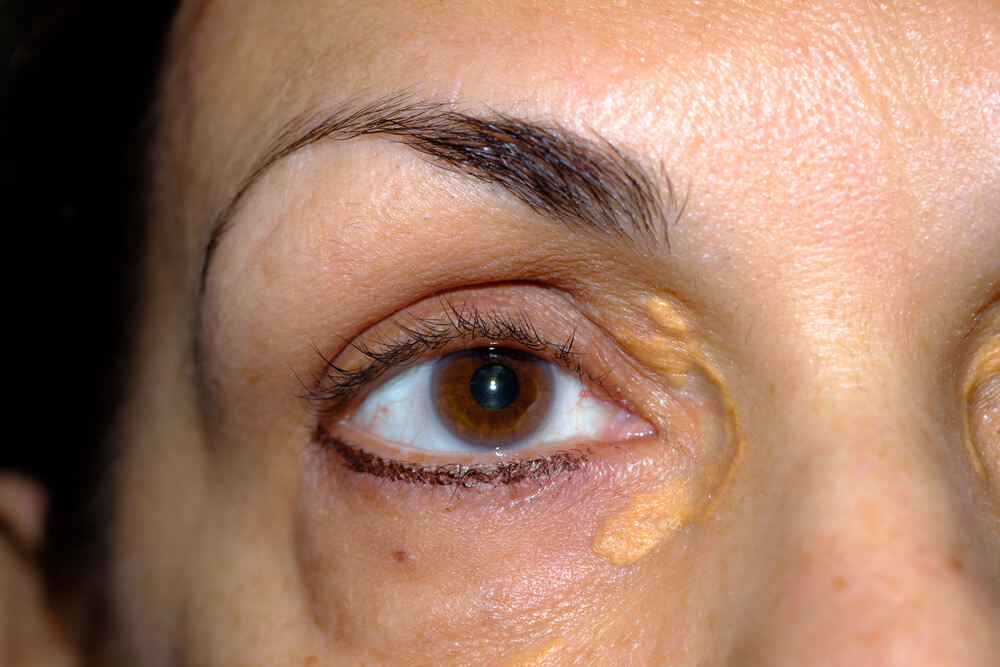
It’s usually a routine medical visit with blood tests, separate from the removal cost and often covered where removal isn’t. The tests are a fasting lipid profile, liver panel, thyroid tests and blood sugar.
About half of people with xanthelasma have a primary or secondary lipid disorder, so the standard workup is a fasting lipid profile, a liver panel, thyroid function tests and fasting glucose, with HbA1c for people with diabetes.[1] This is ordinary medical care, so it’s priced and covered like any other doctor’s visit and blood test, whereas removal itself is usually classed as cosmetic. Our guide on whether xanthelasma removal is covered by insurance explains the difference.
The check-up is worth it whatever your budget: our guides to the causes of xanthelasma and whether xanthelasma is dangerous explain why.

How Can You Keep The Cost Of Removing Xanthelasma Down?
Act while plaques are small, choose a method that suits your plaques, compare clinics on their full total, and avoid DIY attempts that can leave damage to fix. For small to medium plaques, at-home removal keeps the cost fixed.
- Get the cause checked. It’s routine care and guides every later choice.
- Don’t wait for plaques to grow if you know you want them gone; smaller plaques suit lighter methods.
- Match the method to the plaque. The wrong method can mean complications or recurrence.
- Ask for an all-in quote. Including sessions, follow-up and any repeat removal.
- Choose experience. An experienced clinician lowers the risk of costly complications.
- Skip kitchen remedies. Burns and scars cost more to fix than plaques cost to remove.
- Consider a fixed price. For small to medium plaques, at-home removal costs $169 up front.
What Does It Cost To Remove Xanthelasma At Home?
Xanthel® costs $169 with free international delivery. There’s no consultation, no session fees and no per-eyelid pricing, so you know the cost before you start.
That fixed price is the main difference from clinic removal, where the cost climbs with every extra plaque, eyelid and session. You apply the cream only to the plaque at home, one application per plaque, with enough for a second on larger ones, and allow about one to two weeks of healing. Results vary, and very large, deep or long-standing plaques may still be better suited to a clinic.
Our guides to xanthelasma removal cream and xanthelasma home removal explain the process. If your doctor has checked the cause and you want the cost of removal fixed before you start, this is the cream we make for xanthelasma.

What’s The Bottom Line On The Cost To Remove Xanthelasma?
The cost to remove xanthelasma rises with plaque size, depth and number. Small, soft plaques suit less costly methods; deep or four-lid plaques usually need surgery and recur more. At-home removal with Xanthel® is a fixed $169.
Get the cause checked, think about the cost over time as well as the first bill, and don’t let price push you toward a method that’s wrong for your plaques. If you’d like the cost fixed from the start, Xanthel® is a cosmetic cream made for xanthelasma removal at home, sold by Xanthelasma.com. You’ll find it at the foot of this page, or read more about Xanthel® xanthelasma removal cream, compare the cost to remove cholesterol deposits on eyelids, and browse all our xanthelasma guides.
Common Questions About The Cost To Remove Xanthelasma
How Much Does It Cost To Remove Xanthelasma?
It depends on plaque size, depth and number, and on the method. Clinics price by procedure or session, while at-home removal with Xanthel® is a fixed $169.
Is It Cheaper To Remove Small Xanthelasma?
Usually, yes. Small, soft, recent plaques often suit lighter methods such as chemical peels, while large or deep plaques usually need surgery.
Does Removing Xanthelasma On All Four Eyelids Cost More?
Usually, yes. It often needs more complex surgery, some clinics price per eyelid, and recurrence is higher when all four lids are involved.
Which Clinic Method Costs The Least?
Chemical peels are generally the least costly clinic method, but several sessions may be needed, so compare the total for your plaques.
Will I Have To Pay Again If Xanthelasma Comes Back?
Possibly. Recurrence is generally under 50% but higher after repeat procedures and with deep plaques, so ask clinics how they charge for repeats.
Does It Cost Anything To Leave Xanthelasma Alone?
Not in money, because the plaques are harmless. Larger plaques can need a bigger procedure later, and the check-up for a cause still matters.
Is The Check-Up Part Of The Removal Cost?
No. Blood tests for a cause are routine medical care, priced and often covered like any doctor’s visit, while removal is usually classed as cosmetic.
How Much Does Xanthel® Cost?
Xanthel® costs $169 with free international delivery, with one application per plaque and enough for a second on larger ones.
Sources
- Blair K. Xanthelasma Palpebrarum. StatPearls, National Library of Medicine (NCBI Bookshelf), updated 2026.
- Malekzadeh H, Ormseth B, Janis JE. A Practical Review of the Management of Xanthelasma Palpebrarum. Plastic and Reconstructive Surgery Global Open, 2023;11(5):e4982.
- Nair PA, Singhal R. Xanthelasma palpebrarum: a brief review. Clinical, Cosmetic and Investigational Dermatology, 2017;11:1-5.
- Outcomes of surgical management of xanthelasma palpebrarum. Archives of Plastic Surgery, 2013;40(4):380-386.
- Patadia A, Rana HS, Stewart K, Yen MT, Lee H. Xanthelasma. EyeWiki, American Academy of Ophthalmology, reviewed 2026.
- Reddy PKS, Kunneth ST, Lakshminarayana SPA, Yallappa SM, Chandrashekara R, Nanjundaswamy SK. Comparative Study to Evaluate the Efficacy of Radiofrequency Ablation versus Trichloroacetic Acid in the Treatment of Xanthelasma Palpebrarum. Journal of Cutaneous and Aesthetic Surgery, 2016;9(4):236-240.
Read Next
 How Much Is Xanthelasma Removal?Every cost line
 How Much Does Removal Cost?What affects the price
 Cost To Remove Cholesterol DepositsEyelid deposits priced up
 Is Removal Covered By Insurance?When insurers pay
 Xanthelasma Removal CreamThe fixed-price option
 Does Xanthelasma Come Back?Recurrence explained