Can Xanthelasma Get Bigger?
Whether Xanthelasma Grows, What Makes It Enlarge, and What You Can Do to Limit It
Yes, xanthelasma can get bigger, slowly, over months and years, though not always. This guide explains what makes xanthelasma enlarge, whether it will keep growing, and how to limit it.
By Xanthelasma.com
Can Xanthelasma Get Bigger?
Yes, xanthelasma can get bigger, but it does so slowly and not in every case. The yellow cholesterol plaques on the eyelids often start small and may gradually broaden or thicken over months and years, and sometimes additional patches appear nearby and merge into a larger area. So a xanthelasma getting bigger over time is common, but it is a slow, gradual change rather than a sudden or rapid one.
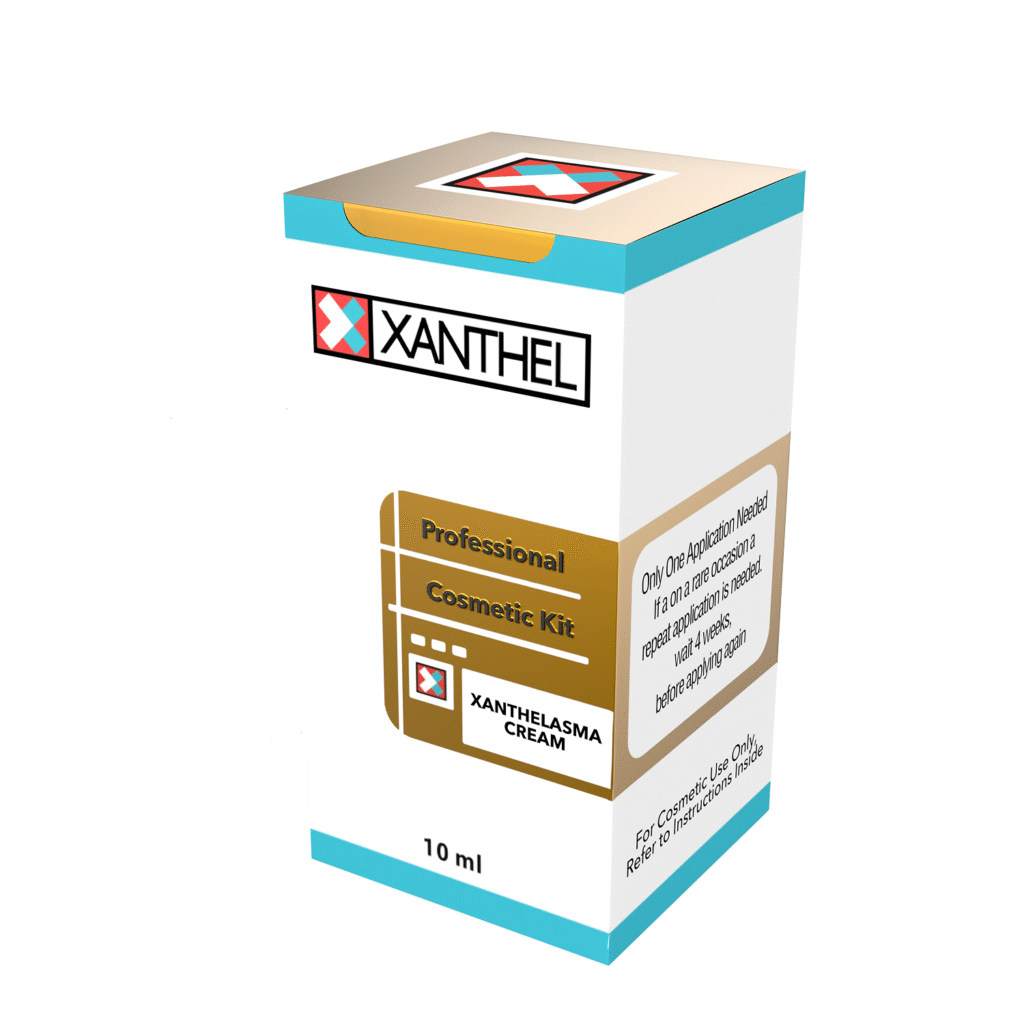
The reassuring part is that the growth is unhurried and the marks remain benign throughout, getting bigger does not make xanthelasma dangerous, just more noticeable. It is also not inevitable: some xanthelasma stay much the same size for years. What it almost never does is shrink or disappear on its own. This page explains what influences whether xanthelasma enlarges, and what you can do about it. If you would like to clear it, Xanthel ® is a cosmetic skincare cream made for xanthelasma removal at home. Our how fast xanthelasma grows and whether xanthelasma spreads pages cover the growth question further.

What Makes Xanthelasma Get Bigger
Because xanthelasma is made of cholesterol-rich material, the things that influence whether it enlarges are largely the same factors that affect your blood lipids. Raised cholesterol, particularly high LDL (the “bad” cholesterol) or low HDL (the “good” cholesterol that helps clear it), is the main association, and the higher and longer-standing the imbalance, the more readily xanthelasma may grow or multiply. An underactive thyroid, diabetes, or a liver issue can contribute by disturbing how the body handles fats, and a genetic or family tendency to high cholesterol can mean xanthelasma appears earlier or enlarges more readily.
Lifestyle factors feed into this through their effect on cholesterol: a diet high in saturated and trans fats, smoking, heavy alcohol use, and inactivity can all nudge lipid levels in the wrong direction and so encourage xanthelasma to enlarge or new patches to form. The honest limit worth stating, though, is that improving these factors helps slow new growth and reduce the chance of new xanthelasma; it will not shrink a plaque that has already formed. Our pages on the causes of xanthelasma and whether it indicates raised cholesterol cover the underlying factors.

Will It Keep Getting Bigger, or Does It Stop?
A natural follow-up worry is whether xanthelasma, once it starts enlarging, will keep growing indefinitely. It will not balloon or spread rapidly, the growth is always slow, and in many people a xanthelasma reaches a certain size and then stays fairly stable for a long time. Growth is variable rather than guaranteed: some plaques enlarge noticeably over a year or two, others change very little over the same period.
What is consistent is that xanthelasma does not resolve on its own, so while it will not suddenly worsen, it generally will not retreat without treatment either. Getting bigger also does not mean the marks are becoming harmful, they stay benign and do not affect the eye or vision; they simply become more visible. Because the pace is so slow, there is no urgency to act, you can confirm the diagnosis, check your cholesterol, and decide on removal at your own pace. Our pages on whether xanthelasma comes back and whether it is dangerous cover this.

How to Limit Xanthelasma Growth
If your xanthelasma is getting bigger, there are two complementary things you can do. The first is to manage the underlying cause, which helps slow further growth and reduce the chance of new patches. Because that cause is usually lipid-related, a simple cholesterol blood test with your doctor is the sensible starting point. Around half of people with xanthelasma have completely normal cholesterol, so for many this is reassurance, but where raised cholesterol or another factor is found, managing it (through diet, regular activity, not smoking, moderating alcohol, and any treatment your doctor advises) is the part that helps limit growth and protects your wider health.
The second is to remove the xanthelasma that is already there, since managing cholesterol slows new growth but will not shrink an existing plaque. The clinic options (surgery, laser, freezing, radiofrequency, electrosurgery) work but involve cost, recovery, and a scarring risk near the eye, while the least invasive route is an at-home cosmetic cream made for the purpose. Xanthel ® is a cosmetic skincare cream made for xanthelasma removal at home, applied to the xanthelasma, with the skin healing over roughly one to two weeks. Together, removal plus cause-management is the most effective response to xanthelasma that is enlarging. Our pages on how to stop xanthelasma growing, how to prevent it, and what to eat for xanthelasma cover the cause side.

Removing a Xanthelasma That Has Got Bigger
If a xanthelasma has already enlarged and its appearance bothers you, removal is the way to clear it, and a larger plaque is still very treatable. The right method depends on its size and your preferences: larger or thicker xanthelasma may be better assessed in a clinic, while small to moderate plaques suit the at-home route well. Xanthel ® is a cosmetic skincare cream made for xanthelasma removal at home, applied precisely to the plaque following the supplied guide, with the skin healing over roughly one to two weeks, and enough is supplied for a second treatment if a larger plaque needs it.
It is worth confirming with a doctor that an enlarging mark is xanthelasma rather than a look-alike before removing it, especially if it is changing in a way that seems unusual. Avoid trying to squeeze, pick, or cut a xanthelasma, this does not work (there is no core to express) and risks infection and scarring near the eye, and skip DIY remedies, which do not remove the deposit and can irritate the delicate skin. Our pages on how to remove xanthelasma, the xanthelasma removal cream, and removing it at home cover the options.


Can Xanthelasma Get Bigger? The Bottom Line
Yes, xanthelasma can get bigger, gradually, over months and years, though not in every case, and some plaques stay stable for a long time. The growth is always slow rather than sudden, and an enlarging xanthelasma stays benign and does not affect the eye or vision; it simply becomes more visible. What it rarely does is shrink or disappear on its own. The factors that drive growth are largely those that affect cholesterol, diet, lifestyle, and underlying conditions.
To limit growth, manage any underlying cause (starting with a cholesterol check) to slow new growth, and remove the existing plaque if you want it gone, since managing cholesterol will not shrink one already formed. The least invasive removal route is xanthelasma removal at home with Xanthel ®. Avoid squeezing the plaques or using DIY remedies near the eye. Our how does xanthelasma form and what is xanthelasma pages cover related questions.

Common Questions About Whether Xanthelasma Gets Bigger
Can xanthelasma get bigger over time?
Yes, xanthelasma can enlarge slowly over months and years, often broadening or thickening, and sometimes new patches appear and merge. The change is gradual rather than sudden, and it is not inevitable, some plaques stay fairly stable for years. What xanthelasma rarely does is shrink or disappear on its own, so if you want it gone, removal is the reliable route.
Does xanthelasma grow quickly?
No. Xanthelasma does not grow quickly or spread suddenly across the eyelid. Its growth is always slow and steady, measured in months and years. If a mark grows unusually fast, changes colour markedly, bleeds, or becomes painful, that is not typical of xanthelasma and is worth having a doctor check, to confirm it is still xanthelasma and not another skin change.
What makes xanthelasma get bigger?
The factors that affect blood cholesterol: raised LDL or low HDL cholesterol, and contributors like an underactive thyroid, diabetes, a liver issue, or a genetic tendency. Lifestyle factors that raise cholesterol, a diet high in saturated and trans fats, smoking, heavy alcohol use, and inactivity, can encourage growth too. Improving these slows new growth but will not shrink an existing plaque.
Will xanthelasma keep growing forever?
No. The growth is always slow, and many xanthelasma reach a size and then stay fairly stable for a long time rather than enlarging indefinitely. Growth is variable from person to person. It will not suddenly worsen, but it generally will not shrink on its own either, so removal is needed if you want to clear an enlarged plaque.
Is a bigger xanthelasma more dangerous?
No. A larger xanthelasma is more noticeable but no more harmful, the marks stay benign and do not affect the eye, vision, or eyelid function regardless of size. Their significance is unchanged: being made of cholesterol, they can flag raised blood lipids worth checking. So a bigger xanthelasma is a cosmetic matter, not a health threat in itself.
Can I stop xanthelasma from getting bigger?
To an extent. Managing the underlying cause, mainly keeping cholesterol healthy through diet, activity, not smoking, and any treatment your doctor advises, can slow further growth and reduce the chance of new patches. It will not shrink an existing plaque, though. To clear a xanthelasma that has already enlarged, removal is the reliable route, ideally paired with managing the cause.
How do I remove a xanthelasma that has got bigger?
By an active removal method. Larger or thicker plaques may be better assessed in a clinic, while small to moderate ones suit the at-home route. Xanthel is a cosmetic skincare cream made for xanthelasma removal at home, applied to the plaque, with the skin healing over one to two weeks, and enough is supplied for a second treatment if a larger plaque needs it. Confirm the diagnosis with a doctor first.
Xanthel ® is a cosmetic skincare cream made for xanthelasma removal at home, not a medical treatment for any underlying condition. However your xanthelasma is removed, it is worth seeing your doctor for a simple check, since xanthelasma can sometimes sit alongside lipid, thyroid, or cardiovascular factors worth identifying and managing for your wider health.