
Xanthelasma Treatments
How to Choose Between Them, and What Each One Realistically Delivers
With several xanthelasma treatments available, the real question is which suits your case. This page weighs the options on what each realistically delivers, so you can match a treatment to your situation.
By Xanthelasma.com
Choosing Between Xanthelasma Treatments
There are several xanthelasma treatments, an at-home cream, cryotherapy, laser, electrosurgery, and surgical excision, and rather than just listing them, the useful question is how to choose between them for your situation. Each delivers the same broad goal (clearing the visible plaques) but differs in invasiveness, cost, recovery, scarring risk, and how it suits different plaque sizes, so the right choice depends on you.
This page weighs the treatments on what each realistically delivers, so you can match one to your case. Two honest threads run through all of them: none is a guaranteed permanent fix (the marks can recur whatever you choose), and all clear the visible plaque without treating the underlying cause. For typical eyelid xanthelasma, the least invasive starting point is an at-home cream, Xanthel ® is a cosmetic skincare cream formulated to remove xanthelasma plaques at home. Our page on xanthelasma treatment options lays them out in detail, and our overview of xanthelasma gives the background.

The At-Home Cream: Best for Typical Cases
For most people with typical eyelid xanthelasma, this is the natural first treatment to weigh, because it asks the least of you. A purpose-made cosmetic cream is applied to the plaque yourself, following the supplied guidance, and the mark is reduced or removed as the skin heals over the following days. What it delivers: removal of the visible marks without a clinic visit, anaesthetic, cutting, or per-session billing, at a flat one-off cost.
Xanthel ® is a cosmetic skincare cream formulated to remove xanthelasma plaques at home, with one application enough for most typical cases and a second occasionally needed for larger plaques. It suits modest eyelid plaques and a preference for dealing with the marks privately and affordably. What it does not do, like every treatment here, is change the underlying tendency or treat blood cholesterol, so it is a cosmetic removal, not a cure for the cause. For very large or stubborn plaques, a clinic treatment may deliver more. You can look at the at-home option or read what to look for in a cream.

Cryotherapy and Laser: The Middle-Ground Clinic Treatments
If you would rather a professional carry out the treatment but want to avoid surgery, cryotherapy and laser are the main middle-ground options, and they deliver differently. Cryotherapy freezes the plaque with liquid nitrogen; it is quick, minimally invasive, and relatively affordable among clinic methods, but it can need repeat sessions and carries a notable risk of pigment changes on the eyelid. It suits smaller plaques where cost matters.
Laser vaporises the deposit with precision, sparing surrounding skin, and is often favoured for a clean cosmetic result; what it delivers is accuracy with a relatively short recovery, but typically across several sessions, each charged separately, making it one of the more expensive routes. It suits those prioritising precision who accept the higher cost. Both avoid cutting and stitches, both are done by a dermatologist or oculoplastic surgeon, and both, like all methods, can be followed by recurrence. Our page on how xanthelasma is removed walks through what each procedure involves.
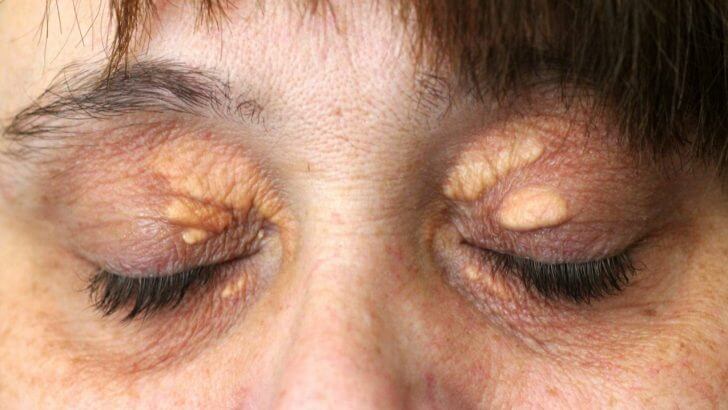
Surgery: Best for Large or Stubborn Plaques
At the most involved end, surgical excision delivers the most definitive single-session result, which is why it is the go-to for large, thick, or long-standing plaques that other methods struggle with. Under local anaesthetic, the surgeon cuts out the plaque and closes the skin with fine stitches, removing the deposit directly in one procedure, with a relatively low recurrence rate compared with some other methods.
What you weigh against that: it is the most invasive treatment, carries the highest scarring risk on the visible eyelid, involves stitches and a recovery period, and is usually the most expensive, rarely covered by insurance since removal is cosmetic. So surgery delivers thoroughness at the cost of invasiveness, a good trade for a large plaque, an unnecessary one for a small mark a cream could handle. This is why matching the treatment to the plaque matters. Our page on what doctor removes xanthelasma covers who performs it.

What All the Treatments Have in Common: Recurrence and the Cause
Whichever treatment you choose, two realities apply to all of them, and they are worth building into your expectations. First, recurrence is possible after any method. None of these treatments changes the underlying tendency to form the deposits, so new marks can appear over time, and the chance is higher if a cause like raised cholesterol is left unmanaged. Surgery tends to have a somewhat lower recurrence rate than the others, but no method guarantees the marks are gone for good.
Second, every treatment clears the visible plaque but none treats the underlying cause. That is why lasting results come from pairing whichever removal you choose with a simple lipid check from your doctor (sometimes with thyroid and blood-sugar checks), managing anything raised. Around half of people with xanthelasma have normal cholesterol, so for many this is mostly reassurance, but it is always worthwhile. Our page on whether xanthelasma comes back covers recurrence in more depth.


Xanthelasma Treatments: The Bottom Line
The xanthelasma treatments, an at-home cream, cryotherapy, laser, electrosurgery, and surgery, each deliver removal of the visible marks but differ in invasiveness, cost, recovery, and which plaques they suit. For typical eyelid xanthelasma, an at-home cream is the gentlest, most affordable first try; cryotherapy and laser are middle-ground clinic options; and surgery is best reserved for large or stubborn plaques. Matching the treatment to your case is what gives a good result.
Across all of them, recurrence is possible and none treats the underlying cause, so pairing removal with a cholesterol check matters. It is worth looking at the at-home removal option, comparing the full range of options, and reading the treatment options in detail.

Common Questions About Xanthelasma Treatments
What treatments are available for xanthelasma?
The main treatments are an at-home cosmetic cream, cryotherapy (freezing), laser, electrosurgery, and surgical excision. They all clear the visible plaques but differ in invasiveness, cost, recovery, and which plaques they suit. An at-home cream is the least invasive; surgery the most. The right choice depends on the size of your plaques, your budget, and your preferences.
Which xanthelasma treatment is best?
There is no single best treatment; it depends on your case. For typical eyelid xanthelasma, an at-home cream is the gentlest and most affordable starting point. Cryotherapy and laser are middle-ground clinic options, and surgery suits large or stubborn plaques. Matching the treatment to your plaque size, budget, and tolerance for invasiveness and cost is what matters.
What is the least invasive xanthelasma treatment?
An at-home cosmetic cream is the least invasive. Xanthel is a cosmetic skincare cream formulated to remove xanthelasma plaques at home, with no cutting, anaesthetic, clinic visit, or per-session cost. It suits typical eyelid xanthelasma. The clinic treatments (cryotherapy, laser, electrosurgery, surgery) are more invasive to varying degrees, with surgery the most.
Do xanthelasma treatments work permanently?
No treatment is guaranteed permanent. All of them clear the visible plaque, but none changes the underlying tendency to form the deposits, so the marks can recur, particularly if a cause like raised cholesterol is unmanaged. Surgery tends to have a somewhat lower recurrence rate than other methods, but pairing any treatment with managing the cause gives the most lasting result.
Which treatment is best for large xanthelasma?
Surgical excision is usually best for large, thick, or stubborn plaques, since it removes the deposit directly in a single procedure with a relatively low recurrence rate. Laser can also handle thicker plaques. These are better suited than a cream to substantial deposits, though they are more invasive and costly. An oculoplastic surgeon or dermatologist can advise.
Do xanthelasma treatments leave scars?
Scarring risk varies by treatment. Surgery and electrosurgery, which cut or burn the skin, carry the highest risk. Laser and cryotherapy are gentler but can cause temporary pigment changes. An at-home cream avoids the cutting of surgical removal. With any clinic method, an experienced practitioner and good aftercare reduce the risk on the delicate eyelid.
Will treating xanthelasma fix my cholesterol?
No. Xanthelasma treatments are cosmetic, they clear the visible marks on the skin but do not treat blood cholesterol or any underlying lipid disorder, which are internal and managed by your doctor. This is why a simple cholesterol check is worth having alongside treatment, to address the underlying side that no removal method affects.
How do I choose a xanthelasma treatment?
Weigh the plaque size (small marks suit a cream; large ones may need surgery or laser), your budget (a cream is the most affordable; clinic methods cost more and are rarely insured), your tolerance for invasiveness and scarring risk, and whether you prefer treating at home or at a clinic. A doctor can advise, and a lipid check is worth having whichever you choose.
Xanthel ® is a cosmetic skincare cream made to remove xanthelasma plaques at home, not a medical treatment for any underlying condition. Whichever treatment you choose for the marks, it is worth seeing your doctor for a simple check, since xanthelasma can sometimes sit alongside lipid, thyroid, or cardiovascular factors worth identifying and managing for your wider health.