
Xanthoma Definition
What a Xanthoma Is, the Different Types, and Where Xanthelasma Fits In
A xanthoma is a deposit of cholesterol-rich material in the skin or tendons. This page defines the term, explains the main types and what they signal, and shows where the eyelid form, xanthelasma, fits.
By Xanthelasma.com
Xanthoma: The Definition
A xanthoma is a deposit of cholesterol-rich, fatty material that builds up in the skin or tendons, appearing as a yellowish growth. The name comes from the Greek “xanthos”, meaning yellow, which is exactly what gives these deposits their characteristic colour. They form when cells called macrophages take up lipids (fats) and accumulate, and they are usually painless.
The single most useful thing to understand is that “xanthoma” is an umbrella term covering several different types, and they are not all equal in significance. Some types are strong markers of serious, often inherited, lipid disorders and need proper medical attention. One type, the eyelid form called xanthelasma, is usually a simple cosmetic concern. This page defines the family and explains which is which, so you can tell where your situation fits. The wider overview is on our xanthomas page, and the eyelid type has its own xanthelasma overview.

The Main Types of Xanthoma
Xanthomas are classified by how and where they appear, and the type matters because each points to different things. There are five main types worth knowing.
Eruptive xanthomas appear suddenly as crops of small reddish-yellow papules, often on the buttocks, shoulders, and extensor surfaces, and are typically linked to very high triglycerides, often with poorly controlled diabetes. Tuberous xanthomas are firm, painless nodules on pressure areas like the elbows and knees, associated with raised cholesterol. Tendinous xanthomas grow within tendons, classically the Achilles and the tendons of the hands, and are strongly associated with familial hypercholesterolemia. Planar (or plane) xanthomas are flat yellowish patches that can appear in various places. And xanthelasma is the planar type that appears specifically on the eyelids, the most common xanthoma of all. Our pages on eruptive xanthomas, tuberous xanthoma, and tendon xanthomas cover those types in detail.

What Xanthomas Indicate
Across the family, xanthomas share a common thread: they are made of cholesterol, so they can be outward signs of how the body handles fats. Many types are genuinely useful warning flags, eruptive xanthomas can signal very high triglycerides, tendinous and tuberous ones often point to inherited high cholesterol such as familial hypercholesterolemia, and planar xanthomas can sometimes be associated with more serious underlying conditions. Diabetes, an underactive thyroid, and liver disease can all contribute too.
This is why, for most xanthoma types, the right response is medical assessment. A doctor will typically examine the lesions, run a lipid blood test, and sometimes arrange genetic testing or a biopsy, because identifying and managing the underlying lipid disorder protects your wider health, including your cardiovascular risk. The notable exception, in terms of how worried to be, is the eyelid type, which is covered next. For the other types, please treat their appearance as a prompt to see a doctor rather than a cosmetic matter.

Where Xanthelasma Fits In
Xanthelasma is the xanthoma most people actually encounter, and it sits a little apart from the rest. It is the planar type that forms on the eyelids, appearing as soft yellow patches near the inner corners of the eyes. Like all xanthomas it is made of cholesterol, and it too can occasionally reflect raised lipids, so a simple cholesterol check is still worthwhile. But unlike the tendinous, tuberous, and eruptive types, xanthelasma is generally a straightforward cosmetic concern rather than a marker of a serious inherited disorder, and notably, around half of people with it have completely normal cholesterol.
This difference matters practically. For the eyelid type specifically, there is a simple at-home cosmetic option, Xanthel ® is a cosmetic skincare cream formulated to remove xanthelasma plaques at home, intended for eyelid xanthelasma and not for the other, more serious xanthoma types, which need a doctor’s care rather than a cosmetic cream. So if your concern is the eyelid form, our xanthelasma overview and page on what it looks like will help. If you have deposits on tendons, joints, palms, or elsewhere, see a doctor.
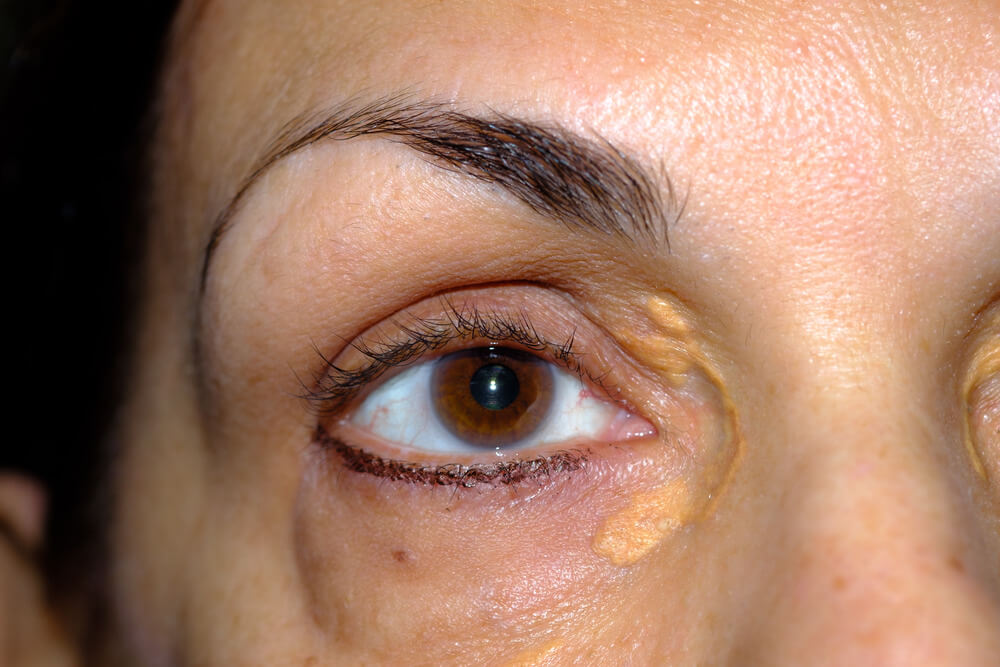
Xanthoma Definition: The Short Version
A xanthoma is a yellowish deposit of cholesterol-rich material in the skin or tendons, and it comes in several types, eruptive, tuberous, tendinous, and planar, most of which can signal a significant, often inherited, lipid disorder and warrant medical assessment. Xanthelasma, the planar type on the eyelids, is the most common and is usually a simple cosmetic concern rather than a serious sign, though a cholesterol check is still sensible.
If your concern is the eyelid type, you can read more on our xanthelasma overview or look at the at-home removal option made specifically for it. For any other type of xanthoma, on tendons, joints, palms, or elsewhere, please see a doctor for assessment of the underlying cause.


Common Questions About the Xanthoma Definition
What is a xanthoma?
A xanthoma is a deposit of cholesterol-rich, fatty material in the skin or tendons, appearing as a yellowish growth. The name comes from the Greek for yellow. Xanthomas form when cells take up lipids and accumulate, and they are usually painless. “Xanthoma” is an umbrella term covering several types that differ in significance.
What are the different types of xanthoma?
The main types are eruptive (sudden crops of papules, linked to high triglycerides), tuberous (firm nodules on the elbows and knees), tendinous (within tendons, linked to inherited high cholesterol), and planar or flat xanthomas. Xanthelasma, the eyelid form, is the planar type that appears on the eyelids and is the most common.
Is xanthelasma a type of xanthoma?
Yes. Xanthelasma is the planar xanthoma that forms specifically on the eyelids, and it is the most common type of all. It shares the cholesterol-deposit nature of the family but is generally a simple cosmetic concern, unlike the tendinous, tuberous, or eruptive types, which more often signal serious lipid disorders.
What do xanthomas indicate about health?
They can be outward signs of how the body handles fats. Eruptive xanthomas can signal very high triglycerides, tendinous and tuberous types often point to inherited high cholesterol, and various types can relate to diabetes, thyroid problems, or liver disease. For most types, their appearance is a prompt for medical assessment of the underlying cause.
Are all xanthomas serious?
No. Most types, eruptive, tuberous, tendinous, can be markers of significant, often inherited, lipid disorders and warrant a doctor’s assessment. The eyelid type, xanthelasma, is the exception, being generally a cosmetic concern, with around half of those affected having normal cholesterol. The type and location determine how concerned to be.
Can xanthomas be removed?
It depends on the type. For most xanthomas, treatment focuses on managing the underlying lipid disorder under a doctor’s care, and the deposits may reduce as the cause is controlled. For eyelid xanthelasma specifically, there is also a cosmetic at-home cream option, since that type is usually a straightforward cosmetic matter.
Do xanthomas go away on their own?
Generally not on their own, though treating the underlying lipid disorder can sometimes reduce or resolve certain types over time. Eyelid xanthelasma tends to persist and not fade, which is why people often choose to remove it cosmetically. Any xanthoma that appears warrants understanding its cause first.
Should I see a doctor about a xanthoma?
For most types, yes, because they can signal an underlying lipid disorder worth identifying and managing. This is especially important for tendinous, tuberous, and eruptive xanthomas. Even for eyelid xanthelasma, a simple cholesterol check is sensible, after which that type can be treated as the cosmetic matter it usually is.
Most types of xanthoma can indicate an underlying lipid disorder and should be assessed by a doctor. Xanthel ® is a cosmetic skincare product intended for eyelid xanthelasma, not for other xanthoma types. This page is for general information and is not a substitute for medical advice.