A Budget For Every Stage: The Health Check, The Removal, The Extras People Forget, And Keeping The Deposits Away
The cost to remove cholesterol deposits on eyelids runs from a flat $169 for an at-home removal cream to thousands of dollars for clinic surgery, and insurance rarely pays. But the removal is only one of three costs: there’s also the doctor’s check of the cause, and the cost of keeping new deposits away. Budgeting for all three gives you the true figure.
Removing cholesterol deposits on the eyelids (xanthelasma) costs a flat $169 with an at-home removal cream, or a clinic fee quoted after consultation, often per session, that can reach thousands for surgery. Add a doctor’s check and blood tests, aftercare, travel and time off, and the chance of paying again if deposits return. Insurance usually doesn’t pay for removal.
Key Takeaways
- Budget for three things: the health check, the removal and keeping deposits away.
- Clinic removal is quoted individually and often charged per session.
- Surgeon fees for cosmetic eyelid surgery start in the thousands.
- Insurance and tax relief rarely apply to cosmetic removal.
- Deposits return in under half of people, which can mean paying twice.
- An at-home removal cream is a single flat cost for small to medium deposits.
On This Page 16 sections
What Does It Cost To Remove Cholesterol Deposits On Eyelids?
It depends on the route. An at-home removal cream made for these deposits costs a flat $169. Clinic laser, surgery or peels are priced after a consultation, often per session, and surgeon fees for cosmetic eyelid surgery alone start at around $3,000.
There’s no national price list for removing eyelid cholesterol deposits, so clinics set their own fees. The clearest benchmark from a professional body is full cosmetic eyelid surgery: the American Society of Plastic Surgeons’ projected 2024 surgeon fee is $3,000 to $5,500 for the upper lids and $3,709 to $6,500 for the lower lids, before anesthesia or facility costs.[3] Removing a single small deposit is a smaller job, but those figures show where surgical eyelid fees begin.
For method-by-method prices see how much xanthelasma removal costs, and for prices at a glance see how much xanthelasma removal is. This page focuses on budgeting for every stage, from the first doctor’s visit to keeping the deposits away.

What Are Cholesterol Deposits On The Eyelids?
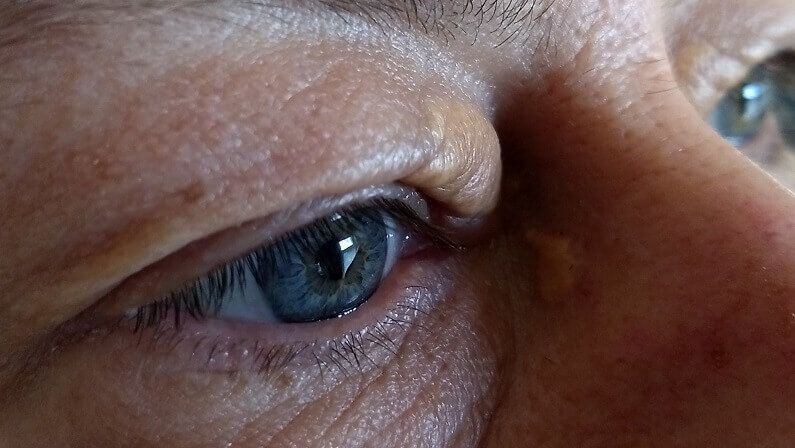
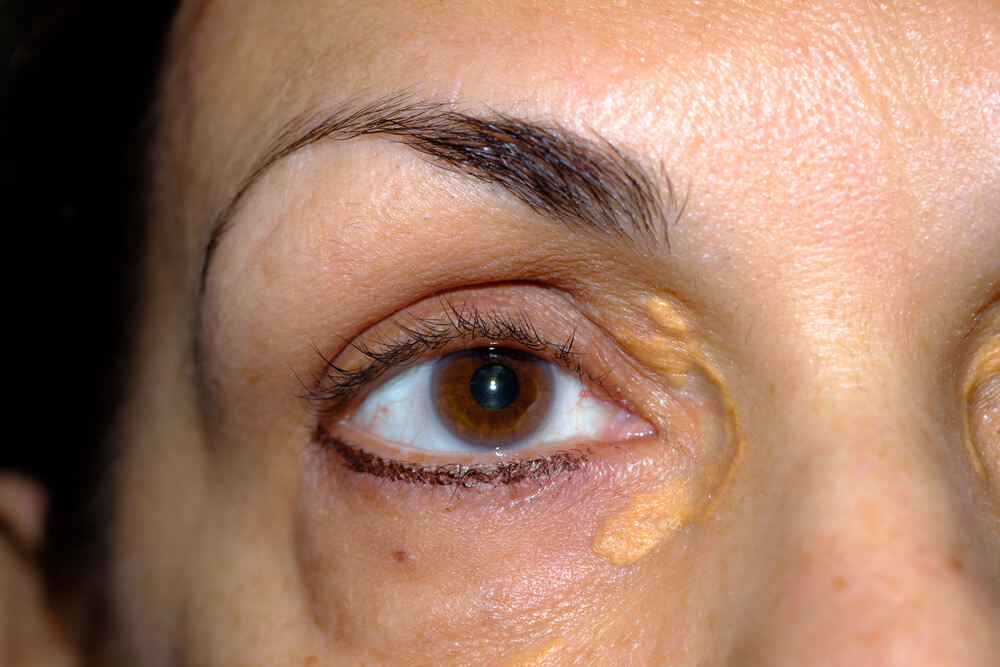
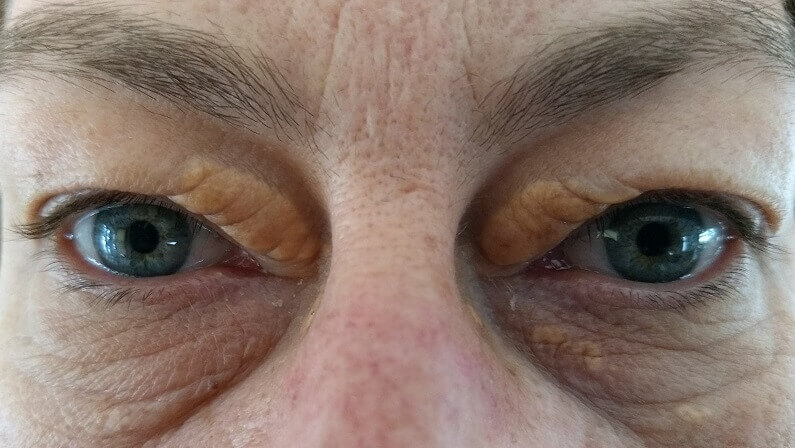
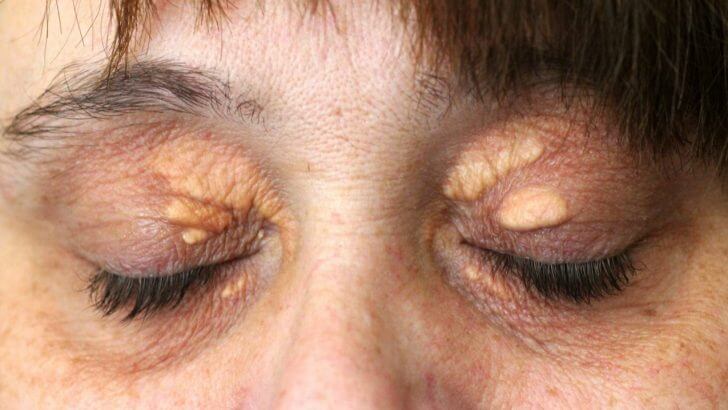
They’re xanthelasma: soft, yellow plaques of fat-filled immune cells in the eyelid skin, usually near the inner corners and often on both sides. They rarely fade by themselves, which is why removal costs come up at all.
Xanthelasma palpebrarum forms when fats leak from tiny eyelid blood vessels and are taken up by immune cells, which become foam cells and collect in the skin.[1] The plaques tend to stay the same or slowly grow rather than disappear, and about half of people who have them have a lipid disorder.[1] Our main xanthelasma guide explains the condition, and our guide to what causes cholesterol deposits around the eyes covers why they form.

What Are The Three Costs To Budget For?
The health check (a doctor’s visit and blood tests), the removal itself (clinic or at home, plus extras), and keeping deposits away afterward (managing the cause and paying again if they return).
- The health check. Confirms the diagnosis and looks for cholesterol, thyroid, liver or blood sugar problems.
- The removal. The procedure or product, plus consultation, aftercare, travel and time off.
- Keeping them away. Ongoing care for any cause, and the chance of a repeat removal.
Most price quotes cover only the second item, and often only part of it. Planning for all three avoids surprises.
What Does The Health Check Cost?
Usually a routine doctor’s visit plus standard blood tests. Because these are for your health rather than your appearance, they’re a separate question from removal, so ask your plan how they’re covered.
The usual tests are a fasting lipid profile, a liver panel, thyroid tests and fasting glucose, with HbA1c if you have diabetes; a biopsy is only needed if the diagnosis is uncertain.[1] This step is worth paying for whichever removal route you choose: finding and managing a cause lowers the chance of paying for removal twice. Our guide on what xanthelasma indicates explains the results.
What Does Clinic Removal Of Eyelid Cholesterol Deposits Cost?
Clinics quote after seeing you. Surgery is usually the most expensive; laser is often mid to high and charged per session; acid peels tend to cost less per visit but may need repeats. Larger, deeper or more numerous deposits cost more.
Results matter as much as price. A 2023 review of 49 studies found CO2 laser gave more than 75% improvement in over 90% of patients, and erbium laser more than 80%; changes in skin color were the most common complication, and surgery was favored for larger, deeper plaques.[2] Freezing can scar and discolor eyelid skin, and surgery can pull the lid out of shape,[1] so a lower price that leads to a correction later isn’t a saving.
Our guide on what type of doctor removes xanthelasma explains who charges what and why.

How Many Sessions Might You Pay For?
Often more than one for laser and peels. In one study of clinic acid peels, patients needed between one and five sessions, 1.64 on average, so budget for at least two visits unless your doctor says otherwise.
In that 2024 study of 77 patients given 80% trichloroacetic acid peels, 49.4% needed one session and 40.3% needed two.[6] Laser can also take more than one session, while surgery is usually a single procedure with follow-up visits. Ask each clinic how many sessions they expect for your deposits and what each extra one costs.

Which Extra Costs Do People Forget?
Consultation fees, anesthesia and facility charges, aftercare products, follow-up visits, travel, time off work while the skin heals, and any repeat sessions. Together they can add a lot to the headline price.
- Consultation. Sometimes charged separately, sometimes credited if you go ahead.
- Anesthesia and facility fees. Common for surgery.
- Aftercare. Ointments, dressings and sun protection.
- Follow-ups. Stitch removal or healing checks.
- Travel. Specialists may be some distance away.
- Time off. Many people prefer not to be seen while the area heals.
- Repeat sessions. If the first doesn’t clear everything.

What Does It Cost To Remove Eyelid Cholesterol Deposits At Home?
A removal cream made for these deposits costs a flat $169 with free international delivery: no consultation, anesthesia, facility fee, travel or per-session billing. It suits small to medium deposits once your doctor has checked the cause.
It’s one application per plaque, with enough for a second on larger ones, then about one to two weeks of healing. Very large, deep or unusual deposits are better seen by a specialist. Our guides to xanthelasma cream and how to remove xanthelasma at home explain the process.
If you’ve had your doctor’s check and want to remove the deposits for one flat price, this is the cream we make for xanthelasma.
Budget Worksheet: Cost To Remove Cholesterol Deposits On Eyelids
| Cost Item | Clinic Route | At-Home Route | Notes |
|---|---|---|---|
| Doctor’s check and blood tests | Yes | Yes | Medical, not cosmetic; ask your plan |
| Consultation | Often charged | None | Sometimes credited if you go ahead |
| Removal | Quoted individually | $169 flat | Surgery highest; laser often per session |
| Anesthesia and facility | Common for surgery | None | Check if included |
| Repeat sessions | Possible | Enough for a second application on larger plaques | Ask how many to expect |
| Travel and time off | Likely | Healing time only | About one to two weeks of healing |
| Delivery | n/a | Free international delivery | Included in the $169 |
What Does Keeping Cholesterol Deposits Away Cost?
Mostly the ongoing care for any cause your doctor finds, and the chance of paying for removal again. Deposits come back in under half of people after removal, around 60% after repeat procedures, and more often with deeper plaques.
Recurrence varies by method and depth.[1] The cheapest way to avoid a second bill is to manage the cause: eating well, staying active, not smoking, and taking any medicine your doctor recommends for cholesterol, thyroid or blood sugar. Dealing with new spots while they’re small also keeps costs down. Our guides on whether xanthelasma comes back and how to prevent xanthelasma explain how.
Will Insurance Pay To Remove Cholesterol Deposits On Eyelids?
Usually not. Removing harmless skin lesions purely for appearance is cosmetic, and Medicare and most insurers exclude it. Exceptions need a documented medical reason, such as a lesion restricting vision or an uncertain diagnosis.
A Medicare coverage policy on benign skin lesion removal says removing lesions that pose no threat to health or function is cosmetic and not covered, and lists the exceptions: bleeding, intense itching or pain, inflammation, restricted vision or an obstructed opening, repeated injury, or possible cancer, all clearly documented.[4] Typical xanthelasma doesn’t meet these. Private plans set their own rules; see whether xanthelasma removal is covered by insurance.

Can You Use An HSA, FSA Or Tax Relief For This Cost?
Don’t assume so. The IRS generally doesn’t count cosmetic surgery as a medical expense, and health savings accounts follow similar rules. Check with your plan administrator first.
IRS guidance says you generally can’t include amounts paid for cosmetic surgery in medical expenses.[5] If your doctor documents a medical reason, the position may differ, so keep the paperwork. The doctor’s visit and blood tests are a separate, medical matter. We’re not tax advisors, so check with your plan or a tax professional.
How Can You Spend Less Removing Eyelid Cholesterol Deposits?
Act while deposits are small, compare itemized quotes, ask what’s included, consider the at-home route for small to medium deposits, and manage the cause so you don’t pay twice.
- Act early. Shallow deposits are simpler to remove and come back less often.[1]
- Compare at least two clinics. On total cost, not headline price.
- Ask about multiple plaques. Per-plaque and per-session pricing differ.
- Ask about payment plans. Many clinics spread the cost.
- Avoid false savings. Garlic, vinegar and squeezing can burn or scar the eyelid; see whether you can squeeze out xanthelasma.
- Cover up in the meantime. See how to cover xanthelasma.

What Should You Ask Before Paying To Remove Eyelid Cholesterol Deposits?
Ask for the total price including every fee, how many sessions to expect, who will do the work and their eyelid experience, the risks for your deposits, and what happens and costs if they come back.
- “What’s the all-in price?” Consultation, anesthesia, facility, aftercare and follow-ups.
- “How many sessions?” And the cost of each extra one.
- “Who does it, and how often do they work on eyelids?”
- “What are the risks for my deposits?” Color change, scarring, lid shape.
- “What if they come back?” Is there a reduced fee for repeats?
Our guide on how you get rid of xanthelasma compares the methods themselves.

What’s The Bottom Line On The Cost To Remove Cholesterol Deposits On Eyelids?
Budget for the health check, the removal and keeping deposits away. Clinic removal is quoted individually, can reach thousands and is rarely insured; an at-home removal cream is a flat $169. Managing the cause is the best way to avoid paying twice.
Xanthel® is a cosmetic cream made for xanthelasma removal at home, sold by Xanthelasma.com. You’ll find it in the box above, or read more about Xanthel® xanthelasma removal cream, and browse all our xanthelasma guides.
Common Questions About The Cost To Remove Cholesterol Deposits On Eyelids
How Much Does It Cost To Remove Cholesterol Deposits On Eyelids?
A removal cream made for them costs a flat $169; clinic removal is quoted after a consultation, often per session, and surgeon fees for cosmetic eyelid surgery start around $3,000.
Does Insurance Pay To Remove Eyelid Cholesterol Deposits?
Usually not, because removal for appearance is cosmetic. Plans may pay with a documented medical reason, such as restricted vision or an uncertain diagnosis.
What Is The Cheapest Way To Remove Eyelid Cholesterol Deposits?
For small to medium deposits, an at-home removal cream is usually the lowest total cost, with no consultation, anesthesia, facility or travel costs.
Why Is The Final Bill Higher Than The Quote?
Quotes often cover only the procedure. Consultations, anesthesia, facility fees, aftercare, follow-ups, repeat sessions, travel and time off add to it.
How Many Sessions Will I Pay For?
It varies. In one study of clinic acid peels, patients needed one to five sessions, 1.64 on average; laser may also need more than one.
Can I Use My HSA For Eyelid Cholesterol Deposit Removal?
Don’t assume so. The IRS generally doesn’t count cosmetic surgery as a medical expense, so check with your plan administrator first.
Will I Have To Pay Again If They Come Back?
Possibly. Deposits return in under half of people after removal, so managing the cause with your doctor helps avoid a second bill.
Do I Need To Budget For A Doctor’s Visit?
Yes. A doctor’s check and blood tests confirm the diagnosis and look for cholesterol, liver, thyroid or blood sugar problems behind the deposits.
Sources
- Blair K. Xanthelasma Palpebrarum. StatPearls, National Library of Medicine (NCBI Bookshelf), updated 2026.
- Malekzadeh H, Ormseth B, Janis JE. A Practical Review of the Management of Xanthelasma Palpebrarum. Plastic and Reconstructive Surgery Global Open, 2023;11(5):e4982.
- American Society of Plastic Surgeons. 2024 Average Surgeon/Physician Fees. ASPS Procedural Statistics, 2025.
- Centers for Medicare & Medicaid Services. Local Coverage Determination L34233: Benign Skin Lesion Removal (Excludes Actinic Keratosis, and Mohs). Medicare Coverage Database, revised 2025.
- Internal Revenue Service. Publication 502: Medical and Dental Expenses (for 2025 returns).
- Sapra S, Tran JVH, Gurm H, Eleuterio M. Treatment of Xanthelasma Palpebrarum Using Trichloroacetic Acid 80%. Journal of Clinical and Aesthetic Dermatology, 2024;17(11):17-22.