
Why I Have Xanthelasma
What It Means That You Have It, Whether It’s Your Fault, and What to Do
Found xanthelasma and wondering why you have it? It is rarely anything you did wrong. This page explains, calmly, what having it means, the factors behind it, and the sensible steps to take.
By Xanthelasma.com
Why Do I Have Xanthelasma?
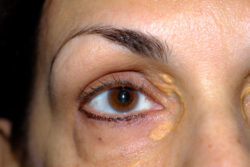
If you have found yellow patches on your eyelids and are asking “why me?”, here is the calm, honest answer: you have xanthelasma because cholesterol-rich material has collected under the thin skin of your eyelids, and the reasons that happens are usually a mix of things, many of them outside your control. It is rarely the result of anything you did wrong, and for a lot of people it comes down largely to genetics, simply a personal tendency to form these deposits.
That is worth sitting with, because the natural first reaction is often worry or self-blame, and neither is warranted. Xanthelasma is harmless, and around half of people who have it have completely normal cholesterol. The rest of this page explains what having it actually means for you, the factors that may be behind your case, and the sensible (not alarmed) steps to take. The marks will not fade on their own, but they can be removed if you want, Xanthel ® is a cosmetic skincare cream formulated to remove xanthelasma plaques at home. Our overview of what xanthelasma is gives the background.

Is It My Fault? Almost Certainly Not
Let’s address the self-blame directly, because it is the part that troubles people most. Having xanthelasma does not mean you have eaten badly, neglected your health, or done something wrong. Genetics play a large role: a family tendency to form these deposits, or inherited differences in how your body handles cholesterol, can produce xanthelasma even in people who eat well, exercise, and have normal blood cholesterol. This is exactly why so many health-conscious people are puzzled to find they have it.
Other factors that contribute, age, being female, hormonal changes such as those around menopause, are likewise not things you chose or could have prevented. So if you have been quietly blaming yourself, you can let that go. Xanthelasma is far more about your individual biology than your habits, and finding it says nothing bad about how you have looked after yourself. Our page on why you might have got xanthelasma explores this personal-tendency angle further.

What Having Xanthelasma Can Mean for Your Health
That said, there is one constructive thing your xanthelasma can do: occasionally act as a useful prompt to check a few aspects of your health. Because the marks are made of cholesterol, they can sometimes reflect raised blood lipids, and through that, a higher cardiovascular risk worth knowing about. They can also, less often, sit alongside an underactive thyroid or diabetes, both of which affect how the body handles fats.
The important word, though, is “occasionally”, and this is where a lot of older information overstates things. Having xanthelasma does not mean you definitely have high cholesterol or heart disease, since around half of people with it have normal lipids. So the marks raise a question worth checking rather than delivering a worrying verdict. The sensible, non-alarmed response is a simple lipid blood test from your doctor, often with a thyroid and blood-sugar check. If something turns up, you have caught it early; if not, your marks are simply a cosmetic tendency. Our page on what xanthelasma indicates covers this in a balanced way.

The Factors That May Be Behind Your Case
To give you a fuller picture of why you specifically might have xanthelasma, here are the contributing factors, so you can see which might apply. Genetics and family history are the big one, often the main driver, and the reason it appears even with healthy habits. Your lipid levels matter where they are raised, through high LDL, low HDL, or raised triglycerides. Age plays a part, since it most often appears in middle age. Sex and hormones contribute, as it is somewhat more common in women.
Then there are the factors you do have some influence over: an underactive thyroid or diabetes (worth managing with your doctor), and lifestyle elements like diet, weight, and smoking, which affect your overall lipid picture. For any given person it is usually a combination rather than a single cause. The only way to know which apply to you is that simple check with your doctor. Our guide to the causes of xanthelasma goes deeper into each factor.

What to Do Now
So you have xanthelasma, what is the sensible next move? Two things, kept separate in your mind. First, the health side: see your doctor for that simple lipid check (and thyroid and blood sugar if relevant). It is reassurance if all is well, and an early catch if not, and either way it is the responsible step, not a cause for worry in itself. If something is found, managing it protects your wider health and helps prevent new marks.
Second, the cosmetic side, entirely separate and entirely your choice. The marks are harmless, so there is no medical urgency to remove them; it is purely about whether their appearance bothers you. If it does, they will not fade on their own, but they can be cleared without a clinic. Xanthel ® is a cosmetic skincare cream formulated to remove xanthelasma plaques at home, as an alternative to surgery, laser, or freezing. You can look at the at-home removal option or compare the full range of removal options.

Why I Have Xanthelasma: The Bottom Line
You have xanthelasma because cholesterol has collected under your eyelid skin, driven by a mix of factors, most often genetics, that are largely outside your control. It is not your fault, and it is rarely a sign of anything you did wrong, especially since around half of people who get it have normal cholesterol. It can occasionally be a useful prompt to check your cholesterol, thyroid, or blood sugar, but it is a question to check, not a verdict to fear.
The sensible response is a simple check with your doctor for the health side, and, entirely separately, a free choice about removing the marks for cosmetic reasons. If you would like them gone, it is worth looking at the at-home removal option, and reading what causes xanthelasma for more.

Common Questions About Why You Have Xanthelasma
Why do I have xanthelasma?
You have it because cholesterol-rich material has collected under the thin skin of your eyelids. Why that happens is usually a mix of factors, most often genetics, along with lipid levels, age, sex, and sometimes thyroid or diabetes issues. For many people a genetic tendency is the main reason, which is why it appears even in those with healthy habits and normal cholesterol.
Is having xanthelasma my fault?
Almost certainly not. Genetics play a large role, so xanthelasma often appears in people who eat well, exercise, and look after themselves. Age, sex, and hormonal factors also contribute and are not things you chose. Having xanthelasma says nothing bad about how you have looked after your health, so self-blame is not warranted.
Does having xanthelasma mean I have high cholesterol?
Not necessarily. Although the marks are made of cholesterol, around half of people with xanthelasma have completely normal blood cholesterol, because a local or genetic tendency to deposit it can exist independently of overall levels. A simple lipid test is the only way to know whether high cholesterol is a factor for you.
Does having xanthelasma mean I will get heart disease?
No. It can occasionally reflect raised cholesterol, which relates to cardiovascular risk, but it does not mean you have or will get heart disease. It is best seen as a prompt to check your cholesterol rather than a prediction. For around half of people with xanthelasma, cholesterol is normal and the marks signal nothing of concern.
I eat healthily, so why do I have xanthelasma?
This is very common and comes down to genetics. An inherited tendency to form these deposits, or inherited differences in how your body handles cholesterol, can produce xanthelasma even when your diet, weight, and blood cholesterol are all healthy. It is not a sign you have done anything wrong, simply your individual biology.
What should I do now that I have xanthelasma?
Two things, kept separate. See your doctor for a simple lipid check (and thyroid and blood sugar if relevant) to rule out or catch any underlying cause, which is the health side. Then, entirely separately and by choice, decide whether you want the harmless marks removed for cosmetic reasons, which can be done at home.
Will I keep getting more xanthelasma?
You might, since the underlying tendency to form the deposits often remains, especially if a cause like raised cholesterol is left unmanaged. Managing any underlying factor with your doctor reduces the chance of new marks. Where the cause is mainly genetic, new marks are possible regardless, but removal is always an option if they appear.
Can I get rid of the xanthelasma I have?
Yes. The marks will not fade on their own, but they can be removed. Xanthel ® is a cosmetic skincare cream formulated to remove xanthelasma plaques at home, as an alternative to clinic procedures like surgery, laser, and freezing, without the cost, scarring risk, or downtime.
Xanthel ® is a cosmetic skincare cream made to remove xanthelasma plaques at home, not a medical treatment for any underlying condition. Because having xanthelasma can occasionally point to lipid, thyroid, or cardiovascular factors worth identifying, it is worth a simple check with your doctor, who can tell you which apply to you and give the full picture of your health.