Xanthelasma Removal
Xanthelasma and Reasons for Removal
Xanthelasma Palpebrarum (XP) may not pose any immediate health risks, but its presence on your skin—particularly around the eyes—can lead to a desire for its removal. Why might you consider treatment for a condition that is, by and large, benign and asymptomatic? Here are some common reasons:
– Aesthetic Concerns: XP manifests as yellowish plaques on the eyelids, which can be a source of cosmetic dissatisfaction for you.
– Psychological Impact: The visibility of these lesions can potentially impact your self-esteem and social interactions.
– Indication of Underlying Conditions: While XP itself isn’t harmful, it might be a sign of underlying lipid abnormalities. It could prompt you to undergo medical evaluations to rule out associated systemic conditions.
Although XP doesn’t lead to direct cutaneous complications, its appearance can be enough to seek professional treatment, primarily for cosmetic improvements.
The Importance of Professional Treatment
When dealing with Xanthelasma Palpebrarum, professional treatments are essential for several reasons:
– Expert Assessment: A healthcare professional can evaluate whether your XP requires treatment and discuss the potential benefits and risks.
– Advanced Techniques: Specialists employ advanced treatment modalities that are less likely to damage surrounding skin tissue.
– Minimizing Scarring: Inappropriate treatment can lead to scarring. Professionals aim to reduce this risk as much as possible.
– Monitoring for Recurrence: After removal, experts can monitor the area for signs of recurrence, ensuring prompt intervention if needed.
– Comprehensive Care: Treatment of XP can be coupled with a general health assessment to determine if there are underlying health issues that need to be addressed.
Moreover, if you have normolipidemic XP (XP without lipid abnormalities), literature suggests limited evidence on the effectiveness of various treatments. This further underscores the importance of seeking professional counsel. A specialized doctor will analyze your individual case and decide on the most suitable approach, possibly including:
– Surgical excision
– Cryotherapy
– Laser ablation

– Electrodessication
Each of these methods comes with its own set of considerations, and not every treatment is right for every individual. When choosing a treatment plan, it is vital to factor in the potential for recurrence, healing time, and the chances of scarring. A qualified professional will guide you through these considerations, leading to optimal treatment outcomes and greater satisfaction with the appearance of your skin post-procedure.

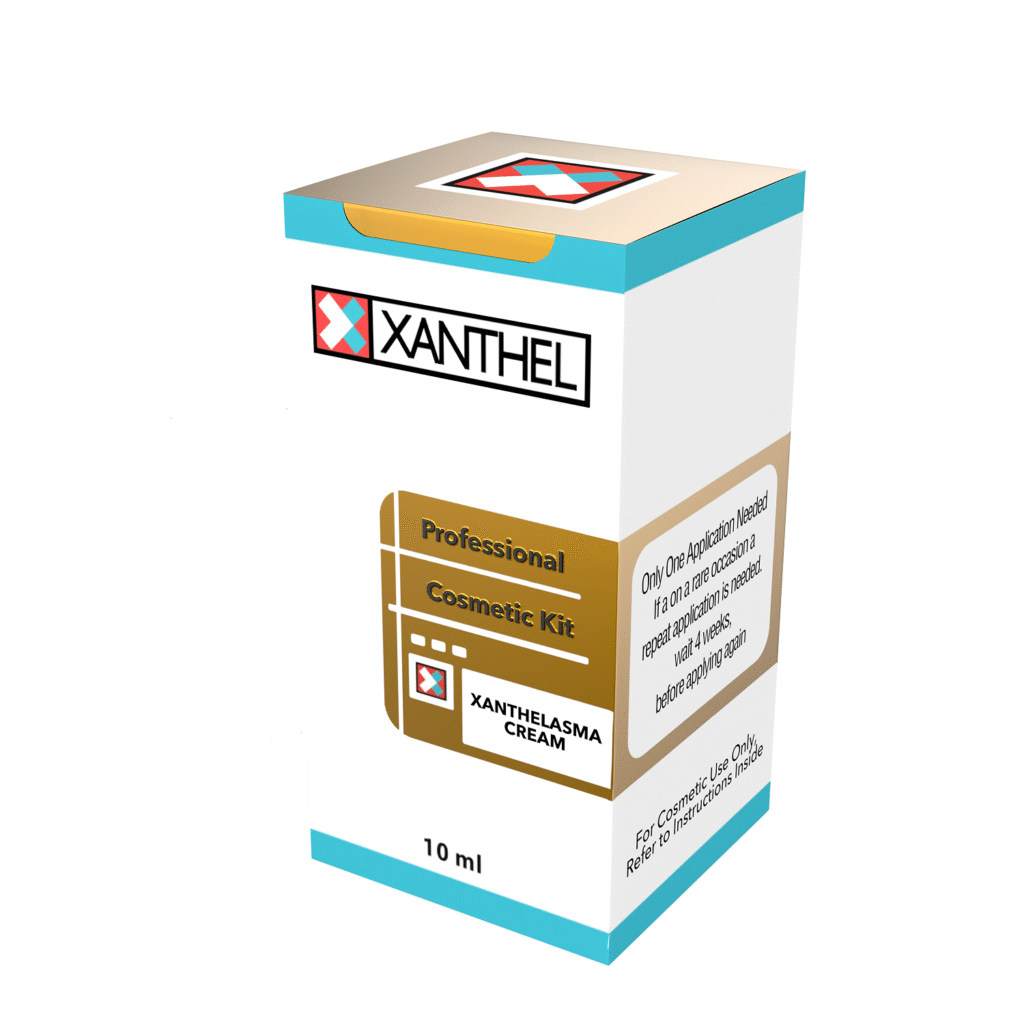
Xanthel ® Treatment
For individuals dealing with xanthelasma palpebrarum (XP), pursuing treatment is often motivated by the desire to improve appearance rather than to address any physical health concerns. Despite the benign nature of XP, the quest for effective treatment options is justified by the cosmetic implications that the lesions typically pose. In evaluating your options, it’s important to understand the available topical treatments and to navigate them carefully, given the sensitive area these lesions affect.
Overview of Xanthel ® Application
– Definition: Xanthel ® reacts and removes the xanthelasma plaque with one application. Can be performed at home by the clients for effective xanthelasma removal.
– Usage in XP Treatment: Xanthel ® is meticulously applied to the XP lesions to destroy the lipid-laden skin cells.
– Procedure: The XP area is cleansed, and Xanthel ® is applied using a supplied precise applicator to avoid spreading to surrounding skin.
– Additional Considerations: Skin needs to be clean of all residue before application for the Xanthel ® treatment to be effective.
Effectiveness and Precautions
– Outcomes: The xanthelasma will reduce and then be completely removed after application.
– Repeated Sessions: If the treatment outcome is not to the desired result, enough is supplied if in the rare case, a secondary application is needed after 4 weeks from the first treatment.
– Post-treatment Care: After Xanthel ® has been applied and removed from your skin, you should maintain a meticulous skincare routine, using anti-bacterial cream to assist in healing and to minimize adverse effects.
– Sun Protection: Post-procedure care must include stringent sun protection to prevent complications associated with pigmentation.
Given the sensitive and delicate area where XP lesions typically occur, namely on the eyelids, supervision ensures safe application and minimizes the potential for harm to the surrounding eye area.
As you navigate the treatment landscape, remember the importance of informed decision-making. While the desire for cosmetic improvement is valid, it should not overshadow the necessity for safety and expert guidance.

Laser Therapy
In the realm of modern dermatology, the use of laser therapy has garnered significant attention as a treatment option for various skin conditions, including xanthelasma palpebrarum (XP). As a sufferer of XP, when you learn about laser therapy, you’re discovering a cutting-edge treatment that boasts precision and effectiveness. This section provides insight into the different laser ablation techniques available for XP treatment and what you should know about the risks and recovery associated with these advanced procedures.
Laser Ablation Techniques

– Carbon Dioxide (CO2) Laser: This laser vaporizes the xanthelasma lesions layer by layer, allowing for accuracy and minimal damage to surrounding tissues.
– Erbium:YAG (Er:YAG) Laser: Known for its fine resurfacing capabilities, the Er:YAG laser is another option that effectively treats XP with precision and a lower risk of pigmentary changes.
– Q-switched Nd:YAG Laser: This is a newer modality that targets and breaks down the lipid deposits within the XP lesions without significant damage to the overlying skin.
– Pulsed Dye Laser (PDL): The PDL targets the vascular component often found in XP lesions, aiming to reduce their appearance through selective photothermolysis.
Each of these lasers operates at specific wavelengths that determine their penetration depth and the nature of their interaction with skin tissues. This allows dermatologists to tailor treatment to the individual characteristics of your xanthelasma, potentially improving outcomes with a high degree of control over the procedure.
Risks and Recovery
– Expected Recovery: Typically, laser treatments present minimal downtime, allowing you to resume normal activities shortly after the procedure, with adherence to post-care instructions.
– Common Risks: You may experience redness, swelling, or minor discomfort post-procedure. These usually subside within a short timeframe.
– Skin Color Changes: Hypopigmentation or hyperpigmentation can occur, especially in individuals with darker skin tones. An experienced dermatologist can mitigate this risk by selecting the appropriate laser and settings for your skin type.
– Wound Care: Post-procedural care will involve keeping the treated area clean and protected from the sun, promoting optimal healing and reducing the chance of scar formation.
– Infection Risk: As with any procedure breaking the skin barrier, there’s a small risk of infection which can be minimized with proper aseptic technique and aftercare.
As you consider laser therapy for XP, it is critical to consult with a dermatologist who is skilled in laser treatments and knowledgeable about the nuances of treating eyelid lesions. Your provider can inform you about the specific laser technologies they use, the expected outcomes based on your individual case, the number of treatments you may need, and the costs involved.
Embarking on laser therapy requires careful consideration of the balance between potential benefits and risks. It is vital to address all your concerns with your healthcare provider before proceeding, as safety should be the paramount factor in the decision-making process. Laser therapy offers the promise of improved cosmetic outcomes for xanthelasma patients, but it must be approached judiciously to ensure it is the right choice for you.

Cryotherapy
When exploring treatments for xanthelasma palpebrarum, you may come across cryotherapy as a widely recognized modality. This method involves the application of extreme cold, typically using liquid nitrogen, to destroy unwanted tissue. As you seek to diminish the presence of xanthelasma, understanding the intricacies of cryotherapy can be instrumental in making an informed decision.
Cryosurgery Using Liquid Nitrogen
– Description: Cryotherapy involves the precise application of liquid nitrogen to freeze the xanthelasma lesions.
– Process: A healthcare professional will use a cotton swab or a cryo-spray to apply liquid nitrogen directly to the targeted area.

– Duration: The exposure to the cold is brief, usually a matter of seconds.
– Mechanism: The cold causes ice crystals to form within the tissue cells, leading to cell death and the eventual removal of the lesion.
– Selectivity: The technique aims to be as selective as possible, affecting only the xanthelasma without damaging surrounding tissues.
While cryotherapy is less invasive than surgical options, it’s critical to have this procedure performed by a skilled professional. They will ensure that the application is delivered with precision to minimize the risk of scarring or damage to the sensitive eye area.
Aftercare and Expected Results
– Healing Time: After cryotherapy, the treated area will require time to heal, with the dead tissue sloughing off over the course of a few weeks.
– Side Effects: You might experience redness, swelling, blisters, and temporary discomfort at the treated site.
– Aftercare Routine: Proper aftercare, including keeping the area clean and applying prescribed ointments, will be necessary to promote healing and reduce the likelihood of complications.
– Monitoring: Regular check-ups with your healthcare provider are essential to monitor the healing process and manage any adverse reactions.
– Success Rate: Many patients experience satisfactory results with cryotherapy, with reduced visibility of xanthelasma, but the re-development of xanthelasma is commonly reported with this treatment.
It’s important to keep realistic expectations and remember that multiple treatments may be needed to achieve desired results. The potential for recurrence of xanthelasma should also be discussed with your healthcare provider, as well as strategies to prevent it, which may include managing lipid levels if this is identified as a contributing factor.
As you consider cryotherapy for your xanthelasma, weighing the benefits against the risks and potential side effects is crucial. Always depend on the expertise of a qualified healthcare professional and ensure you have a comprehensive understanding of what the procedure entails. Safe practices and careful follow-up care will contribute significantly to the success of your treatment and satisfaction with the outcome.
Surgical Excision
When you are considering treatment options for xanthelasma palpebrarum, surgical excision may be recommended, particularly if your lesions are large or have not responded well to other treatments. This procedure involves the careful removal of the xanthelasma by a skilled surgeon. Here’s what you need to know about the surgical approach.
The Process of Surgical Removal
– Consultation: Initially, you will undergo a detailed consultation, where a surgeon will assess the lesions and discuss the most appropriate surgical method.
– Procedure: Under local anesthesia, the surgeon will meticulously excise the xanthelasma, aiming to remove the lipid deposit while preserving as much of the healthy eyelid tissue as possible.
– Duration: The length of the surgery varies depending on the size and number of lesions, but it typically does not take longer than 30 minutes to an hour.
– Techniques: Surgical excision may use a scalpel, electrocautery, or laser depending on the surgeon’s preference and your specific case.
– Immediate Aftercare: Following excision, you will have a dressing applied to the operated area to protect it and minimize the risk of infection.
Surgical excision of xanthelasma offers a high rate of complete removal, but as with any surgical procedure, it is imperative that it is performed by a competent surgeon who specializes in eyelid surgeries to minimize the risk of complications.
Post-Surgical Care and Scarring Prevention
– Healing Period: After the surgery, the eyelid may take several weeks to fully heal. Initially, you might notice some bruising and swelling.
– Care at Home: You will be given instructions on how to care for the surgical site at home, which should include keeping the area clean and avoiding strenuous activities that could impact healing.
– Scar Management: Your surgeon might recommend certain treatments or ointments to promote healing and minimize scarring.
– Follow-Up Visits: Regular follow-up appointments are crucial to ensure that the eyelid is healing properly and to address any concerns promptly.
– Success and Recurrence: Most patients find that surgical excision provides a lasting solution, but it is possible for xanthelasma to recur, especially if underlying lipid abnormalities are not addressed.
Surgical excision might also leave a scar, but it is typically well-concealed within the natural creases of the eyelids. By adhering to optimal wound care practices and any personalized advice from your surgeon, you can help ensure the best aesthetic outcome. It is your responsibility to inform the surgical team of your detailed medical history and any medications you are taking, as this can affect both the procedure and the healing process. Remember to ask your surgeon about all possible outcomes, including how to handle any potential scarring or recurrence of xanthelasma.Large Xanthelasma Management
When dealing with larger xanthelasma, you may find that non-invasive treatment options are not as effective. These larger lesions sometimes require more invasive or specialized techniques to remove them and minimize the chances of them coming back. Understanding the unique challenges and the available methods designed to treat significant xanthelasma is vital in making an informed decision regarding your treatment.
Challenges with Larger Xanthelasma
– Extent of the Lesions: Bigger xanthelasma can cover more of the eyelid area, making it tougher to treat without affecting eyelid function.
– Depth of Deposits: These lesions often penetrate deeper into the skin, which means superficial treatments may not reach the entire affected area.
– Possibility of Recurrence: Larger xanthelasma may have a higher tendency to recur after treatment, necessitating a more aggressive and meticulous approach.
– Need for Surgical Precision: Because of their size and the delicate area in which they are located, surgical removal often requires a skilled hand to ensure cosmetic and functional outcomes. This can raise the stakes when choosing a practitioner.
Specialized Techniques for Bigger Lesions
– Surgical Excision: This method involves cutting out the xanthelasma with a scalpel and carefully suturing the area to promote healing while attempting to minimize scarring.
– Patient Suitability: Primarily recommended for significant, well-circumscribed lesions.
– Recovery Time: Given the invasiveness of the procedure, you will need more time to recover, and there may be more care requirements, such as suture removal and scar care.
– Electrodessication: Utilizing a high-frequency electric current to remove the lesion, this option can be precise, but must be done with care to avoid damaging underlying tissues.
– Patient Suitability: Can be used for a variety of lesion sizes, but the provider’s expertise is critical in its effective application.
– Recovery Time: May be less than surgical excision but includes a healing phase where the skin crusts and peels away.
– Cryotherapy: This involves freezing the xanthelasma with liquid nitrogen to destroy the fat cells.
– Patient Suitability: Generally used on smaller lesions, but can be explored for larger ones under a provider’s guidance.
– Recovery Time: Healing is typically quick, but multiple sessions might be necessary.
As someone considering treatment for large xanthelasma, it is essential to consult with a specialist—commonly a dermatologist or an oculoplastic surgeon. Their expertise in dealing with skin and eye-area conditions will ensure that the chosen treatment path is both safe and likely to produce the desired aesthetic results. Collaborate closely with your healthcare provider to understand each step of the treatment plan, from initial assessment through to recovery and follow-up care.

Understanding Your Xanthelasma Treatment Options
If you have been diagnosed with large xanthelasma, it is important to familiarize yourself with the treatment modalities available and make an educated decision about how to proceed. The following sections will bring into focus the realities of managing these cholesterol deposits around your eyes and provide guidance for your journey towards treatment.
Factors Influencing Treatment Choice
As you move forward with seeking treatment for your xanthelasma, it’s crucial you consider various factors that will influence your decision:
– Risk of Scarring: The potential for scarring is an important aspect to discuss with your specialist. Each procedure carries its own risk, and this may affect your choice, particularly because of the visibility of the area involved.
– Aesthetic Outcome: The desire for an improved cosmetic appearance is often the driving force behind seeking treatment. Ensure that your expectations are clearly communicated to your healthcare provider.
– Downtime and Lifestyle: Some treatments may require you to take time off from work or social activities. Discuss with your doctor how much downtime is expected for each option and plan accordingly.
– Treatment Costs: Costs can vary broadly with different treatment modalities. Explore what your insurance covers and what will be out-of-pocket expenses.
Consulting with a Specialist
Your next step should be a consultation with a qualified specialist. They will:
– Evaluate the Extent of Your Xanthelasma: A thorough examination will help determine the size, depth, and potential challenges in treating your xanthelasma.
– Discuss Treatment Options: Based on their assessment, the specialist will outline the most appropriate treatment methods for your case.
– Explain the Pros and Cons: You’ll be briefed on the potential outcomes, risks, and benefits associated with each treatment option, helping you to make an informed decision.
Summarizing Xanthelasma Removal Options
In summary, treatment modalities for large xanthelasma include:
– Surgical Excision
– Best for well-defined and significant lesions.
– Possible downtime: a number of weeks, with attention to scar and wound care.
– Xanthel ® removal cream
– Effective at removing xanthelasma and cost effective in comparison to the other possible treatment options.
– Healing can be swift, with, althoug rare, some potential for temporary crusting.
– Cryotherapy
– Often used for smaller lesions but can be adapted for larger ones.
– Quick recovery time, with a potential need for repeated sessions.
Collating all this information and discussing it in-depth with your doctor will boost your confidence in the decision-making process.
Final Recommendations
It’s paramount that you:
– Choose a highly experienced and certified specialist for any treatment procedure.
– Carefully consider the potential risks and benefits before making a decision.
– Plan for the pre- and post-treatment requirements, including any lifestyle adjustments necessary during the recovery period.
– Keep your expectations realistic, with an understanding that multiple treatments or touch-ups may be needed to achieve your desired outcome.
Your proactive engagement in this process can help ensure the best possible results for your xanthelasma treatment. Keep in communication with your specialist and follow their guidance for a smoother road to recovery and improved aesthetic appearance.