
How Can I Remove Xanthelasma
Your Removal Options, From Least Invasive to Most, and How to Choose
Want to remove xanthelasma? You have real options, from an at-home cream to laser, freezing, and surgery. This page walks through each one, least invasive first, so you can pick what fits you.
By Xanthelasma.com
How Can I Remove Xanthelasma?
If you have decided you want your xanthelasma gone, the good news is there are several effective ways to do it. They will not fade on their own, so removal is the route most people take, and the options range from a simple at-home cream through to clinic procedures like laser, freezing, and surgery. They differ mainly on how invasive they are, what they cost, and how much recovery they involve.
The simplest way to make sense of them is to walk through the options from least invasive to most, which is what this page does, so you can match one to what you are comfortable with. The least invasive starting point is an at-home cosmetic cream: Xanthel ® is a cosmetic skincare cream formulated to remove xanthelasma plaques at home. One thing that applies to every method, though: removing the marks does not change the underlying tendency to form them, so pairing removal with a simple cholesterol check helps results last. Our overview of what xanthelasma is covers the background.

Option 1: An At-Home Cream (Least Invasive)
The least invasive route, and the natural starting point for most people, is a cosmetic cream made specifically for eyelid xanthelasma. Xanthel ® is a cosmetic skincare cream formulated to remove xanthelasma plaques at home, applied to the plaque following the supplied guidance, with the skin then healing over the following days. One application is usually enough, with a second occasionally needed for larger plaques.
Its appeal is straightforward: it avoids the cost of a clinic, the recovery time, and the scarring risk of cutting, freezing, or lasering the delicate eyelid skin, and it can be done at home in private. It is also designed for safe use near the eye, unlike improvised home remedies such as garlic or vinegar, which lack evidence and can irritate or burn the thin skin there. Very large or stubborn plaques may still need a clinic, but for typical eyelid xanthelasma a cream is the sensible first option. You can read more about the cream specifically or look at the at-home removal option directly.

Option 2: Cryotherapy and Laser (Less Invasive Clinic Routes)
If you prefer a clinic procedure, the less invasive options are cryotherapy and laser. Cryotherapy freezes the plaque with liquid nitrogen, causing it to blister and fall away. It needs no cuts or stitches and recovery is usually quick, but the eyelid is sensitive, so it can need more than one session and carries a risk of pigment changes, the skin becoming lighter or darker, especially on darker skin tones.
Laser therapy uses focused light (commonly a CO2 or Er:YAG laser) to remove the deposit with precision and limited damage to the surrounding skin. It is effective and healing tends to be relatively quick, but it often needs several sessions, each charged separately, and can cause temporary redness, swelling, or colour changes. Both routes are carried out at a clinic, tend to be costly, are rarely covered by insurance since removal is cosmetic, and, like every method, can be followed by recurrence if an underlying cause is left unmanaged. Our guide to treating xanthelasma compares these in more detail.
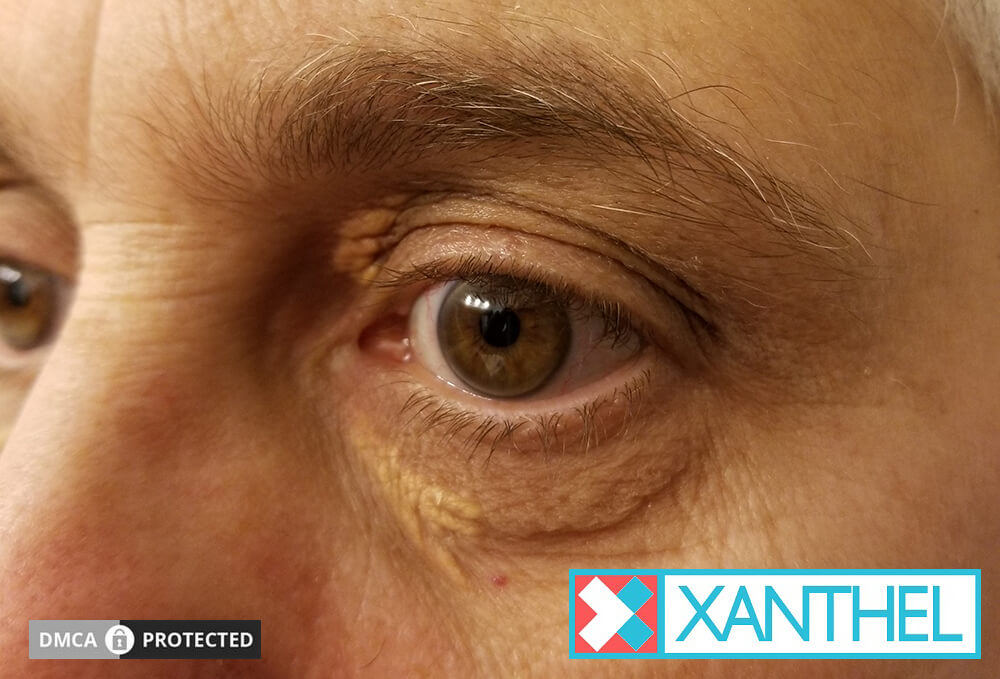
Option 3: Electrosurgery, Radiofrequency, and Surgery (Most Invasive)
At the more involved end are the methods that cut or apply controlled heat. Electrosurgery and radiofrequency use an electric current or radio-wave heat to remove or break down the plaque; they can be effective and are often quick, sometimes done in a single session, but carry a scarring risk and may need stitches and local anaesthetic. Surgical excision cuts the plaque out and closes the skin; it is the most direct route and well suited to larger plaques, with a lower recurrence rate, but it is also the most invasive, involving stitches, a recovery period, and a real risk of scarring on the visible eyelid.
These methods make most sense for larger, thicker, or stubborn plaques that the gentler routes struggle with. For typical eyelid xanthelasma they are a lot to take on for a harmless cosmetic mark, which is precisely why the less invasive options exist and why many people try those first. If you are considering surgery, discuss the likely scarring and recovery candidly with the surgeon beforehand. Our page on how much removal costs covers the price side of these clinic routes.

Whichever You Choose: Make It Last
Removing the visible plaque is only half the picture, because none of these methods, cream, laser, freezing, or surgery, changes the underlying tendency to form the deposits. Recurrence is most likely when an underlying cause, such as raised cholesterol, is left unmanaged. So the approach that gives the most durable result is two-track: remove the marks, and manage any underlying cause with your doctor.
In practice that means a simple lipid blood test to check your cholesterol, often with a thyroid and blood-sugar check, and managing anything raised through diet, activity, not smoking, and any treatment your doctor advises. Around half of people with xanthelasma have normal cholesterol, so for many this is mostly reassurance, but the check is always worth doing. Pairing it with removal is what keeps new marks from forming. Our at-home management advice covers the prevention side.


A Note on Aftercare
Whatever method you use, good aftercare protects the result and the delicate skin around your eye. The general principles are the same across methods: keep the treated area clean, apply any soothing or antibacterial cream advised, and avoid makeup or harsh products until the skin has healed. Protecting the area from the sun matters in particular, since UV exposure during healing can lead to pigment changes, so sunglasses and a high-SPF sunscreen help.
Beyond that, be patient, healing time varies from person to person, and watch for any signs of infection such as increasing redness, swelling, or discharge, reporting them to a professional if they appear. With a clinic procedure you will be given specific instructions to follow; with an at-home cream, following the supplied aftercare guidance carefully does the same job. Rushing back into your normal routine before the skin has recovered is the main thing to avoid.

How Can I Remove Xanthelasma: The Bottom Line
You can remove xanthelasma in several ways, and the simplest way to choose is by how invasive you are willing to go: an at-home cream is the least invasive and most affordable, cryotherapy and laser are middle-ground clinic routes, and electrosurgery, radiofrequency, and surgery sit at the more involved end for larger plaques. Whichever you pick, good aftercare and managing any underlying cause are what make the result last.
For most people with typical eyelid xanthelasma, the natural place to start is the least invasive route, so it is worth looking at the at-home removal option first, comparing it with the clinic methods in our full range of removal options, and reading why you might have got xanthelasma to understand the recurrence side.

Common Questions About Removing Xanthelasma
How can I remove xanthelasma?
There are several routes, ranging from least to most invasive: an at-home cosmetic cream, then clinic procedures like cryotherapy and laser, and at the more involved end electrosurgery, radiofrequency, and surgical excision. The right choice depends on the size of the plaques, your budget, and how you feel about scarring risk. Many people start with the least invasive at-home option.
Can I remove xanthelasma at home?
Yes. Xanthel ® is a cosmetic skincare cream formulated to remove xanthelasma plaques at home, designed as an alternative to surgery, laser, or freezing, without the cost, scarring risk, or downtime of a clinic procedure. It is made for safe use near the eye, unlike improvised remedies like garlic or vinegar, which can irritate the delicate skin.
What is the least invasive way to remove xanthelasma?
A purpose-made at-home cream is the least invasive route, since it avoids the cutting, freezing, or lasering involved in clinic procedures, along with their cost and downtime. For typical eyelid xanthelasma it is usually the sensible starting point, with the more involved clinic methods kept in reserve for larger or stubborn plaques.
Is surgical removal better than a cream?
It depends on the case. Surgery is the most direct route and suits larger or thicker plaques, with a lower recurrence rate, but it is the most invasive and carries a real scarring risk on the eyelid. A cream is far less invasive and more affordable. For typical eyelid xanthelasma, many people try the cream first and keep surgery in reserve.
Will the xanthelasma come back after removal?
It can, particularly if an underlying cause like raised cholesterol is left unmanaged, since no removal method changes the tendency to form the deposits. The best approach combines removing the marks with managing any underlying factor through your doctor, which reduces the chance of new ones forming.
Does removing xanthelasma hurt or leave scars?
Clinic procedures that cut or burn the skin, surgery and electrosurgery in particular, carry a real scarring risk and usually involve local anaesthetic. Laser and cryotherapy are less invasive but can cause temporary redness or pigment changes. An at-home cream avoids the cutting of surgical removal. Careful aftercare reduces the risk of marks with any method.
How long does it take to remove xanthelasma?
It varies by method. Some clinic procedures are done in a single short session, while laser and cryotherapy often need several. With any method, the skin then needs time to heal over the following days to weeks. An at-home cream usually involves one application, with the skin healing afterward, and occasionally a second for larger plaques.
Should I see a doctor before removing xanthelasma?
It is worth one visit. A doctor can confirm the marks are xanthelasma and run a simple lipid test to check for any underlying cause, which helps results last whichever removal route you choose. With that confirmed, you can decide between the at-home and clinic options based on your case and preferences.
Xanthel ® is a cosmetic skincare product, not a medical treatment. Because xanthelasma can sometimes sit alongside lipid, thyroid, or cardiovascular factors, and because managing those helps prevent recurrence, it is worth discussing with your doctor, who can give you the full picture of your health to pair with any cosmetic approach.