Eyelid Xanthomas
How to Tell Eyelid Xanthelasma Apart From Other Eyelid Lumps
Found a lump on your eyelid and want to know what it is? Eyelid xanthomas, properly xanthelasma, have a distinctive look. This page helps you tell them apart from other common eyelid bumps.
By Xanthelasma.com
What Are Eyelid Xanthomas?
“Eyelid xanthomas” is another name for xanthelasma palpebrarum, the most common type of xanthoma and the one that appears on the eyelids. They are soft, yellowish deposits of cholesterol-rich material that build up just under the thin skin of the eyelids, usually near the inner corner, and often symmetrically on both eyes. They are entirely benign: painless, harmless, and no threat to your vision.
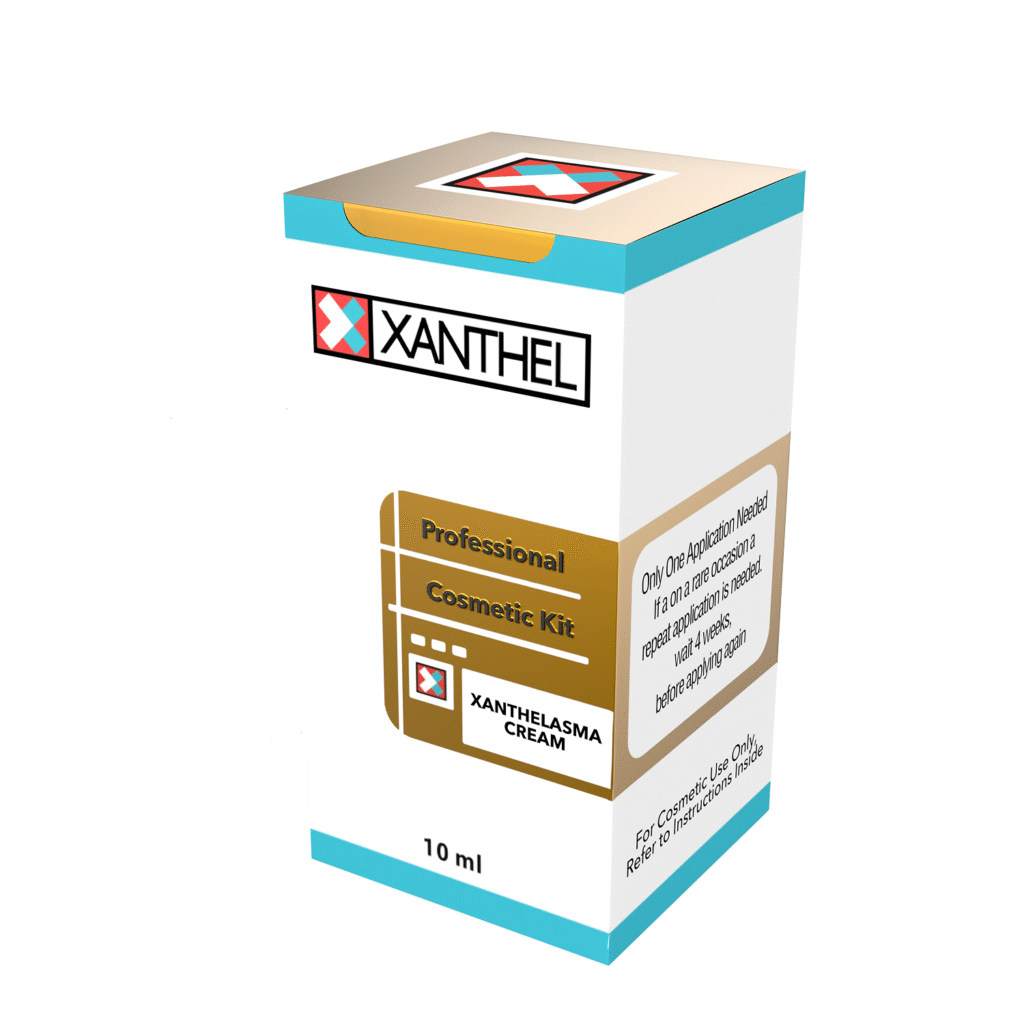
If you have found a lump or patch on your eyelid, though, the first useful question is whether it is xanthelasma at all, because several other harmless eyelid bumps can look similar at a glance, and a few warrant a doctor’s eye. This page focuses on telling them apart: what eyelid xanthelasma looks like, how it differs from other common eyelid lumps, and what to do once you know. If it is xanthelasma and you want it gone, Xanthel ® is a cosmetic skincare cream formulated to remove xanthelasma plaques at home. Our overview of what xanthelasma is gives the full background.

What Eyelid Xanthelasma Looks Like
Eyelid xanthelasma has a fairly distinctive set of features, which is what lets a doctor usually recognise it on sight. The colour is the giveaway: a yellow to yellowish-cream tone, coming from the cholesterol in the deposit, unlike most other eyelid bumps which tend to be skin-coloured, white, or red. The texture is soft, sometimes slightly raised but often flat, rather than hard or tense. The shape is a fairly well-defined patch or plaque, not a tight round dome.
Location and symmetry help too. Xanthelasma sits on the eyelids near the inner corner (towards the nose) more often than anywhere else, and very commonly appears on both eyes in mirror-image positions, something most other eyelid lumps do not do. It also tends to grow slowly over months rather than appearing overnight. If what you are seeing is soft, yellowish, flat-ish, near the inner corner, and possibly mirrored on both lids, xanthelasma is the likely answer. Our page on what xanthelasma looks like goes into more detail on identification.

Telling It Apart From Other Eyelid Lumps
This is where it helps to know the look-alikes, because the eyelid is prone to several harmless bumps that are not xanthelasma. Milia are tiny, firm, white or pearly cysts, much smaller than xanthelasma and white rather than yellow. A stye is a red, tender, often painful lump at the lash line, usually appearing quickly, very different from the painless, slow, yellow xanthelasma. A chalazion is a firmer, rounder lump from a blocked eyelid gland, again not yellow and usually single. Skin tags are small soft flesh-coloured flaps, and syringomas are small skin-coloured bumps that can cluster near the eyes.
The distinguishing pattern for xanthelasma against all of these is its combination of soft texture, yellow colour, flat plaque shape, inner-corner position, and frequent symmetry. The honest caveat: while xanthelasma is benign, a few eyelid lesions are not, and certain changes deserve prompt medical attention, a lump that bleeds, grows quickly, ulcerates, distorts the lash line, or looks pigmented and irregular should be seen by a doctor rather than assumed to be xanthelasma. When in doubt, get it confirmed. Our page on whether xanthelasma can be white covers one common identification question.

Confirming It: When to See a Doctor
Because identification matters, it is worth knowing when a doctor’s check is sensible rather than optional. For a classic, soft, yellow, symmetrical eyelid plaque, a doctor can usually confirm xanthelasma on sight, no biopsy needed. A check becomes more important if the lump does not fit that classic picture, if it is single and firm, painful, red, growing quickly, bleeding, or unusual in any way, since that is how you rule out the less common lesions that are not xanthelasma.
There is a second reason to see a doctor even when xanthelasma is obvious: a simple lipid blood test. Because the deposits are cholesterol, they can occasionally flag raised lipids, or less often a thyroid or diabetes issue, worth knowing about. It is worth keeping this in proportion, though, around half of people with xanthelasma have completely normal cholesterol, so this is a worthwhile check rather than a cause for alarm. Our page on what xanthelasma indicates covers the health side in a balanced way.

If It Is Xanthelasma: Your Options
Once you have established that the marks are eyelid xanthelasma, dealing with them is a separate, purely cosmetic choice, since they are harmless. They will not fade on their own, and they tend to grow slowly, so if their appearance bothers you, removal is the route. The clinic options are surgical excision (effective for large plaques, but the most invasive, with the highest scarring risk on the eyelid), laser, cryotherapy (freezing), and electrosurgery, all carried out by a dermatologist or oculoplastic surgeon, all tending to be costly and rarely covered by insurance.
The least invasive route is an at-home cream. Xanthel ® is a cosmetic skincare cream formulated to remove xanthelasma plaques at home, designed for the eyelid type, as a more affordable, non-invasive alternative to clinic procedures. For typical eyelid xanthelasma it is a reasonable first option, with surgery held in reserve for large or stubborn plaques. If your marks are the eyelid type, it is worth looking at the at-home removal option or comparing the full range of removal options.


Eyelid Xanthomas: The Bottom Line
Eyelid xanthomas are xanthelasma palpebrarum, soft, yellow, benign cholesterol patches on the eyelids, usually near the inner corner and often on both eyes. The key first step is making sure that is what you have, since other eyelid lumps (milia, styes, chalazia, skin tags) can look similar but differ in colour, texture, and behaviour; anything firm, painful, fast-growing, bleeding, or unusual should be seen by a doctor rather than assumed to be xanthelasma.
Once confirmed, a simple lipid check is worthwhile (though around half of people with it have normal cholesterol), and dealing with the marks is a separate cosmetic choice. If you would like them gone, it is worth looking at the at-home removal option, and reading what causes xanthelasma for the background.

Common Questions About Eyelid Xanthomas
What are eyelid xanthomas?
Eyelid xanthomas are another name for xanthelasma palpebrarum, the most common type of xanthoma. They are soft, yellowish patches of cholesterol-rich material that form just under the thin skin of the eyelids, usually near the inner corner and often symmetrically on both eyes. They are benign: painless, harmless, and no threat to vision.
How do I know if my eyelid lump is xanthelasma?
Xanthelasma is typically soft, yellow to cream-coloured, flat or slightly raised, found near the inner corner of the eyelid, and often mirrored on both eyes. Other eyelid lumps differ: milia are small and white, styes are red and painful, chalazia are firm and round. If your lump does not fit the soft-yellow-symmetrical picture, have a doctor confirm it.
What else could a bump on my eyelid be?
Several harmless eyelid bumps resemble xanthelasma: milia (tiny white cysts), a stye (a red, tender lump at the lash line), a chalazion (a firm round lump from a blocked gland), skin tags, and syringomas (small skin-coloured bumps). These differ from xanthelasma in colour, texture, and behaviour. Rarely, an eyelid lesion can be more serious, so anything unusual should be checked.
When should I see a doctor about an eyelid lump?
See a doctor if the lump does not fit the classic soft-yellow-symmetrical xanthelasma picture, or if it is firm, painful, red, growing quickly, bleeding, ulcerated, or pigmented and irregular. These features help rule out the less common lesions that are not xanthelasma. Even for obvious xanthelasma, one visit for a lipid check is worthwhile.
Are eyelid xanthomas dangerous?
The xanthelasma itself is benign, painless, and harmless, and does not affect vision. Its only health significance is that, being cholesterol, it can occasionally flag raised lipids, a thyroid issue, or diabetes, which a simple blood test checks. Around half of people with it have normal cholesterol. The marks are not dangerous, but confirming the diagnosis and a lipid check are sensible.
Do eyelid xanthomas mean I have high cholesterol?
Not necessarily. Although the deposits are cholesterol, around half of people with eyelid xanthelasma have completely normal blood cholesterol, because a local or genetic tendency to deposit it can exist independently of overall levels. It is worth a simple lipid test to check, but the marks are a prompt to investigate, not proof of high cholesterol.
Can eyelid xanthomas be removed?
Yes. The marks will not fade on their own, but they can be removed once confirmed as xanthelasma. Options range from clinic procedures (surgery, laser, freezing) to an at-home cream. Xanthel is a cosmetic skincare cream formulated to remove xanthelasma plaques at home, as a less invasive, more affordable alternative to clinic treatment for the eyelid type.
Will eyelid xanthomas come back after removal?
They can, since no removal method changes the underlying tendency to form the deposits, particularly if a cause like raised cholesterol is left unmanaged. Combining removal with managing any underlying factor through your doctor gives the most lasting result. Where the tendency is mainly genetic, new marks remain possible, but removal is always an option if they recur.
Xanthel ® is a cosmetic skincare cream made to remove xanthelasma plaques at home, not a medical treatment for any underlying condition. Because an eyelid lump should be correctly identified, and because xanthelasma can occasionally point to lipid, thyroid, or cardiovascular factors, it is worth a check with your doctor, who can confirm the diagnosis and give you the full picture of your health.