How Do I Treat Xanthelasma
The Practical Steps: From Confirming It to Choosing a Route That Fits You
Wondering how to actually go about treating your xanthelasma? This page walks through it in order, confirming what it is, deciding what you want to treat, picking a route that fits, and aftercare.
By Xanthelasma.com
How Do I Treat Xanthelasma?
If you have xanthelasma and are wondering how to go about treating it, the useful way to think about it is as a short sequence of steps rather than a single decision. The marks will not fade on their own, so treating them means actively removing them if their appearance bothers you, but there are a couple of sensible steps to take first, and then a choice of routes to suit your situation.
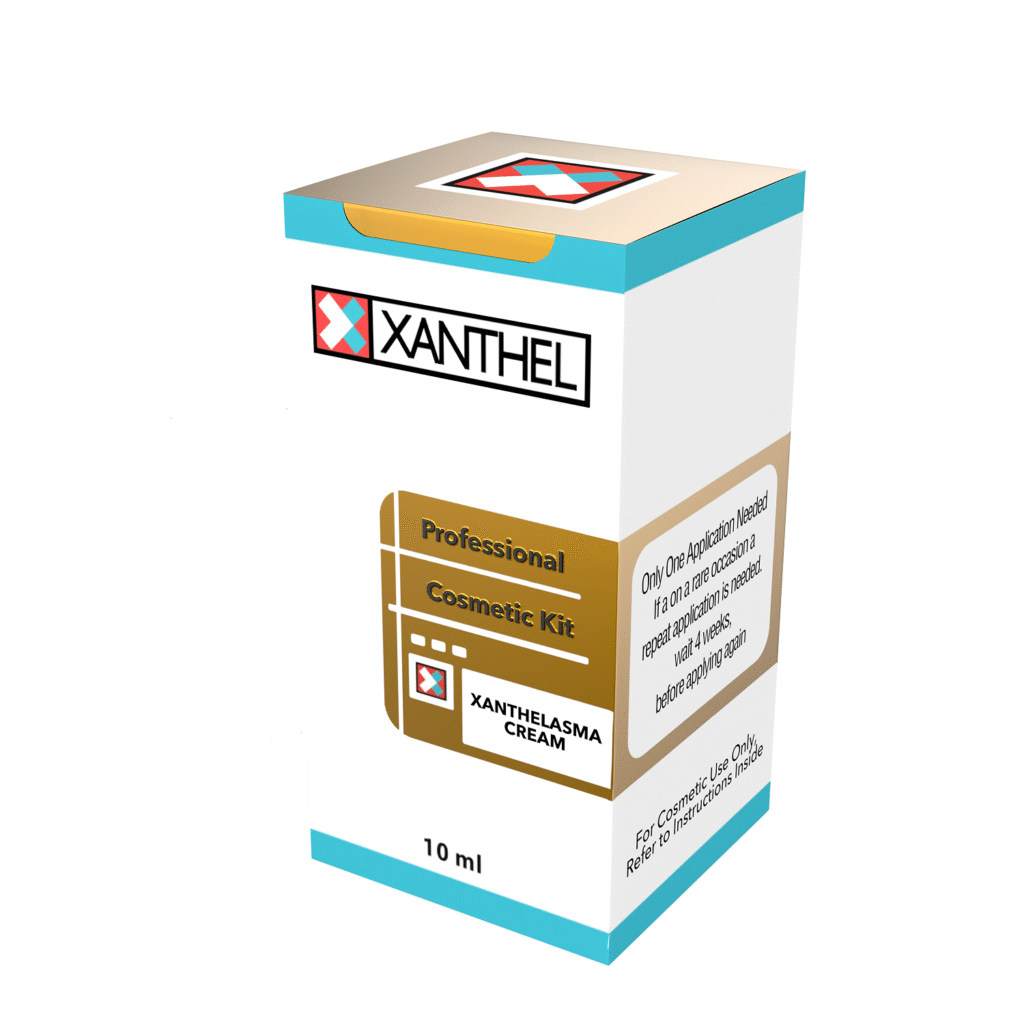
This page walks through it in practical order: confirming the marks really are xanthelasma, deciding what you actually want to treat (the appearance, the underlying cause, or both), choosing a removal route that fits you, and looking after the area afterwards. Taken step by step, it is straightforward. The least invasive removal route is an at-home cream, Xanthel ® is a cosmetic skincare cream formulated to remove xanthelasma plaques at home, and we come to where that fits below. Our overview of what xanthelasma is gives the background.

Step 1: Confirm It’s Actually Xanthelasma
Before treating anything, it is worth being sure the marks are xanthelasma, because a few other harmless eyelid bumps can look similar, and treating the wrong thing wastes effort. Classic xanthelasma is soft, yellowish, flat or slightly raised, sits near the inner corner of the eyelids, and often appears symmetrically on both eyes. If that matches what you see, it is very likely xanthelasma.
If the mark does not fit that picture, if it is firm and single, red, painful, growing quickly, or unusual in any way, it is worth having a doctor confirm it before you treat it, since a small number of eyelid lesions are not xanthelasma. A doctor can usually identify classic xanthelasma on sight, no biopsy needed. Getting this first step right means you are treating what you think you are treating. Our page on what xanthelasma looks like helps with identification.

Step 2: Decide What You Want to Treat
This is the step people skip, but it shapes everything: are you treating the appearance of the marks, the possible underlying cause, or both? They are two separate jobs. The marks themselves are harmless, so removing them is purely a cosmetic choice, entirely up to whether they bother you. The underlying side is a health matter handled separately by your doctor.
On the health side, it is worth a simple lipid blood test, because xanthelasma can occasionally flag raised cholesterol, though it is worth keeping in proportion that around half of people with it have completely normal cholesterol. If something is found, managing it (through diet, lifestyle, and any treatment your doctor advises) protects your wider health and reduces the chance of new marks forming. So the honest framing is: treat the cause with your doctor if there is one, and treat the appearance cosmetically if you want to, recognising that removing the marks does not change the underlying tendency. Our page on what xanthelasma indicates covers the health side.

Step 3: Choose a Removal Route That Fits You
Once you have decided you want the marks gone, the choice is which removal route suits your situation, and there is a real range. The clinic options are surgical excision (effective for large plaques, the most invasive, with the highest scarring risk), laser (precise, often several sessions), cryotherapy (freezing, quick but with a pigment-change risk), and electrosurgery. These are carried out by a dermatologist or oculoplastic surgeon, tend to be costly, and are rarely covered by insurance since removal is cosmetic.
The least invasive route is an at-home cream. Xanthel ® is a cosmetic skincare cream formulated to remove xanthelasma plaques at home, applied to the plaque with the skin healing over the following days, as a more affordable, non-surgical alternative for typical eyelid xanthelasma. A reasonable way to choose: for modest, typical plaques where you want to avoid clinic cost and scarring risk, the cream is a sensible first try; for very large or stubborn plaques, a clinic procedure may suit better. Whatever you do, avoid improvised home remedies like garlic or vinegar near the eye, which lack evidence and can harm the skin. You can look at the at-home option or compare the full range of removal options.

Step 4: Look After the Area Afterwards
The final step, whichever route you chose, is aftercare, because it affects both healing and the cosmetic result. The principles are the same across methods: keep the treated area clean, follow the specific aftercare guidance you were given (whether by the clinic or supplied with an at-home product), protect the healing skin from the sun, and avoid rubbing or picking at it while it recovers.
Healing typically takes a few days to a couple of weeks depending on the method, with any redness or crusting settling over that time and the final result emerging gradually rather than instantly. Watch for any signs of a problem, spreading redness, swelling, or discharge, and check with a doctor if they occur. Good aftercare reduces the chance of marks and helps you get the cleanest result from whichever route you chose. And pairing the removal with managing any underlying cause, from step 2, is what makes the result last. Our page on treating xanthelasma covers the methods in more depth.


How Do I Treat Xanthelasma: The Bottom Line
Treating xanthelasma is best approached as a sequence: confirm the marks really are xanthelasma; decide whether you are treating the appearance, the underlying cause, or both (they are separate jobs); choose a removal route that fits, from an at-home cream for typical plaques to a clinic procedure for large or stubborn ones; and look after the area afterwards. The marks are harmless, so removal is a cosmetic choice, while a simple cholesterol check handles the health side.
For typical eyelid xanthelasma, the least invasive removal route is worth considering first, so it is worth looking at the at-home removal option, comparing the full range of options, and reading why you might have got it.

Common Questions About Treating Xanthelasma
How do I treat xanthelasma?
Treat it as a sequence: confirm the marks are xanthelasma, decide whether you are addressing the appearance or any underlying cause (or both), choose a removal route that fits (an at-home cream for typical plaques, or a clinic procedure like surgery, laser, or freezing for larger ones), and follow good aftercare. The marks are harmless, so removal is a cosmetic choice.
Can I treat xanthelasma at home?
Yes, the cosmetic removal can be done at home. A purpose-made cream lets you remove the marks without a clinic, as a less invasive, more affordable alternative. Xanthel is a cosmetic skincare cream formulated to remove xanthelasma plaques at home. Avoid improvised remedies like garlic or vinegar near the eye, which lack evidence and can harm the delicate skin.
Do I need to treat the cause as well as the marks?
They are two separate things. Removing the marks is a cosmetic choice; the marks are harmless. The underlying side is a health matter, worth a simple lipid check with your doctor, since xanthelasma can occasionally flag raised cholesterol (though around half of people with it have normal cholesterol). Managing any cause found reduces the chance of new marks and protects your wider health.
What is the best way to treat xanthelasma?
There is no single best way, it depends on your situation. For typical, modest plaques where you want to avoid clinic cost and scarring risk, an at-home cream is a sensible first try. For very large or stubborn plaques, a clinic procedure (surgery, laser) assessed by a specialist may suit better. Matching the route to your plaques and preferences is what matters.
Will treating xanthelasma stop it coming back?
Removing the marks clears what is there, but no method changes the underlying tendency to form the deposits, so recurrence is possible, especially if a cause like raised cholesterol is left unmanaged. This is why treating the cause (with your doctor) alongside removing the marks gives the most lasting result. Where the tendency is mainly genetic, new marks remain possible.
Should I see a doctor to treat xanthelasma?
A doctor is the right choice for surgical removal and is worth seeing once for a lipid check, since the marks can occasionally flag raised cholesterol. But for the cosmetic removal itself you do not necessarily need one, since the harmless marks can be removed at home with a purpose-made cream. If unsure a mark is xanthelasma, have a doctor confirm it first.
How long does treating xanthelasma take?
The removal step is quick, but healing takes a few days to a couple of weeks depending on the method, with redness or crusting settling over that time and the final result emerging gradually. An at-home cream involves applying it and letting the skin heal over the following days. Clinic methods like laser or freezing may need several sessions.
Are there medications to treat xanthelasma?
There is no medication that removes the marks themselves; lipid-lowering medication (like statins) treats the underlying cholesterol, not the plaques, and is prescribed by your doctor where relevant. Removing the visible marks is done cosmetically, by a clinic procedure or an at-home cream. Be wary of any product claiming to treat your cholesterol through the skin, as no topical product does this.
Xanthel ® is a cosmetic skincare cream made to remove xanthelasma plaques at home, not a medical treatment for any underlying condition. Treating the marks is a cosmetic choice, while any underlying cause is a separate health matter, so it is worth a simple check with your doctor, who can identify any underlying cause and give you the full picture of your health.