
How Do You Treat Xanthelasma
The Step-by-Step Process, From Noticing the Marks to Clearing Them for Good
Wondering how xanthelasma is actually treated? This page walks through the whole process, confirming the marks, choosing a removal method, the treatment itself, and keeping them from coming back, so you know what to expect.
By Xanthelasma.com
How Do You Treat Xanthelasma? The Process Overview
Treating xanthelasma is more of a short process than a single step, and knowing the sequence makes it far less daunting. In brief, it goes: confirm the marks really are xanthelasma, get a simple cholesterol check to rule out any underlying cause, choose a removal method that suits you, have the marks removed, and then manage any underlying factor so new ones are less likely. That is the whole journey, and most of it is straightforward.
The removal step is where the choice lies, and it does not have to mean a clinic. Xanthel ® is a cosmetic skincare cream formulated to remove xanthelasma plaques at home, alongside the clinic options of surgery, laser, cryotherapy, and electrosurgery. The rest of this page walks through each stage so you know what to expect. If you want to compare the removal methods specifically, our page on treating xanthelasma sets them side by side, and xanthelasma treatment ranks them by cost and invasiveness.

Step One: Confirm It’s Xanthelasma
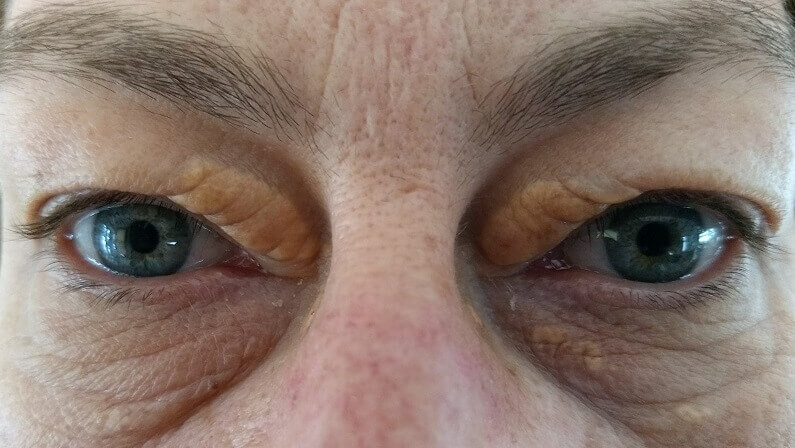
Before treating anything, it is worth being sure of what you are treating. Xanthelasma has a recognisable look, soft yellow patches, usually near the inner corners of the eyelids, often symmetrical, but a few other harmless bumps such as milia and syringomas can resemble it, and a small number of eyelid lesions need medical attention.
So the sensible first step is a quick confirmation. A doctor or dermatologist can usually identify xanthelasma on sight in moments, and confirm with a simple biopsy in the rare cases of doubt. If your marks clearly match the classic pattern you may feel confident, but if anything is pearly, bleeding, changing, or simply does not fit, get it checked first. Our page on what xanthelasma looks like helps you compare, and what can be mistaken for xanthelasma covers the look-alikes.
Step Two: Check the Underlying Cause
The next step is a simple health check, and it is worth doing before or alongside removal rather than skipping it. Because xanthelasma is made of cholesterol, it can occasionally be an outward sign of raised lipids, an underactive thyroid, or diabetes. A lipid blood test from your doctor, sometimes with a thyroid and blood-sugar check, settles whether any of these is involved.
This matters for treatment because leaving an underlying cause unaddressed is the main reason xanthelasma comes back after removal. Around half of people with xanthelasma have completely normal cholesterol, so for many this step is simply reassurance, but for those who do have a lipid issue, identifying it protects their wider health and helps keep results lasting. Either way, the underlying side is your doctor’s job, and the visible marks are a separate, cosmetic matter you treat in the next step. Our page on what causes xanthelasma covers the cause side.

Step Three: Choose a Removal Method
This is the heart of “how do you treat xanthelasma”, and there are a few routes. The clinic procedures each work in a different way: surgical excision cuts the plaque out, laser vaporises it with precision, cryotherapy freezes it off, and electrosurgery uses an electric current to remove it. They can all be effective, but they tend to be expensive, several need repeat sessions, and because they treat the delicate eyelid skin, they carry a risk of scarring or pigment changes. They are also rarely covered by insurance, since removal is cosmetic.
The least invasive route is an at-home cosmetic cream. Xanthel ® is a cosmetic skincare cream formulated to remove xanthelasma plaques at home, applied to the plaque following the supplied guidance, without the cutting, clinic cost, or downtime. For most people weighing convenience, cost, and avoiding scarring risk, it is the natural place to start, with the clinic routes available if a plaque is especially large or stubborn. You can see the full comparison in our range of removal options.
Step Four: The Treatment and Aftercare
Whatever method you choose, the removal itself is usually quick, and good aftercare makes the difference to the result. With clinic procedures, the treatment is typically done under local anaesthetic in a single appointment (though some methods need repeats), followed by a healing period during which you protect the area, keep it clean, and follow the practitioner’s wound-care instructions. Some swelling, redness, or temporary colour change is normal as it heals.
With an at-home cream, the process is to clean the area, protect the surrounding skin as the instructions describe, apply the cream to the plaque, leave it for the stated time, then rinse, with the area healing over the following days. Across both routes, the aftercare principles are the same: keep the area clean, apply any soothing or antibacterial product advised, protect the healing skin from the sun, and be patient through the healing period rather than picking or rushing it. Avoid improvised home remedies like garlic or vinegar, which lack evidence and can harm the delicate skin.


Step Five: Keep Them From Coming Back
The final step turns a one-off removal into a lasting result. Because xanthelasma can recur, especially if an underlying cause is left unmanaged, the maintenance phase is about reducing that risk. If your cholesterol check revealed raised lipids, managing them, through diet, exercise, not smoking, and any medication your doctor advises, both protects your heart and helps prevent new marks. Managing related conditions like thyroid problems or diabetes matters too.
This is the two-track principle that runs through good xanthelasma care: remove the visible marks, and manage any underlying cause so fewer new ones form. Keeping an eye out for any returning marks, and dealing with them early, keeps things simple. If you would rather handle the removal side at home, it is worth looking at the at-home removal option, and our at-home management advice covers the prevention side.

How Do You Treat Xanthelasma: The Bottom Line
Treating xanthelasma is a short process: confirm the marks, check for any underlying cause with a simple lipid test, choose a removal method, have the marks removed with good aftercare, and manage any underlying factor to keep them away. The removal step is your choice, clinic procedures like surgery and laser work but cost more and carry a scarring risk, while an at-home cream is the least invasive and most affordable route.
If you would rather skip the clinic, it is worth looking at the at-home removal option made for the eyelid form, and reading why you might have got xanthelasma to understand the cause side that keeps results lasting.

Common Questions About Treating Xanthelasma
How do you treat xanthelasma?
Treatment is a short process: confirm the marks are xanthelasma, check for any underlying cause with a simple lipid test, choose a removal method, have the marks removed with good aftercare, and manage any underlying factor to limit recurrence. Removal options range from clinic procedures (surgery, laser, cryotherapy, electrosurgery) to an at-home cosmetic cream.
What is the easiest way to treat xanthelasma?
For most people, the easiest and least invasive route is an at-home cosmetic cream, which avoids the cost, scarring risk, and downtime of a clinic procedure. Xanthel ® is a cosmetic skincare cream formulated to remove xanthelasma plaques at home, following simple supplied instructions for use near the eye.
Do I need to see a doctor to treat xanthelasma?
It is worth one visit to confirm the marks are xanthelasma and to run a simple lipid test for any underlying cause, which helps results last. Once confirmed, you can choose how to remove the marks, including at home, without necessarily returning to a clinic for the removal itself.
Can xanthelasma be treated at home?
Yes. A cosmetic cream made specifically for eyelid xanthelasma lets you treat the marks at home, with clear instructions for safe use near the eye. This is very different from improvised remedies like garlic or vinegar, which lack evidence and can harm the delicate skin. A purpose-made product is the safe at-home route.
Does treating xanthelasma stop it coming back?
Removal clears the visible marks, but it does not by itself prevent new ones, because the underlying tendency often remains. Managing any underlying cause, such as raised cholesterol, alongside removal is what reduces recurrence. Combining the two gives the most lasting result.
How long does xanthelasma treatment take to heal?
It varies by method, but initial healing after most treatments commonly takes a few days, with any temporary redness or colour change settling over the following weeks. Following the aftercare, keeping the area clean, protected, and out of the sun, supports a clean result. Your method’s specific instructions give the detail.
Which xanthelasma treatment is best?
There is no single best method, only the one that fits your priorities. Surgery and laser are effective but costly and carry a scarring risk near the eye, while an at-home cream is the least invasive and most affordable. Confirming the diagnosis and managing any underlying cause matters whichever removal route you choose.
Will my cholesterol need treating too?
Possibly. If your lipid test shows raised cholesterol, managing it protects your heart and helps prevent new xanthelasma, so it is worth doing alongside removal. Around half of people with xanthelasma have normal cholesterol, though, so for many the check is simply reassurance. Your doctor will advise.
Xanthel ® is a cosmetic skincare product, not a medical treatment. Because xanthelasma can sometimes sit alongside lipid, thyroid, or cardiovascular factors, it is worth discussing with your doctor, who can give you the full picture of your health to pair with any cosmetic approach.