Do Xanthelasma Indicate Raised Cholesterol?
What the Yellow Eyelid Marks Really Say About Your Cholesterol and Heart Health
Do xanthelasma indicate raised cholesterol? Sometimes, but not always, only about half the time. This page explains the real link to cholesterol and heart health, and the simple check worth doing.
By Xanthelasma.com
Do Xanthelasma Indicate Raised Cholesterol? The Honest Answer
This is an important health question, so here is the honest, balanced answer: xanthelasma can indicate raised cholesterol, but it does not always. Roughly half of people with xanthelasma have elevated cholesterol or another lipid abnormality, while the other half have completely normal cholesterol, with genetics or other factors behind their marks. So the yellow eyelid deposits are a useful prompt to check, but they are not proof of a cholesterol problem on their own.
Because the marks are made of cholesterol, though, they are worth taking seriously as a possible signal. The sensible response is simple and low-stakes: a lipid blood test from your doctor settles whether cholesterol is part of your picture. If it is raised, you have caught something genuinely useful for your long-term heart health; if not, the marks are purely cosmetic. The rest of this page explains the link, the risk factors, and what to do. Our related page on what xanthelasma indicates covers the broader signalling angle.

The Link Between Xanthelasma and Cholesterol
The connection makes sense once you know what xanthelasma is: a deposit of cholesterol-rich material under the eyelid skin. In people with raised blood lipids, particularly high LDL (“bad”) cholesterol, that excess cholesterol can find its way into the skin and accumulate as these visible marks. In that sense, xanthelasma can be an outward, visible clue to what is happening with the fats in your blood.
Where cholesterol is raised, it matters beyond the marks, because high cholesterol contributes to plaque building up in the arteries (atherosclerosis), which over time raises the risk of heart disease and stroke. This is precisely why doctors treat xanthelasma as worth a check rather than dismissing it as purely cosmetic: it can occasionally be an early, visible nudge to look at your cardiovascular health before any other symptoms appear. That said, this is about sensible checking, not alarm, the marks themselves are harmless, and many people with them are perfectly healthy. Our page on the causes of xanthelasma explains the lipid link in more depth.

Why Half of People With Xanthelasma Have Normal Cholesterol
It surprises many people that around half of those with xanthelasma have entirely normal cholesterol levels. The reason is that cholesterol in the blood is only one of the factors that can lead to these deposits. Genetics play a large role: some people are simply predisposed to form xanthelasma even when their blood lipids are normal, sometimes because of how their skin handles cholesterol locally rather than because of high levels circulating in the blood.
Other factors feed in too, an underactive thyroid, diabetes, and liver conditions can all influence lipid handling, and the tendency can run in families independently of measured cholesterol. So if your lipid test comes back normal, it does not mean the diagnosis is wrong or that something has been missed; it simply means your xanthelasma falls into the common normal-cholesterol group, and the marks are a cosmetic matter for you. Our page on whether xanthelasma is genetic covers the hereditary side.

Risk Factors Worth Knowing
Whether or not your cholesterol turns out to be raised, a few factors are associated with a higher chance of developing xanthelasma, and they overlap with general cardiovascular risk factors. These include a family history of high cholesterol or xanthelasma, being overweight, smoking, diabetes, and an underactive thyroid. Xanthelasma is also seen somewhat more often in women, and typically appears in adulthood.
The reason these are worth knowing is not to worry you but to inform the conversation with your doctor. If you have xanthelasma alongside one or more of these factors, a cholesterol check and a broader look at your cardiovascular health make particular sense, and managing those factors benefits your overall health regardless of the marks. If you have none of them and your lipids are normal, the marks are very likely just a cosmetic quirk. Either way, the marks themselves are benign. Our page on why you might have got xanthelasma goes through the risk factors.
What to Do If You Have Xanthelasma
The practical steps are straightforward and reassuring. First, see your doctor for a simple check: they can confirm the marks are xanthelasma and arrange a lipid blood test (often after a short fast), sometimes alongside a thyroid or blood sugar test. This tells you whether cholesterol or another factor is involved. If something is raised, managing it, through diet, lifestyle, and any medication your doctor advises, protects your heart and helps prevent new marks. If everything is normal, you have peace of mind.
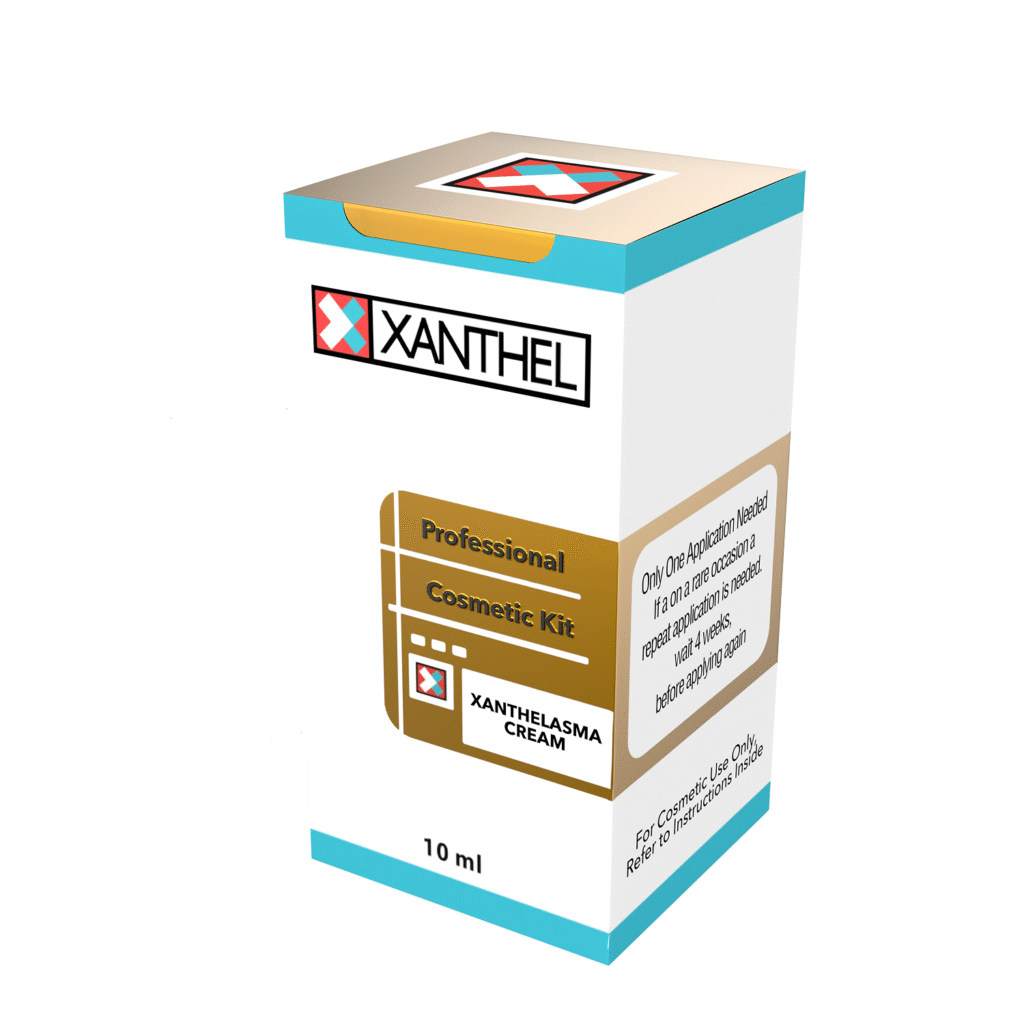
Second, you can deal with the appearance separately, since the marks will not fade on their own. The least invasive route is xanthelasma removal at home with a cosmetic cream made for the purpose, or a clinic procedure if you prefer. To be clear, removing the marks is purely cosmetic and does nothing for your cholesterol, the two are separate jobs, which is exactly why the health check matters in its own right. You can read more on what causes the cholesterol deposits around the eyes or browse the full range of removal options.


Do Xanthelasma Indicate Raised Cholesterol? The Bottom Line
Xanthelasma can indicate raised cholesterol, but only about half the time, the other half of people with the marks have normal cholesterol, often due to genetics. So the marks are a valuable prompt to get a simple lipid test rather than a diagnosis in themselves. Where cholesterol is raised, managing it protects your heart; where it is normal, the marks are purely cosmetic.
The sensible plan is to get a quick cholesterol check with your doctor for your health, and, separately, to deal with the appearance if it bothers you, since the marks will not fade on their own. If you would rather avoid a clinic, xanthelasma removal with an at-home cream made for the purpose is the least invasive option. You can also read what xanthelasma indicates more broadly.

Common Questions About Xanthelasma and Cholesterol
Do xanthelasma always mean high cholesterol?
No. Around half of people with xanthelasma have raised cholesterol or another lipid abnormality, while the other half have normal cholesterol, often due to genetics. So the marks are a useful prompt to get a lipid test, but they do not confirm a cholesterol problem on their own.
Why does xanthelasma form if my cholesterol is normal?
Because cholesterol in the blood is only one factor. Genetics play a large role, and some people form xanthelasma even with normal lipids, sometimes due to how their skin handles cholesterol locally. Thyroid, diabetes, and liver factors can also contribute. A normal lipid test does not mean the diagnosis is wrong.
What should I do if I have xanthelasma?
See your doctor for a simple check. They can confirm the diagnosis and arrange a lipid blood test, sometimes with thyroid or blood sugar tests, to see whether cholesterol or another factor is involved. If something is raised, managing it protects your health; if not, the marks are cosmetic. You can then deal with the appearance separately.
Does xanthelasma mean I am at risk of heart disease?
It can be a prompt to check, since raised cholesterol contributes to cardiovascular risk, and xanthelasma can sometimes reflect that. But it is not a diagnosis of heart disease, and many people with the marks have normal cholesterol and healthy hearts. A lipid test and a conversation with your doctor put your individual risk in context.
Will lowering my cholesterol get rid of the xanthelasma?
Usually not for existing marks. Managing cholesterol protects your health and helps prevent new marks, but it rarely clears plaques already formed on the eyelids. Those generally need direct removal. The cholesterol check is about your wider health; clearing the marks is a separate, cosmetic step.
Can I have xanthelasma removed even if my cholesterol is fine?
Yes. If your cholesterol is normal, the marks are purely cosmetic, and you can remove them if you wish. Xanthel ® is a cosmetic skincare cream made for xanthelasma removal at home, or you can opt for a clinic procedure. The marks will not fade on their own, so removal is the route if their appearance bothers you.
How is the cholesterol check done?
Your doctor arranges a lipid panel, a simple blood test measuring LDL, HDL, and triglycerides. You may be asked to fast for around 9 to 12 hours beforehand for accuracy, especially for triglycerides. The results show whether your cholesterol is raised and guide any advice on diet, lifestyle, or medication.
Should everyone with xanthelasma see a doctor?
Yes, a single visit is worthwhile for anyone with xanthelasma, even without other symptoms. Because the marks can occasionally signal raised cholesterol or another underlying factor, a quick check is a sensible, low-effort step. If everything is normal, you have reassurance and can treat the marks as a cosmetic matter.
Xanthel ® is a cosmetic skincare cream made for xanthelasma removal at home, not a medical treatment for any underlying condition. However the marks are removed, it is worth seeing your doctor for a simple check, since xanthelasma can sometimes sit alongside lipid, thyroid, or cardiovascular factors worth identifying and managing for your wider health.