
Is Xanthelasma Removal Covered By Insurance
Usually Not, Here Is Why, the Rare Exceptions, and the Affordable Alternative
Wondering if insurance will cover xanthelasma removal? In most cases, no, because it is classed as cosmetic. This page explains why, the narrow exceptions, how Medicare treats it, and the affordable at-home option.
By Xanthelasma.com
Is Xanthelasma Removal Covered By Insurance?
The short answer is that, in most cases, no, xanthelasma removal is not covered by insurance. This is because insurers almost always classify it as a cosmetic procedure rather than a medical necessity, and cosmetic procedures generally fall outside what health plans pay for. So for the majority of people, the cost of removal will be out of pocket, which is worth knowing before you plan.
There is a narrow exception, covered below, and there are practical steps if you want to pursue it. But because coverage is unlikely for typical xanthelasma, many people look to the most affordable route instead. Xanthel ® is a cosmetic skincare cream formulated to remove xanthelasma plaques at home, at a fraction of the cost of a clinic procedure. The rest of this page explains the cosmetic-versus-medical distinction, when removal might be covered, how Medicare treats it, and what to do if you are paying yourself. Our pages on how much removal costs and the full cost structure cover the price side.

Why It’s Usually Classed as Cosmetic
To understand the coverage question, it helps to understand how insurers think. They draw a line between procedures that improve appearance (cosmetic) and procedures that resolve a health problem (medically necessary), and they generally only pay for the latter. Xanthelasma is benign, painless, and does not normally affect vision or eyelid function, so removing it is almost always seen as improving appearance rather than treating a medical problem, which places it on the cosmetic side of that line.
This is not a judgement on how much the marks bother you, the psychological impact of visible eyelid marks can be real, but insurers base coverage on functional medical need, not on cosmetic or emotional distress. So even a strongly felt desire to remove them does not, by itself, make the procedure coverable. The practical upshot is to plan as though you will be paying for removal yourself, while knowing the narrow circumstances in which that might differ, which we turn to next.
When Removal Might Be Covered
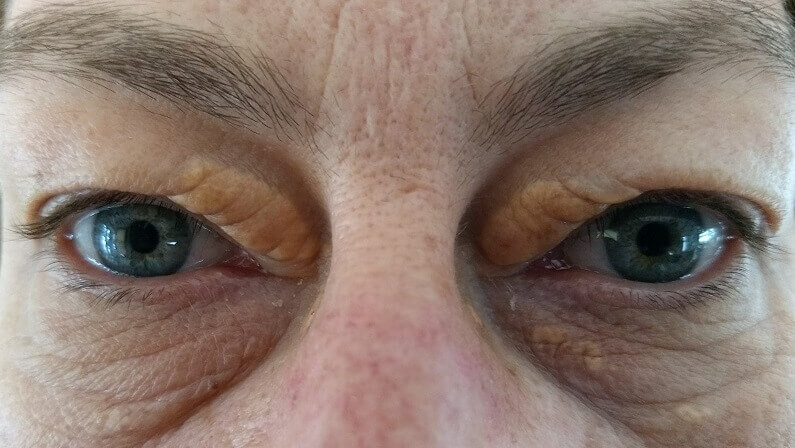
There is a genuine, if uncommon, exception: if xanthelasma stops being purely cosmetic and starts causing a functional medical problem, an insurer may consider removal medically necessary. The clearest example is vision impairment, if a plaque grows large enough, or contributes to the eyelid drooping enough, to actually obstruct part of your field of vision, that is a functional issue rather than a cosmetic one. Similarly, if the deposits interfere with how the eyelid moves or cause genuine physical discomfort, that may strengthen a case.
If you think you might qualify, the process is methodical: see an ophthalmologist or dermatologist for an assessment, have them document the functional impact (visual field testing can objectively demonstrate vision obstruction), gather your medical records, and seek pre-authorisation from your insurer before the procedure. Some insurers also require evidence that other approaches were tried first. It is worth engaging your insurer early and keeping everything in writing. For typical xanthelasma that does not impair vision, though, this route usually does not apply.

Medicare and Xanthelasma Removal
For those on Medicare, the same cosmetic-versus-medical principle applies. As a general guide, Medicare Part B may cover procedures that a healthcare professional documents as medically necessary, but if xanthelasma removal is considered purely cosmetic, which it usually is, Medicare coverage is unlikely. If, on the other hand, a provider can establish a genuine medical issue such as vision obstruction, Medicare may cover some or all of the cost.
A few practical points worth knowing: even where a procedure qualifies, you would typically still be responsible for Part B deductibles and copayments; Medicare may require prior authorisation, so the paperwork needs to be in place beforehand; and a Medigap (Medicare Supplement) plan may offset some out-of-pocket costs that Original Medicare does not cover. These are general descriptions of how coverage commonly works rather than guarantees, every situation differs, so confirm the specifics with Medicare and your provider for your own case. The same caution applies to any private insurer.

If You’re Paying Yourself: The Affordable Route
Since most people will not have removal covered, the practical question becomes how to keep the cost down. Clinic procedures, surgery, laser, cryotherapy, electrosurgery, range from a few hundred to a few thousand, often per session, and the bill includes consultation, facility, and follow-up charges on top. Many clinics offer payment plans to spread that cost, but a plan does not reduce the total.
The genuinely affordable alternative is an at-home cosmetic cream. Xanthel ® is a cosmetic skincare cream formulated to remove xanthelasma plaques at home, and because you carry out the treatment yourself, there is no surgeon’s fee, facility charge, or per-session billing, making it far cheaper than a clinic course while also avoiding the scarring risk and downtime. For most people, given that insurance is unlikely to help, it is the natural place to start. You can look at the at-home removal option directly, or compare it with the clinic methods in our full range of removal options.


Is Xanthelasma Removal Covered By Insurance: The Bottom Line
In most cases, no. Insurers and Medicare generally treat xanthelasma removal as cosmetic and do not cover it, since the marks are benign and do not usually affect vision or eyelid function. The narrow exception is when a plaque genuinely impairs vision or eyelid function, in which case, with proper documentation and pre-authorisation, removal may qualify, but this is uncommon. For typical xanthelasma, plan to pay yourself.
Because of that, the affordable at-home route appeals to many: it is worth looking at the at-home removal option made for the eyelid form. A simple cholesterol check with your doctor is also worth doing alongside, since xanthelasma can occasionally flag raised lipids, our page on what causes xanthelasma covers that.

Common Questions About Insurance and Xanthelasma Removal
Is xanthelasma removal covered by insurance?
Usually not. Insurers almost always classify xanthelasma removal as a cosmetic procedure rather than a medical necessity, and cosmetic procedures are generally not covered. So for most people, the cost is out of pocket. A narrow exception applies if a plaque genuinely impairs vision or eyelid function.
Why won’t my insurance cover xanthelasma removal?
Because xanthelasma is benign, painless, and does not normally affect vision or eyelid function, insurers see removing it as improving appearance rather than treating a medical problem. Coverage is based on functional medical need, not on cosmetic concern or emotional distress, however real that distress may be.
When would insurance cover xanthelasma removal?
Only in the uncommon case where the deposits cause a functional medical problem, most clearly when a plaque obstructs part of your vision or interferes with eyelid movement. This requires assessment by a specialist, documentation of the functional impact (such as visual field testing), and pre-authorisation from your insurer.
Does Medicare cover xanthelasma removal?
Generally only if it is documented as medically necessary, for example because it obstructs vision. If it is considered purely cosmetic, which is usual, Medicare coverage is unlikely. Even where it qualifies, Part B deductibles and copayments typically still apply. These are general guidelines, so confirm the specifics with Medicare for your situation.
How do I get insurance to approve xanthelasma removal?
If you believe it qualifies, see an ophthalmologist or dermatologist for an assessment, have them document the functional impact, obtain visual field testing if vision is affected, gather your medical records, and seek pre-authorisation before the procedure. Engage your insurer early and keep correspondence in writing. For typical cosmetic cases, approval is unlikely.
How much does xanthelasma removal cost without insurance?
It varies by method, but clinic procedures typically range from a few hundred to a few thousand, often per session, with consultation, facility, and follow-up costs on top. An at-home cosmetic cream is the most affordable route, since it removes the surgeon, facility, and per-session charges entirely.
Are there cheaper options if insurance won’t cover it?
Yes. The most affordable route is an at-home cosmetic cream, which avoids clinic fees altogether. Xanthel ® is a cosmetic skincare cream formulated to remove xanthelasma plaques at home, at a fraction of the cost of a clinic course, without the scarring risk or downtime. Many clinics also offer payment plans, though those do not reduce the total.
Is it worth claiming on insurance for xanthelasma?
For most people it is not worth the effort, since typical cosmetic removal will be declined. It is only worth pursuing if a plaque genuinely affects your vision or eyelid function, where a documented medical-necessity case may succeed. Otherwise, planning to pay out of pocket, and considering the affordable at-home route, is the more practical approach.
Xanthel ® is a cosmetic skincare product, not a medical treatment. Insurance coverage varies by provider and policy, and this page gives general information rather than a guarantee about any individual plan, confirm the specifics with your insurer. Because xanthelasma can sometimes sit alongside lipid factors, a cholesterol check with your doctor is also worthwhile.