
How To Cover Xanthelasma Spots
Making the Cover Last All Day, and Using Eye Makeup to Draw the Eye Away
Covering xanthelasma spots is one thing; keeping them covered all day is another. This page focuses on longevity, plus using the rest of your eye makeup to draw attention away from the marks.
By Xanthelasma.com
Covering Xanthelasma Spots So It Lasts
Getting xanthelasma spots covered is one thing; keeping them covered, looking natural from morning to evening, is the harder part, and it is what this page focuses on. The delicate, mobile eyelid skin is exactly where makeup tends to crease, slide, or wear off through the day, so longevity takes a bit of technique. Alongside that, there is a second trick worth knowing: using the rest of your eye makeup to draw attention away from the spots, so the cover does not have to be perfect to be effective.
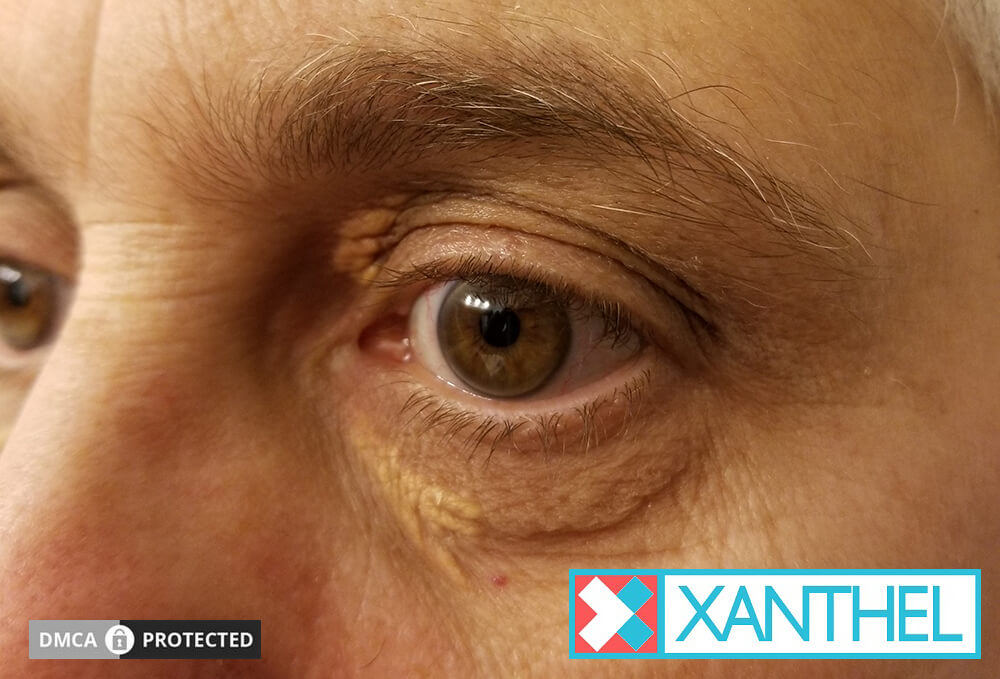
So this page is less about the basic cover-up routine (which our other guides walk through) and more about making it last and making it work with your whole eye look. The spots themselves are harmless yellow cholesterol marks that makeup conceals temporarily but does not remove, if you would rather not cover them daily, Xanthel ® is a cosmetic skincare cream formulated to remove xanthelasma plaques at home. For the basic technique, see our guides on covering xanthelasma with makeup and the colour-correction approach.
Why the Cover Slips, and How to Stop It
Understanding why makeup fails on the eyelid tells you how to make it last. The eyelid skin is thin, naturally a little oily near the lashes, and constantly moving as you blink, so product applied too thickly or without a stable base tends to crease into lines, slide, or wear away. The fixes all address one of those causes.
Start with a stable base: clean, lightly moisturised skin (heavy moisturiser makes things slide) topped with a thin layer of eye primer, which gives the concealer something to grip and is the single biggest factor in all-day wear. Then build coverage in thin layers rather than one thick coat, since thick makeup creases far faster on a moving lid. Set the finished cover with a light dusting of finely milled translucent powder to lock it, and finish with a spritz of setting spray if you have it. Thin layers, a primed base, and a light set are what keep the cover from sliding off by midday. Our page on the colour-correction method covers the correcting step in detail.

Using Eye Makeup to Draw the Eye Away
Here is the technique most cover-up guides miss: you do not have to rely on the concealer alone, because the rest of your eye makeup can pull attention away from the spots. The eye is drawn to contrast, definition, and light, so placing those elsewhere makes a concealed spot far less noticeable, even if the cover is not flawless.
A few ways to do it. Define the upper lash line with a thin line of eyeliner, which lifts the focus to the lash line and away from the lid. Keep eyebrows neatly groomed, since well-shaped brows frame the eye and draw the gaze upward. Use mascara, concentrating on the outer lashes, to open and lift the eye. If you highlight, place it on the brow bone and the inner corner, away from the spots, to put the light where you want attention. And favour matte eyeshadow over shimmer, because shimmer catches light on any raised texture, while matte shades sit flat and quiet. Together these shift the eye’s focus and do a lot of the concealing work for you.

Choosing Shades and Textures That Help
The products you choose also affect how well the cover lasts and how natural it looks, so a few choices are worth making deliberately. For covering the spot itself, the principle is to neutralise the yellow first (a colour corrector, then a skin-matched concealer) rather than piling on skin-tone concealer alone, which tends to leave a greyish patch. A creamy, not-too-thick, long-wear concealer sits best on the thin eyelid skin and is less likely to cake.
For everything around the spot, lean towards matte rather than shimmery textures near the lid, since matte does not highlight raised areas, and towards neutral eyeshadow tones that add depth without drawing the eye to the lid. If your skin is on the oily side, a matte, oil-absorbing setting powder helps the cover last; if it is dry, a hydrating formula avoids emphasising any flakiness. These are small choices, but on the eyelid they make the difference between a cover that lasts and one that does not. Our guide on hiding xanthelasma with makeup offers more product pointers.

Covering Is Temporary: The Marks Are Still There
It is worth keeping the bigger picture in view, because it shapes what you decide. Covering xanthelasma spots well, and keeping them covered all day, can genuinely let you forget about them, and that is worth having. But makeup conceals; it does not remove the marks. They remain under the makeup, will not fade on their own, and tend to grow slowly over time, so concealing becomes a daily commitment.
For some people that is fine and makeup is all they want. Others tire of the daily routine and would rather deal with the spots at the source. If that is you, removal is the route: the clinic options (surgery, laser, freezing) work but are costly and carry a scarring risk, while the least invasive route is an at-home cream. Xanthel ® is a cosmetic skincare cream formulated to remove xanthelasma plaques at home, so it is worth looking at the at-home removal option or the full range of removal options. Many people cover the spots with makeup while dealing with them properly.


How to Cover Xanthelasma Spots: The Bottom Line
To cover xanthelasma spots so it lasts, start with a primed, lightly moisturised base, build the cover in thin layers, and set it with a light translucent powder (and setting spray if you have it), since the thin, mobile eyelid is where makeup creases and slides. Then use the rest of your eye makeup, defined lash line, groomed brows, matte neutral shadows, strategic highlight, to draw attention away from the spots, so the cover does not have to be perfect.
Just remember the cover is temporary and the marks remain underneath. If you would rather not conceal them every day, it is worth looking at the at-home removal option, and reading what causes xanthelasma to understand why the spots form.

Common Questions About Covering Xanthelasma Spots
How do you cover xanthelasma spots?
Neutralise the yellow first with a colour corrector, then apply a skin-matched concealer over the top in thin layers and set with translucent powder. For lasting wear, start with a primed, lightly moisturised base. Using the rest of your eye makeup (defined lash line, groomed brows, matte shadows) to draw attention away from the spots also helps the cover look effective.
How do I stop the cover sliding off during the day?
The eyelid is thin, oily near the lashes, and always moving, so makeup creases and slides there. Use a thin layer of eye primer for grip, build coverage in thin layers rather than one thick coat, set with a light dusting of translucent powder, and finish with setting spray. Avoid heavy moisturiser under the makeup, which makes it slide.
Can eye makeup help hide xanthelasma spots?
Yes, considerably. The eye is drawn to contrast and light, so defining the upper lash line, keeping brows groomed, using mascara on the outer lashes, and placing highlighter on the brow bone and inner corner all pull attention away from the spots. Favouring matte over shimmery shadow near the lid also helps, since shimmer highlights raised texture.
What kind of concealer covers xanthelasma spots best?
A creamy, long-wear, not-too-thick concealer matched to your skin tone, applied over a colour corrector that neutralises the yellow first. Thick, heavy products cake and emphasise the spot rather than hiding it. Apply with a small brush or sponge in thin layers, patting rather than dragging, and set lightly. The corrector-then-concealer order is what makes it look natural.
Why does my concealer make xanthelasma spots look worse?
Usually because it is applied too thickly, or without colour-correcting first. A heavy layer of skin-tone concealer creases on the moving lid and can leave a greyish cast where the yellow shows through. Neutralising the yellow with a corrector first, then applying thin layers of concealer, and setting lightly, gives a far more natural result than one thick coat.
Will covering the spots with makeup damage them or my skin?
No, makeup applied gently with clean tools does not harm xanthelasma or the skin. Use non-irritating, fragrance-free products near the eye and remove makeup gently at day’s end. Avoid rubbing the area, which both smudges the cover and irritates the delicate skin. Makeup neither worsens nor treats the spots; it conceals them temporarily.
How do I keep the cover looking good all day?
Build on a primed base, use thin layers, and set well. Carry blotting papers to lift oil without disturbing the makeup, and for touch-ups pat a little concealer on rather than adding more powder, which builds up and cakes. Avoid rubbing your eyes. A setting spray at the start adds staying power for the whole day.
Should I keep covering the spots or have them removed?
That is your choice. Makeup is a good temporary cover and costs little to try, but it must be redone daily and the spots remain. Removal deals with them at the source. Many people cover the spots with makeup while arranging removal, then no longer need to conceal once the marks are gone. An at-home cream is the least invasive removal route.
Xanthel ® is a cosmetic skincare cream made to remove xanthelasma plaques at home, not a medical treatment for any underlying condition. Makeup conceals the spots but does not treat them, and because xanthelasma can occasionally point to lipid, thyroid, or cardiovascular factors, a simple check with your doctor is also worthwhile for the full picture of your health.