Treating Xanthelasma Palpebrarum (XP)
This condition is characterized by the formation of yellowish plaques on or around the eyelids. The name xanthelasma combines two ancient Greek words – “xanthos” meaning yellow and “elesma” signifying a flat plaque.
– Visual Characteristics: These lesions are soft, have a velvety texture, and are typically situated on the medial aspects of the eyelids.
– Significance: While xanthelasma itself is benign and primarily a cosmetic concern, its presence can signal underlying health issues that may require attention.
Etiology and Pathophysiology
It’s crucial to understand the causes and mechanisms behind xanthelasma to provide effective care and treatment. Here’s what you need to know:
– Associated Conditions: Xanthelasma is often linked to lipid metabolism disorders such as hypercholesterolemia, LDL hyperlipoproteinemia, or dyslipidemia.
– Pathology: The development of the condition entails the accumulation of cholesterol-laden foam cells (xanthoma cells) within the skin, leading to the noticeable plaques.
– Systemic Correlation: Screening for systemic conditions including diabetes and thyroid dysfunction is recommended since these can coexist with xanthelasma.
Differentiating Xanthelasma
With various periorbital skin conditions out there, it’s essential to differentiate xanthelasma:
– Color: Xanthelasma lesions are typically yellow.
– Texture: They have a soft, velvety feel.
– Distribution: Lesions usually appear symmetrically on the medial aspects of the upper and lower eyelids.
Screening and Diagnosis
Upon identifying xanthelasma, it is advisable to initiate further investigation:
– Laboratory Tests: Screen for lipid disorders, diabetes, and thyroid dysfunction through blood tests.
– Physical Examination: Evaluate the size, shape, and number of plaques to assist in diagnosis and treatment planning.
Treatment Options
Treatment should be individualized based on various factors:
– Patient Preferences: Some individuals may opt for treatment due to cosmetic concerns, while others prefer monitoring.

– Clinical Presentation: The size and number of plaques may influence the choice of treatment.
– Health Considerations: Underlying health issues determine the treatment course, emphasizing the need to manage systemic problems along with the xanthelasma.

Assessment of Xanthelasma
Clinical Assessment Techniques
To differentiate xanthelasma palpebrarum from other periorbital skin conditions, it’s imperative to focus on the following:
– Color: Xanthelasma lesions are typically yellowish and may increase in intensity over time.
– Texture: These plaques are often soft, velvety, and can become more palpable as they thicken.
– Distribution: Look for symmetrical distribution on the upper or lower eyelids, particularly near the inner canthus (the corner nearest to the nose).
In assessing xanthelasma, it’s not just about the visual cues; a comprehensive approach includes:
– Physical Examination: Pay attention to size, shape, and possible interference with eyelid function.
– Medical History: Gather information on previous diagnoses of hyperlipidemia, cardiovascular disease, or xanthomas elsewhere on the body.
– Family History: Inquire about similar skin lesions or systematic disorders in close relatives, which could indicate an inherited lipid metabolism disorder.
Identifying Underlying Health Concerns
While xanthelasma palpebrarum primarily presents a cosmetic concern, it’s crucial to screen for associated health conditions:
– Lipid Disorders: Conduct a lipid profile test to check for elevated LDL cholesterol or other lipid anomalies.
– Diabetes: Measure fasting blood glucose or A1C levels to exclude or confirm a diagnosis of diabetes mellitus.
– Thyroid Function: Abnormal thyroid function can contribute to altered lipid metabolism, so request a thyroid panel as part of your investigation.
Upon diagnosing xanthelasma, consider the following treatment options tailored to your patient’s needs:

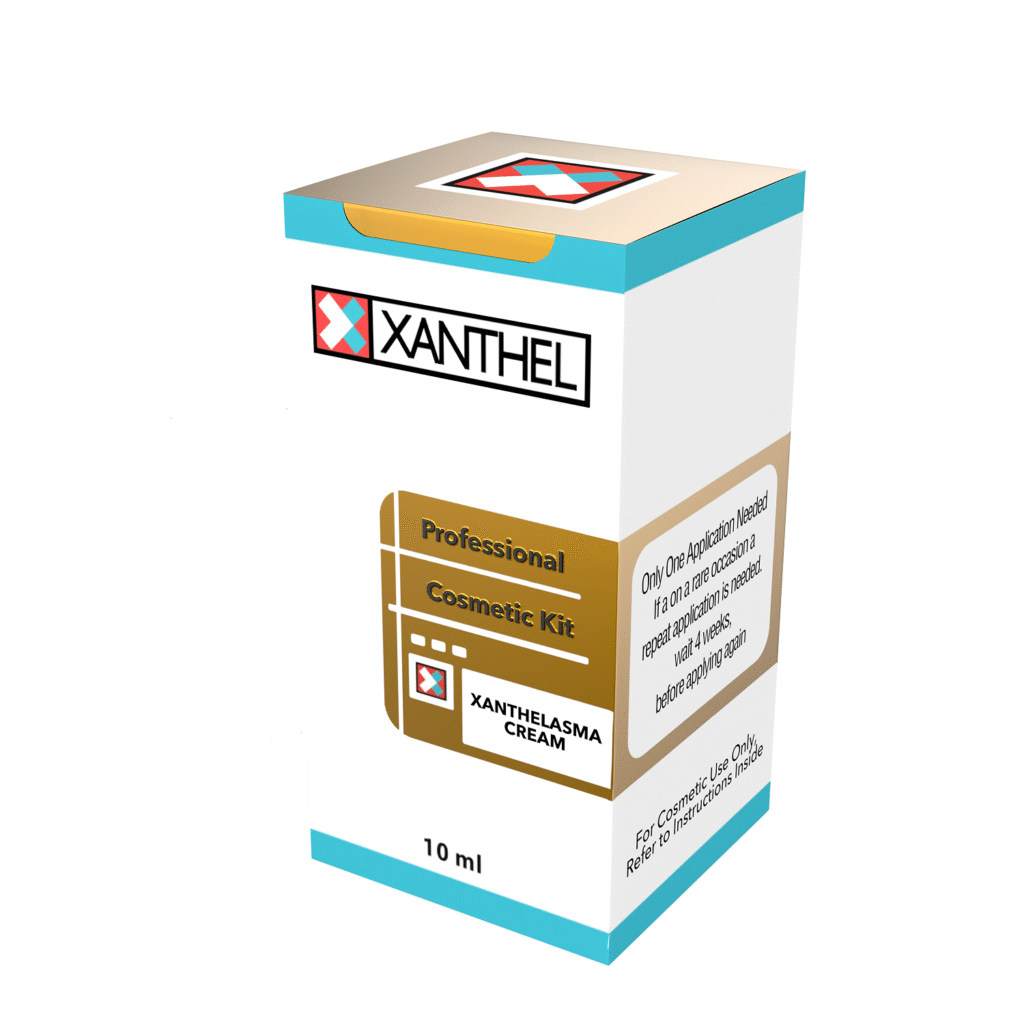
– Xanthel ® removal cream: Available online to treat xanthelasma professionally at home.
– Surgical Removal: Elect for surgical excision if the plaques are large or interfere with eyelid function.
– Laser Therapy: Explore the use of lasers for precision and minimal scarring.
– Cryotherapy: Utilize freezing techniques for lesion removal in certain cases.
It’s essential to periodically review treatment efficacy and patient satisfaction. Additionally, maintaining an interaction with the interprofessional healthcare team, including dermatologists, primary care physicians, and endocrinologists, facilitates a comprehensive approach to managing xanthelasma. Adjusting lipid-lowering therapies and other systemic treatments can be optimized through collective input.
Remember, addressing xanthelasma palpebrarum extends beyond the visible lesions. Act as your patient’s advocate in promoting their overall health, and guide them through both the immediate cosmetic and long-term systemic implications of their condition.

Traditional Surgical Excision
Explanation of Surgical Excision
As someone dealing with xanthelasma palpebrarum, you might consider traditional surgical excision, especially if the plaques are significantly large or causing discomfort. This procedure involves the precise removal of the fatty deposits under local anesthesia.
Follow these steps in your surgical treatment journey:
– Consultation: First, you’ll meet with a specialist to discuss the extent of plaque buildup and the feasibility of surgery.
– Preoperative Planning: Your surgeon will map out the exact area of excision to ensure an aesthetic outcome post-surgery.
– Anesthesia: Local anesthesia will be applied to minimize discomfort.
– Excision: Using fine tools, your surgeon will carefully remove the xanthelasma plaques.
– Closure: The skin is sutured with fine, cosmetically placed stitches to aid healing and reduce scarring.
– Postoperative Care: You will receive instructions on how to care for the wound to prevent infection and ensure proper healing.
Benefits and Risks of Surgical Treatment
When considering surgical excision for your xanthelasma, weigh the following benefits and risks to make an informed decision:

Benefits:
– Effectiveness: Surgical excision typically offers a complete removal of the plaques.
– Quick Results: The cosmetic improvement is immediate following the procedure and healing.
– One-Time Treatment: Unlike other treatments that may require multiple sessions, surgical excision is usually a one-time procedure.
Risks:
– Scarring: Despite careful techniques, there’s a risk of visible scarring.
– Recurrence: Xanthelasma can recur, even after complete excision.
– Post-Surgical Complications: Potential complications include infection, hematoma, or changes in eyelid function.
Collaboration with an interprofessional healthcare team is crucial to tailor the treatment plan to your unique situation. Your dermatologist or ophthalmologist will coordinate with other specialists as needed, such as a plastic surgeon, to ensure optimal cosmetic and functional results. Follow-ups are essential to monitor for any signs of recurrence or complications, and to address any concerns you may have post-treatment.
Maintain an ongoing dialogue with your healthcare providers regarding recovery, and adhere to recommended strategies to manage lipid levels which can decrease the chance of recurrence. Living with xanthelasma palpebrarum can be challenging, but with the right treatment and support, the condition can be managed effectively. Remember, your healthcare team is there to help you through this journey, focusing on both the cosmetic concerns and the underlying health implications.

Laser Therapy Options
CO2, Pulsed Dye, and Nd:YAG Lasers
When you’re considering laser therapy as a treatment for your xanthelasma, it’s essential to understand the various types available. Each has distinct characteristics and uses:
– CO2 Lasers: These are effective due to their high precision in vaporizing the xanthelasma plaques. A local anesthetic is typically applied to minimize discomfort during the procedure. Post-treatment care is crucial for optimal healing and minimizing scarring.
– Pulsed Dye Lasers: This type targets blood vessels and may be used when xanthelasma is associated with prominent vascularization. The pulsed dye laser offers a less invasive treatment with a short recovery time.
– Nd:YAG Lasers: Known for their deeper penetration, Nd:YAG lasers can be beneficial if your xanthelasma is thicker. They work by producing heat and causing coagulation within the lesion.
As you mull over these options, consult your healthcare provider to determine which laser type aligns best with your unique case. Factors such as lesion size, skin type, previous treatments, and personal health should inform this decision. You deserve an individualized treatment plan that offers the highest likelihood of success with minimal risk.
Effectiveness and Potential Risks
You should weigh the effectiveness of each laser treatment against potential risks. Here’s what you need to keep in mind:
– Effectiveness: Laser therapy for xanthelasma is praised for its ability to target the lesion with minimal damage to surrounding tissues. Lasers like fractionated Erbium:YAG (Er:YAG) and fractionated CO2 are especially preferred for this condition, often delivering satisfactory results with precision that other non-surgical methods may not achieve.
– Potential Risks: As with any procedure, there’s some degree of risk involved. Potential complications can include hyperpigmentation, hypopigmentation, scarring, infection, and eye injury. It’s vital to have the procedure performed by an experienced professional who understands the intricacies of treating the sensitive eyelid area.
– Cost Comparison: While laser treatment can be more expensive than other options such as radiofrequency machines—often presumed to have lower complication rates—it’s crucial to consider the long-term effectiveness and potential for lower recurrence rates with laser treatments.
Make sure to have an in-depth discussion with your dermatologist regarding these aspects. The goal is to ensure that your investment in the treatment leads to long-lasting satisfaction and minimizes the chances of recurrence. Remember, laser therapy should be carried out by certified practitioners to maximize the benefits while limiting any unforeseen consequences. Your health and safety should unequivocally be the primary concerns.
Together with your healthcare provider, you’ll navigate the options and identify the optimal approach to treating your xanthelasma, keeping both the cosmetic and potential health implications in check. A well-informed choice today can lead to a happier, healthier tomorrow.

Xanthel ® Treatment
Using Xanthel ® to remove xanthelasma
As you explore various treatment options for xanthelasma palpebrarum, you may consider the popular treatment Xanthel ®, which is done at home by the client. Xanthel is a formulated solution which, when applied to skin, causes the protein in the cells to denature, leading to the removal of unwanted xanthelasma plaques. Here are key points about Xanthel ®:
– Indications: Xanthel ® is a dedicated xanthelasma and xanthoma removal cream. It come with full treatment guide and just one application is needed to remove the xanthelasma.
– Effective: Due to Xanthel ® being formultaed to match the clients skintone and the plaques age etc, the treatment is very effective in removeing the plaques and stopping regrowth.
– Procedure: The procedure may be conducted at home. It’s relatively quick and does not require sedation. However, precise application is crucial to avoid damage to surrounding tissues. There is no downtime to the treatment anhd following it.
– Outcomes: The effectiveness of Xanthel ® is well documented. Upon application the xanthelasma will start to shrivel and over a few days it will be completley removed. The skin will then recondition back to its original natural state.
Application Methods and Precautions
When undergoing Xanthel ® treatment, it’s important to understand the application methods and necessary precautions:
– Professional Application: Xanthel ® should always be applied by a competent person. The correct application is vital to prevent the solution from affecting the healthy skin around your lesions, so follow the treatment guide to get the best and most effective results.
– Healing Time: Post-application, the treated area will require time to heal. It’s critical to follow your aftercare instructions to facilitate proper healing and reduce the risk of scarring.
– Side Effects: Some rare side effects include redness, irritation, and temporary discomfort. These are generally short-lived and subside as the skin heals.
– Sun Protection: After treatment, you should protect the area from sun exposure. Sunscreen is essential to avoid pigmentation changes and promote optimal healing.
Remember, while Xanthel ® is an effective option for removing xanthelasma, it requires specialized care and a strategic approach. By working closely with your treatment team at Xanthel ®, you can aim to achieve the best possible outcome. Xanthel ® has a proven track record of stopping the plaques from returning after treatment.

Cryotherapy Method
Liquid Nitrogen Cryotherapy Explained
Cryotherapy is another treatment option you have at your disposal when considering how to manage your xanthelasma. Specifically, liquid nitrogen cryotherapy involves the application of extreme cold to freeze and destroy the xanthelasma plaques. Here’s what you should understand about this method:
– Procedure: During this treatment, liquid nitrogen is applied to the xanthelasma plaques. The extreme cold causes ice crystals to form within the cells, leading to cell death and eventually the shedding of the xanthelasma.
– Duration and Sessions: Depending on the extent of xanthelasma, multiple sessions may be required, spaced a few weeks apart. Each session is brief, usually lasting a few minutes.
– Anesthesia: The procedure is generally well-tolerated, but a topical anesthetic may be used to lessen any discomfort.
– Recovery: Post-procedure care is relatively straightforward; there may be some localized swelling and redness which usually resolves without intervention.
It’s important to have a clear understanding of what cryotherapy entails and to have realistic expectations of the outcomes. Your healthcare provider will guide you through the process, taking into account your clinical presentation and personal comfort.
Advantages and Limitations
When you are evaluating different treatment options, you will want to know about the advantages and limitations of each. Liquid nitrogen cryotherapy offers distinct benefits but also presents certain challenges:
– Advantages:
– Minimally Invasive: Compared to surgical options, cryotherapy is less invasive.
– No Incisions: This procedure does not require any cuts, hence reducing the risk of scarring and infection.
– Quick Recovery: Patients often experience a faster recovery period with cryotherapy compared to more invasive procedures.
– Cost-effective: Cryotherapy can be more affordable than laser treatments or surgery.
– Limitations:
– Recurrence: There’s a possibility that xanthelasma may recur, necessitating further treatment.
– Pigmentation Changes: Some patients may experience changes in skin pigmentation at the treatment site.
– Potential for Tissue Damage: If not administered carefully, surrounding tissue can be damaged due to the nonspecific nature of freezing.
With these factors in mind, you and your healthcare team can make an informed decision that balances efficacy with safety and cost. Always remember to share your preferences and concerns with your provider. They can help you to understand how the advantages and limitations apply specifically to your case and create a tailored plan for your long-term management and satisfaction.

Recurrence After Treatment
Understanding Recurrence Rates Post-Treatment
When you undergo treatment for xanthelasma palpebrarum, it is crucial for you to understand that the rate of recurrence, while being less than 50% initially, increases should you require retreatment. Here’s what you should be aware of regarding recurrence:
– Initial Treatment Effectiveness: After your first treatment, whether it be cryotherapy, laser ablation, or surgical excision, there is generally a less than 50% chance of the xanthelasma returning.
– Chances of Recurrence Post-Retreatment: If your xanthelasma reappears and you opt for a second treatment, note that the likelihood of another recurrence escalates to approximately 60%.
– Nature of Xanthelasma: Keep in mind that xanthelasma does not typically resolve on its own. Without medical intervention, the lesions are apt to remain the same or may even grow in size.
– Importance of Aesthetic Consideration: As the appearance of xanthelasma is a significant concern for many, this often prompts the decision to seek treatment. Remember to discuss with your healthcare provider the potential need for future treatments if recurrence occurs.
It’s important for you to engage with your healthcare provider about the probabilities of recurrence. An understanding of these rates will help you set realistic expectations and prepare for the possibility of further treatment, if necessary.
Preventive Measures and Long-Term Care
To reduce the chance of recurrence and to ensure your well-being, it’s essential to focus on preventive measures and ongoing care following treatment for xanthelasma:
– Control of Underlying Conditions: Actively managing conditions such as hyperlipidemia, diabetes, liver diseases, and thyroid disorders can mitigate the risk of developing additional lesions. It’s crucial for you to follow your healthcare provider’s advice on the treatment of these underlying conditions.
– Lifestyle Modifications: Adopting a healthier lifestyle which includes a balanced diet, regular exercise, and weight management can complement your treatment and possibly prevent recurrence. Discuss with your healthcare provider what lifestyle changes are appropriate for you.
– Monitoring and Regular Check-Ups: Regular follow-ups with your healthcare provider will allow for early detection of any new or recurrent xanthelasma. It’s essential for you to commit to these appointments for timely intervention.
– Customized Treatment Strategy: Considering the potential for recurrence, your healthcare provider may develop a customized long-term management plan. This would not only address current xanthelasma but also aim to prevent future occurrences.
By taking these steps, you can help manage the condition and maintain the results of your treatment. Always remember that your participation in long-term care is vital: adhering to your healthcare provider’s advice, monitoring for changes, and maintaining ongoing communication about your condition will contribute to the best possible outcome.
In reflection
Summary of Treatment Options
You have various treatment options for xanthelasma palpebrarum, and each has its own success rate:
– Xanthel ®: Effective results, with high rate of stopping the xanthelasma from returning.
– Laser Ablation: Offers high efficacy but also higher cost and careful aftercare.
– Surgical Excision: Provides good results with potential scarring risk.
– Cryotherapy: Generally effective but may require repeat procedures.
Consider the severity of your condition when discussing these treatment modalities with your healthcare provider.
Final Considerations for Individuals with Xanthelasma
In creating your treatment plan, factor in:
– Severity and Recurrence: The extent and history of xanthelasma influence treatment decisions.
– Underlying Health Conditions: Addressing systemic health issues such as lipid disorders is crucial.
– Personal Preferences: Discuss your concerns and expectations openly with your healthcare team.
As part of your care, the interprofessional team will coordinate to provide holistic care, encompassing both cosmetic and health considerations. Remember, your input is vital to ensure the chosen treatment aligns with your personal values and desired outcomes. The management of xanthelasma palpebrarum requires attention to detail, patience, and active participation in follow-up care to achieve the best results for your condition and overall well-being.