Home Xanthelasma Removal?
What Are Its Causes?
If you are noticing yellowish patches on your eyelids, you might be facing a condition called xanthelasma palpebrarum. It’s important to understand the reasons behind this condition and see if you are at risk. Here’s what you need to know:
– High Cholesterol: The majority of xanthelasma cases are related to elevated levels of cholesterol in the blood. Keeping track of your cholesterol levels is crucial.
– Genetic Factors: Genetics can play a significant role. If your family has a history of xanthelasma or high cholesterol, it’s wise to monitor your health in this regard.
– Medical Conditions: Certain medical conditions are associated with xanthelasma. These include:
– Dyslipidemia: Abnormally elevated cholesterol or fats (lipids) in the blood.
– Diabetes: If you have diabetes, you might see xanthelasma due to high blood sugar levels that can impact cholesterol.
– Thyroid Issues: An underperforming thyroid gland can also lead to lipid abnormalities.
– Lifestyle Factors: Your diet and lifestyle can contribute to the development of xanthelasma as well. A diet high in saturated fats and a sedentary lifestyle can increase cholesterol levels, potentially leading to these patches.
– Age and Gender: People who are middle-aged and females are more often affected by xanthelasma. This may be due to hormonal and metabolic changes that happen with age.
Remember, xanthelasma might be rare, but if your cholesterol levels are elevated, you’re more susceptible. Regular check-ups with your healthcare provider can help you stay ahead of this condition.
The Need for Professional Removal
Xanthelasma does not usually cause physical discomfort, but its appearance can be concerning. If you’re considering removal, it’s essential to seek professional advice:
– Expert Assessment: A professional team can determine if the condition is indeed xanthelasma and if it’s related to underlying health issues that need addressing.
– Safe Removal Procedures: There are several methods for removing xanthelasma, such as Xanthel ® removal cream, laser treatment, or surgical excision. Surgery and laser should be done by a qualified professional to minimize risks, but in turn this will make it more expensive.
– Preventive Advice: Post-removal, a treatment provider can offer advice on how to prevent xanthelasma from recurring, which is often connected to managing cholesterol and general health.
– Monitoring: After removal, ongoing monitoring can ensure that cholesterol levels are kept in check and can prevent new lesions from forming.
While considering removal, understand that xanthelasma might reappear if the underlying causes aren’t managed properly. Maintaining a healthy lifestyle and following your healthcare provider’s recommendations are key to preventing recurrence.


The Myth of At-Home Natural Removal
Why At-Home Natural Xanthelasma Treatments Don’t Work
You may have wondered whether it’s feasible to treat xanthelasma—the yellowish plaques that appear around your eyes—right from the comfort of your home. Despite your eagerness to avoid clinical interventions, it’s necessary to understand that at-home natural treatments are not a viable solution. As a responsible individual seeking robust health solutions, you should recognize the following reasons:
– Ineffectiveness: Xanthelasma plaques are caused by fat deposits, and no natural home remedies have been proven to dissolve or remove these lipid accumulations effectively.
– Persistence: These plaques are notorious for their stubbornness; they neither shrink nor disappear without professional removal treatments, such as Xanthel ®, the only professional at home treatment that is guranteed to work.
– Underlying Conditions: Often, xanthelasma is a marker of more serious health issues like high cholesterol or liver disease. Home treatments do not address these underlying causes, leaving your general health unmonitored.
The Risks of DIY Xanthelasma Removal Methods
– Risk of Infection: Poking, prodding, or applying unsterilized substances to the plaques without treatment supervision may lead to infections.
– Damage to Skin: In your attempt to remove xanthelasma, you might harm the sensitive skin around the eye area or even cause scarring.
– Delayed Diagnosis: By focusing on a DIY approach, you may delay consulting a professional treatment provider for a proper diagnosis and treatment of the underlying causes.
In in reflection, although the internet may offer a variety of home remedies for xanthelasma removal, except Xanthel ®, the others are not backed by scientific evidence or proven results, and all carry potential risks. It is compelling to want to take control of the situation and find an easy fix, but when it comes to your health, it’s often wiser to trust professionals who are equipped to give you the right tools and knowledge to treat the condition safely and effectively.

Garlic Therapy: Fact vs. Fiction
Examining the Claim of Garlic Paste for Xanthelasma Removal
If you’re seeking relief from xanthelasma palpebrarum, then you’ve probably stumbled across various home remedies that suggest garlic as a cure. These recommendations typically claim that applying garlic paste to your lesions will remove them, thanks to garlic’s natural properties. However, it’s crucial to approach these claims with a healthy dose of skepticism for several reasons:
– Scientific Evidence: First and foremost, there’s no strong scientific evidence that directly links garlic paste application with successful xanthelasma treatment.
– Potential Irritation: Garlic can be very irritating to the skin, particularly the delicate area around the eyes, potentially causing chemical burns or dermatitis.
– Absence of Medical Guidance: Using garlic paste is not a substitute for professional medical advice. If your xanthelasma is due to high cholesterol, only a physician can provide appropriate treatment for the underlying cause.
Understanding the Role of Enzymes in Garlic
Garlic contains enzymes, and some advocates for its use believe these could react with the fats in xanthelasma plaques. However, it’s crucial to recognize the complexity of biological reactions, which take place under very specific conditions inside the human body. Outside of those conditions, enzymes may not have the same effect. Consider the following:
– Biological Complexity: Skin integrity and eye safety are paramount. The body’s biological environment is vastly different from that of the surface of the skin, which means the enzymes in garlic are less likely to penetrate and reduce fat deposits like xanthelasma effectively.

– Professional Treatments: Clinically proven treatments, such as surgery, cryotherapy, or laser therapy, have been established as effective ways to remove these plaques under the scrutiny of medical professionals.
– Medication: Cholesterol-lowering medications might be prescribed if your xanthelasma is associated with high levels of cholesterol.
While garlic is a nutritious food that can contribute positively to your health when included in your diet, its application to xanthelasma plaques is not recommended. The enzymes in garlic are unlikely to treat xanthelasma effectively when applied topically, and self-application raises the risk of skin irritation and other complications. It is therefore advised that you consult your healthcare provider for treatments that address both the appearance of xanthelasma and its potential underlying causes, ensuring a comprehensive approach to your health.
Conventional Treatment Options
Cosmetic Surgery for Xanthelasma
In addressing xanthelasma, should you opt for professional treatment, you may consider cosmetic surgery. This is how professional surgical options could be beneficial to you:
– Precision: Experienced dermatologists or surgeons can excise xanthelasma with meticulous precision, reducing the risk of damage to the surrounding skin.
– Effectiveness: Surgical removal is highly effective with a very low likelihood of recurrence if your cholesterol levels are managed concurrently.
– Swift Removal: Surgery offers a quick resolution, usually completed within one session, meaning you won’t have to endure the presence of plaques for a prolonged period.
– Professional Analysis: Surgeons will often work in tandem with other healthcare providers to ensure the underlying causes of xanthelasma are treated alongside the cosmetic aspects.
Prior to opting for surgery, your dermatologist or surgeon will evaluate your health status to ensure you are fit for the procedure and to discuss the potential risks, such as scarring and changes in eyelid shape. Most importantly, remember that professional advice is tailored to your specific condition, offering peace of mind that the treatment path chosen is suited for your unique situation.
Laser Treatments: A Non-Surgical Approach
Laser treatments stand as a modern alternative to traditional surgery for the removal of xanthelasma. Here are some of the advantages of opting for this non-invasive procedure:
– Minimally Invasive: Unlike surgical excision, lasers can remove xanthelasma through the precise targeting of the plaques, without the need for incisions.
– Reduced Recovery Time: With laser treatments, the recovery time can be significantly less than that of traditional surgery, allowing for a quicker return to daily activities.
– Versatility: Different types of lasers, such as CO2 lasers, can be adapted to suit the size and depth of the plaques, providing a customized treatment.
– Less Risk of Scarring: The precision of lasers reduces the risk of damaging surrounding skin, thus minimizing the potential for scarring.
While laser treatment is appealing, it’s crucial to understand that it will require multiple sessions to achieve complete removal of the xanthelasma. Additionally, an expert consultation will determine whether you’re an ideal candidate for laser therapy, considering factors such as skin type and plaque characteristics.

Regardless of the method you choose, it is essential not to neglect the importance of also addressing any systemic issues like dyslipidemia or diabetes. Remember, removal of xanthelasma does not cure the underlying cholesterol problem, and without proper management, the plaques could reappear.

The Role of Cryotherapy
Cryotherapy Explained: Freezing the Lesions with Liquid Nitrogen
If you’re considering various professional treatments for xanthelasma, cryotherapy is one option your clinic may provide. Cryotherapy involves the use of liquid nitrogen to freeze the lesions:
– Targeted Treatment: The process is relatively straightforward. The liquid nitrogen is applied with precision to the xanthelasma, effectively freezing and destroying the fatty cholesterol deposits.
– Non-Invasive: As a non-surgical option, cryotherapy offers you a quick, in-office procedure without incisions, which means less downtime and minimal discomfort.
– Low Recurrence Rate: After cryotherapy, the likelihood of xanthelasma returning is quite low, especially when adhering to recommended lifestyle changes that address cholesterol levels.
It’s crucial to be aware that cryotherapy is a delicate procedure, and it’s imperative that it is administered by a professional to prevent damage to your delicate eye area. Delivered with precision, this treatment can diminish the appearance of xanthelasma with minimal risk to your underlying skin health.
Effectiveness and Number of Sessions Required
The effectiveness of cryotherapy for xanthelasma may vary depending on the individual case:
– Multiple Sessions: Some patients may require more than one session of cryotherapy to fully eradicate xanthelasma, especially if the plaques are thicker or larger.
– Follow-up Appointments: Your physician will likely schedule follow-up appointments to monitor the treated area for healing and to determine the need for additional sessions.
– Post-Treatment Care: You will be given specific aftercare instructions to facilitate healing, such as keeping the area clean and avoiding direct sunlight.
As with all treatments, the number of sessions needed is personalized to you. Your practitioner will assess the size and depth of your xanthelasma to estimate the number of sessions required to achieve the desired outcome, ensuring that the treatment plan is uniquely tailored to your needs while minimizing any unnecessary exposure to treatment.
Remember, treating xanthelasma is not just about cosmetic enhancement; it’s also about caring for your overall health and addressing the underlying causes.

The Modern At Home Treatment
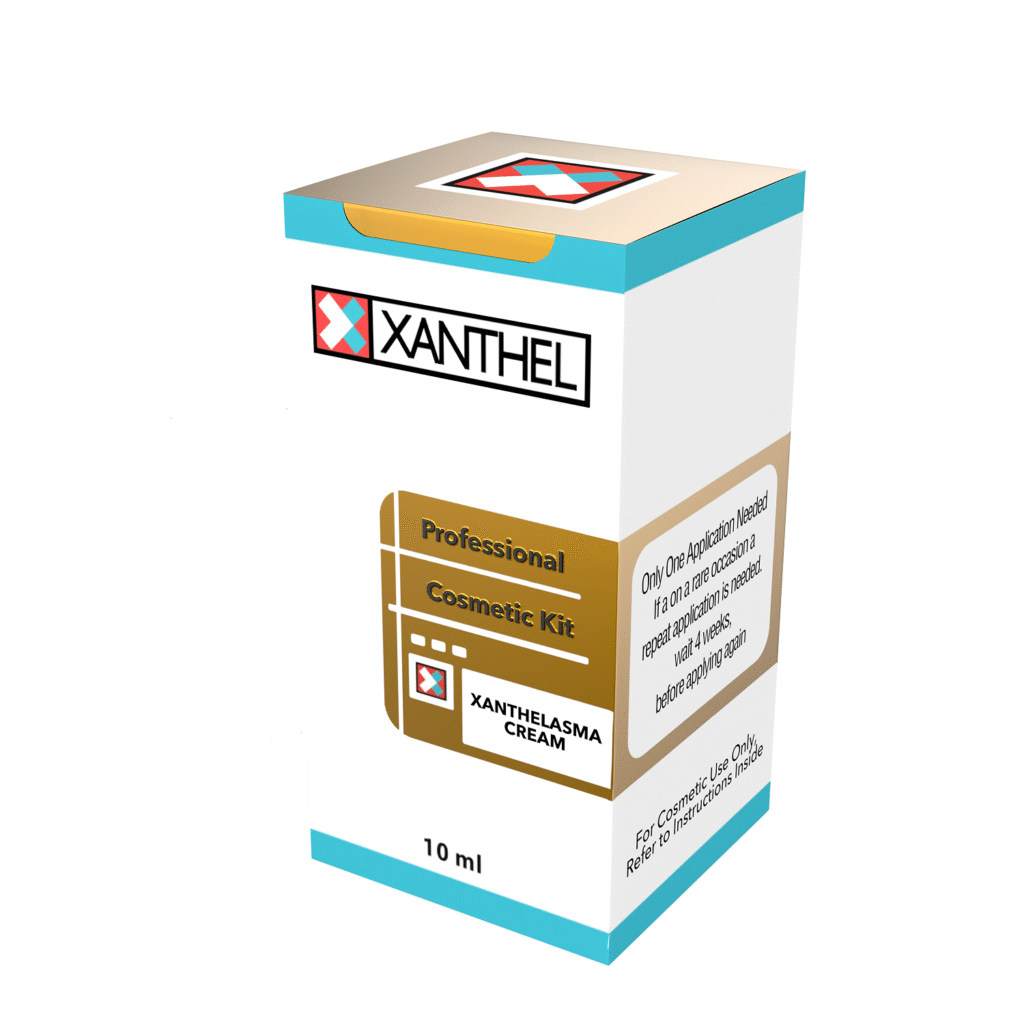
Xanthel ® for Xanthelasma
As you explore your options for treating xanthelasma, Xanthel ® may surface as a common non-surgical alternative worthy of consideration. Xanthel ® involves using a formulated solution to remove the cholesterol laden cells, which can also impact xanthelasma plaques. Here’s why this might be a suitable option:
– Targeted Application:Xanthel ® is applied specifically to the affected area, which will help in reducing the size of the lesions, till they are removed.
– Exfoliation Benefits: Xanthel ® provides a dual effect of exfoliating the skin, which can enhance its overall appearance while also treating xanthelasma.
– Formulated Intensity: Xanthel ® is formulated to work with your skin tone and the age of the plaques and more. That way the treatment solution can be effectvie in removing your xanthelasma, but removes the main concerns or possibilities of scarring and hyper or hypo pigmentation.
Always seek the advice of experienced treatment professionals at Xanthel ® if you have any concerns.

Heat-Based Treatments: A Viable Option?
Heat-based treatments, such as electrodessication, have been utilized in dermatology for various conditions and could also apply to the management of xanthelasma. Through the application of controlled heat, these treatments can effectively reduce or eliminate the plaques. The convincing points for considering heat-based treatments are:
– Focused Treatment: The heat is applied directly to the xanthelasma plaques, ensuring minimal interference with the surrounding skin.
– Convenience: Some heat-based procedures are quick and can be done in an outpatient setting.
– Possibility of Less Scarring: When performed correctly, heat-based treatments might result in less scarring compared to some other removal methods.
Careful selection of a provider is crucial, as improper heat application can lead to adverse effects such as burns or excessive scarring. As with all medical interventions, discuss the risks and benefits thoroughly with your healthcare provider.
Always remember, while all these treatments can alleviate the presence of xanthelasma, they do not address the high cholesterol or other systemic conditions that may be associated with its occurrence. For a holistic approach, you must continue to monitor and manage any underlying health concerns in collaboration with your treatment team. The synergy of cosmetic improvements and medical therapy will pave the way to not only enhance aesthetics but also to ensure long-term health benefits.

Recurrence and Management
Understanding the Nature of Xanthelasma Recurrence
When it comes to xanthelasma palpebrarum, you should be aware that recurrence is a significant concern. Even after treatment, statistics suggest that the condition reappears for 40% of individuals after their first treatment and for 60% after a second treatment. This repeated occurrence underscores the necessity for vigilant long-term care.
Understanding why xanthelasma tends to return is crucial. The primary reason lies in the root causes—elevated cholesterol levels, genetic predispositions, and possibly other underlying health issues like diabetes and thyroid dysfunction. These factors continue to influence your body after the initial removal of xanthelasma plaques.
– Elevated Cholesterol Levels: If your cholesterol remains high, the risk of xanthelasma returning is significantly increased. It implies that cholesterol management is vital not just for your overall cardiovascular health but also for preventing the recurrence of these skin lesions.
– Genetic Factors: Genetics play a role in xanthelasma formation and recurrence. You may be more prone to develop these plaques if there is a family history, so it’s important to understand your genetic risk.
– Underlying Health Issues: Conditions like diabetes or thyroid problems contribute to the presence and persistence of xanthelasma. Managing these conditions effectively is a part of the comprehensive approach to treatment.
In essence, acknowledging that the return of xanthelasma is a likely possibility can prepare you for a more proactive approach in managing your health.
Long-Term Management Strategies
Your journey doesn’t end with the initial treatment of xanthelasma. To prevent recurrence, integrate these strategies into your healthcare routine:
– Cholesterol Control: Work with your healthcare provider to monitor and manage your cholesterol levels through diet, medications, and lifestyle adjustments.
– Regular Medical Check-Ups: Stay ahead by getting regular health check-ups, especially if you have a predisposition to lipid abnormalities, diabetes, or thyroid diseases.
– Healthy Lifestyle: Embrace a lifestyle that supports cardiovascular health—encompassing regular exercise, a balanced diet, smoking cessation, and weight management.
– Continued Observation: Keep a watchful eye on early signs of recurrence of xanthelasma and contact your healthcare provider if you notice any changes.
– Educate Yourself: Being well-informed about your condition empowers you to make decisions and identify the best practices for maintaining your health and preventing future plaques.